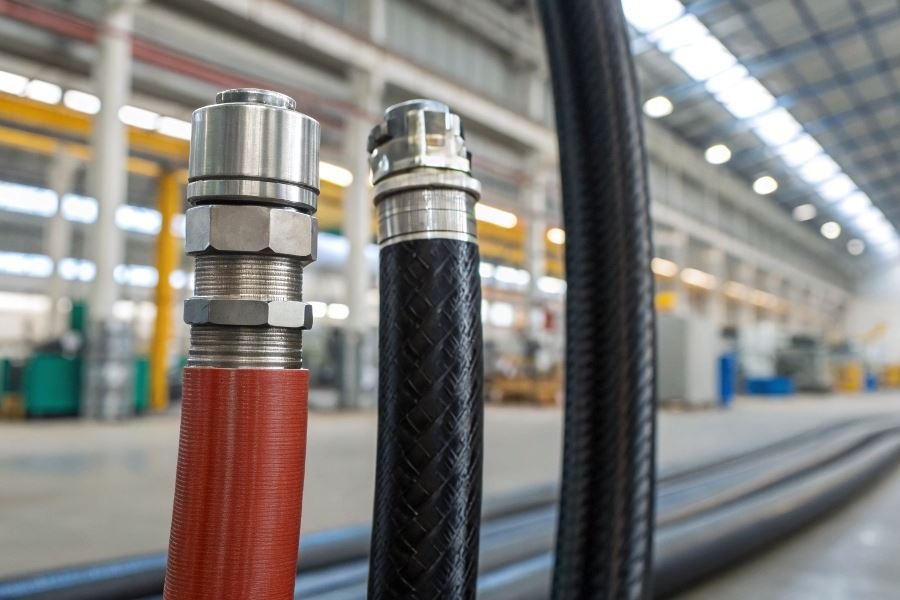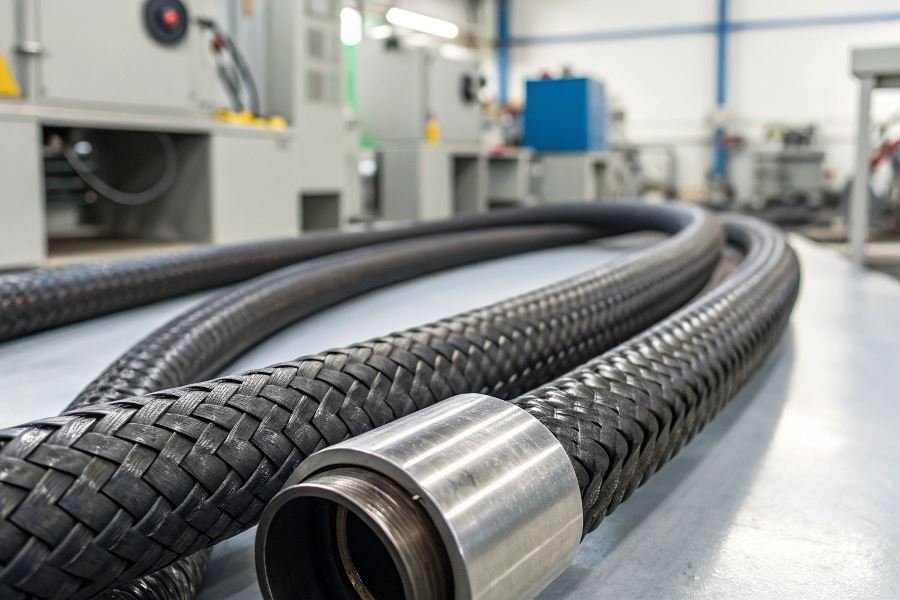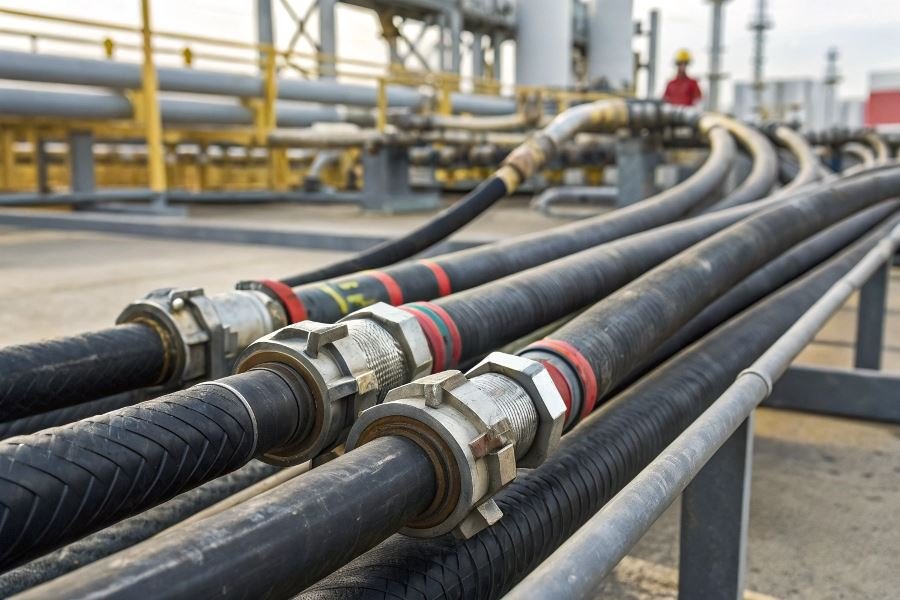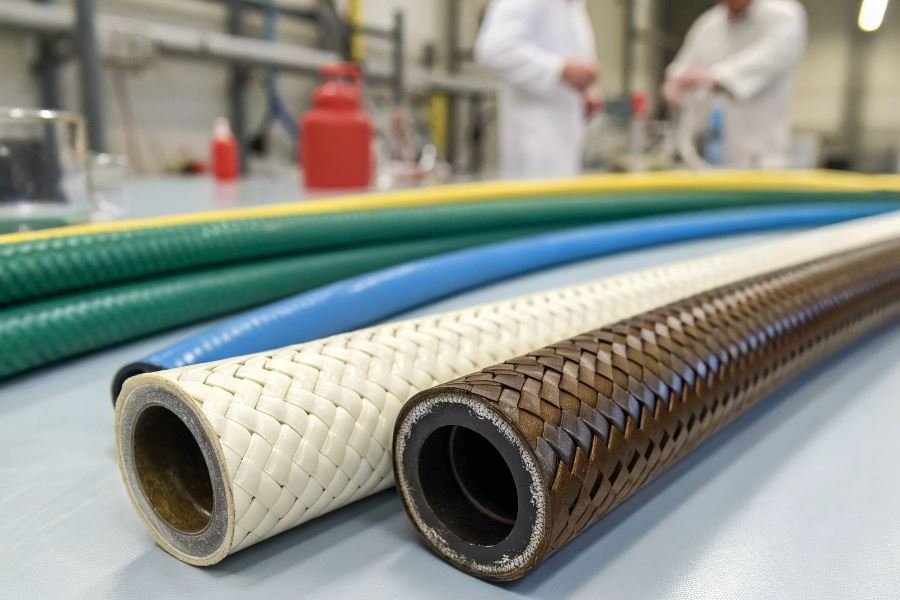
Ever watched a chemical spill containment team in action? Their success hinges on equipment most people never notice—specialized hoses designed to handle substances that would dissolve ordinary materials in minutes. These aren’t your garden-variety water hoses; they’re engineering marvels standing between safe operations and potential disaster.
Chemical-resistant industrial hoses serve as the circulatory system of modern manufacturing, transporting highly corrosive, abrasive, and reactive substances that would quickly destroy standard equipment. From sulfuric acid in battery production to sodium hydroxide in paper mills, these specialized conduits must withstand extreme pH levels, temperature fluctuations, and constant abrasion while maintaining structural integrity.
The challenge intensifies when we consider the diverse nature of aggressive chemical environments. A hose perfect for transferring hydrochloric acid might fail catastrophically when exposed to organic solvents. Material compatibility becomes the first critical consideration, with options ranging from specialized rubber compounds to fluoropolymers like PTFE that resist virtually all chemicals but come with significant cost implications.
Beyond material selection, three factors dominate performance outcomes:
- Temperature range – Many chemicals become more aggressive at higher temperatures
- Pressure requirements – Affecting both wall thickness and reinforcement needs
-
Flexibility demands – Balancing chemical resistance with practical handling requirements
Selecting the wrong hose isn’t merely inefficient—it’s potentially catastrophic, risking equipment damage, environmental contamination, and worker safety. The difference between a 6-month and 5-year service life often comes down to understanding these critical selection factors.
The Ultimate Chemical Warrior: Industrial Hose Selection Guide
When your facility handles aggressive chemicals, the humble industrial hose transforms from basic equipment into mission-critical infrastructure. The difference between a standard hose and one engineered for chemical resistance can mean the difference between smooth operations and catastrophic failure.
The systematic comparison of industrial hoses for aggressive chemical environments reveals that material selection stands as the primary factor determining performance and longevity. While price points might tempt procurement teams toward cheaper alternatives, the long-term operational costs and safety considerations make premium chemical-resistant hoses the clear economic choice for facilities handling corrosive substances.
Material Mastery: The Chemical Resistance Hierarchy
The frontline defenders against chemical attack come in several formulations, each with distinct advantages:
PTFE (Polytetrafluoroethylene) reigns supreme in chemical resistance, withstanding virtually all industrial chemicals except molten alkali metals and fluorinating agents. With a temperature range of -100°F to 500°F, PTFE hoses deliver unmatched versatility but command premium pricing.
FEP (Fluorinated Ethylene Propylene) offers 95% of PTFE’s chemical resistance at 75% of the cost. Its transparency allows visual flow confirmation—a significant advantage when monitoring critical processes.
PFA (Perfluoroalkoxy) combines PTFE’s chemical resistance with improved mechanical properties, particularly at elevated temperatures. Its smoother surface reduces material buildup and simplifies cleaning protocols.
UHMWPE (Ultra-High-Molecular-Weight Polyethylene) excels with strong acids and bases while providing exceptional abrasion resistance—outlasting standard polyethylene by 10-15 times in high-wear applications.
Construction Configurations That Count
The architecture of chemical hoses falls into three distinct categories:
Lined Hoses
These feature a chemical-resistant inner tube with reinforcement layers and protective outer covers. The multi-layer construction creates a robust defense system:
| Layer | Function | Material Options |
|---|---|---|
| Inner | Chemical barrier | PTFE, FEP, PFA, UHMWPE |
| Reinforcement | Pressure resistance | Stainless steel, aramid, polyester |
| Cover | External protection | EPDM, neoprene, silicone |
Extruded Hoses
Manufactured as a single homogeneous material, extruded hoses eliminate delamination concerns but typically offer lower pressure ratings than their lined counterparts.
Composite Structures
The engineering marvels of the hose world, composites integrate multiple materials to create synergistic performance profiles. The ChemFlex Composite System combines a PTFE liner with carbon-fiber reinforcement, delivering 30% weight reduction while maintaining full chemical compatibility.
Performance Metrics That Matter
When evaluating industrial hoses for chemical applications, three critical parameters determine suitability:
Pressure Ratings vary dramatically based on construction. While standard PTFE-lined hoses typically handle 1,000-1,500 PSI, high-pressure variants with multiple reinforcement layers can withstand up to 5,000 PSI—essential for chemical injection applications.
Temperature Tolerance creates clear dividing lines between materials:
| Material | Low Temp Limit | High Temp Limit |
|---|---|---|
| PTFE | -100°F | 500°F |
| FEP | -65°F | 400°F |
| PFA | -65°F | 450°F |
| UHMWPE | -40°F | 180°F |
Flexibility Factors often determine installation feasibility. The bend radius—measured as a multiple of the hose’s outer diameter—ranges from 4× for specialized convoluted PTFE designs to 12× for rigid composite structures.
The ideal chemical hose balances these performance metrics against specific application requirements, creating a custom solution rather than a one-size-fits-all approach.
Mastering Chemical Hose Selection and Maintenance
Finding your perfect chemical match
Selecting the right industrial hose for aggressive chemical environments isn’t just a procurement decision—it’s a critical safety and operational imperative. The perfect hose selection begins with a comprehensive chemical compatibility analysis. Different elastomers react uniquely with various chemicals: EPDM excels with ketones and alcohols but deteriorates rapidly when exposed to petroleum products, while fluoropolymers like PTFE offer nearly universal chemical resistance at premium price points.
Temperature and pressure parameters create another crucial decision matrix. A hose rated for 150°F may fail catastrophically when handling a 180°F caustic solution. Similarly, pressure ratings must include a substantial safety factor—typically 4:1 for chemical applications.
Physical environment considerations often determine long-term success. Will your hose experience vibration, flexing, or abrasion? Is UV exposure a factor? These seemingly secondary concerns can dramatically reduce service life in real-world applications.
| Elastomer | Chemical Strength | Temperature Range | Relative Cost |
|---|---|---|---|
| EPDM | Excellent with ketones, alcohols | -40°F to 275°F | $$ |
| Nitrile | Superior with petroleum | -30°F to 250°F | $$ |
| PTFE | Nearly universal resistance | -65°F to 450°F | |
| PVC | Good with acids, poor with solvents | 0°F to 150°F | $ |
Safety standards that cannot be compromised
Chemical hose compliance isn’t optional—it’s mandatory. The American Society for Testing and Materials (ASTM) provides critical standards for chemical hose performance, while the Rubber Manufacturers Association (RMA) offers specific guidelines for elastomeric materials in chemical service.
For facilities handling particularly hazardous chemicals, compliance with Process Safety Management (PSM) standards becomes essential. These comprehensive frameworks demand documented inspection protocols, preventive maintenance schedules, and failure response procedures.
The consequences of non-compliance extend beyond regulatory penalties to potential catastrophic failures affecting personnel safety and environmental integrity.
Proper certification documentation should accompany every chemical hose installation. This includes pressure testing certificates, material compatibility statements, and batch traceability information. Maintaining these records isn’t bureaucratic busywork—it’s essential protection against liability and operational disruption.
Extending service life through strategic maintenance
The difference between a hose that fails prematurely and one that exceeds its expected service life often comes down to maintenance discipline. Implementing a comprehensive inspection protocol represents your first defense against unexpected failures.
Visual inspections should occur weekly, focusing on early warning signs:
- Cover abrasions or cracks
- End fitting security and integrity
- Evidence of chemical seepage
- Unusual stiffness or softening
Pressure testing at 1.5× operating pressure (never exceeding manufacturer’s maximum test pressure) should be conducted quarterly for critical applications. This proactive approach identifies degradation before catastrophic failure occurs.
Strategic rotation of chemical hoses between high-stress and low-stress applications can distribute wear more evenly. Similarly, implementing proper storage protocols—avoiding sharp bends, extreme temperatures, and UV exposure—significantly extends service life.
The most effective maintenance strategy combines manufacturer recommendations with application-specific experience to create a living document that evolves with operational insights.
Proper flushing procedures after chemical transfer prevent cross-contamination and reduce internal degradation. This seemingly simple step can double the effective lifespan of expensive specialty hoses while maintaining process purity.
Discover the ultimate guide to chemical-resistant industrial hoses for harsh environments. Compare PTFE, FEP, PFA, and UHMWPE materials based on pressure ratings, temperature tolerance, and safety standards to make informed equipment decisions.
Discover the ultimate guide to chemical-resistant industrial hoses for harsh environments. Compare PTFE, FEP, PFA, and UHMWPE materials based on pressure ratings, temperature tolerance, and safety standards to make informed equipment decisions.