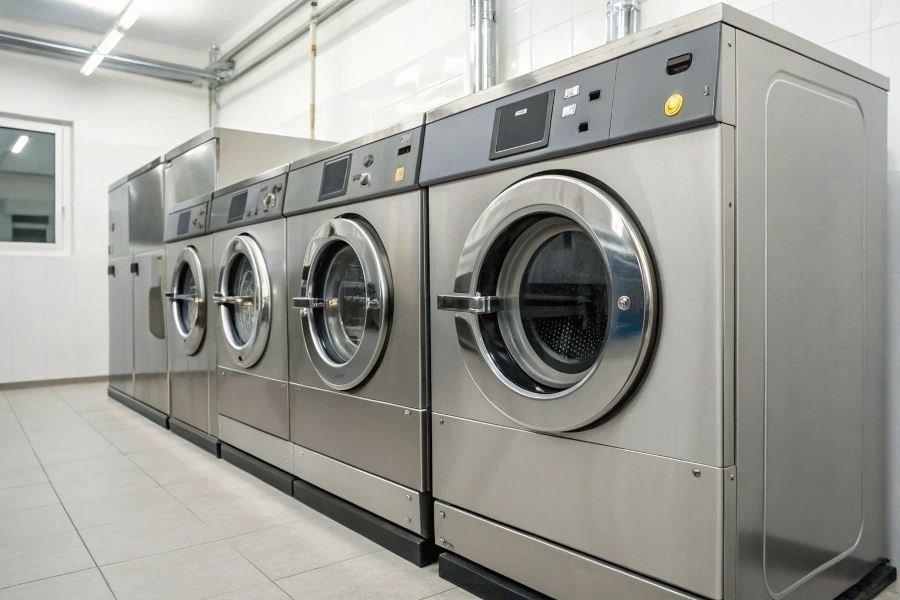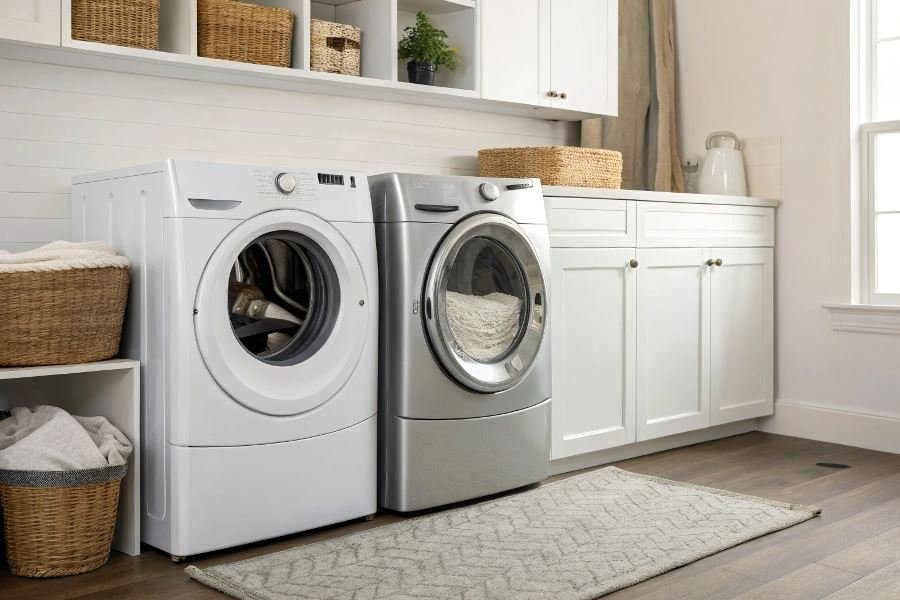
The average American family runs nearly 400 loads of laundry each year—that’s a relationship more committed than most marriages. Your choice between front-loading and top-loading washing machines isn’t just about aesthetics; it’s about aligning with your lifestyle for potentially decades to come.
When walking through appliance showrooms, you’ll notice the landscape has evolved dramatically. Front-loading machines have surged in popularity, capturing nearly 45% of the U.S. market—a remarkable shift from just 20 years ago when top-loaders dominated almost exclusively. This revolution stems from significant technological advancements in cleaning efficiency and water conservation.
The fundamental differences that matter
Front-loaders operate by tumbling clothes through a shallow pool of water, using gravity to create a gentle yet effective washing action. Top-loaders, meanwhile, either use a central agitator or an impeller plate to move clothes through a deeper water bath. These mechanical differences create cascading effects on:
- Cleaning performance: Front-loaders typically achieve superior stain removal with less detergent
- Water and energy usage: Front-loaders use roughly 40% less water and 25% less energy
- Gentleness on fabrics: The tumbling action of front-loaders creates less wear and tear
- Space requirements: Front-loaders can be stacked with dryers, while top-loaders need vertical clearance
Matching the machine to your home
Your perfect washing machine depends on several personal factors:
“The best washing machine isn’t necessarily the most expensive or feature-rich—it’s the one that fits your specific household dynamics.”
Consider your physical space (including door clearance and ceiling height), family size (affecting load frequency and capacity needs), laundry habits (do you sort meticulously or wash everything together?), and mobility concerns (bending requirements differ between types).
The right choice balances these practical considerations with performance expectations and budget constraints—creating harmony in your laundry routine for years to come.
Performance Metrics That Matter in Washing Machine Selection
When deciding between front-loading and top-loading washing machines: what to choose often comes down to measurable performance differences rather than just aesthetics or tradition. Let’s dive into the metrics that separate these two distinct designs and help you make an investment that aligns with your household needs.
Cleaning Efficiency and Water Usage
Front-loading washers consistently outperform their top-loading counterparts in cleaning effectiveness. The tumbling action of a front-loader creates a more thorough cleaning process by repeatedly lifting clothes and dropping them into the water, utilizing gravity as a cleaning force.
Water consumption differences are striking:
- Front-loaders: Typically use 7-13 gallons per load
- Traditional top-loaders: Can consume 30-45 gallons per load
- HE top-loaders: Use approximately 15-25 gallons per load
This efficiency gap exists because front-loaders need only enough water to wet the clothes, while top-loaders traditionally require filling the tub to submerge the entire load.
Front-loading machines use roughly 40-60% less water than conventional top-loaders, translating to thousands of gallons saved annually for the average household.
Energy Efficiency and Cost Implications
The energy equation heavily favors front-loading machines for two primary reasons:
- Reduced water heating requirements – Less water means less energy needed to heat it
- Higher spin speeds – Front-loaders typically reach 1,200-1,600 RPM versus 600-800 RPM for most top-loaders
| Machine Type | Avg. Annual Energy Use | Approximate Annual Cost |
|---|---|---|
| Front-Loader | 125 kWh | $15-20 |
| HE Top-Loader | 175 kWh | $20-30 |
| Traditional Top-Loader | 300 kWh | $35-45 |
Energy Star certified front-loaders can reduce energy consumption by up to 25% compared to non-certified models, with potential savings of 370−530 over the machine’s lifetime.
Cycle Duration and Capacity Considerations
Time investment varies significantly:
Front-loaders typically run longer cycles (45-90 minutes) compared to top-loaders (30-60 minutes). This extended duration results from their water-efficient design—clothes spend more time tumbling through a smaller amount of water rather than being quickly agitated in a full tub.
However, the capacity equation often favors front-loaders:
- Front-loaders: Typically offer 4.5-5.5 cubic feet capacity
- Top-loaders: Generally range from 3.5-4.5 cubic feet
The larger capacity of front-loaders often negates their longer cycle times by requiring fewer loads overall. A family of four might run 7-8 loads weekly with a top-loader versus 5-6 with a front-loader.
Load flexibility matters too: Front-loaders excel with bulky items like comforters and pillows due to their larger drums and absence of agitators. Whirlpool and LG front-loaders can handle king-size comforters that would overwhelm most top-loaders.
The performance metrics clearly favor front-loaders for efficiency-conscious households, while top-loaders maintain advantages in convenience and initial cost. Your optimal choice ultimately depends on balancing these performance factors against your specific household needs, space constraints, and budget priorities.
Making the Smart Choice: Front vs Top Loaders
Space and installation realities
Front-loading and top-loading washing machines demand different spatial commitments from your home. Front loaders require a minimum of 24 inches of width and 33 inches of depth, plus additional clearance for door swing—typically another 20-24 inches. They shine in tight spaces because they can be stacked with a matching dryer, effectively doubling your laundry capacity in the same footprint.
Top loaders, meanwhile, need similar width but less depth (typically 27-28 inches), making them ideal for shallow laundry areas. However, they demand vertical clearance—you’ll need at least 20 inches above the lid for comfortable loading and unloading. This makes them impossible to stack and less suitable for closet installations or under countertops.
Installation tip: Front loaders require perfectly level floors to prevent excessive vibration and premature bearing wear. Top loaders are more forgiving on slightly uneven surfaces.
For apartments and condos with limited square footage, front loaders paired with their dryer counterparts in a vertical configuration can save up to 15 square feet of floor space—enough room for a small chest freezer or storage cabinet.
Durability and maintenance truths
The reliability equation isn’t as simple as many believe. Modern front loaders from brands like Miele and Speed Queen are engineered for 15,000+ wash cycles—approximately 20 years of typical household use. Their counterbalanced drums and sophisticated suspension systems reduce wear on internal components.
Top loaders traditionally offer simpler mechanics with fewer potential failure points. Agitator models from Whirlpool have legendary durability, with some units still functioning after 25+ years.
Maintenance requirements differ significantly:
| Maintenance Task | Front Loader | Top Loader |
|---|---|---|
| Door seal cleaning | Monthly (prevents mold) | Not required |
| Drum cleaning cycle | Every 30-40 loads | Every 50 loads |
| Filter cleaning | Every 3-4 months | Rarely needed |
| Leveling check | Annually | Only if moved |
Front loaders demand more attentive maintenance—leaving the door closed between uses can lead to mildew and odors. However, their gentler washing action causes less wear on clothing, potentially saving hundreds of dollars annually in replacement garment costs.
Budget reality check
The price spectrum for washing machines spans from basic budget models to premium feature-packed units:
| Type | Entry Level | Mid-Range | Premium |
|---|---|---|---|
| Top Loader (Agitator) | 399−599 | 600−899 | 900−1,200 |
| Top Loader (HE) | 499−699 | 700−999 | 1, 000−1,400 |
| Front Loader | 699−899 | 900−1,299 | 1, 300−2,100 |
While front loaders command a higher initial investment, they typically deliver 30-50% water savings and 20-30% energy reduction compared to traditional top loaders. For a family doing 7-8 loads weekly, this translates to approximately 150−200 annual utility savings—potentially recouping the price premium within 3-5 years.
The value calculation extends beyond purchase price. Front loaders from manufacturers like LG and Samsung typically include longer warranties on motors and drums (10 years) compared to top loaders (5-7 years), reflecting manufacturer confidence in component longevity.
For budget-conscious households, high-efficiency top loaders offer a middle ground—delivering some water and energy savings without the premium price of front-loading technology.
Discover the key differences between front-loading and top-loading washing machines to make an informed purchase decision. Compare efficiency, performance, space requirements, and cost factors to find the perfect washer for your household needs.
Discover the key differences between front-loading and top-loading washing machines to make an informed purchase decision. Compare efficiency, performance, space requirements, and cost factors to find the perfect washer for your household needs.