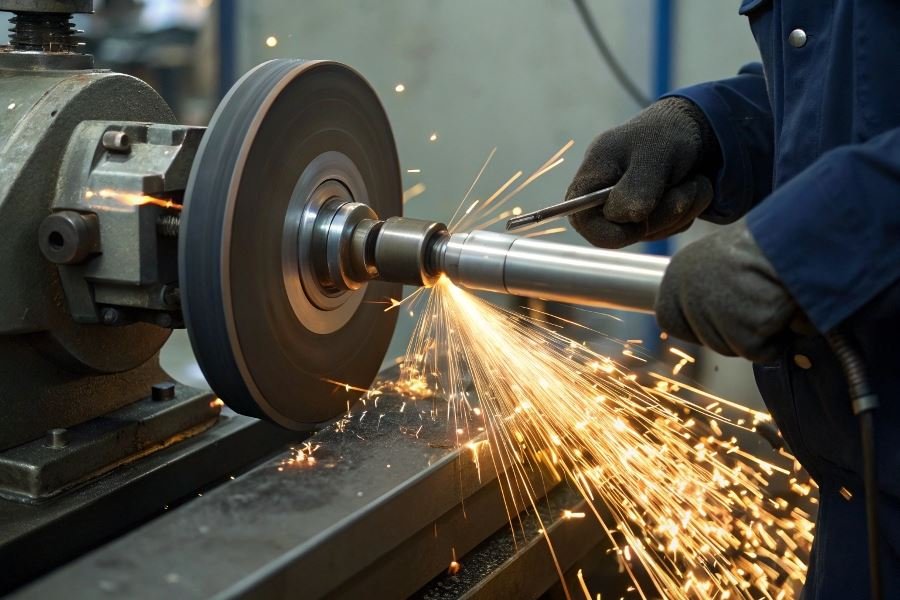
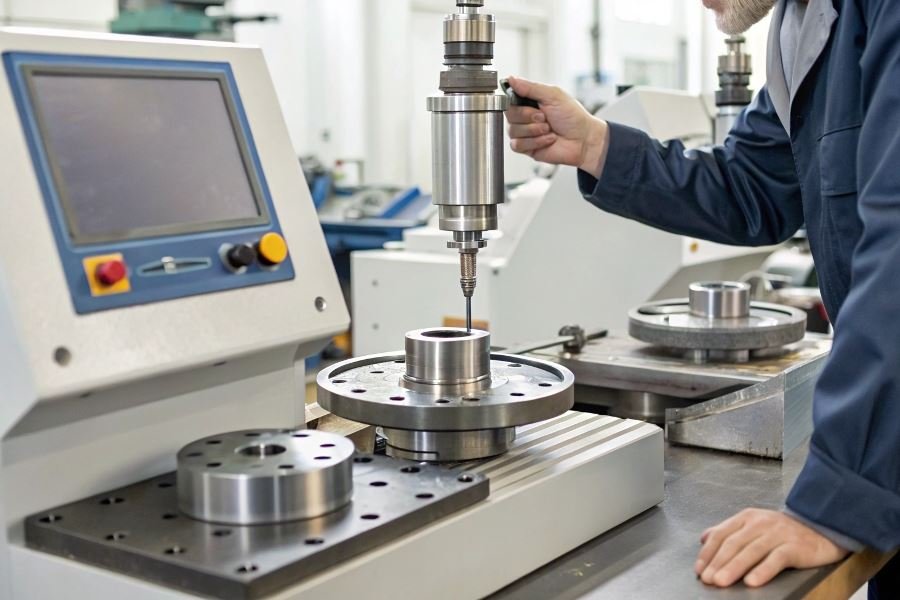
Ever watched a master craftsman transform a rough metal block into a gleaming component with tolerances measured in microns? That magical moment when precision meets perfection doesn’t happen by accident—it begins with selecting the right grinding machine for the job.
Grinding represents the critical finishing touch in metalworking, where the difference between excellence and mediocrity often comes down to thousandths of an inch. The criteria for selecting grinding machines extend far beyond price tags and specifications sheets; they encompass a delicate balance of technical requirements, production demands, and long-term business strategy.
“The right grinding machine isn’t just equipment—it’s a competitive advantage,” notes a recent industry analysis that found properly matched grinding equipment can reduce production costs by up to 30% while extending component lifespan significantly.
The grinding landscape: More options, more complexity
Today’s metalworking professionals face an unprecedented range of grinding technologies—from traditional surface grinders to advanced CNC cylindrical systems with acoustic emission monitoring. The market has evolved dramatically since the introduction of the first precision grinding machines in the late 19th century, with modern equipment offering automation features that were unimaginable even a decade ago.
This expanding selection brings both opportunity and challenge. The perfect machine balances precision capabilities with production efficiency, creating that sweet spot where quality meets profitability. Choose wisely, and you’ll unlock new capabilities; choose poorly, and you’ll watch competitors race ahead while you struggle with rework and missed deadlines.
Technical Essentials That Define Superior Grinding Machines
When evaluating grinding machines for metalworking operations, the difference between adequate and exceptional performance often comes down to technical specifications that might seem subtle on paper but prove dramatic in practice. The criteria for selecting grinding machines for metalworking must balance precision requirements, production demands, and material challenges—a delicate equation that separates workshop champions from expensive disappointments.
Power, Speed, and Precision: The Performance Trinity
The foundation of any grinding machine’s capability starts with its motor power. Industrial grinding machines typically range from 2HP for bench grinders to 50HP or more for production centerless grinders. This isn’t simply about raw power—it’s about sustained torque delivery under load.
Speed range versatility becomes critical when working with diverse materials. Modern CNC grinding machines offer variable speed control between 500-6000 RPM, with premium models featuring:
- Digital RPM displays with ±1 RPM accuracy
- Programmable speed transitions for complex operations
- Automatic speed compensation under varying loads
Precision capabilities represent perhaps the most crucial specification. Top-tier surface grinders achieve tolerances of ±0.0001″ (2.5 microns), while specialized machines can reach sub-micron precision.
| Machine Type | Typical Power | Speed Range | Precision Capability |
|---|---|---|---|
| Surface Grinder | 3-10 HP | 1200-3600 RPM | ±0.0001″ |
| Cylindrical Grinder | 10-30 HP | 1000-2500 RPM | ±0.00005″ |
| Centerless Grinder | 15-50 HP | 500-2000 RPM | ±0.0002″ |
| Tool & Cutter Grinder | 2-5 HP | 2000-6000 RPM | ±0.0001″ |
Workpiece Compatibility: Matching Machine to Material
The physical characteristics of your workpieces dictate machine selection as much as any other factor. Table size and maximum workpiece dimensions create hard limits on capability—a 12″ × 24″ table simply cannot accommodate larger components regardless of other specifications.
Weight capacity affects not just what can be ground, but how precisely it can be ground. Machines with inadequate weight capacity may flex under load, compromising finished tolerances. Premium machines feature:
- Reinforced cast iron beds with vibration-dampening properties
- Hydrostatic ways that maintain precision under varying loads
- Automatic weight compensation systems
Material considerations extend beyond size and weight to composition. Grinding hardened tool steels (58-62 HRC) demands different machine characteristics than working with aluminum or titanium. The best machines offer:
Material-specific presets that automatically adjust speed, feed rate, and coolant delivery based on workpiece material properties.
Grinding Wheel Systems: Where Machine Meets Metal
The interface between machine and material—the grinding wheel system—often receives insufficient attention during selection. Yet wheel mounting, changing systems, and compatibility determine daily operational efficiency.
The most precise machine becomes worthless if wheel changes require 30 minutes of downtime and complex realignment procedures.
Advanced machines from manufacturers like Studer and Okamoto feature:
- Quick-change wheel mounting systems requiring no tools
- Automatic wheel balancing technology
- Integrated dressing systems that maintain wheel geometry during operation
- Multi-wheel turrets for complex operations without changeovers
Wheel compatibility extends beyond physical mounting to include the machine’s ability to handle various wheel compositions—from conventional aluminum oxide to superabrasives like CBN and diamond. The best machines offer coolant delivery systems specifically designed for these advanced wheels, with high-pressure capability up to 1000 PSI for deep grinding operations.
By evaluating these technical criteria systematically, you’ll identify grinding machines that deliver not just acceptable results, but exceptional performance that translates directly to competitive advantage in your metalworking operations.
Beyond Specs: The Business Case for Your Grinding Machine
The true cost equation
When evaluating grinding machines, looking beyond the sticker price reveals the complete financial picture. Total Cost of Ownership (TCO) encompasses acquisition costs, operational expenses, maintenance, and eventual replacement—spanning the machine’s entire lifecycle.
A premium grinding machine from manufacturers like Studer or Okamoto might command $75,000-150,000 upfront, but their energy efficiency can save $3,000-5,000 annually compared to budget alternatives. The math becomes compelling when you consider that quality machines typically maintain precision for 15+ years versus 7-10 years for economy models.
The wisest investment isn’t always the cheapest option—it’s the one that delivers the greatest value across its operational lifetime.
TCO analysis should factor in:
| Cost Component | Typical Range | Impact Factors |
|---|---|---|
| Energy consumption | $5,000-15,000/year | Motor efficiency, idle power usage |
| Consumables | $3,000-8,000/year | Wheel quality, coolant systems |
| Downtime costs | $1,000-3,000/hour | Production interruption, rush orders |
| Precision maintenance | $2,000-7,000/year | Calibration requirements, service intervals |
Maintenance realities that protect production
Maintenance requirements vary dramatically between grinding machine classes. High-precision machines from JUNKER or Kellenberger typically demand scheduled service intervals of 2,000-3,000 operating hours, while economy models might require intervention every 1,000 hours.
The critical factor isn’t just frequency but service availability. A machine that requires a specialist to fly in from overseas creates vulnerability in your production schedule. Evaluate:
- Local technician availability within 24-48 hours
- Parts inventory and delivery timeframes
- Remote diagnostic capabilities
- Manufacturer training programs for your maintenance team
Modern grinding machines from ANCA and Haas increasingly feature self-diagnostic systems that alert operators to developing issues before catastrophic failure occurs—potentially saving thousands in emergency repairs and lost production.
Automation that transforms workflows
The automation capabilities of today’s grinding machines represent perhaps the most significant ROI opportunity. Integration with existing workflows can reduce labor costs by 30-50% while improving consistency.
Leading machines now offer:
- Robotic loading/unloading systems that operate during unmanned shifts
- In-process measurement that eliminates separate quality control steps
- Adaptive control systems that automatically adjust grinding parameters based on material variations
JTEKT and Makino grinding systems can interface with Manufacturing Execution Systems (MES) to provide real-time production data, enabling predictive maintenance scheduling and just-in-time production capabilities.
When evaluating automation potential, assess your current workflow bottlenecks first. A machine that automates your most time-consuming or error-prone processes delivers the greatest value, even if it doesn’t have every available feature.
The most successful implementations start with modest automation goals and expand incrementally, allowing operators and maintenance teams to adapt to new workflows without overwhelming disruption.
Discover the 7 critical factors for choosing the right metalworking grinding machine. Learn how to evaluate technical specifications, workpiece compatibility, and cost-effectiveness to maximize precision, efficiency, and ROI in your metal fabrication operations.
Discover the 7 critical factors for choosing the right metalworking grinding machine. Learn how to evaluate technical specifications, workpiece compatibility, and cost-effectiveness to maximize precision, efficiency, and ROI in your metal fabrication operations.