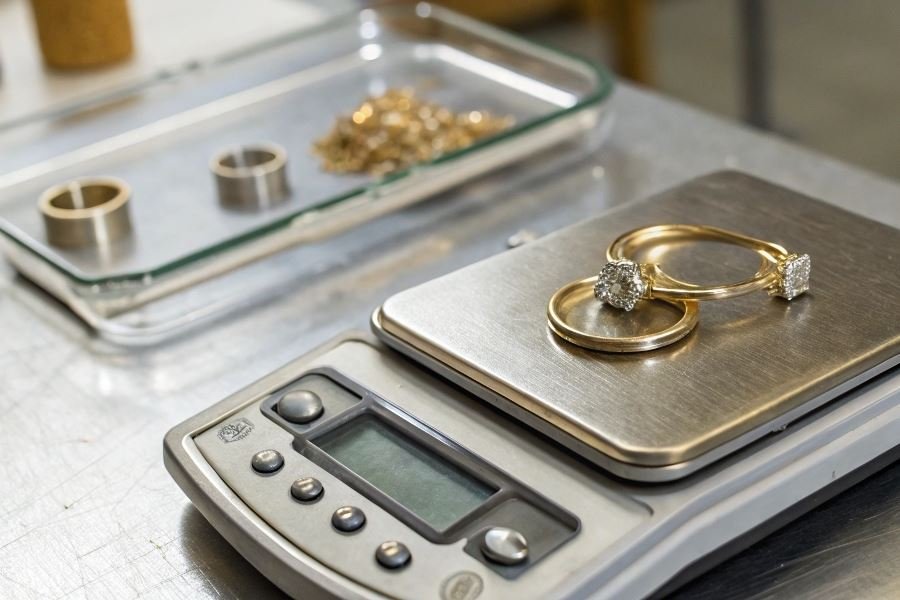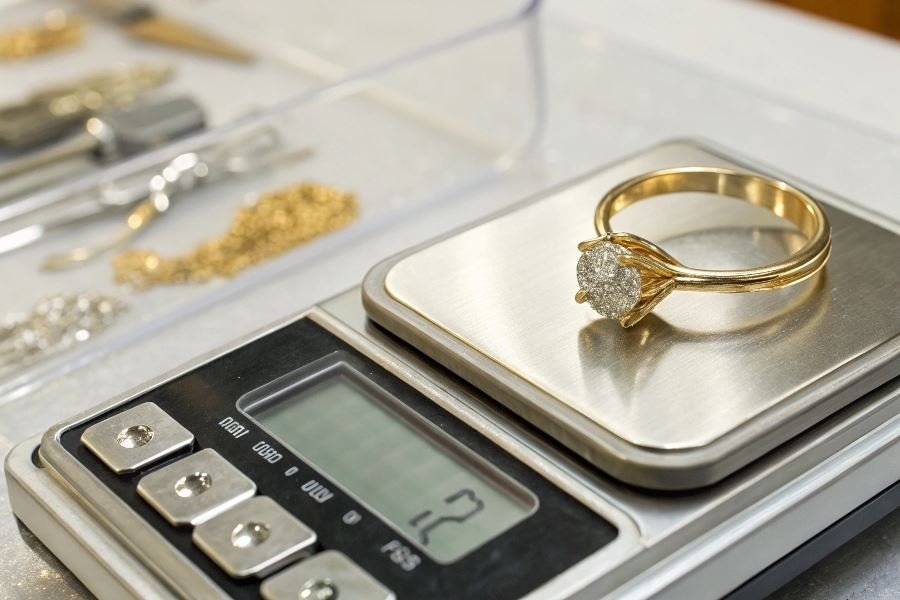
A single milligram can mean thousands of dollars in the jewelry business. This isn’t hyperbole—it’s the reality that professional jewelers face daily when weighing precious metals and gemstones.
When a one-carat diamond’s value can fluctuate by $1,000 or more based on a 0.05-carat difference, precision isn’t just a technical specification—it’s your financial lifeline. Professional jewelry scales serve as the unsung heroes behind every successful transaction, authentication, and creation in the jewelry world.
“The difference between profit and loss often balances on the edge of a scale’s accuracy.”
The precision-profit connection
The mathematics is simple: inaccurate measurements directly impact your bottom line. Underweigh your materials, and you’re essentially giving away precious metals. Overweigh them, and you risk overcharging clients and damaging your reputation. A study by the Jewelers Vigilance Committee found that jewelers using precision scales with accuracy of at least 0.01g reported 23% fewer customer disputes over weight-related pricing.
Beyond basic measurement
Professional jewelry scales do more than just weigh—they validate your expertise. When clients see you using professional-grade equipment with features like anti-static technology and draft shields, it communicates attention to detail and commitment to accuracy. This perception builds the trust that transforms one-time buyers into lifetime clients.
The foundation of craftsmanship
For artisans creating custom pieces, precision scales ensure consistent quality from concept to completion. Whether calculating metal alloys or setting stones, the right scale provides the confidence to create without compromise, knowing that what you’ve designed on paper will translate perfectly to the physical world.
The Technical Edge in Jewelry Weighing
When precision meets craftsmanship, every milligram matters. Professional jewelers understand that the difference between profit and loss often balances on the edge of a scale’s platform. The jewelry industry demands measuring instruments that deliver uncompromising accuracy, reliability, and consistency.
Determining what characteristics are important when choosing jewelry scales for professionals requires understanding both the technical specifications and practical applications in a jewelry workshop or retail environment. The right scale becomes an extension of the craftsperson’s expertise—a silent partner in quality control that validates the value of precious materials.
Precision that pays for itself
Professional jewelry scales must offer resolution of at least 0.01g (10mg), though many experts prefer 0.001g (1mg) precision for working with gemstones and precious metals. This level of readability isn’t merely a luxury—it’s essential when pricing items containing gold, platinum, or diamonds where minute weight differences translate to significant monetary value.
Resolution comparison for professional applications:
- Standard jewelry scale: 0.01g (sufficient for basic retail)
- Premium jewelry scale: 0.001g (ideal for gemstone work)
- Laboratory-grade scale: 0.0001g (for specialized applications)
The display should feature clear, backlit digits with stable readings that don’t fluctuate when objects are centered on the weighing platform. Many modern scales from manufacturers like Ohaus or Sartorius include features that indicate when readings have stabilized, eliminating guesswork.
Capacity considerations for every application
While precision captures headlines, capacity determines versatility. Most jewelry professionals require scales with capacity between 100g and 1000g, depending on their specific needs:
| Scale Capacity | Ideal Applications | Typical Items Weighed |
|---|---|---|
| 20-100g | Gemstone work | Individual stones, small components |
| 100-500g | General jewelry | Rings, necklaces, bracelets |
| 500-1000g | Bulk materials | Metal stock, multiple pieces |
| 1000g+ | Production | Inventory batches, heavy components |
The sweet spot for most jewelers tends to be 200-300g capacity with 0.01g precision, offering sufficient range for most pieces while maintaining accuracy.
Calibration and certification: Trust but verify
Professional scales require regular calibration to maintain accuracy. Look for models with:
- External calibration capability using certified weights
- Internal calibration mechanisms that self-adjust (premium feature)
- Calibration lock to prevent unauthorized adjustments
Certification standards matter tremendously in professional environments. Scales should comply with relevant industry standards such as NTEP (National Type Evaluation Program) in the United States or OIML (International Organization of Legal Metrology) internationally.
The best jewelry scales include calibration certificates traceable to national standards. Manufacturers like A&D Weighing and Mettler Toledo provide documentation that validates accuracy claims and ensures compliance with regulatory requirements.
Remember that environmental factors—temperature fluctuations, air currents, vibration—can affect measurement accuracy. Premium scales include features like draft shields, vibration filtering, and temperature compensation to maintain precision regardless of workshop conditions.
Making the Final Decision on Professional Jewelry Scales
When investing in precision equipment for your jewelry business, the final decision requires careful consideration of multiple factors. Let’s navigate the crucial balance between budget constraints and essential features, while examining what truly matters for long-term satisfaction with your jewelry scale purchase.
Smart Budget Allocation for Maximum Value
The price range for professional jewelry scales spans from $100 to well over $5,000, creating a significant decision point for business owners. Rather than viewing this purely as an expense, consider it an investment in accuracy and efficiency.
Budget strategy tip: Allocate funds based on your most frequent weighing tasks. If you primarily weigh finished pieces under 100 grams, a mid-range scale with 0.01g precision might suffice. For gemstone dealers regularly weighing tiny stones, investing in higher precision (0.001g) becomes non-negotiable despite the higher cost.
The true cost of a scale extends beyond the purchase price—consider how accuracy impacts your pricing and profitability over time.
Beyond the Purchase: Support Systems Matter
The relationship with your scale doesn’t end at checkout. Professional jewelry scales require occasional calibration, maintenance, and sometimes repairs.
| Support Element | Why It Matters | What to Look For |
|---|---|---|
| Warranty Length | Protects investment | Minimum 2-year coverage |
| Calibration Service | Maintains accuracy | Included calibration weights or service plan |
| Technical Support | Resolves issues quickly | US-based phone support with extended hours |
| Repair Turnaround | Minimizes downtime | Express service options |
Many manufacturers offer extended warranty options that include annual calibration services. While these add to the initial cost, they often prove economical compared to paying for individual calibration services, which typically range from $75-150 per session.
Top Professional Jewelry Scales Worth Your Investment
After analyzing dozens of models based on precision, reliability, and value, these three scales consistently meet professional requirements:
-
Sartorius Quintix Precision Balance (65Q1) – Offering 0.0001g readability with automatic internal calibration, this German-engineered scale represents the gold standard for jewelers working with precious gemstones. Its draft shield and touch-screen interface make it exceptionally user-friendly despite its advanced capabilities.
-
OHAUS Pioneer PX224 – With 0.0001g precision and a capacity of 220g, this workhorse balances exceptional accuracy with a reasonable price point. Its robust metal housing and overload protection make it ideal for busy workshop environments.
-
A&D FX-120i – This compact precision scale offers 0.001g readability with a 122g capacity at a mid-range price point. Its vacuum fluorescent display ensures readability in any lighting condition, while the standard RS-232 interface allows for data transfer to inventory systems.
When making your final selection, prioritize the features that directly impact your specific workflow. A custom jeweler handling precious metals might prioritize different characteristics than a gemstone dealer or appraisal specialist.
The best scale isn’t necessarily the most expensive one—it’s the one that delivers consistent accuracy for your specific weighing tasks while fitting seamlessly into your business operations.
Remember that precision equipment forms the foundation of accurate pricing and quality control in jewelry businesses. The right scale becomes an invisible yet invaluable partner in your professional success.
Discover the critical characteristics professional jewelers need in precision scales. Learn about resolution, capacity, and calibration standards that ensure accuracy and protect your reputation in the jewelry business.
Discover the critical characteristics professional jewelers need in precision scales. Learn about resolution, capacity, and calibration standards that ensure accuracy and protect your reputation in the jewelry business.