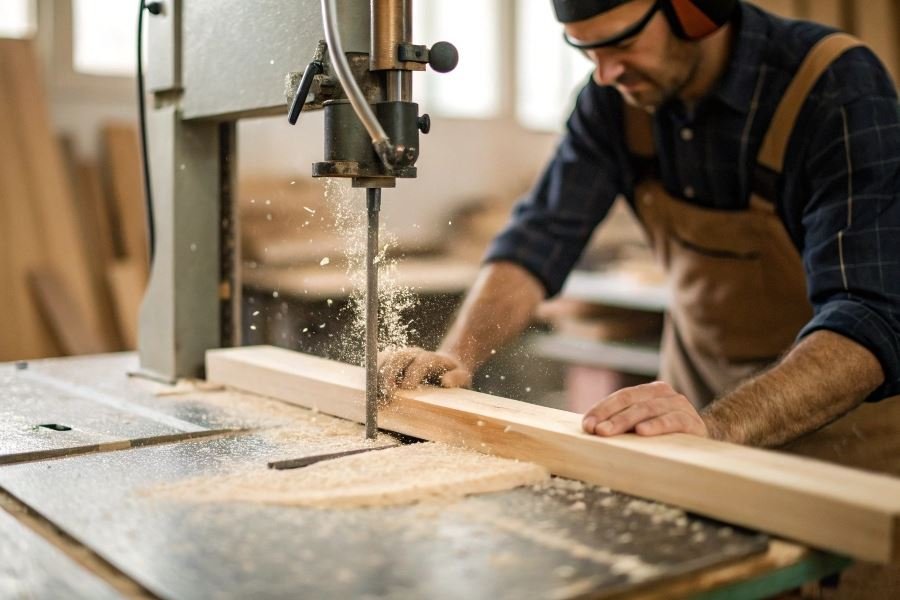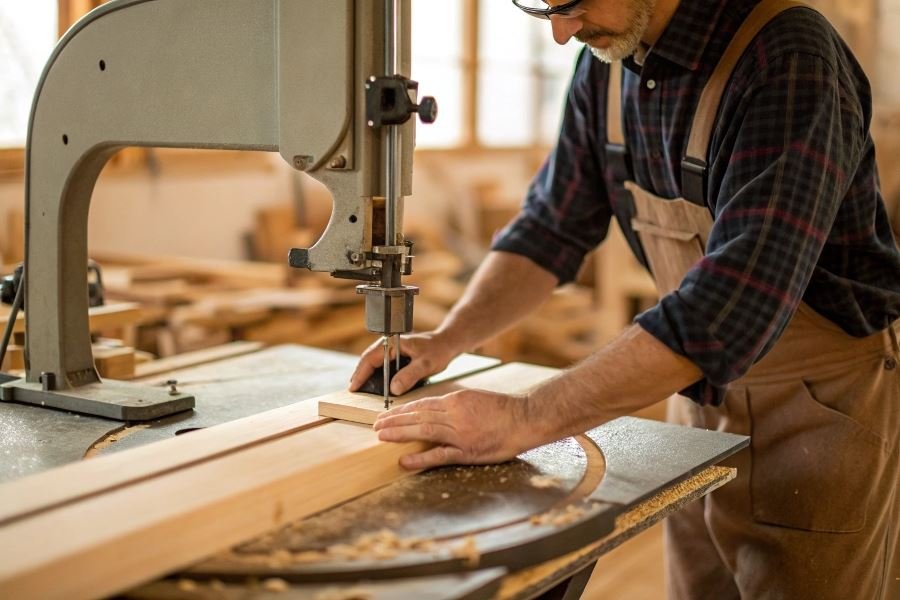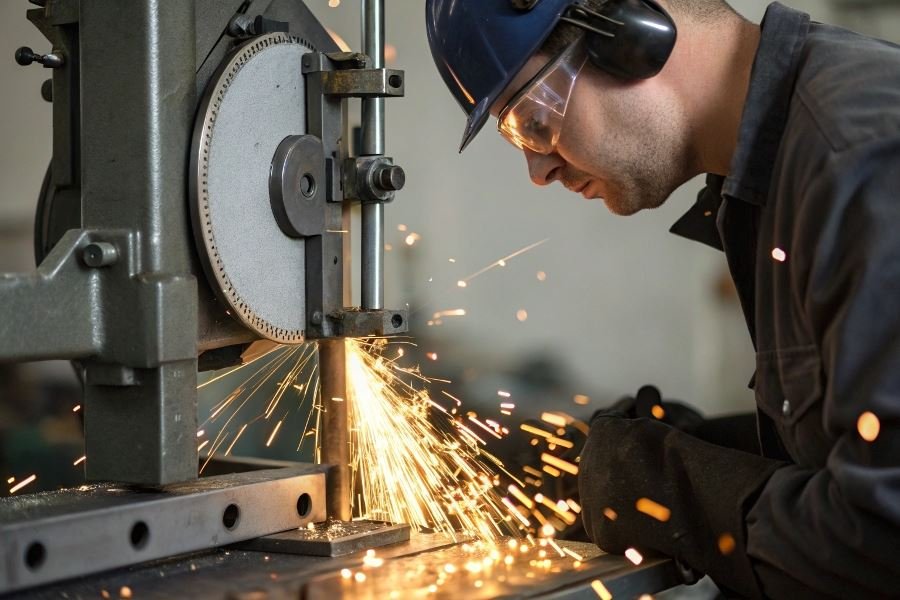
Ever watched a master craftsman slice through steel like it was butter? That’s the power of the right band saw in skilled hands.
Selecting the appropriate band saw for metal cutting isn’t just about making purchases—it’s about making investments that directly impact your productivity, precision, and profitability. Whether you’re outfitting a professional fabrication shop or upgrading your personal workshop, the band saw you choose becomes the backbone of your metal-cutting capabilities.
Why your band saw choice matters more than you think
The difference between a mediocre and exceptional metal-cutting experience often comes down to three critical factors: cut quality, operational efficiency, and long-term reliability. A properly selected band saw doesn’t just cut metal—it transforms your entire workflow.
“The right band saw pays for itself not just in cut quality, but in reduced material waste, decreased blade replacement costs, and significantly improved production times.”
Decision drivers that separate professionals from amateurs
When evaluating band saws, focus on these game-changing elements:
- Material capacity: The thickness and types of metals you’ll regularly cut
- Cut precision: Tolerance requirements for your specific applications
- Power requirements: Matching horsepower to your typical workload
- Blade speed options: Essential for adapting to different metal properties
- Frame rigidity: The foundation of vibration control and cut accuracy
The perfect band saw aligns precisely with your specific metal-cutting needs, transforming challenging cuts into routine operations while maximizing your material investment through cleaner, more accurate results.
Essential Specifications That Make or Break Your Metal Band Saw
When selecting the perfect band saw for metal cutting operations, understanding the technical specifications isn’t just helpful—it’s critical to your success. The difference between a precision cut and a costly mistake often comes down to matching your machine’s capabilities with your specific metal cutting needs.
Choosing a band saw for metal requires careful consideration of three primary factors: power requirements, blade specifications, and cutting capacity. These elements work together to determine whether your saw will slice through stainless steel like butter or struggle with basic aluminum work. Let’s dive into what makes these specifications so crucial for your metalworking projects.
Power and Motor Requirements: The Heart of Your Saw
The motor is where everything begins. For light-duty applications with thin aluminum or brass, a 1/2 HP motor might suffice, but professional shops cutting tool steel or stainless will need significantly more power.
Material-specific power requirements:
| Metal Type | Recommended Motor Power | Maximum Thickness |
|---|---|---|
| Aluminum | 3/4 – 1 HP | Up to 4″ |
| Mild Steel | 1 – 1.5 HP | Up to 3″ |
| Stainless | 1.5 – 2 HP | Up to 2″ |
| Tool Steel | 2+ HP | Up to 1.5″ |
Remember that underpowered motors lead to blade stalling, which damages both the workpiece and the saw itself.
For continuous production environments, look for motors with duty cycles of 100% rather than the 50-75% common in hobbyist models. Industrial-grade JET and DoAll band saws feature robust motors designed for all-day operation without overheating.
Blade Specifications: The Cutting Edge
Blade selection might seem overwhelming, but understanding three key specifications will clarify your decision:
Teeth Per Inch (TPI): This determines finish quality and cutting speed.
- 6-8 TPI: Ideal for thick materials (>1/2″)
- 10-14 TPI: Perfect for medium thickness (1/4″ to 1/2″)
- 18-24 TPI: Best for thin materials (<1/4″)
Blade Width: Wider blades provide straighter cuts but less maneuverability.
- 1/4″ – 3/8″: For intricate cuts and curves
- 1/2″ – 3/4″: Standard for most straight cuts
- 1″ and above: Heavy-duty cutting with maximum stability
Blade Material: The right material dramatically extends blade life.
- Bi-metal blades from manufacturers like Lenox combine flexibility with hardened teeth, offering the best value for most applications.
- Carbide-tipped blades cost 3-5 times more but last up to 10 times longer when cutting exotic alloys.
Cutting Capacity and Throat Depth: Size Matters
Your band saw’s cutting capacity directly limits the size of material you can process. This specification breaks down into two measurements:
Maximum cutting height determines the thickest material your saw can handle. Professional models from Baileigh Industrial offer cutting heights up to 10″ for structural steel applications.
Throat depth measures from the blade to the frame, establishing the maximum width of material that can be cut. A 14″ throat depth allows you to cut to the center of a 28″ wide plate.
Don’t overlook the importance of adjustable cutting speeds, typically measured in feet per minute (FPM):
- Stainless steel: 50-100 FPM
- Tool steel: 70-120 FPM
- Mild steel: 100-180 FPM
- Aluminum: 180-300 FPM
The right specifications transform a band saw from a basic tool into a precision instrument capable of handling everything from delicate jewelry components to heavy structural members. By matching these specifications to your specific cutting needs, you’ll ensure clean cuts, extended blade life, and ultimately, superior finished products.
Making the Final Decision on Your Metal Band Saw
Selecting the perfect band saw for metal cutting involves more than just comparing specs—it’s about finding that sweet spot where performance meets practicality. After evaluating blade types, motor power, and cutting capacities, you’re now ready to make that final decision. Let’s dive into the factors that will ultimately determine which machine deserves a place in your workshop.
Smart budgeting without sacrificing quality
The price range for metal band saws spans from $300 for entry-level portable models to $15,000+ for industrial powerhouses. But here’s the reality: the cheapest option rarely delivers the best value over time.
Wisdom nugget: The true cost of a band saw isn’t what you pay today—it’s what you pay over its lifetime.
Consider establishing a “price per cut” metric for your decision. A $2,500 mid-range JET horizontal band saw might seem expensive initially, but when you factor in its 10+ year lifespan and consistent cutting accuracy, it often outperforms a $900 budget model that needs replacement in three years.
For small shop owners, the sweet spot typically falls between 1, 200−3,000 for horizontal models that balance durability with precision. Vertical models with greater versatility may command 3, 000−5,000 but offer expanded capabilities that justify the investment.
Reputation and warranty considerations
Manufacturer reputation serves as your insurance policy against costly mistakes. Established brands like DoAll, Ellis, and Baileigh have earned their status through decades of consistent performance.
When evaluating warranties, look beyond the duration to understand what’s actually covered:
| Warranty Type | Typical Coverage | What to Watch For |
|---|---|---|
| Limited | Parts only, 1-2 years | Labor costs excluded |
| Full | Parts and labor, 2-5 years | Shipping responsibilities |
| Premium | Comprehensive, 5+ years | Transferability if you sell |
The availability of replacement parts should influence your decision significantly. Some manufacturers maintain parts inventories for 20+ years, while others discontinue support after just 5 years.
The hidden costs of ownership
Maintenance requirements vary dramatically between models and directly impact your total cost of ownership. Consider these ongoing expenses:
- Blade replacement: Quality bi-metal blades cost 25−100 depending on size and tooth configuration
- Coolant systems: Require regular fluid changes (50−100 annually)
- Guide bearings: May need replacement every 2-3 years (75−200 per set)
- Power consumption: Industrial models can add 200−500 annually to electricity bills
Machines with tool-free blade changes and accessible maintenance points save valuable shop time. The Grizzly G0561 models, for instance, feature quick-access panels that reduce maintenance downtime by up to 70% compared to competitors.
Smart buyers also factor in resale value. Premium brands like Hydmech typically retain 50-60% of their value after 5 years, while budget imports might depreciate to 10-20% in the same timeframe.
Your final decision should balance immediate budget constraints against long-term operational costs. The perfect metal band saw isn’t necessarily the most expensive model—it’s the one that delivers consistent performance at a sustainable cost throughout its service life, matching your specific cutting needs without unnecessary features that inflate the price without adding value.
Discover how to choose the perfect metal band saw with our comprehensive guide covering essential specifications, power requirements, blade selection, and budget considerations for optimal cutting performance and longevity.
Discover how to choose the perfect metal band saw with our comprehensive guide covering essential specifications, power requirements, blade selection, and budget considerations for optimal cutting performance and longevity.