
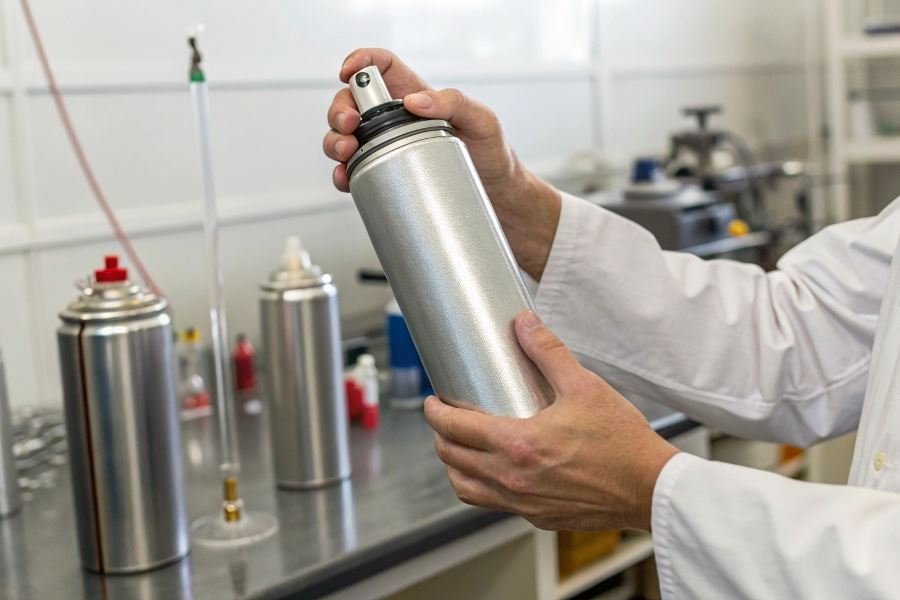
Ever wondered why some spray paints deliver flawless coverage while others sputter and drip? The difference often lies not in the paint itself, but in the engineering marvel that is the aerosol can. This seemingly simple container represents decades of precision engineering that directly impacts your project’s success.
When selecting an aerosol product, understanding the relationship between container and contents is crucial. A premium aerosol can designed for automotive paint behaves fundamentally differently than one formulated for household cleaning. The internal pressure systems, valve mechanisms, and propellant formulations are specifically engineered for their intended applications.
Quality indicators you can actually test before purchasing:
- Valve responsiveness: Press partially—does it deliver consistent spray or sputter?
- Weight distribution: A well-manufactured can feels balanced, not top-heavy
- Sound test: Gently shake the can—quality products produce a smooth, consistent sound
Safety beyond the warning label
While most consumers focus exclusively on the product inside, safety considerations begin with the can itself. Premium aerosol containers feature reinforced seams, pressure-tested chambers, and specialized valve systems designed to prevent accidental discharge.
“The difference between a professional-grade aerosol can and a budget option isn’t just about what’s inside—it’s about precision engineering that ensures consistent delivery and enhanced safety.”
Store your aerosol products in temperature-controlled environments below 120°F to prevent dangerous pressure buildup. Never puncture or incinerate cans, even when empty, as residual propellant can cause explosive reactions.
Technical Specifications That Make or Break Aerosol Cans
When selecting aerosol cans for your products or projects, the technical specifications aren’t just fine print—they’re the difference between success and failure. What to pay attention to when buying an aerosol can goes far beyond basic measurements, extending into pressure ratings, material composition, and spray pattern functionality that directly impacts performance. Let’s dive into the engineering details that separate premium aerosol containers from substandard options.
Pressure Ratings and Content Compatibility
The internal pressure of an aerosol can isn’t just a safety concern—it’s a performance guarantee. Standard aerosol cans typically operate between 40-70 psi at 70°F, but specialized applications may require different specifications:
| Application Type | Recommended Pressure Range | Compatible Contents |
|---|---|---|
| Personal Care | 35-55 psi | Water-based formulas, light oils |
| Industrial | 50-90 psi | Solvents, paints, lubricants |
| Food Grade | 30-45 psi | Cooking oils, whipped cream |
| Medical | 40-60 psi | Sterile solutions, topical treatments |
Pressure testing certifications should be clearly indicated on quality cans. The DOT (Department of Transportation) ratings are particularly important for shipping and storage safety. Look for cans that have undergone hydrostatic testing to at least 1.5 times their operating pressure.
The propellant compatibility is equally crucial—HFCs (hydrofluorocarbons) and hydrocarbons like propane and butane have different chemical interactions with various product formulations. A mismatched propellant can cause product degradation or inconsistent spray performance.
Material Composition and Durability Factors
The molecular structure of your aerosol can directly impacts both product integrity and shelf life. Modern aerosol cans typically feature:
- Tinplate steel (0.15-0.25mm thickness): Offers excellent pressure resistance and recyclability
- Aluminum (0.3-0.4mm thickness): Lighter weight with superior corrosion resistance
- Laminated materials: Multi-layer protection for reactive contents
The internal lining deserves particular scrutiny. Epoxy phenolic linings protect against content reactivity, while polyamide coatings offer enhanced chemical resistance for aggressive formulations.
The durability of an aerosol can isn’t just about preventing catastrophic failure—it’s about maintaining consistent performance throughout the product lifecycle.
Environmental stress testing results should be available from quality manufacturers. Look for cans tested under temperature cycling (typically -20°F to 130°F), drop impact resistance (minimum 4-foot drop survival), and corrosion resistance (500+ hours in salt spray testing).
Nozzle Design and Spray Pattern Engineering
The actuator and valve assembly represents the most sophisticated engineering aspect of the entire package. Different applications demand specific spray characteristics:
- Fan spray patterns deliver broad, even coverage ideal for surface coatings and paints
- Cone spray patterns provide controlled dispersion perfect for room fresheners
- Stream patterns offer precision application for lubricants and industrial chemicals
- Foam actuators create expanded product delivery for cleaning products
Valve orifice diameter (typically 0.016″-0.072″) directly controls flow rate and particle size. Smaller orifices create finer mists while larger openings deliver higher volume output.
The dip tube length and material composition must align with product viscosity. Silicone and polyethylene tubes offer superior chemical resistance compared to standard PVC options.
For premium applications, consider Precision Valve actuators with their patented 360° functionality or Aptar Group systems featuring metered-dose technology that delivers exact amounts with each spray.
By understanding these technical specifications, you’ll select aerosol packaging that not only contains your product safely but delivers it with the performance characteristics your application demands.
Making Smart Aerosol Can Purchases
When selecting aerosol cans, the decision extends far beyond simply grabbing the first option off the shelf. The right choice balances performance, safety, and environmental responsibility—all while considering your budget. Let’s dive into what truly matters when finalizing your aerosol can purchase.
Balancing cost and quality
The price tag on aerosol products varies dramatically, from $2 budget options to premium selections exceeding $20. This variance isn’t arbitrary—it reflects meaningful differences in:
Valve quality: Higher-priced cans typically feature precision-engineered valves that deliver consistent spray patterns and resist clogging throughout the product’s life.
Propellant technology: Premium products often use more sophisticated propellant systems that maintain pressure consistency until the final spray.
The true value equation isn’t about finding the cheapest option, but identifying where quality improvements justify additional cost.
A practical approach is evaluating cost-per-use rather than sticker price alone. A $15 premium paint can that delivers 400 consistent sprays may offer better value than a $5 option that clogs after 100 uses or delivers inconsistent coverage requiring multiple applications.
Environmental considerations and disposal
Aerosol cans present unique environmental challenges that responsible consumers should address:
Propellant impact: While CFCs were phased out in the 1970s, many aerosols still use hydrocarbons or compressed gases with varying environmental footprints.
Material recyclability: Most modern aerosol cans are made from steel or aluminum—both highly recyclable when properly emptied.
| Material | Recyclability | Special Disposal Requirements |
|---|---|---|
| Steel | Widely accepted | Must be completely empty |
| Aluminum | Highly recyclable | Pressure must be released |
| Composite | Limited | Often requires special handling |
Before disposal, aerosol cans must be completely emptied. Many municipalities classify partially-filled aerosol cans as hazardous waste requiring special disposal procedures. Check local regulations, as requirements vary significantly by location.
Pro tip: Look for products marked with the “Green Seal” or similar certifications indicating reduced environmental impact.
Industry leaders in aerosol manufacturing
Three manufacturers consistently demonstrate excellence in aerosol can production:
-
Rust-Oleum – Renowned for their paint and coating aerosols featuring patented comfort-grip triggers and consistent spray patterns. Their innovation in nozzle design has set industry standards for precision application.
-
3M – Pioneers in industrial aerosol technology, 3M excels in specialized adhesives and coatings. Their valve systems deliver remarkable consistency even with highly viscous materials.
-
WD-40 Company – Beyond their famous lubricant, WD-40 has perfected the Smart Straw system that switches between precision and broad application without additional attachments.
These manufacturers invest heavily in quality control, resulting in products with fewer failures, more consistent performance, and better overall user experience.
When making your final selection, consider your specific application needs, frequency of use, and environmental values alongside price. The ideal aerosol can isn’t necessarily the most expensive option, but rather the one that delivers reliable performance for your particular requirements while aligning with your values regarding environmental responsibility.
Discover what experts look for when selecting aerosol cans: pressure ratings, material quality, nozzle design, and safety features. Learn how to choose the perfect can for your specific needs while considering durability and environmental impact.
Discover what experts look for when selecting aerosol cans: pressure ratings, material quality, nozzle design, and safety features. Learn how to choose the perfect can for your specific needs while considering durability and environmental impact.