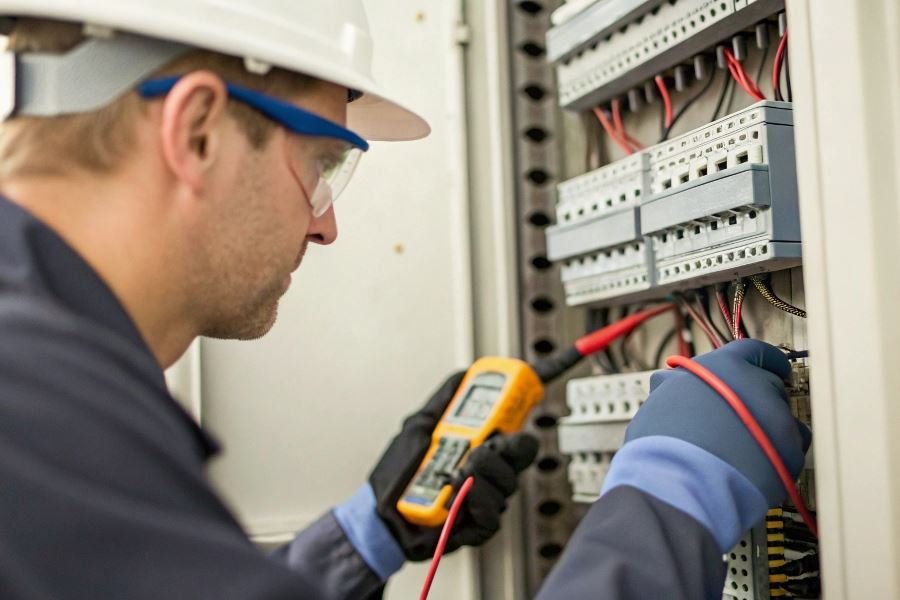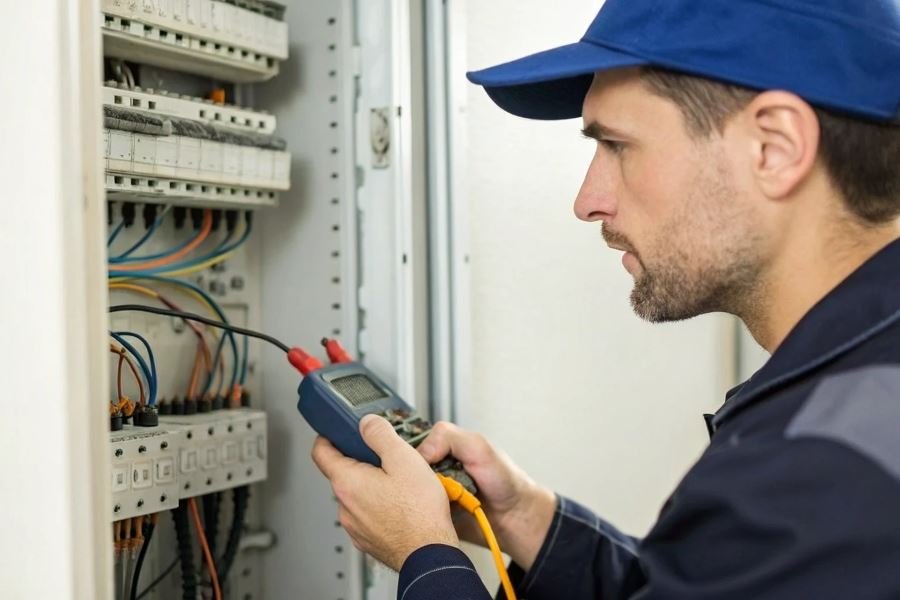
Ever touched a wire and wondered if it was live? That split-second decision could be life-changing—and not in a good way.
Voltage indicators are simple yet powerful devices designed to detect the presence of electrical voltage in wires, outlets, or equipment. Think of them as your personal electrical bodyguards, silently standing watch over your home’s invisible power network. These handheld tools serve one critical purpose: to tell you whether electricity is flowing through a conductor before you make contact with it.
Why your home needs voltage indicators
The statistics speak volumes: according to the Electrical Safety Foundation International, home electrical failures cause nearly 51,000 fires annually, resulting in hundreds of deaths and over $1.3 billion in property damage. A quality voltage indicator isn’t just a tool—it’s an investment in your family’s safety.
Types of voltage indicators for every need
Non-contact voltage testers (NCVTs) are perfect for quick checks. Simply hover near a wire or outlet, and they’ll alert you to voltage with lights or sounds—no direct contact required.
Two-pole voltage testers offer more detailed information by making direct contact with electrical points, showing exact voltage readings.
Multimeters go beyond simple voltage detection, measuring current and resistance as well—ideal for the home DIYer tackling more complex projects.
Socket testers plug directly into outlets to verify proper wiring and identify common wiring faults that could pose hazards.
The right voltage indicator transforms invisible danger into visible information, giving you confidence before changing a light fixture or troubleshooting an appliance. It’s not just about avoiding shocks—it’s about taking control of your home’s electrical safety.
Essential Features That Make or Break a Voltage Indicator
When electrical safety is on the line, the details matter. Selecting the right voltage indicator for your home isn’t just about finding a tool—it’s about investing in peace of mind. The market offers countless options, but understanding the critical features will help you navigate the selection process with confidence.
Voltage Range and Measurement Precision
The foundation of any quality voltage indicator lies in its measurement capabilities. Most residential electrical systems in the United States operate at 120V and 240V, but selecting a voltage indicator with a broader range provides versatility for various applications. When evaluating how to choose a voltage indicator for home use, prioritize models that offer measurement ranges from 12V to 1000V to handle everything from low-voltage electronics to standard home wiring.
Accuracy matters tremendously in voltage detection. Premium indicators typically offer accuracy ratings of ±1.0% to ±2.0%. This precision becomes crucial when troubleshooting sensitive electronics or determining if voltage levels are within safe operating parameters.
| Voltage Range | Best For | Typical Accuracy |
|---|---|---|
| 12V-600V | General household use | ±2.0% |
| 12V-1000V | Advanced DIY/Professional | ±1.5% |
| 6V-1200V | Professional electricians | ±1.0% |
Resolution quality directly impacts your ability to detect minor voltage fluctuations. Higher-end models display readings to the tenth of a volt, while basic units might round to the nearest volt—a critical difference when diagnosing subtle electrical issues.
Contact vs. Non-Contact Detection: Choosing Your Approach
Voltage indicators fall into two primary categories, each with distinct advantages:
Contact voltage testers require direct connection to electrical circuits, offering unparalleled accuracy and detailed readings. These tools typically feature probes or alligator clips and provide specific voltage measurements rather than simple presence detection.
Non-contact voltage detectors (NCVDs) use electromagnetic field sensing to detect voltage without physical connection to conductors. They excel in:
- Quick preliminary checks before detailed testing
- Identifying live wires inside walls
- Scanning multiple outlets rapidly
- Enhancing safety in potentially hazardous situations
Many professionals opt for dual-function models like the Fluke T6-1000 that combine both technologies, allowing for rapid scanning with non-contact features followed by precise measurements when needed.
Safety Certifications: Your Non-Negotiable Criteria
When dealing with electricity, safety standards aren’t just bureaucratic checkboxes—they’re vital protections. Quality voltage indicators should comply with:
“Never compromise on safety certifications when selecting electrical testing equipment. Your life may literally depend on it.”
The CAT rating system (CAT II through CAT IV) indicates the device’s ability to withstand voltage spikes. For home use, a minimum of CAT III 600V provides adequate protection for most residential applications.
Look for these critical certifications:
- UL (Underwriters Laboratories) listing
- CE marking for European compliance
- IEC 61010 standard compliance
- IP rating for dust/water resistance (minimum IP54 for general use)
The ergonomic design of your voltage indicator significantly impacts safety as well. Features like insulated probes, bright LED indicators visible in low light, and audible alerts provide crucial redundancy when working in challenging environments.
By focusing on these essential features—accurate voltage measurement capabilities, appropriate contact or non-contact functionality, and rigorous safety certifications—you’ll select a voltage indicator that delivers reliable performance when electrical safety is on the line.
Making the Final Decision on Your Home Voltage Indicator
Selecting the right voltage indicator for your home isn’t just about grabbing the first one you see on the shelf. It’s about finding that perfect match between your specific electrical needs, safety requirements, and budget constraints. Let’s cut through the confusion and nail down exactly how to make this decision with confidence.
Tailoring to your specific home environment
Your home’s electrical system has its own personality, and your voltage indicator should speak its language. Consider these matching factors:
Circuit complexity matters. Older homes with updated electrical systems might require dual-range indicators that can handle both traditional and modern voltage levels. Meanwhile, newer constructions benefit from digital models that can detect GFCI protection status.
The environment where you’ll use the tester significantly impacts your choice. Basement workshops with potential moisture require voltage indicators with higher IP ratings (IP65 or above), while standard living areas can function well with IP54 protection.
The most overlooked factor in voltage indicator selection is frequency of use. Daily users should invest in professional-grade tools, while occasional users can opt for simpler models.
For homes with smart electrical systems or solar installations, consider indicators with expanded voltage ranges that can accurately measure DC components from alternative energy sources.
Budget considerations that make sense
Price ranges for home voltage indicators typically fall into three tiers:
| Price Range | Features | Best For |
|---|---|---|
| $15-30 | Basic non-contact detection, limited range | Occasional use, simple tasks |
| $30-75 | Digital display, multiple functions, moderate durability | Regular DIY enthusiasts |
| $75-150+ | Professional features, data logging, extreme durability | Serious hobbyists, home automation setups |
Value isn’t just about price. A $50 indicator with replaceable batteries and a 5-year warranty often delivers better long-term value than a $25 model that fails after 18 months.
Consider the hidden costs of inadequate testing. A quality voltage indicator might prevent expensive electrical repairs or, more importantly, ensure your family’s safety—making it worth every penny.
Maintaining your voltage indicator properly
Even the best voltage indicator requires proper care to maintain accuracy and safety:
Test before each use. Always verify your indicator works by testing it on a known live circuit before relying on it for important safety checks.
Battery management is crucial. Replace batteries at the first sign of weakening performance, and remove them during long storage periods to prevent corrosion.
Store your voltage indicator in a dry, room-temperature location, preferably in its original case or a protective pouch. Extreme temperatures can affect calibration and electronic components.
For non-contact voltage testers from brands like Fluke or Klein Tools, perform monthly sensitivity checks by testing at various distances from known voltage sources.
Documentation matters. Keep the manual accessible—many manufacturers provide troubleshooting guides and calibration tips that extend your tool’s lifespan.
By matching your specific needs, considering true value beyond just price, and committing to proper maintenance, you’ll select a voltage indicator that serves as a reliable guardian of your home’s electrical safety for years to come.
Learn how to select the perfect voltage indicator for your home with our comprehensive guide. Discover key features, safety certifications, and budget considerations to ensure electrical safety and prevent accidents in your household.
Learn how to select the perfect voltage indicator for your home with our comprehensive guide. Discover key features, safety certifications, and budget considerations to ensure electrical safety and prevent accidents in your household.