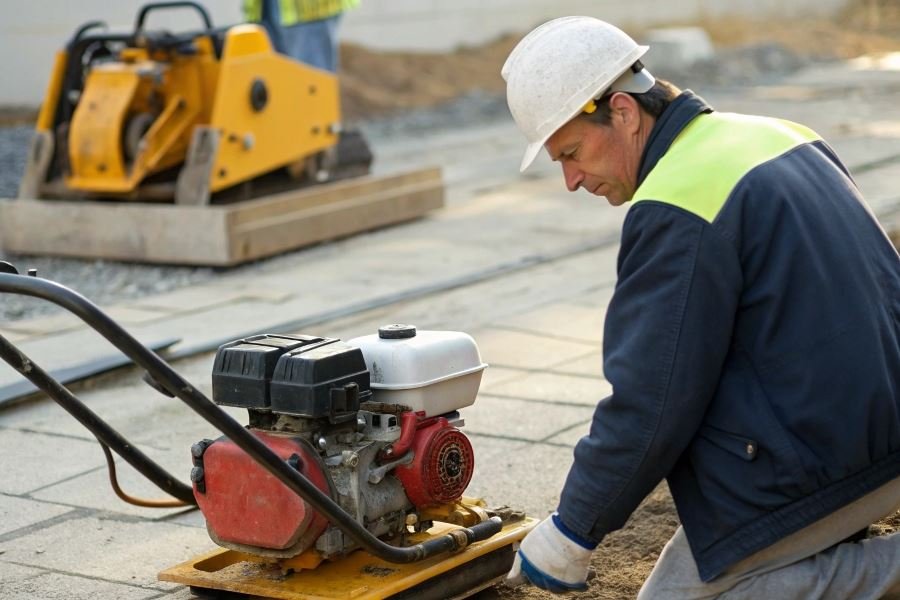
Ever watched a small construction team transform a loose pile of aggregate into a rock-solid foundation in mere hours? That’s the magic of vibrating plates at work—compact powerhouses that have revolutionized how small construction businesses approach compaction tasks.
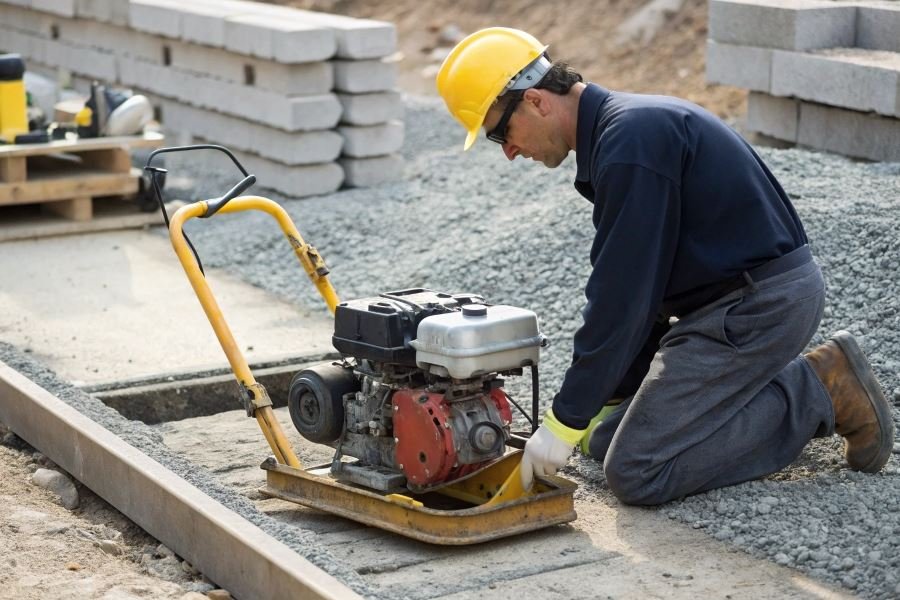
Vibrating plates (or plate compactors) are specialized construction equipment designed to increase the density of soil, gravel, sand, or asphalt by applying vibration. These machines feature a flat metal plate attached to an engine that creates rapid oscillating movements, effectively eliminating air pockets and compressing materials to create stable surfaces for construction projects.
For small construction businesses, these machines aren’t just convenient—they’re game-changers. A quality vibrating plate can dramatically reduce labor costs by accomplishing in minutes what would take hours manually. They deliver professional-grade results that meet stringent building codes and extend the lifespan of pavements, foundations, and other structures by preventing settling and cracking.
“The right vibrating plate doesn’t just compact soil—it compacts your timeline and expands your profit margins.”
When evaluating vibrating plates for your operation, three critical factors should guide your decision: plate size and weight (which determines compaction force), engine power and type (affecting performance and maintenance), and forward travel speed (impacting productivity). Additional considerations include vibration frequency, amplitude, and specialized features like water tanks for asphalt work.
Choosing wisely means understanding not just the machine’s specifications, but how those specs translate to your specific job requirements.
Technical Essentials That Make or Break Your Vibrating Plate
When selecting equipment for construction and compaction projects, the technical specifications of vibrating plates can dramatically impact your operational efficiency and project outcomes. Small business owners face unique challenges when evaluating these machines—balancing performance requirements against budget constraints while ensuring the equipment can handle diverse job demands.
The criteria for choosing a vibrating plate for small business operations must account for several critical technical factors that directly influence productivity and results. Understanding these specifications isn’t just about checking boxes; it’s about matching the right tool to your specific application needs and ensuring your investment delivers maximum value over its operational life.
Plate Dimensions and Weight: Size Matters
The size and weight of your vibrating plate compactor fundamentally determine which projects you can tackle effectively. Lighter models (typically 100-200 pounds) excel in confined spaces and are ideal for:
- Asphalt patching operations
- Trench work with limited access
- Landscaping applications
- Small repair jobs
Medium-weight plates (200-400 pounds) offer versatility for general contractors, while heavier models (400+ pounds) provide the compaction force needed for substantial commercial projects.
Plate width directly impacts productivity rates. A wider plate covers more ground per pass but sacrifices maneuverability. Consider this relationship between plate width and typical applications:
| Plate Width | Optimal Applications | Typical User |
|---|---|---|
| 12-18 inches | Tight spaces, patch work | Landscapers, utility contractors |
| 18-24 inches | General construction, medium projects | General contractors, rental companies |
| 24+ inches | Large commercial projects, road work | Dedicated construction firms |
Power and Force: The Muscle Behind Compaction
Engine power directly translates to compaction capability. Most small business applications require engines ranging from 3-9 HP, with Honda and Wacker Neuson offering reliable options in this range.
The relationship between engine size and compaction force isn’t always linear—design efficiency matters significantly.
Compaction force (measured in pounds or kilonewtons) represents the actual work being performed. For reference:
- Light-duty applications: 2,000-3,000 pounds of force
- Medium-duty work: 3,000-5,000 pounds
- Heavy commercial applications: 5,000+ pounds
Material depth capacity increases with compaction force. A plate delivering 3,000 pounds might effectively compact 8-10 inches of granular material, while a 5,000-pound force unit could handle 12-16 inches per pass.
Frequency and Amplitude: The Science of Vibration
Vibration frequency (measured in vibrations per minute or VPM) and amplitude (the distance the plate travels up and down) determine how effectively your machine compacts different materials.
Higher frequencies (typically 3,500-6,000 VPM) work best for:
- Granular materials like sand and gravel
- Asphalt applications where surface finish matters
Lower frequencies with greater amplitude excel with:
- Clay and cohesive soils
- Materials requiring deeper compaction
The ideal frequency-amplitude combination varies by material:
| Material Type | Optimal Frequency | Preferred Amplitude | Notes |
|---|---|---|---|
| Asphalt | 3,500-4,000 VPM | Low | Prevents aggregate crushing |
| Sand/Gravel | 4,000-6,000 VPM | Medium | Promotes particle rearrangement |
| Clay/Silt | 2,500-3,500 VPM | High | Overcomes cohesive resistance |
By carefully evaluating these technical specifications against your typical project requirements, you’ll select a vibrating plate that delivers optimal performance without unnecessary expense—the hallmark of smart equipment investment for any small business operation.
Smart Money: Business-Driven Vibrating Plate Selection
Budget planning with purpose
Investing in a vibrating plate compactor represents a significant capital expenditure that demands careful financial analysis. Most small contractors can expect to spend between $1,500 and $7,000 for professional-grade equipment, with premium models from Wacker Neuson or Bomag commanding higher price points.
The ROI calculation extends beyond the sticker price. A concrete contractor completing 15-20 residential projects annually might recoup their investment within 8-12 months through rental cost elimination alone. For landscaping businesses, the math becomes even more compelling when factoring productivity gains—a quality plate compactor can reduce labor time on paver installations by up to 30%.
The cheapest compactor often becomes the most expensive when measured in downtime and replacement costs.
Smart business owners analyze not just acquisition cost but project requirements, frequency of use, and potential revenue generation. A $3,000 investment that enables you to take on an additional $25,000 in annual contracts represents sound business logic.
Lifetime value and maintenance economics
Durability translates directly to profitability in construction equipment. Commercial-grade vibrating plates from manufacturers like JCB or Husqvarna typically deliver 2,000-3,000 operating hours before major service requirements—approximately 5-7 years of regular use.
The total cost of ownership equation includes:
| Cost Component | Percentage of TCO | Notes |
|---|---|---|
| Initial purchase | 40-50% | Higher quality commands premium pricing |
| Fuel/energy | 15-25% | Electric models offer long-term savings |
| Maintenance | 10-20% | Quality models require less frequent service |
| Repairs | 5-15% | Varies dramatically by brand and usage |
| Resale value | -10 to -20% | Premium brands retain value better |
Maintenance requirements vary significantly between models. Honda-powered compactors typically require oil changes every 100 operating hours, while some Dynapac models extend this interval to 250 hours—a meaningful difference for busy contractors.
The accessibility of service points, availability of parts, and dealer support network should factor prominently in your decision matrix. A machine that’s 15% more expensive but reduces annual maintenance costs by 30% represents superior business value.
Application flexibility and business growth
The most business-savvy equipment purchases accommodate both current needs and future growth. Versatility in vibrating plates manifests in several key specifications:
Plate size and configuration: Reversible plates cost more but offer superior maneuverability in confined spaces—critical for contractors working in established urban environments.
Force adjustment capabilities: Models with variable frequency settings allow adaptation to different materials, from granular base layers to asphalt finishing.
Attachment compatibility: Forward-thinking businesses select plates compatible with paving pad attachments, water tanks, and transport wheels—expanding their application range without additional equipment purchases.
A landscaping business that primarily installs residential patios might initially consider a single-direction plate sufficient. However, investing in a reversible model with rubber mat capability creates immediate opportunities to bid on commercial walkway projects—potentially opening entirely new revenue streams.
The most successful contractors view equipment purchases through the lens of business expansion rather than minimum requirement fulfillment. A vibrating plate that enables you to say “yes” to 30% more project types delivers value far beyond its specification sheet.
Discover the 7 essential criteria for selecting the perfect vibrating plate for your small construction business. Learn about size, power, frequency, and ROI considerations to maximize efficiency and profitability in your compaction projects.
Discover the 7 essential criteria for selecting the perfect vibrating plate for your small construction business. Learn about size, power, frequency, and ROI considerations to maximize efficiency and profitability in your compaction projects.