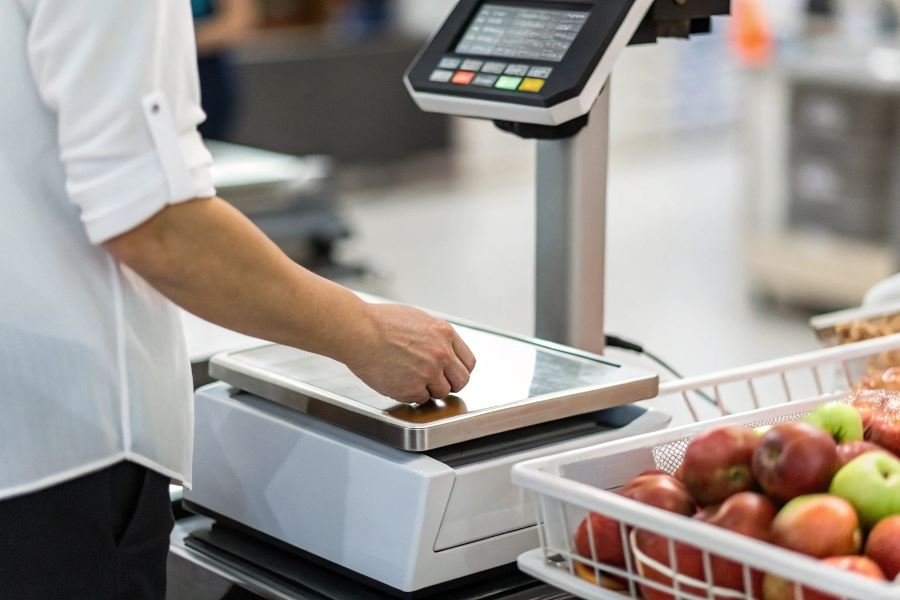
Ever watched a customer’s eyebrows raise when your scale shows a different weight than they expected? That split-second reaction speaks volumes about trust in retail—and it’s happening at counters across America thousands of times daily.
Behind every successful retail operation lies an often-overlooked hero: the commercial scale. These precision instruments do far more than generate price tags; they build customer confidence and protect your bottom line. A mere 1% weighing inaccuracy can translate to thousands of dollars in annual revenue loss for even modest-sized operations.
The right scale doesn’t just weigh products—it weighs directly on your business reputation.
Commercial scales operate under strict regulatory frameworks established by the National Institute of Standards and Technology (NIST). These regulations aren’t arbitrary bureaucracy—they’re your shield against potential fines and litigation. Since the Weights and Measures Act fundamentally shaped American commerce, authorities have conducted surprise inspections to ensure businesses maintain properly calibrated equipment.
Beyond compliance, your scale selection directly impacts operational efficiency. The deli counter using an outdated mechanical scale might be losing 3-5 seconds per transaction compared to modern digital alternatives. Multiply that by hundreds of daily transactions, and suddenly you’re looking at hours of productivity evaporating weekly.
The truth? Many retailers underestimate how deeply their scale choice affects customer perception. When shoppers see consistent, accurate measurements, they develop subconscious trust that extends to your entire brand experience—making scale selection not just an equipment decision, but a strategic business investment.
Essential Factors for Choosing Commercial Scales
The difference between profit and loss in retail often balances on fractions of ounces and pennies. Selecting the right commercial scale isn’t just about weighing products—it’s about weighing your business options. When evaluating how to choose commercial scales for a store, merchants must consider not just immediate needs but future growth potential. Let’s dive into the critical factors that separate adequate scales from exceptional ones.
Weight Capacity and Precision for Your Retail Niche
Different retail environments demand different weighing solutions. A jewelry store requires scales with precision to 0.01 grams, while a bulk food store might need capacity up to 60 pounds with 0.02-pound increments.
Precision requirements by store type:
| Store Type | Recommended Precision | Typical Capacity Range |
|---|---|---|
| Jewelry | 0.001-0.01g | Up to 1kg |
| Candy/Specialty Foods | 0.1-1g | 1-10kg |
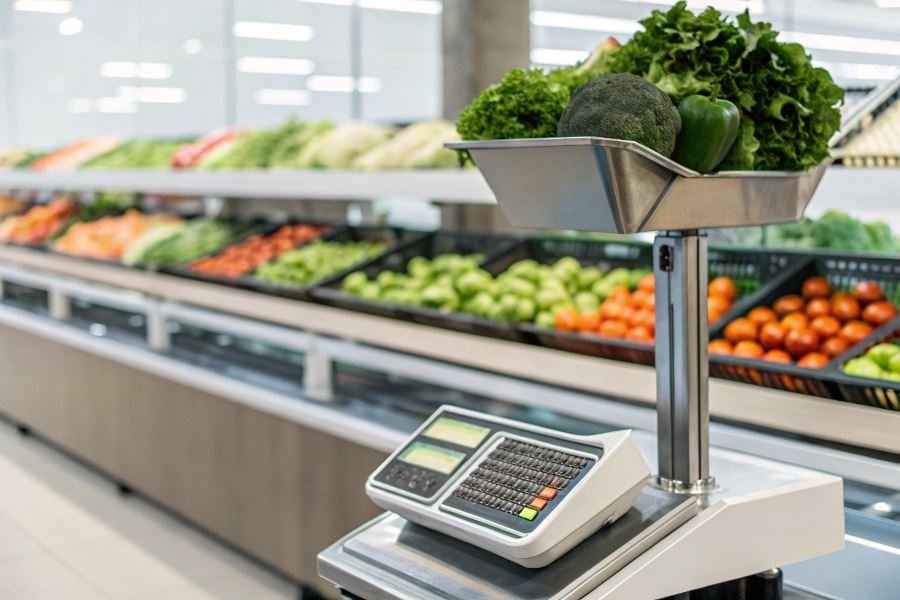
| Deli/Produce | 2-5g | 5-30kg |
| Bulk Foods | 5-10g | 10-60kg |
The scale’s readability (smallest displayed weight increment) must align with your pricing structure. If you’re selling saffron at $15 per gram, a scale with 0.1g precision could cost you $1.50 per transaction in potential lost revenue.
For butcher shops and seafood markets, look for scales with at least 0.01-pound increments and washdown capabilities to withstand frequent cleaning. Bakeries benefit from baker’s percentage scales that calculate ingredient ratios automatically.
Scale Technologies: Finding Your Perfect Match
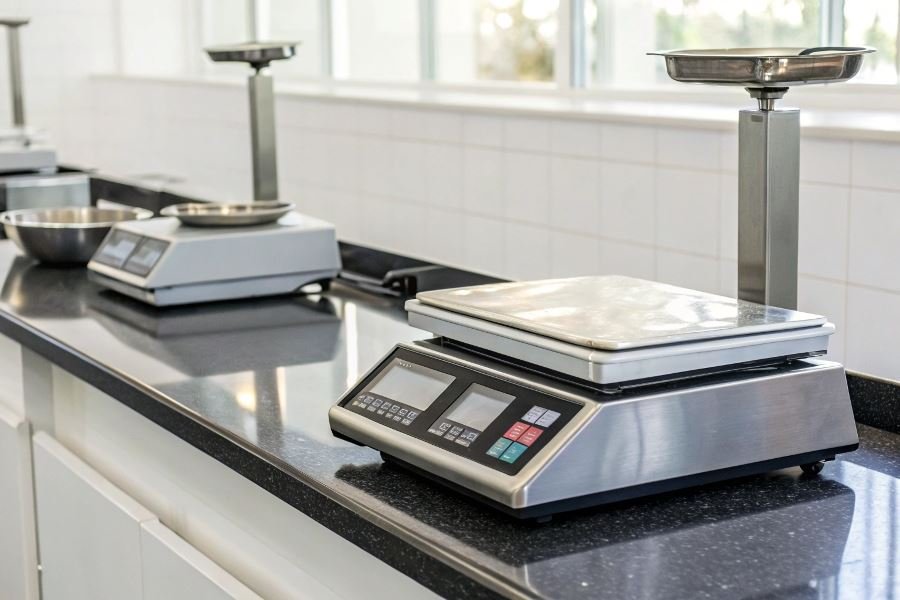
The technology powering your scale affects everything from accuracy to longevity.
Mechanical scales offer reliability without power requirements. The Toledo Scale mechanical models remain workhorses in many markets despite being analog technology. They’re ideal for areas with unreliable electricity but require regular calibration.
Digital scales dominate modern retail with features like:
- Automatic tare functions
- Multiple unit conversion
- Price calculation
- Data storage
Hybrid systems combine mechanical durability with digital displays, offering the best of both worlds for high-volume environments. The Mettler Toledo hybrid scales feature mechanical load cells with digital interfaces, providing reliability with modern functionality.
Wisdom nugget: The true cost of a scale isn’t its price tag—it’s the cost of inaccuracy multiplied by your transaction volume.
Integration: Making Your Scale a Business Hub
Modern scales aren’t isolated tools—they’re nodes in your business network.
POS integration capabilities transform scales from simple measurement devices into transaction powerhouses. Scales with Ethernet or Wi-Fi connectivity can:
- Automatically transfer weight data to your POS
- Update pricing in real-time
- Generate barcode labels
- Track inventory movement
The Bizerba retail scales offer direct integration with major POS systems, eliminating manual entry errors and speeding checkout times by up to 30%.
Inventory management integration creates a closed-loop system where:
- Products are weighed
- Sales are recorded
- Inventory is automatically adjusted
- Reorder points trigger purchase recommendations
For multi-location businesses, cloud-connected scales from CAS Corporation allow centralized management of pricing and product data across all stores, ensuring consistency and compliance.
When selecting scales, consider not just current needs but future expansion. The modest price premium for integration-ready scales typically pays for itself within months through labor savings and error reduction.
Making the Final Decision on Commercial Scales
When you’ve narrowed down your options for commercial scales, the real decision-making begins. This isn’t just about finding a device that weighs accurately—it’s about making a strategic business investment that will serve your operation for years to come.
Beyond the price tag
The sticker price of commercial scales can be deceptive. Smart business owners look at the Total Cost of Ownership (TCO) instead. A $1,200 Mettler Toledo scale might seem expensive compared to a $700 alternative, but the calculation changes when you factor in:
- Maintenance costs: Higher-quality scales typically require less frequent repairs
- Calibration expenses: Some models need quarterly calibration at $75-150 per service
- Power consumption: Energy-efficient models can save $50-100 annually
- Replacement parts: Proprietary components can cost 30-40% more than standard parts
A quality scale from manufacturers like OHAUS or AND Weighing might cost more upfront but often delivers 7-10 years of reliable service versus 3-5 years from budget alternatives.
Vendor relationships matter
The company behind your scale deserves as much scrutiny as the equipment itself. Consider:
“The best scale in the world becomes worthless when it breaks down during your busiest season with no support in sight.”
Support infrastructure varies dramatically between vendors. National providers like Rice Lake Weighing Systems maintain extensive service networks, while local providers might offer more personalized attention.
| Vendor Type | Response Time | Parts Availability | Cost Structure |
|---|---|---|---|
| National Brands | 24-48 hours | Excellent | Higher hourly rates |
| Regional Providers | Same day (often) | Good | Moderate rates |
| Local Specialists | Varies widely | Limited | Lower rates + relationship pricing |
Look for vendors who offer preventative maintenance programs. These typically include regular inspections, calibration, and priority service—often reducing downtime by up to 60%.
Implementation and training considerations
Even the perfect scale becomes a liability if your team can’t use it effectively. A thoughtful implementation plan includes:
- Timeline planning: Allow 2-3 weeks from purchase to full deployment
- Physical preparation: Ensure power sources, counter space, and network connectivity
- Integration testing: Verify compatibility with your POS or inventory systems
- Staff training: Schedule multiple sessions to accommodate different shifts
The training component deserves special attention. Scales from CAS Corporation or Avery Weigh-Tronix come with different interfaces and capabilities. Budget at least 3-4 hours of hands-on training per employee, with refresher sessions after the first month.
Documentation accessibility is another overlooked factor. Digital manuals, quick-reference guides, and troubleshooting flowcharts should be readily available to all staff members.
By carefully weighing these factors—total ownership costs, vendor relationships, and implementation requirements—you’ll select not just a scale, but a weighing solution that delivers accuracy, reliability, and value for your specific business needs.
Discover how to choose the perfect commercial scales for your retail business. Learn about weight capacity, technology options, POS integration, and compliance requirements to enhance efficiency and build customer trust.
Discover how to choose the perfect commercial scales for your retail business. Learn about weight capacity, technology options, POS integration, and compliance requirements to enhance efficiency and build customer trust.