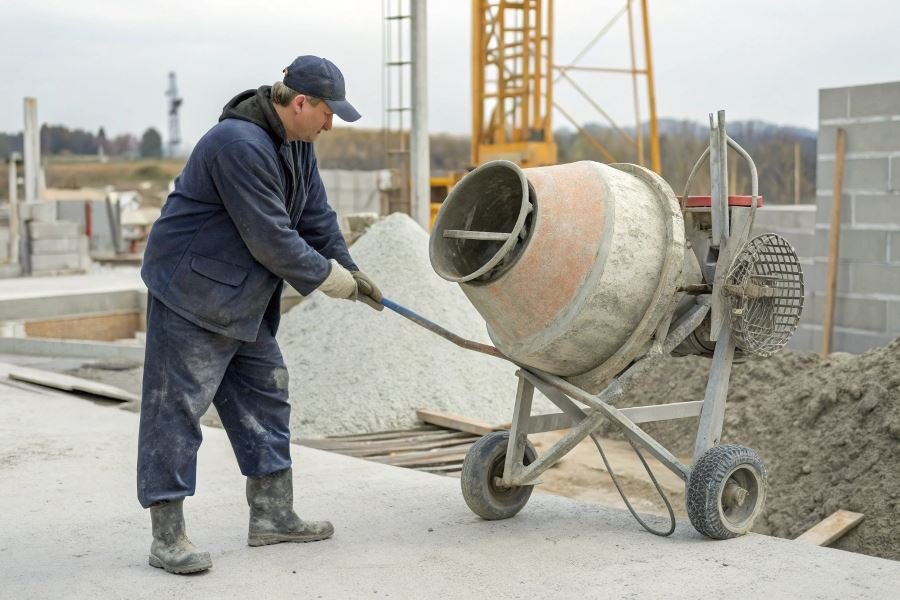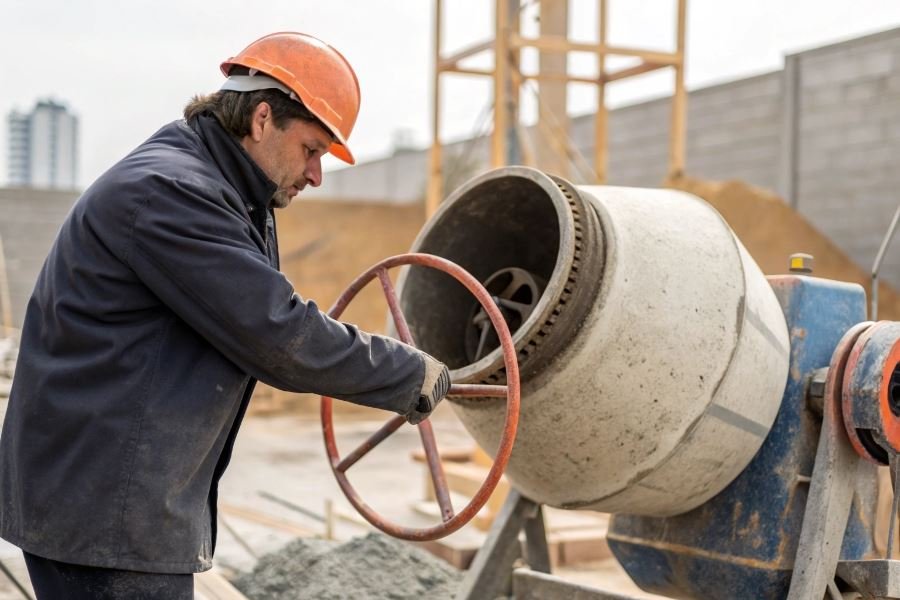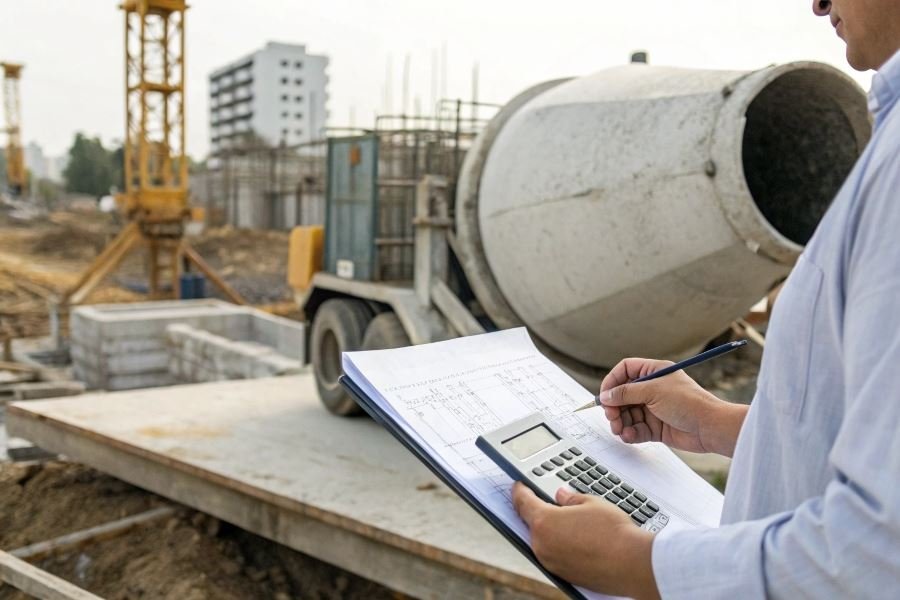
The difference between a profitable construction project and a financial sinkhole often comes down to equipment decisions. When that mixer drum starts turning, it’s not just combining sand, gravel, and cement—it’s either generating value or draining your resources.
For contractors navigating the complex landscape of construction equipment acquisition, few decisions carry as much weight as how to procure a concrete mixer. These workhorses form the backbone of virtually every construction project, transforming raw materials into the literal foundation upon which everything else stands. The question isn’t whether you need access to a mixer—it’s whether that mixer should appear on your balance sheet or your rental agreement.
“The right equipment strategy can make a 15-20% difference in project profitability.” — Construction Equipment Economics Survey
The financial equation
The rent-versus-buy calculation hinges on several critical variables:
- Utilization rate: Projects requiring daily concrete work for months favor ownership
- Capital constraints: Initial investments for quality mixers start at $5,000 for portable models and can exceed $150,000 for truck-mounted systems
- Maintenance capabilities: Ownership demands technical expertise and maintenance infrastructure
Operational considerations beyond dollars
Beyond pure economics, contractors must weigh:
- Project flexibility: Rental allows access to precisely the right size and type for each specific job
- Storage requirements: Owned equipment demands secure, accessible storage between projects
- Technology obsolescence: Purchased mixers eventually face technological disadvantages against newer rental fleets
The most successful builders approach this decision not as a universal rule but as a strategic calculation based on their unique project portfolio, financial position, and operational capabilities.
The Concrete Mixer Decision: Project-Based Analysis
When it comes to construction equipment decisions, few choices impact your bottom line quite like the concrete mixer question. The financial implications of renting versus buying this essential piece of equipment vary dramatically depending on your project scope, timeline, and frequency of use.
For contractors and project managers weighing their options between renting vs buying a concrete mixer, the decision ultimately hinges on matching the acquisition strategy to the specific construction scenario. Let’s break down this critical choice across different project scales to identify where each approach shines.
Small Residential Projects: The Weekend Warrior’s Dilemma
For homeowners tackling backyard patios or contractors handling small foundation repairs, the math strongly favors rental options.
Key financial factors:
- Rental costs typically range from $75-150 per day for a portable mixer
- Purchase price for similar equipment starts at $1,500-3,000
- Storage considerations add hidden costs to ownership
- Maintenance responsibility remains with the rental company
Small projects rarely justify the capital expenditure of purchasing equipment that might sit unused for months between jobs. The break-even point typically requires 15-20 days of usage annually to justify ownership.
The true cost of ownership extends beyond purchase price to include maintenance, storage, transportation, and depreciation—factors often overlooked in initial calculations.
Medium Commercial Construction: The Flexibility Factor
Medium-sized projects like multi-family housing or retail spaces present a more nuanced decision matrix.
Mid-scale project considerations:
- Project duration typically spans 3-12 months
- Concrete needs occur intermittently throughout timeline
- Equipment versatility becomes paramount
For these projects, long-term rentals or lease options often provide the optimal balance between capital preservation and equipment availability.
| Acquisition Method | Monthly Cost | Advantages | Disadvantages |
|---|---|---|---|
| Purchase | $250-400 (amortized) | Always available, builds equity | Capital intensive, maintenance responsibility |
| Monthly Rental | $600-900 | No maintenance costs, latest models | Higher long-term expense |
| Lease-to-Own | $350-550 | Lower initial outlay, ownership path | Contract obligations, early termination fees |
The flexibility to scale equipment up or down based on project phases makes rental particularly attractive for commercial contractors who may need different mixer capacities throughout the construction timeline.
Large Infrastructure Projects: The Long Game
For major infrastructure work—highways, bridges, commercial high-rises—the economics shift dramatically toward ownership.
Large-scale project economics:
- Project timelines often exceed 18 months
- Daily concrete production requirements remain consistent
- Equipment utilization rates approach maximum capacity
- Multiple simultaneous projects create equipment rotation opportunities
At this scale, concrete mixer ownership becomes a strategic asset rather than merely an equipment decision. Companies handling infrastructure projects can expect to recoup their investment within the first major project, with subsequent projects representing pure cost advantage over rental alternatives.
The calculus also changes when considering specialized equipment like Liebherr truck mixers or SANY concrete equipment, where rental availability may be limited in some markets.
For the largest projects, the question evolves beyond simple rental versus purchase to include considerations of fleet management, equipment standardization, and long-term capital planning—transforming a tactical decision into a strategic investment in operational capability.
Making the Smart Choice: Rent or Buy Your Concrete Mixer
Decision framework for construction projects
The concrete mixer decision ultimately hinges on three critical factors: project frequency, duration, and scale. For contractors handling multiple concurrent projects or continuous work throughout the year, ownership typically makes sense. The math becomes compelling when your mixer would be in use at least 2-3 days weekly.
Project duration creates another decision point. Short-term projects (under 30 days) generally favor rental solutions, while longer construction timelines tip the scales toward purchasing. Scale matters tremendously too—larger projects requiring continuous concrete production demand dedicated equipment, while smaller renovations can often be served efficiently through rental arrangements.
The smartest contractors match their equipment strategy to their project portfolio, not the other way around.
Breaking down the financial equation
Let’s talk hard numbers. The break-even analysis reveals when ownership becomes financially advantageous:
Break-Even Formula: Purchase Price ÷ (Daily Rental Cost – Daily Ownership Cost) = Break-Even Days
For a mid-range portable concrete mixer priced at $3,500 with daily rental rates averaging $75, the calculation becomes straightforward. Assuming daily ownership costs (maintenance, depreciation, storage) of approximately $15, you’d reach break-even at around 58 working days.
| Mixer Type | Purchase Price | Daily Rental | Ownership Cost/Day | Break-Even (Days) |
|---|---|---|---|---|
| Small Portable | $1,800 | $45 | $8 | 49 |
| Mid-Size | $3,500 | $75 | $15 | 58 |
| Commercial | $8,000 | $150 | $25 | 64 |
ROI considerations extend beyond simple break-even analysis. Opportunity cost deserves careful attention—capital invested in equipment cannot be allocated elsewhere in your business. However, equipment ownership builds equity and potentially creates additional revenue streams through your own rental arrangements during downtime.
Strategic recommendations by contractor profile
Occasional Builders: If you’re handling fewer than 5 concrete-intensive projects annually, the rental path offers maximum flexibility with minimal commitment. The financial and logistical burdens of ownership simply don’t justify the limited usage.
Growing Contractors: Contractors in expansion mode should consider a hybrid approach. Start with rentals while tracking usage patterns, then purchase your most frequently needed mixer size once you consistently exceed 50-60 rental days annually.
Established Operations: For established construction businesses with predictable workflows, ownership delivers substantial advantages. The control over equipment availability, consistent quality, and long-term cost savings create compelling value. Consider financing options that preserve working capital while building equity.
Specialized Contractors: If your work demands specific concrete formulations or techniques, ownership allows customization of your mixer to your exact specifications—something rental units rarely accommodate.
The optimal decision balances immediate financial considerations against long-term strategic goals. The most successful contractors regularly reassess their equipment strategies as their business evolves, ensuring their concrete mixer approach remains aligned with both current projects and future growth plans.
Discover whether renting or buying a concrete mixer makes more financial sense for your construction projects. Our comprehensive cost analysis helps contractors make smarter equipment decisions based on project scale and frequency.
Discover whether renting or buying a concrete mixer makes more financial sense for your construction projects. Our comprehensive cost analysis helps contractors make smarter equipment decisions based on project scale and frequency.