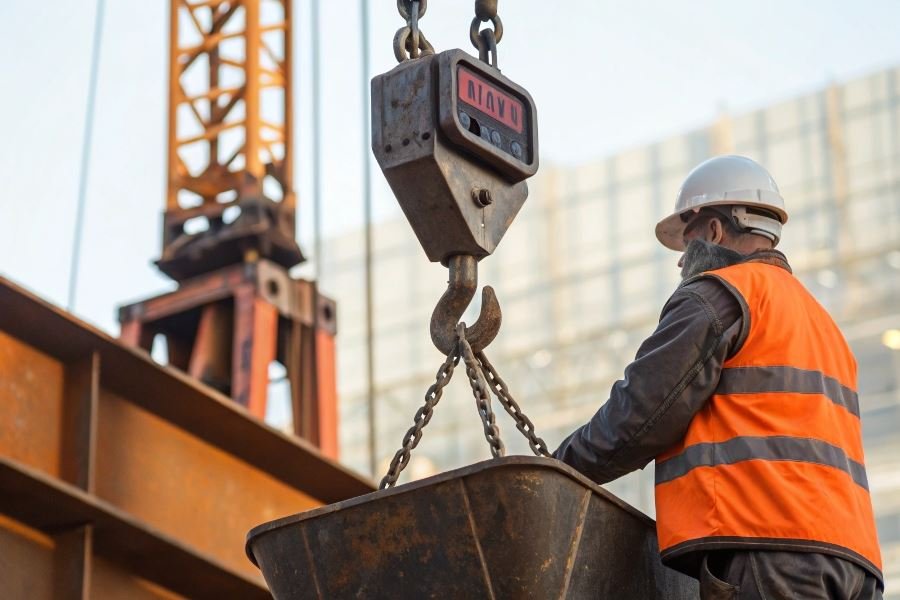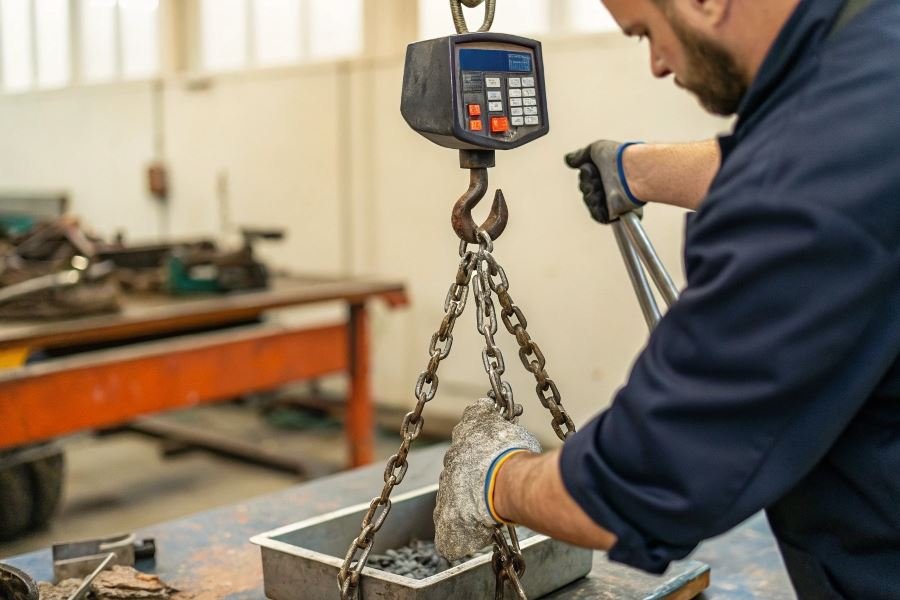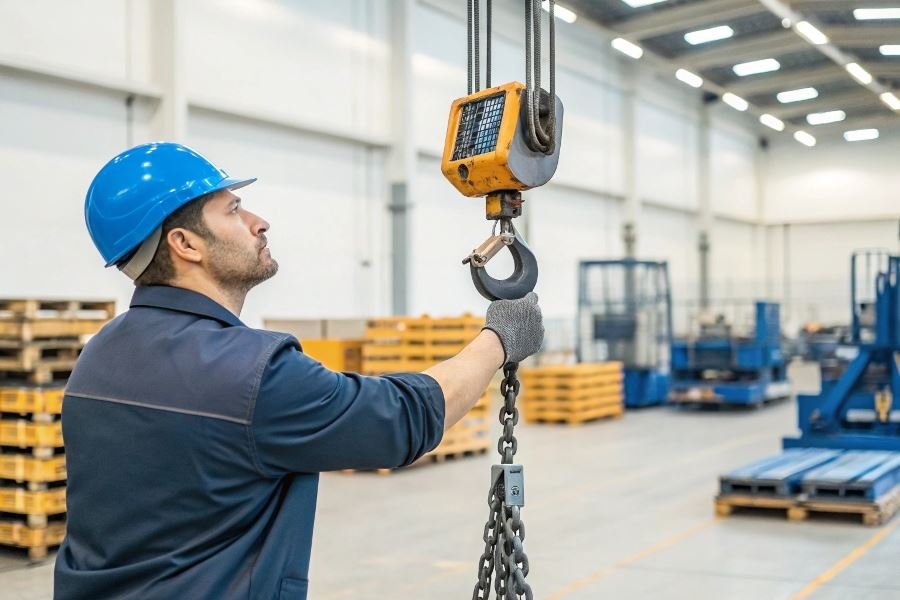
Ever watched a 2,000-pound pallet being hoisted effortlessly through a warehouse while simultaneously capturing its precise weight? That’s the magic of crane scales—devices that have quietly revolutionized logistics operations across America.
When every pound matters and floor space comes at a premium, crane scales emerge as the unsung heroes of warehouse management. These specialized weighing instruments integrate directly with overhead lifting equipment, allowing materials to be weighed during the lifting process—eliminating extra handling steps and dramatically streamlining operations.
The right crane scale can be the difference between profit and loss in today’s high-velocity supply chains. Warehouse managers who select appropriate scales report up to 30% improvements in inventory accuracy and significant reductions in material handling time. But with hundreds of models available, ranging from basic mechanical units to sophisticated digital systems with wireless connectivity, how do you choose?
Three factors stand above all others when evaluating crane scales:
- Weight capacity and accuracy – matching your specific load requirements
- Durability and safety features – ensuring reliable performance under demanding conditions
- Integration capabilities – connecting your scale data with inventory management systems
“The most expensive crane scale isn’t necessarily the best—it’s the one that precisely matches your operational workflow while meeting safety standards.”
Selecting equipment that balances these criteria doesn’t just improve efficiency—it transforms safety protocols by eliminating the need for workers to manually weigh awkward or dangerous loads. The ripple effects extend throughout the entire operation, from receiving to shipping, creating a more responsive and precise warehouse ecosystem.
Technical Essentials for Warehouse Crane Scales
When precision meets power in the warehouse environment, every measurement counts. Warehouse managers know that selecting the right crane scales isn’t just about hanging weight from a hook—it’s about integrating a critical data point into your inventory management ecosystem.
Establishing proper criteria for choosing reliable crane scales for warehouse management requires understanding three fundamental technical pillars: capacity specifications, construction quality, and power management. These factors determine not just initial performance, but long-term reliability in demanding industrial environments.
Weight capacity and accuracy that delivers
The foundation of any crane scale’s performance lies in its weight capacity and measurement precision. Today’s market offers options ranging from compact 1-ton models to industrial powerhouses handling 50+ tons.
Accuracy classifications matter significantly:
| Class | Divisions | Typical Applications |
|---|---|---|
| III | 1:3,000 | Standard warehouse operations |
| IIIL | 1:10,000 | High-precision inventory control |
| IV | 1:1,000 | Basic material handling |
The difference between 0.1% and 0.01% accuracy might seem minimal until you’re calculating inventory worth millions.
Most warehouse operations require scales with at least Class III accuracy and readability of 1:3,000. For operations handling high-value materials like precious metals or pharmaceuticals, investing in IIIL classification with 1:10,000 divisions becomes essential.
Built to withstand industrial realities
Construction quality determines whether your scale becomes a reliable workhorse or an expensive paperweight. Premium crane scales from manufacturers like Mettler Toledo and Rice Lake Weighing Systems feature:
- Aircraft-grade aluminum or stainless steel housings that resist impacts and environmental damage
- IP65 or higher protection ratings ensuring dust-tight operation and resistance to water jets
- Reinforced load cells with overload protection (typically 150% of rated capacity)
The difference between consumer-grade and industrial-grade construction becomes apparent in environments with temperature fluctuations, dust, and occasional impacts. Quality scales maintain calibration despite these challenges, while inferior options require frequent recalibration or replacement.
Power options that keep you operational
Nothing halts warehouse efficiency like dead equipment. Modern crane scales offer diverse power management solutions:
- Rechargeable lithium-ion batteries providing 80+ hours of continuous operation
- Solar panel supplementation for extended field use
- AC adapters for stationary applications
Battery life considerations extend beyond simple runtime metrics. Look for:
“Smart power management features like auto-sleep and display dimming can extend battery life by up to 40% in real-world applications.”
The best scales include battery level indicators visible from ground level and quick-swap battery systems that minimize downtime during charging cycles. Some advanced models from CAS Corporation even offer hot-swappable battery packs, ensuring continuous operation during multi-shift operations.
When evaluating power options, consider your specific workflow. For high-volume operations with constant weighing, prioritize models with rapid charging capabilities (0-80% in under 2 hours) or the ability to operate while charging. For intermittent use, focus on standby time and power-saving features that preserve battery life between weighing sessions.
Beyond the Basics: Advanced Crane Scale Selection Criteria
Connectivity That Transforms Data Into Decisions
Modern warehouse management demands more than just accurate weight readings. Today’s intelligent crane scales offer connectivity options that transform simple measurements into actionable business intelligence.
Leading models now feature Bluetooth, Wi-Fi, and cellular connectivity, enabling real-time data transmission to warehouse management systems (WMS). This integration eliminates manual recording errors and creates an unbroken digital chain of custody for materials handling.
Smartscale Pro X7 systems exemplify this evolution with their ability to sync with enterprise resource planning platforms while simultaneously logging data to cloud storage. This dual-path approach ensures both immediate operational visibility and long-term analytics capabilities.
The difference between connected and non-connected scales isn’t just convenience—it’s the difference between data as a byproduct and data as a strategic asset.
For multi-location operations, look for scales offering:
- API integration capabilities with existing software ecosystems
- Customizable data fields for tracking batch numbers, operators, and timestamps
- Exportable formats compatible with analytics platforms
- Remote monitoring and diagnostics capabilities
Certification Standards: Non-Negotiable Credibility Markers
Warehouse crane scales must meet rigorous certification requirements that vary by industry and application. These aren’t bureaucratic hurdles—they’re essential safeguards for operational integrity and legal compliance.
| Certification | Significance | Typical Applications |
|---|---|---|
| NTEP Class III | Legal for trade in commercial transactions | Material sales, billing by weight |
| OIML R76 | International standard for non-automatic weighing | Global supply chains |
| IP65/IP67 | Dust and water resistance ratings | Harsh environments |
| ATEX/IECEx | Intrinsic safety for explosive atmospheres | Chemical, petroleum handling |
Calibration requirements deserve particular attention. The most reliable scales offer:
- Factory calibration certificates with traceability to national standards
- Field calibration capabilities without requiring manufacturer intervention
- Drift compensation algorithms that maintain accuracy between calibrations
- Digital calibration records that satisfy audit requirements
The True Cost Equation: Looking Beyond Purchase Price
The initial investment in a crane scale typically represents less than 40% of its total lifetime cost. Sophisticated procurement teams analyze Total Cost of Ownership (TCO) across multiple dimensions:
“The cheapest scale is rarely the most economical. The most expensive isn’t necessarily the best value. The right scale is the one that delivers the highest ROI for your specific operation.”
A comprehensive TCO analysis should include:
- Acquisition costs: Purchase price, shipping, installation, initial training
- Operational costs: Power consumption, maintenance requirements, calibration frequency
- Opportunity costs: Downtime during repairs, productivity impacts of accuracy issues
- End-of-life considerations: Upgrade paths, trade-in values, disposal requirements
Crane Systems International offers an illuminating case study: Their premium models cost 30% more upfront but deliver 40% lower five-year TCO through reduced maintenance requirements and extended calibration intervals.
For high-throughput operations, ROI calculations should factor in the scale’s impact on:
- Inventory accuracy improvements
- Labor efficiency gains from automated data capture
- Compliance cost reductions
- Quality control enhancement through consistent measurement
The most forward-thinking warehouse operations recognize that crane scales aren’t merely measuring devices—they’re strategic investments in operational excellence, data integrity, and regulatory compliance.
Discover the 7 critical factors for selecting reliable warehouse crane scales that maximize efficiency and safety. Learn about capacity requirements, durability standards, connectivity options, and ROI considerations for optimal warehouse management.
Discover the 7 critical factors for selecting reliable warehouse crane scales that maximize efficiency and safety. Learn about capacity requirements, durability standards, connectivity options, and ROI considerations for optimal warehouse management.