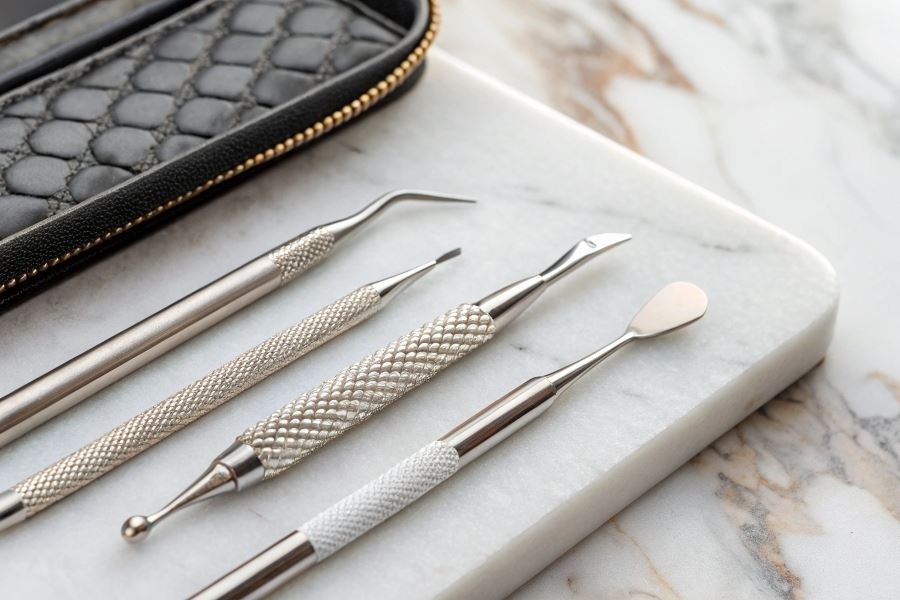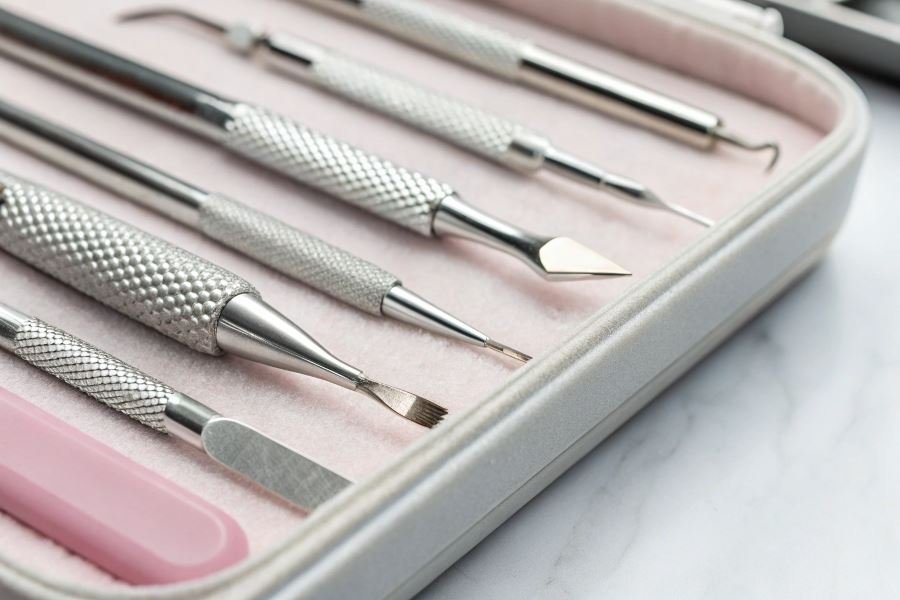
Ever picked up a manicure tool and wondered if you’re holding the difference between amateur results and salon-quality perfection? That small, unassuming curette in your hand might just be the unsung hero of your nail care routine.
Manicure curettes are specialized tools designed to gently remove excess cuticle tissue and clean the nail plate without damaging the living tissue. Think of them as the precision instruments that separate the professionals from the hobbyists. Whether you’re maintaining your nails at home or building a professional kit, selecting the right curette can dramatically elevate your manicure results.
What exactly makes a quality curette worth investing in? The answer lies in three critical factors that professionals consider non-negotiable: material quality, ergonomic design, and proper sizing. These elements don’t just affect performance—they determine whether your manicure will be a comfortable, efficient process or a frustrating exercise in damage control.
The silent workhorses of nail care
Professional nail technicians often describe curettes as their “third hand”—tools so essential they become extensions of their own fingers. The right curette feels balanced in your grip, maintains its edge through countless uses, and allows you to work with surgical precision around the delicate nail area.
“The difference between a mediocre manicure and an exceptional one often comes down to the quality of your curette,” notes one industry veteran with over 15 years of experience crafting award-winning nail art.
Material Quality: The Foundation of Exceptional Manicure Curettes
When professional nail technicians discuss their tools, material quality inevitably dominates the conversation. The material of your manicure curette doesn’t just affect its appearance—it fundamentally determines performance, durability, and ultimately, the quality of your nail care results.
Understanding how to choose curettes for manicure: main criteria begins with recognizing that material selection stands as the cornerstone decision that influences every aspect of the tool’s functionality. The right material ensures precision during cuticle work, reduces the need for frequent replacements, and maintains hygiene standards essential for professional nail care.
Stainless Steel vs. Surgical Steel: The Classic Contenders
Stainless steel curettes have long been the industry standard, offering remarkable corrosion resistance and reasonable durability at accessible price points. These tools typically contain approximately 18% chromium and 8% nickel, creating a protective oxide layer that prevents rusting even with frequent sanitization.
Surgical steel elevates the game considerably. Containing higher carbon content (0.5-1.2%) and often additional molybdenum, surgical steel curettes deliver:
- Superior edge retention maintaining sharpness through hundreds of procedures
- Enhanced corrosion resistance even against harsh disinfectants
- Greater structural integrity reducing the risk of bending or breaking
A quality surgical steel curette from brands like Tweezerman or Mehaz might command $35-75, but professionals report they often outlast standard stainless options by 3-5 years with proper care.
Titanium and Ceramic: The Premium Alternatives
Titanium curettes represent the pinnacle of lightweight performance. At approximately 45% lighter than steel counterparts while maintaining comparable strength, these tools reduce hand fatigue during long manicure sessions.
The titanium advantage extends beyond weight—these tools offer remarkable biocompatibility, making them ideal for clients with metal sensitivities.
| Material | Weight | Corrosion Resistance | Edge Retention | Price Range |
|---|---|---|---|---|
| Stainless Steel | Standard | Good | Moderate | $15-30 |
| Surgical Steel | Standard | Excellent | Excellent | $35-75 |
| Titanium | 45% Lighter | Superior | Very Good | $80-150 |
| Ceramic | Slightly Heavier | Perfect | Outstanding | $60-120 |
Ceramic curettes, while less common, offer unparalleled hardness and edge retention. Manufactured from zirconium oxide, these tools maintain their sharpness significantly longer than metal alternatives. However, their brittleness presents a notable limitation—they can chip or break if dropped on hard surfaces.
Material Impact on Performance and Longevity
The material quality directly influences three critical performance factors:
-
Precision control – Higher-quality materials allow for thinner, more precise tips without sacrificing strength, enabling more accurate cuticle work.
-
Sterilization resilience – Premium materials withstand repeated autoclave cycles without degradation. Surgical steel and titanium curettes from Staleks can endure 1,000+ sterilization cycles before showing signs of wear.
-
Long-term value – While initial investment varies dramatically between materials, calculating cost-per-use reveals premium options often deliver superior economic value over time.
Industry insight: Professional nail technicians performing 20+ manicures weekly typically find titanium curettes recover their additional cost within 8-12 months through reduced replacement needs.
The material selection ultimately determines whether your curette becomes a trusted companion or a frustrating liability. For professionals and serious enthusiasts, investing in surgical steel or titanium options typically delivers the optimal balance of performance, longevity, and value.
The Ergonomic Edge in Manicure Tools
The difference between a comfortable manicure session and hand fatigue often comes down to one critical factor: ergonomics. Professional nail technicians who spend hours wielding curettes understand this intimately, but even home enthusiasts benefit tremendously from tools designed with the human hand in mind.
Handle Design That Transforms Your Grip
The handle of a manicure curette isn’t just something to hold—it’s the interface between your skill and the nail. Premium curettes feature handles with strategic texturing that prevents slipping during precise work. The most effective designs incorporate:
- Silicone grip sections that provide tactile feedback
- Micro-textured metal that remains secure even with product residue
- Contoured finger rests that position your hand naturally
The industry has evolved significantly since the basic metal tools of the 1990s. Modern ergonomic handles from brands like Tweezerman and Pusher & Cuticle Nippers incorporate research from hand therapists to reduce strain during repetitive movements.
Weight and Balance: The Overlooked Performance Factor
A perfectly balanced curette feels like an extension of your hand rather than a tool you’re controlling. This balance point significantly impacts precision and fatigue levels:
The sweet spot occurs when the tool’s center of gravity sits just below your grip position.
| Weight Category | Benefits | Best For |
|---|---|---|
| Lightweight (5-15g) | Enhanced precision, less arm fatigue | Detailed work, longer sessions |
| Medium (16-25g) | Balanced control, natural pressure | General purpose, most hand sizes |
| Heavy (26g+) | Momentum assistance, fewer applied force | Stronger hands, tough cuticles |
The material composition dramatically affects this balance. Stainless steel offers durability with moderate weight, while titanium provides strength with significantly less mass. Some premium models feature weighted ends to counterbalance the working tip perfectly.
Size Matching for Hand Compatibility
One size definitely does not fit all when it comes to manicure tools. The diameter and length of curette handles should complement your specific hand dimensions:
The ideal handle diameter should allow your thumb and forefinger to overlap slightly when gripping the tool.
For smaller hands, handles between 5-7mm in diameter typically offer optimal control. Medium hands work best with 7-9mm handles, while larger hands may prefer 9-12mm diameters for comfortable grip without cramping.
Handle length matters equally—too short and your hand cramps from pinching; too long and leverage becomes unwieldy. The sweet spot typically falls between:
- 4-5 inches for precision work and smaller hands
- 5-6 inches for general use and medium hands
- 6-7 inches for larger hands or when additional leverage helps
Many professionals keep multiple sizes in their kit, switching between them to prevent repetitive strain during long sessions. Brands like ZEVA offer interchangeable handle systems that allow customization without purchasing entirely new tools.
When selecting your next curette, take a moment to assess how it feels in your working position. The right ergonomic match transforms not just your comfort level but the quality of your manicure results.
Discover the essential criteria for selecting professional manicure curettes that deliver precision and comfort. Learn about material quality, ergonomic design, and specialized functionality to make an informed investment in your nail care toolkit.
Discover the essential criteria for selecting professional manicure curettes that deliver precision and comfort. Learn about material quality, ergonomic design, and specialized functionality to make an informed investment in your nail care toolkit.