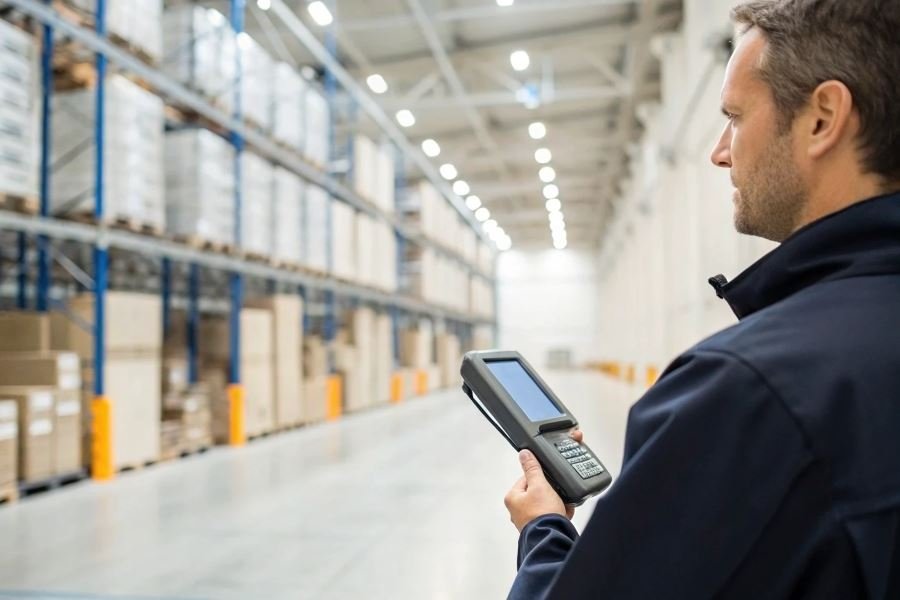
Ever wondered what happens in that split second between scanning a product and seeing it appear on your screen? Behind that seamless moment lies a sophisticated ecosystem of data collection terminals—the unsung heroes of inventory management, retail operations, and warehouse efficiency.
Data collection terminals serve as the critical bridge between physical items and digital systems, capturing information through barcode scanning, RFID reading, or manual input. These devices transform analog information into digital data that can be instantly processed, analyzed, and acted upon. From retail floors to manufacturing plants, these terminals have become indispensable tools for businesses seeking accuracy, speed, and operational intelligence.
The evolution of these devices tells a fascinating story of technological adaptation. What began as simple wired scanners tethered to fixed workstations has transformed into an ecosystem of sophisticated terminals. Since the introduction of the first commercial barcode scanner in 1974, we’ve witnessed a remarkable progression toward increasingly mobile, intelligent, and connected devices.
The wireless revolution: Freedom with responsibility
Wireless terminals offer undeniable advantages: mobility throughout facilities, real-time data transmission, and flexible deployment options. However, they come with considerations around battery life, network reliability, and initial investment costs.
Wired solutions: The reliable workhorses
Wired terminals continue to excel in environments requiring consistent power supply, uninterrupted connectivity, and lower initial investment. Their limitations in mobility are often outweighed by their reliability and simplicity.
When choosing between wireless and wired options, decision-makers must evaluate:
- Operational environment: Physical layout, movement requirements, and existing infrastructure
- Data sensitivity: Security protocols and compliance requirements
- Budget constraints: Initial investment versus long-term operational costs
- Integration needs: Compatibility with existing systems and future scalability
The right choice ultimately depends on your specific operational requirements, environment, and long-term business strategy—not just what’s technologically impressive.
The Ultimate Showdown: Wireless vs Wired Terminals
Performance that powers productivity
When evaluating data collection terminals for warehouse or retail environments, the performance metrics tell a compelling story. Wireless terminals typically operate at 54-300 Mbps depending on the standard (802.11n/ac/ax), while their wired counterparts consistently deliver 100 Mbps to 10 Gbps through Ethernet connections. This speed differential becomes critical during peak operational periods.
The comprehensive comparison of wireless and wired data collection terminals reveals that reliability factors heavily into operational success. Wired terminals boast 99.9% uptime in most environments, with virtually zero packet loss in properly maintained networks. Wireless solutions, while improving yearly, still contend with interference issues that can reduce reliability to 95-98% in challenging environments with physical obstacles or competing signals.
Data integrity—perhaps the most underappreciated performance metric—shows wired terminals maintaining a bit error rate of less than 10-12, while wireless systems typically operate at 10-5 to 10^-7. For operations handling financial transactions or medical data, this difference isn’t trivial.
Implementation realities
Infrastructure requirements diverge significantly between these technologies. Wired terminals demand:
- Extensive cable installation (Cat5e/Cat6/fiber)
- Fixed connection points
- Physical network switches and patch panels
Wireless implementations require:
- Access points strategically positioned for coverage
- Wireless controllers for enterprise deployments
- RF site surveys to optimize placement
Installation timelines tell an interesting story. A medium-sized retail operation (20,000 sq ft) typically requires 3-5 days for complete wired terminal installation versus 1-2 days for wireless deployment. This installation efficiency comes with a maintenance tradeoff—wireless systems require regular signal mapping and interference monitoring that wired systems simply don’t need.
The dollars and sense
| Cost Factor | Wired Terminals | Wireless Terminals |
|---|---|---|
| Hardware (per unit) | $800-1,200 | $1,000-1,500 |
| Installation | $200-400 per drop | $50-100 per device |
| Infrastructure | $5,000-15,000 | $3,000-10,000 |
| Annual maintenance | 5-8% of initial cost | 10-15% of initial cost |
The initial investment for wired terminals typically runs 15-20% lower than comparable wireless systems when factoring in device costs alone. However, installation expenses can quickly erase this advantage in environments requiring extensive cabling.
Operational expenses reveal the long-term story. Wireless terminals from vendors like Zebra Technologies consume approximately 30% more power than their wired counterparts, translating to $5-15 additional cost per device annually. Battery replacement for wireless units adds another $30-50 per device yearly.
The ROI calculation becomes fascinating when examining total cost of ownership. For static environments with minimal layout changes, wired terminals typically achieve ROI in 2.5-3 years. Wireless systems shine in dynamic environments, reaching ROI in 1.5-2 years due to their flexibility during reorganizations—a single layout change can cost $2,000-5,000 for rewiring fixed terminals.
Scalability considerations further complicate the financial picture. Adding wired terminals requires physical infrastructure expansion, while wireless networks can often accommodate additional devices without significant infrastructure investment until reaching access point capacity thresholds.
The verdict? Neither technology claims universal superiority. The optimal choice emerges from careful analysis of your specific operational requirements, physical environment, and growth projections.
Strategic Selection: Wireless vs. Wired Terminal Decision Framework
Industry Applications That Drive Terminal Choice
The battle between wireless and wired data collection terminals isn’t fought on technical specifications alone—it’s won in the trenches of real-world applications. Manufacturing facilities with fixed workstations often maximize efficiency with wired terminals that deliver consistent power and uninterrupted connectivity. The automotive assembly lines at Toyota facilities demonstrate this perfectly, where millisecond precision in barcode scanning directly impacts production rates.
Contrast this with retail environments where mobility reigns supreme. Wireless terminals allow sales associates at Nordstrom to process transactions anywhere in the store, reducing checkout lines by up to 32% during peak shopping periods. Similarly, warehouse operations with high-bay racking systems benefit tremendously from wireless solutions that enable real-time inventory updates from heights exceeding 40 feet.
Healthcare presents perhaps the most compelling case for wireless adoption. Hospitals using wireless terminals for patient identification and medication administration report error reductions of nearly 27%, with the added benefit of improved infection control through reduced equipment handling.
The deployment environment isn’t just a consideration—it’s the primary determinant of terminal selection.
Future-Proofing Your Terminal Investment
Technology obsolescence represents the silent killer of ROI in data collection systems. The average lifecycle of enterprise data collection hardware spans 5-7 years, making adaptability crucial. Wireless terminals built on modular platforms like those from Zebra Technologies offer significant advantages through firmware updates and radio module replacements that extend useful life.
Connectivity standards evolution presents another critical consideration. Wired terminals relying on USB or Ethernet connections benefit from the remarkable stability of these protocols—USB specifications have maintained backward compatibility since 1996. Wireless terminals must navigate a more complex landscape with Wi-Fi standards evolving approximately every 4-5 years.
Battery technology advancements continue to narrow the traditional advantage of wired terminals. Modern lithium polymer batteries now deliver 12+ hour operational cycles, with hot-swappable designs eliminating downtime concerns in 24/7 operations.
Decision Matrix Framework
Selecting between wireless and wired terminals requires systematic evaluation across multiple dimensions:
| Decision Factor | Wired Advantage | Wireless Advantage |
|---|---|---|
| Deployment Environment | Fixed workstations, assembly lines | Field service, retail floors, warehouses |
| Data Throughput Needs | Consistent high-volume transfers | Intermittent, moderate-volume transfers |
| Security Requirements | Physical isolation possible | WPA3 encryption, certificate-based authentication |
| Power Reliability | Continuous operation | 8-12 hour battery life, hot-swap capability |
| Total Cost of Ownership | Lower initial hardware cost | Reduced infrastructure costs, higher productivity |
The most successful implementations begin with process mapping rather than technology selection. Document your current workflows, identify bottlenecks, and quantify the cost of inefficiencies. This analysis often reveals that the optimal solution combines both technologies—wired terminals for fixed operations and wireless units for mobile tasks.
Remember that terminal selection represents just one component of a comprehensive data collection strategy. Integration capabilities with your SAP or Oracle enterprise systems often prove more important than the hardware specifications themselves. The most sophisticated terminal delivers zero value if it can’t seamlessly communicate with your core business applications.
Discover which data collection terminal delivers superior ROI: our comprehensive guide compares wireless vs wired systems on performance, reliability, and cost-effectiveness for modern business operations in various industries.
Discover which data collection terminal delivers superior ROI: our comprehensive guide compares wireless vs wired systems on performance, reliability, and cost-effectiveness for modern business operations in various industries.