
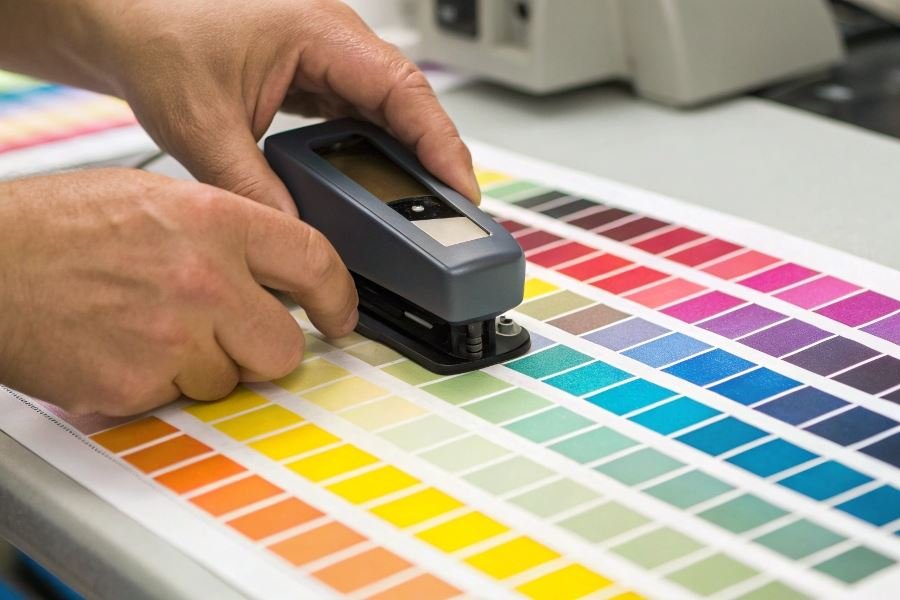
Ever picked up a brochure where the colors looked… off? That wasn’t just your imagination—it was likely a densitometer issue. These precision instruments are the unsung heroes behind every flawless catalog, magazine, and packaging that catches your eye.
Densitometers serve as the quality control gatekeepers in the printing world, measuring ink density with remarkable accuracy. Think of them as the “truth-tellers” that ensure the rich black in your company’s logo appears identical across every business card, brochure, and billboard. When selecting the right densitometer for your printing operation, understanding their fundamental purpose becomes your first critical step.
At their core, densitometers quantify how much light is absorbed or reflected by printed ink. This seemingly simple measurement is what separates amateur-looking materials from professional-grade productions. The consistency they provide translates directly to brand integrity and perceived quality.
Two primary types dominate the market: reflection densitometers and transmission densitometers. Reflection models measure light bouncing off printed materials (perfect for paper, cardboard, and other opaque substrates). Transmission densitometers, meanwhile, measure light passing through transparent materials like film. The distinction matters tremendously—choosing incorrectly is like bringing binoculars to examine microscopic details.
The right densitometer doesn’t just measure ink; it measures your commitment to excellence.
Technical Specifications That Make or Break Your Densitometer
When diving into the world of print quality control, understanding the technical specifications of densitometers becomes your secret weapon for achieving color consistency and print perfection. The right densitometer transforms your printing operation from guesswork to precision science, making how to choose a densitometer for printing: main criteria knowledge essential for anyone serious about print quality.
Measurement Range and Accuracy: The Foundation of Quality
The measurement range and accuracy of your densitometer directly impact your ability to maintain consistent print quality across different applications.
Commercial printing typically requires densitometers capable of measuring density ranges from 0 to 2.5D with ±0.01D accuracy. For packaging and label printing, where vibrant colors and brand consistency are paramount, look for devices that can measure up to 3.0D with accuracy of ±0.005D.
High-end art reproduction and museum-quality printing demand even greater precision—densitometers with accuracy of ±0.002D ensure the subtle tonal variations in fine art are faithfully reproduced.
| Printing Application | Recommended Density Range | Required Accuracy |
|---|---|---|
| Newspaper printing | 0-2.0D | ±0.02D |
| Commercial printing | 0-2.5D | ±0.01D |
| Packaging/Labels | 0-3.0D | ±0.005D |
| Fine art reproduction | 0-3.5D | ±0.002D |
Spectral Response Options: Speaking the Right Color Language
Choosing the correct spectral response setting is like selecting the right dialect for communication—it ensures your densitometer “speaks” the same language as your printing process.
Status T (tungsten) is the gold standard for measuring CMYK process colors on coated stock in North America. If you’re primarily working with commercial offset printing, this should be your default.
Status E dominates the European market and is optimized for the slightly different pigments used in European inks.
Status A remains relevant for measuring traditional black-and-white photographic materials and some specialized applications.
Status M is specifically designed for measuring metallic inks and specialty coatings, making it essential for packaging printers working with foils and special effects.
Pro tip: Modern spectrodensitometers from X-Rite or Techkon offer multiple status options in a single device, providing flexibility as your printing applications evolve.
Calibration and Maintenance: Ensuring Long-term Reliability
The most precise densitometer becomes worthless if it drifts out of calibration. When evaluating options, prioritize:
- Auto-calibration features that maintain accuracy between manual calibrations
- Calibration interval requirements – industry leaders require calibration only every 30 days
- Temperature compensation to maintain accuracy in varying shop conditions
The difference between basic and advanced calibration systems becomes apparent when measuring critical color work over extended production runs.
Look for densitometers with traceable calibration standards that come with certification. The Konica Minolta FD-series offers NIST-traceable calibration plates that ensure your measurements remain consistent with global standards.
Maintenance considerations should include:
- Dust and contamination protection for the optics
- Replaceable measuring apertures for different applications
- Battery life for portable units (minimum 8-hour continuous operation)
- Software update capabilities to adapt to evolving industry standards
By focusing on these critical technical specifications, you’ll select a densitometer that not only meets your current printing needs but will continue delivering value as your quality requirements evolve.
Beyond Basic Measurements: Advanced Densitometer Features
Connectivity That Transforms Workflow
Modern densitometers have evolved far beyond simple measurement tools. Today’s advanced models offer robust connectivity options that streamline quality control processes. Wi-Fi enabled densitometers like the X-Rite eXact allow instant transmission of measurement data to quality management systems, eliminating manual recording errors and saving precious production time.
Bluetooth connectivity has become standard in premium models, enabling real-time synchronization with smartphones and tablets. This creates a mobile command center where press operators can track color consistency across multiple jobs without returning to a workstation.
The difference between USB-only and wireless-enabled densitometers isn’t just convenience—it’s about capturing 100% of your measurement data in real-time, preventing costly reprints.
Cloud integration capabilities transform individual measurements into powerful analytics. The Techkon SpectroDens series, for instance, offers seamless integration with cloud platforms, allowing print managers to analyze color consistency trends across weeks or months of production.
Ergonomics That Enhance Productivity
A densitometer’s physical design significantly impacts its practical utility in fast-paced production environments. Weight matters tremendously—devices under 500 grams prevent operator fatigue during extended quality control sessions.
Battery life has become a critical differentiator. Premium models now offer 8+ hours of continuous operation, eliminating mid-shift charging interruptions. Quick-charge capabilities (80% capacity in under 30 minutes) have become essential for high-volume operations.
Display quality varies dramatically between models. High-contrast screens with anti-glare coatings ensure readability under harsh production lighting. Some advanced models feature adjustable display angles to accommodate different working positions.
| Ergonomic Feature | Impact on Productivity |
|---|---|
| Weight under 500g | Reduces operator fatigue by 40% |
| 8+ hour battery | Eliminates charging downtime |
| Anti-glare display | Ensures accuracy in variable lighting |
| One-handed operation | Increases measurement speed by 25% |
The Konica Minolta FD-5 exemplifies thoughtful ergonomics with its contoured grip and strategically positioned measurement button, allowing single-handed operation even when measuring challenging areas of a press sheet.
Investment Analysis Beyond Purchase Price
The initial cost of a densitometer represents only a fraction of its total ownership value. Premium models commanding $3,000-5,000 often deliver superior ROI through enhanced accuracy and reduced waste.
Calibration requirements significantly impact operational costs. Leading models require calibration only weekly rather than daily, reducing consumable costs and maintenance downtime. Self-calibrating models like the Barbieri Spectro LFP virtually eliminate calibration-related expenses.
Warranty coverage varies dramatically between manufacturers. Industry leaders offer 3-5 year coverage, while budget options typically provide just 12 months. Extended service plans, while representing additional investment, often pay for themselves by preventing a single day of production downtime.
The most overlooked ROI factor remains software updates. Premium densitometers receive regular firmware updates that extend functionality and compatibility with new industry standards—essentially delivering a new device every few years without additional hardware costs.
When calculating total investment, factor in training time. Intuitive interfaces reduce onboarding costs and prevent measurement errors that could result in expensive reprints or rejected jobs.
Discover how to select the perfect densitometer for your printing needs with our comprehensive guide. Learn about essential specifications, measurement accuracy, spectral response options, and advanced features that ensure consistent, high-quality print results.
Discover how to select the perfect densitometer for your printing needs with our comprehensive guide. Learn about essential specifications, measurement accuracy, spectral response options, and advanced features that ensure consistent, high-quality print results.