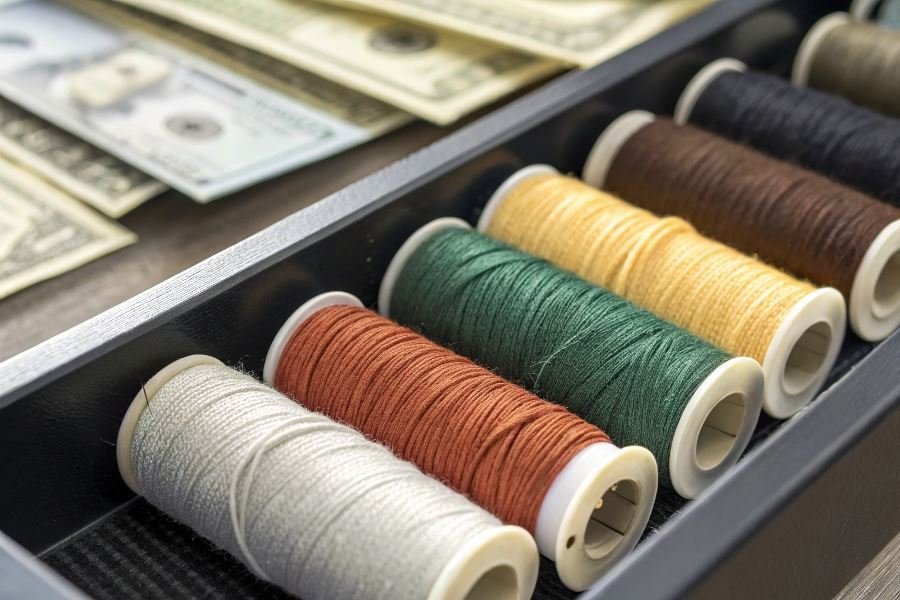
Ever wondered why some of the most important documents in history have tiny holes along their edges? Those punctures tell a fascinating story of document authentication that spans centuries—and surprisingly remains relevant today.
When the Magna Carta was sealed in 1215, it wasn’t just stamped with wax. The pages were bound with thread in a specific pattern that made tampering immediately evident. This wasn’t merely decorative—it was one of history’s first tamper-evident security systems, creating an unbroken chain of document integrity that continues to influence modern practices.
Today, thread sealing documents isn’t just a quaint tradition. Financial institutions, legal firms, and government agencies worldwide still rely on this method for its remarkable effectiveness. Unlike digital signatures that can be compromised by sophisticated hacking, a properly thread-sealed document provides a physical security barrier that’s immediately visible if breached.
The beauty of thread sealing lies in its elegant simplicity. You’ll need just a few essential materials: high-quality linen or silk thread (synthetic options lack the necessary durability), a sharp needle with an eye large enough for your thread, sealing wax, and a custom seal or stamp. The thread itself becomes both binding agent and security feature—the physical embodiment of document integrity.
What makes this centuries-old technique so enduring? Unlike purely digital security measures, thread sealing creates a tangible, visual confirmation of authenticity that requires no special equipment to verify. In an age of sophisticated digital forgeries, sometimes the oldest solutions remain the most reliable.
The Art of Document Thread Sealing
The practice of securing important documents with thread and wax seals dates back centuries, yet remains relevant for authenticating legal papers, notarized documents, and ceremonial certificates today. Learning how to properly use sewing thread when sealing documents ensures both the physical integrity of your papers and their legal validity. This meticulous process combines craftsmanship with security in a way digital alternatives simply cannot replicate.
Preparing Your Document for Thread Sealing
Before threading a single needle, proper preparation creates the foundation for a secure document seal. Start by gathering your materials: high-quality linen thread (preferably 40-weight or heavier), a large-eye needle, sealing wax, and a custom seal stamp.
Document arrangement is critical. Stack your pages perfectly aligned, ensuring all edges match precisely. For multi-page documents, consider pre-punching holes approximately 1/2 inch from the left edge, spaced 1-2 inches apart depending on document size. Use a specialized hole punch or an awl for clean, consistent holes that won’t tear under tension.
Pro tip: Place a self-healing cutting mat beneath your document when punching holes to protect your work surface and ensure clean perforations.
Correct Threading Techniques for Document Integrity
The threading phase represents the structural backbone of your document security system. Begin with thread approximately three times the height of your document stack to avoid running short. Thread your needle and tie a secure knot at the opposite end.
Start from the back of the document at the bottom hole, pulling the thread through until the knot catches. Then follow this pattern:
- Push needle up through the next hole
- Cross over to the next hole above
- Push needle down through that hole
- Continue this pattern until you reach the top hole
- Return downward using the unused holes
This creates a distinctive pattern that’s difficult to tamper with without detection. The thread should be pulled taut but not so tight that it damages the paper.
| Threading Pattern | Security Level | Best Used For |
|---|---|---|
| Simple Straight | Basic | Informal documents |
| Cross-Stitch | Medium | Business contracts |
| Figure-Eight | High | Legal documents |
| Double-Thread | Maximum | Historic preservation |
Securing and Finishing With Wax Application
The final stage transforms your threaded document into a tamper-evident masterpiece. After completing your threading pattern, bring both thread ends together at your chosen seal location. Tie them with a secure double knot, leaving approximately 1-inch tails.
Wax application requires precision and timing. Light your sealing wax and allow several drops to fall onto the knot location. Wait 3-5 seconds for the wax to begin setting but remain malleable. Press your seal firmly into the wax, holding steady for 10-15 seconds to create a clear impression.
For enhanced security, consider these advanced techniques:
- Incorporate a small piece of the thread tail into the wax before stamping
- Apply a small amount of wax to the back side where the thread exits the document
- Use colored thread that matches your organizational branding for added authenticity
The finished seal should display a clear impression with the thread visibly embedded within the wax. This creates a security system that’s virtually impossible to disassemble without obvious damage—the hallmark of proper document authentication.
When properly executed, this traditional method provides security features that digital signatures cannot: physical evidence of tampering, a distinctive tactile element, and a ceremonial weight that communicates importance to all who handle the document.
Thread Mastery: Sealing Documents Like a Pro
Selecting the perfect thread for your documents
Document sealing isn’t just about security—it’s about choosing the right tool for the job. Thread selection dramatically impacts both the integrity and longevity of your sealed documents. Cotton threads offer excellent grip and traditional appeal, while synthetic options like polyester provide superior resistance to environmental factors.
For legal documents and contracts, opt for medium-weight cotton thread (30-40 weight) that creates visible, tamper-evident seals without damaging delicate papers. Historical documents and archives benefit from acid-free linen thread that won’t deteriorate or damage aging paper over decades of storage.
When working with thicker materials like leather-bound documents or multiple-page bundles, increase to a heavier thread (20-30 weight) that can withstand the tension required to properly secure these substantial materials.
The color choice isn’t merely aesthetic—red threads traditionally signify legal importance, while neutral colors like cream or white maintain professional appearance for corporate documents.
Thread sealing pitfalls to avoid
Even experienced professionals make critical mistakes when sealing documents. The most common error? Insufficient tension. A loose thread seal defeats the entire purpose, creating a false sense of security while allowing undetected tampering.
Conversely, excessive tension can tear through paper edges, particularly with lighter weight papers. Balance is essential—firm enough to detect tampering, gentle enough to preserve document integrity.
Another frequent mistake is improper knot selection. The square knot (reef knot) provides the ideal balance of security and professional appearance, while granny knots tend to slip over time. For maximum security, consider finishing with a surgeon’s knot that resists loosening even with repeated handling.
“The difference between amateur and professional document sealing isn’t in the materials—it’s in the meticulous attention to technique and detail.”
Avoid using household sewing thread from brands like DMC for official documents—these lack the specific properties needed for document preservation and security.
Preserving thread-sealed document integrity
Thread-sealed documents require specific storage conditions to maintain their integrity. Store documents flat rather than folded to prevent stress on thread pathways. When documents must be folded, ensure folds don’t intersect with thread paths.
Humidity control is non-negotiable. Maintain relative humidity between 35-45% to prevent thread from becoming brittle (too dry) or slack (too humid). Temperature fluctuations can cause expansion and contraction that gradually loosen thread seals.
| Storage Factor | Ideal Condition | Risk if Ignored |
|---|---|---|
| Humidity | 35-45% | Thread deterioration, seal failure |
| Temperature | 65-70°F (18-21°C) | Expansion/contraction weakening seals |
| Light Exposure | Minimal UV | Thread fading, becoming brittle |
| Handling | Cotton gloves | Oil transfer causing deterioration |
When transporting thread-sealed documents, use rigid document carriers rather than flexible envelopes. This prevents bending that can stress thread pathways and compromise seals.
For long-term archival storage, consider custom-made document boxes from Gaylord Archival that provide acid-free environments specifically designed for preserving thread-sealed historical documents.
By following these best practices, your thread-sealed documents will maintain their integrity and security for decades—ensuring that the time and care you’ve invested in proper document sealing continues to serve its purpose.
Discover essential techniques for properly sealing legal documents with thread. Learn historical methods, step-by-step threading processes, wax application, and best practices for maintaining document integrity and authenticity.
Discover essential techniques for properly sealing legal documents with thread. Learn historical methods, step-by-step threading processes, wax application, and best practices for maintaining document integrity and authenticity.