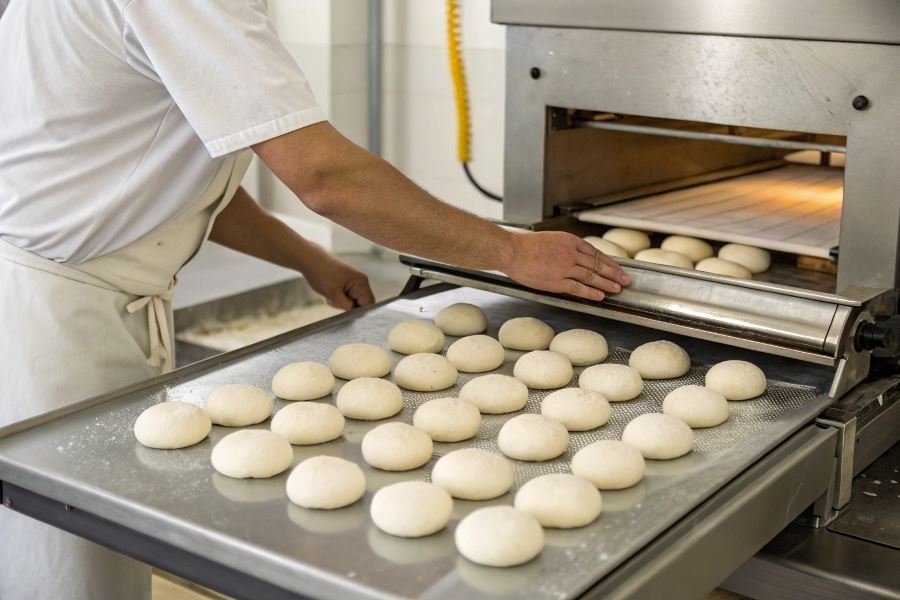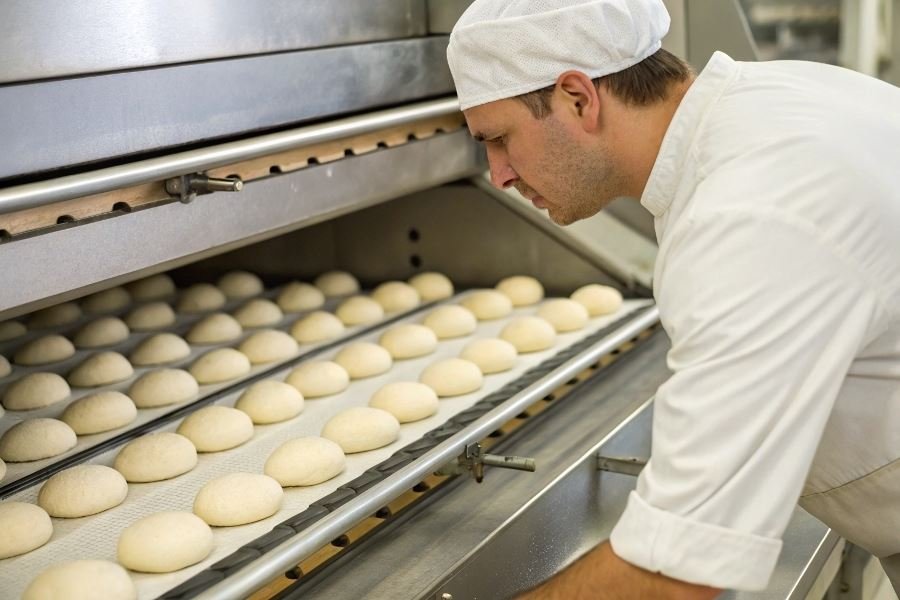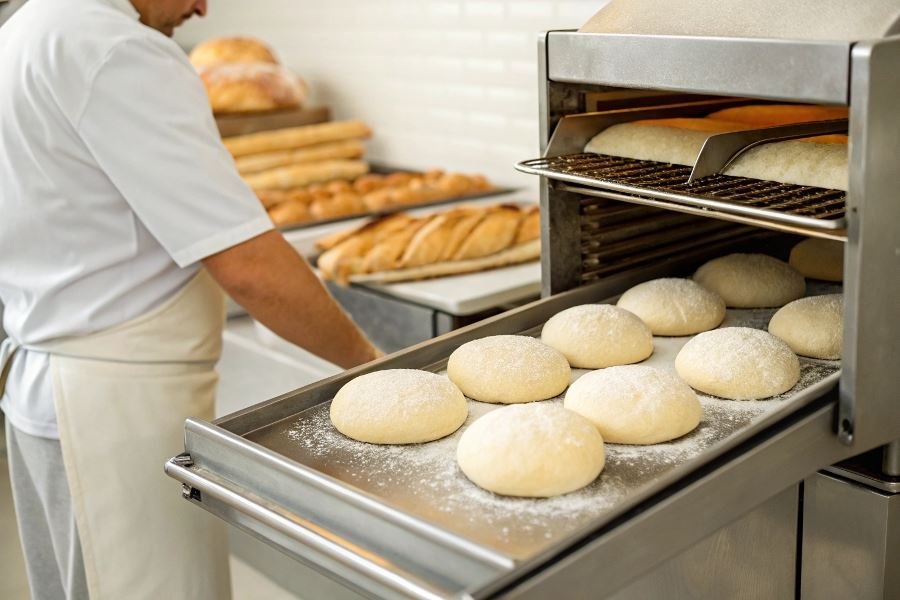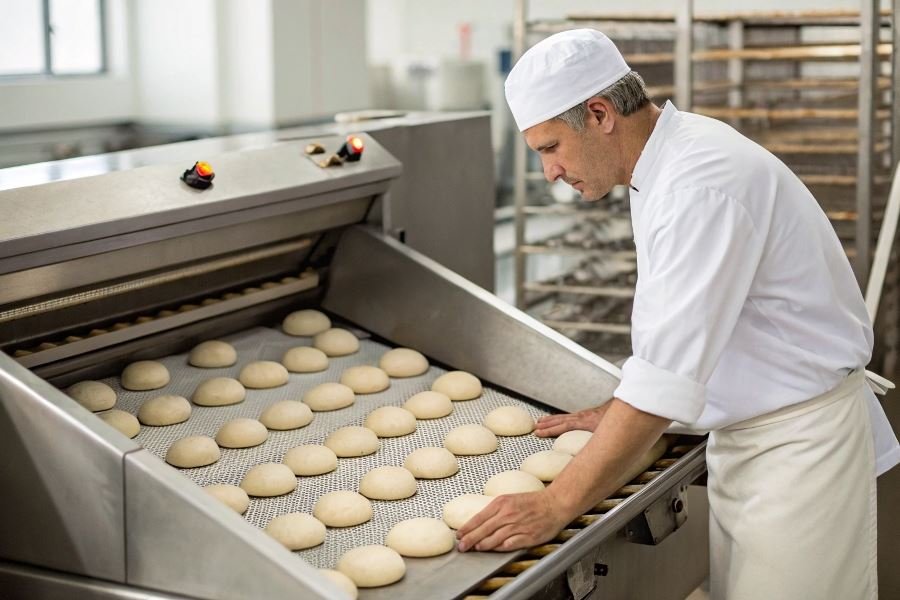
Ever watched a master baker transform a lump of dough into perfectly uniform rolls with seemingly magical precision? Behind that magic often stands a crucial piece of equipment: the dough divider-rounder. This workhorse of commercial bakeries can mean the difference between inconsistent, time-consuming manual production and a streamlined operation that delivers perfect results every time.
When investing in bakery equipment, understanding the delicate balance between price and quality becomes essential. A $2,000 entry-level machine might seem attractive initially, but could cost you thousands more in maintenance and lost production compared to a $5,500 mid-range model built to withstand daily commercial use.
The backbone of production efficiency
For bakeries producing more than 500 units daily, divider-rounders aren’t luxury items—they’re necessities. These machines precisely portion dough and form it into balls, ensuring consistency in weight, shape, and ultimately, final product quality. The right machine dramatically reduces labor costs while increasing production capacity by up to 400%.
What drives the price-quality equation?
Three critical factors determine where a divider-rounder falls on the spectrum:
- Construction materials – Food-grade stainless steel components cost more but resist corrosion and contamination
- Mechanical precision – Higher-end models maintain weight accuracy within ±1% versus ±5% in budget options
- Production capacity – Premium machines handle 1,500+ pieces hourly without overheating
Market landscape at a glance
The market divides into three distinct segments:
- Entry-level (1, 800−3,000): Manual or semi-automatic operation, suitable for small bakeries
- Mid-range (3, 000−7,000): Automated systems with moderate production capacity, the sweet spot for growing operations
- Premium ($7,000+): Fully programmable systems with advanced features like memory settings and integrated cooling
Finding your ideal balance means matching equipment capabilities to your production needs, growth plans, and available capital—not simply choosing the cheapest option available.
Essential Features That Define Value in Dough Divider-Rounders
When evaluating bakery equipment investments, the features that truly matter can make the difference between a purchase you’ll celebrate for years and one you’ll regret by next quarter. Dough divider-rounders represent a significant capital expenditure, with prices ranging from $5,000 for basic models to upwards of $50,000 for industrial-grade systems.
Finding the sweet spot in the price-quality ratio when choosing a dough divider-rounder requires understanding which specifications deliver genuine value versus those that merely inflate the price tag. Smart bakery owners know that the right machine pays for itself through increased production efficiency, reduced waste, and consistent product quality that keeps customers coming back.
Production capacity that matches your ambitions
The throughput capacity of your divider-rounder should align perfectly with your production goals:
- Entry-level models process 1,000-1,500 pieces per hour
- Mid-range equipment handles 2,000-3,000 pieces hourly
- Industrial systems can achieve 5,000+ pieces per hour
Remember that maximum capacity ratings often assume ideal conditions with perfect dough consistency.
A bakery producing artisanal bread might benefit more from a slower machine that handles delicate doughs gently, while high-volume operations need equipment that can maintain precision at higher speeds.
Weight precision that preserves your margins
Weight accuracy directly impacts your bottom line:
| Precision Level | Typical Variance | Annual Impact on 100,000 Units |
|---|---|---|
| Standard | ±3-5% | $3,000-5,000 potential waste |
| Premium | ±1-2% | $1,000-2,000 potential waste |
| High-Precision | <±1% | <$1,000 potential waste |
Weight consistency isn’t just about cost control—it ensures uniform baking times and consistent product appearance. Modern Adamatic and Benier models offer digital weight adjustment systems that maintain calibration longer than mechanical alternatives.
Dough versatility for product diversity
The ability to handle various dough types dramatically affects equipment value:
- Basic models typically handle standard bread doughs at 55-65% hydration
- Advanced systems can process everything from stiff bagel dough to delicate brioche
- Premium equipment includes adjustable pressure settings for different dough consistencies
Hydration range capability should be a primary consideration if your product line includes both traditional and artisanal offerings.
Durability that withstands daily demands
Construction quality determines long-term value:
- Frame materials: Stainless steel frames command premium prices but resist corrosion and sanitize more effectively
- Moving parts: Hardened steel components with proper lubrication systems reduce maintenance frequency
- Expected service life: Quality machines from manufacturers like Koenig typically deliver 15+ years of service with proper maintenance
The true cost of ownership includes both purchase price and maintenance expenses over the equipment’s lifetime.
Automation that transforms workflow
Modern divider-rounders offer automation features that deliver substantial labor savings:
- Programmable recipes store settings for different products
- Self-adjusting systems respond to dough consistency variations
- Integration capabilities connect with upstream mixers and downstream proofers
These features typically add 20-30% to the purchase price but can reduce labor costs by 40-60% compared to manual operations.
The most valuable divider-rounder isn’t necessarily the most expensive—it’s the one that delivers the specific capabilities your operation needs without unnecessary bells and whistles that inflate the price without enhancing performance.
Making Smart Investments: Optimizing Your Dough Divider-Rounder Purchase
When investing in bakery equipment, the sticker price is just the beginning of the story. The true value of a dough divider-rounder emerges over years of operation, through countless batches of perfectly portioned dough. Let’s dive into how to maximize your return on investment and find the sweet spot between price and performance.
Beyond the price tag: Total cost of ownership
The initial purchase price of a dough divider-rounder—ranging from $3,000 for basic models to $50,000+ for advanced systems—represents only 40-60% of what you’ll ultimately spend on this equipment.
Consider these often-overlooked costs:
- Energy consumption: Modern energy-efficient models from manufacturers like Sottoriva can save up to $1,200 annually compared to older units
- Maintenance requirements: High-quality machines from Benier may cost more upfront but typically require 30% less maintenance over their lifespan
- Downtime costs: Every hour of unexpected downtime can cost bakeries between 500−2,000 in lost production
The cheapest divider-rounder is rarely the most economical. The true cost emerges through years of operation, maintenance, and productivity impact.
A premium divider-rounder that costs 25% more upfront but lasts 5-7 years longer while requiring fewer repairs often delivers superior lifetime value.
Right-sizing your equipment investment
The perfect divider-rounder aligns precisely with your production needs—neither overwhelming your operation with unnecessary capacity nor constraining your growth.
| Business Type | Ideal Capacity Range | Key Features Worth Paying For |
|---|---|---|
| Small Artisan | 500-1,500 pieces/hr | Weight accuracy ±2g, gentle dough handling |
| Mid-sized Bakery | 1,500-3,000 pieces/hr | Quick changeovers, versatile dough types |
| Industrial | 3,000+ pieces/hr | Automation integration, continuous operation |
Paying premium for features you’ll never use is wasteful, but skimping on capabilities you need daily is even more costly. The Koenig Mini Rex multi, for example, commands a higher price but offers exceptional versatility that justifies the investment for bakeries producing diverse product lines.
Scale-specific recommendations
For artisan micro-bakeries:
Focus on machines that prioritize gentle dough handling and consistent weight accuracy over raw speed. The Dutchess DB Line offers excellent value with manual loading but precise dividing—perfect when quality trumps quantity.
For growing mid-sized operations:
Seek equipment with modular designs that can scale with your business. The Rondo Rondomat provides an excellent balance of initial affordability with upgrade pathways as production demands increase.
For industrial bakeries:
Total automation compatibility becomes crucial. The higher investment in systems like the Kaak Group Divider-Rounder series pays dividends through labor savings and production consistency at scale.
The most successful bakeries don’t simply purchase equipment—they invest strategically in production assets that align with both current needs and future aspirations. By analyzing total ownership costs, matching capabilities to requirements, and selecting scale-appropriate technology, you’ll find that sweet spot where price meets quality in perfect harmony.
Discover how to select the perfect dough divider-rounder for your bakery by evaluating production capacity, precision, versatility, and long-term value. Find the ideal balance between investment and quality for maximum ROI.
Discover how to select the perfect dough divider-rounder for your bakery by evaluating production capacity, precision, versatility, and long-term value. Find the ideal balance between investment and quality for maximum ROI.