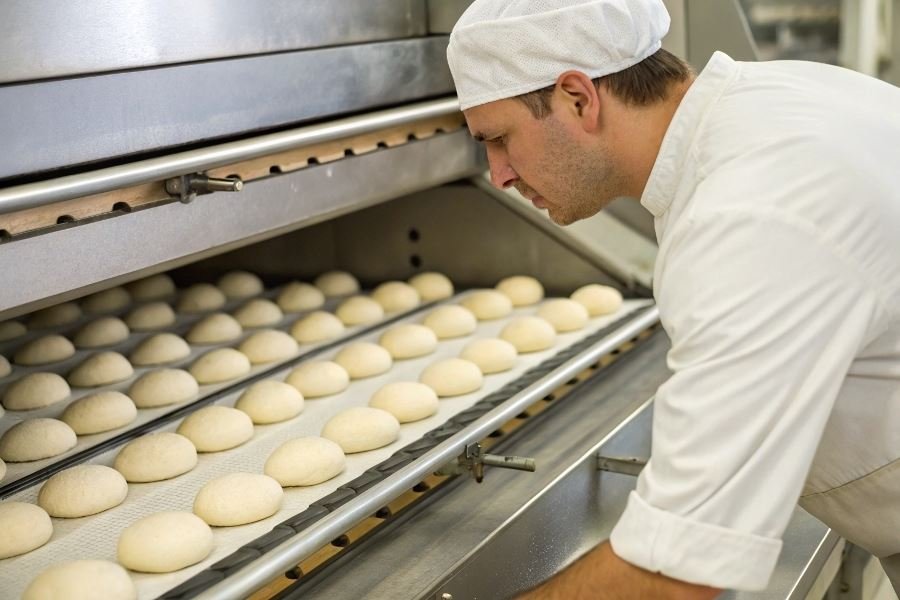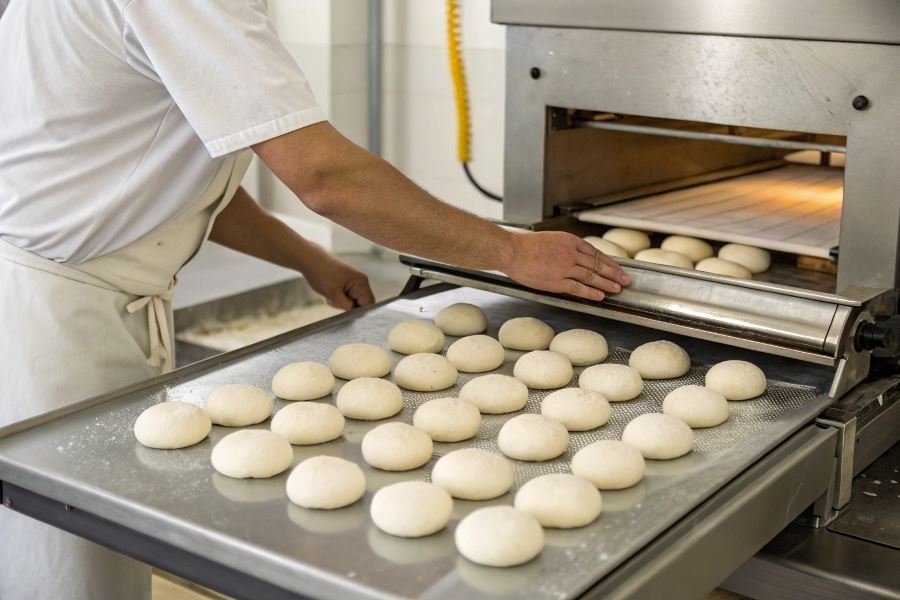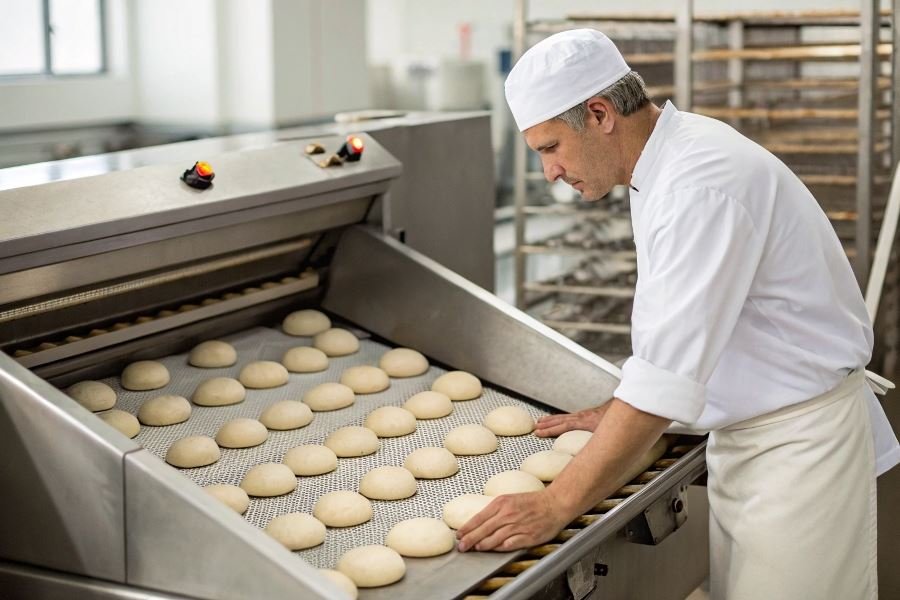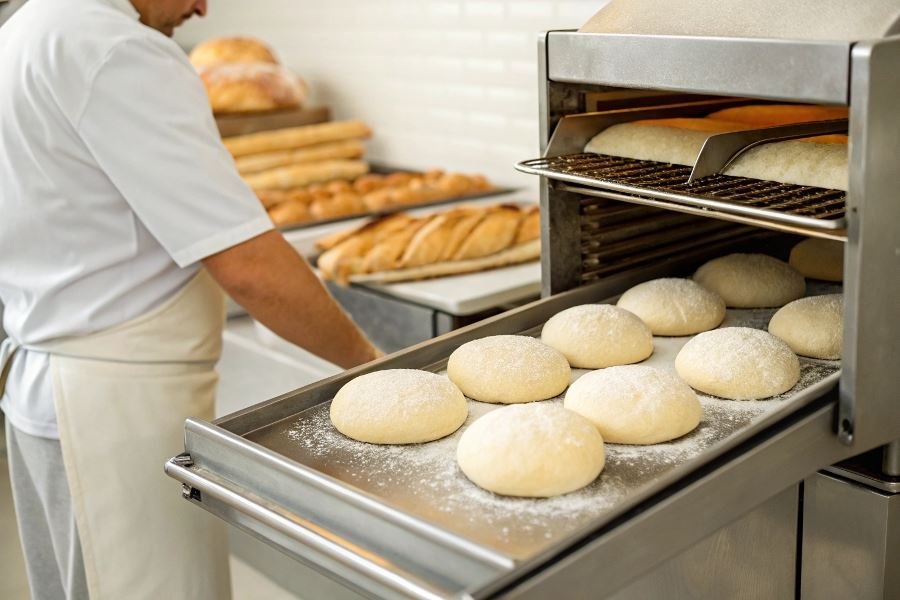
Ever watched a master baker effortlessly portion and shape dozens of perfectly uniform dinner rolls? Behind that consistency often lies a critical piece of equipment that transforms chaotic production into precision artistry: the dough divider-rounder.
For small bakeries, the right equipment isn’t just convenient—it’s transformative. When Artisan Bread Co. in Portland upgraded their dividing process, owner James Harmon reported a 40% increase in production speed while maintaining their signature quality. “The consistency alone justified the investment,” he noted, “but the reduced physical strain on my team was the unexpected bonus.”
Selecting the ideal divider-rounder requires balancing several crucial factors. Production volume should drive your decision—a machine that processes 15-36 pieces per minute might be perfect for a neighborhood bakery but insufficient for a growing wholesale operation. Dough versatility matters too; some machines handle only specific hydration levels, while others accommodate everything from stiff bagel dough to delicate brioche.
The financial impact extends beyond the purchase price. Consider:
- Labor savings: Reducing manual dividing can save 2-3 hours daily
- Waste reduction: Precise portioning typically decreases waste by 5-8%
- Consistency: Uniform products enhance brand reputation and customer satisfaction
The right divider-rounder doesn’t just speed production—it fundamentally transforms your operation’s efficiency, product quality, and ultimately, profitability. When every gram matters and every second counts, this equipment becomes the heartbeat of a thriving bakery business.
Dough Divider-Rounders That Transform Small Bakeries
When selecting equipment for a small bakery operation, few decisions impact your production efficiency like choosing the right dough divider-rounder. The perfect machine balances precision, speed, and cost-effectiveness while adapting to your specific space constraints. Let’s examine the top 3 dough dividers-rounders for small businesses that consistently deliver exceptional results across different price points and operational needs.
Semi-Automatic Hydraulic Powerhouses
The semi-automatic hydraulic divider-rounder represents the gold standard for small bakeries ready to scale production without committing to fully automated systems. These machines combine robust construction with precision engineering to deliver consistent results batch after batch.
Key specifications worth noting:
- Production capacity: 1,000-2,500 pieces per hour
- Weight accuracy: ±2% deviation
- Dough weight range: 30-150g (adjustable)
- Power requirements: 220V, 1.5-2.2kW
The hydraulic pressure system ensures even division and perfect rounding without overworking the dough—critical for maintaining proper gluten development. Most models feature adjustable pressure settings to accommodate different dough consistencies from soft brioche to firm bagel dough.
At 2, 000−5,000, these machines represent a significant investment but deliver exceptional ROI through labor savings and product consistency. The Adamatic ADR-2 and Empire’s Hydraulic 30 stand out as particularly reliable options with excellent service networks.
Bench-Top Electric Solutions
For bakeries with limited floor space but growing production needs, bench-top electric divider-rounders offer an ideal middle ground. These compact workhorses typically measure under 24″ × 30″ yet deliver impressive output.
What makes these machines particularly attractive is their versatility-to-footprint ratio.
Performance metrics:
- Production capacity: 500-1,200 pieces per hour
- Weight range: 20-120g (model dependent)
- Footprint: Typically under 5 square feet
- Setup time: Under 5 minutes
| Feature | Benefit |
|---|---|
| Quick-change dividing discs | Multiple product sizes without tool changes |
| Removable hoppers | Simplified cleaning and sanitation |
| Digital controls | Precise weight adjustments and consistency |
| Low noise operation | Better working environment |
Priced between 1, 200−3,500, these machines hit the sweet spot for growing bakeries. The Doyon DTA30 and Dutchess DDB-175 models offer particularly good value with their combination of durability and precision.
Manual Systems That Deliver
Don’t underestimate the humble manual divider-rounder. These mechanical marvels require no electricity, minimal maintenance, and still deliver remarkably consistent results when operated correctly.
Practical advantages:
- Zero electrical requirements – can be placed anywhere
- Simple mechanics – fewer parts to break or maintain
- Surprising throughput – skilled operators can achieve 300-500 pieces per hour
- Exceptional durability – many units remain in service for decades
The manual systems typically employ a lever-action dividing mechanism coupled with a separate rounding plate. While this two-step process is slightly more labor-intensive, it allows for greater operator control over the final product.
Most units in the 800−1,500 range offer 30-36 divisions per press, with weight ranges from 25-100g. The Thunderbird ARM-30 stands out for its cast iron construction and smooth operation, while the Globe GDD-30 offers excellent value with its stainless components and ergonomic design.
For artisan bakeries prioritizing dough integrity over maximum speed, these manual systems often produce superior results by minimizing dough stress during the dividing process.
Making the Right Investment: Your Ideal Dough Divider-Rounder
When you’re eyeing that shiny new dough divider-rounder for your bakery, you’re not just buying equipment—you’re making a strategic business decision that will impact your operation for years. Let’s dive into the financial and operational considerations that separate a smart investment from an expensive mistake.
ROI and Production Volume Math That Actually Makes Sense
The return on investment for a dough divider-rounder isn’t just about the sticker price—it’s about throughput capacity and labor savings. Here’s the breakdown:
A manual operation typically processes 100-150 dough pieces per hour with one employee. A semi-automatic divider-rounder like the Dutchess DFR-1100 can handle 500-800 pieces hourly, while the Empire MDD-800 reaches 800-1000 pieces, and the Erika Record ER-30 tops out at 1200 pieces.
Let’s translate this to dollars:
| Machine Model | Initial Investment | Labor Savings (Annual) | Production Increase | Payback Period |
|---|---|---|---|---|
| Dutchess DFR-1100 | $8,500 | $15,600 | 400% | 6.5 months |
| Empire MDD-800 | $12,700 | $18,200 | 600% | 8.4 months |
| Erika Record ER-30 | $18,900 | $23,400 | 800% | 9.7 months |
The key insight: Higher initial investment typically correlates with faster production, but your specific production volume determines the sweet spot. A bakery producing fewer than 500 units daily might never recoup the investment on a high-end model.
The Hidden Costs of Ownership
Maintenance requirements vary dramatically between models, creating significant differences in total cost of ownership:
The Dutchess DFR-1100 requires basic daily cleaning (15 minutes) and monthly maintenance (1 hour), with parts replacement averaging $350 annually. Its simpler mechanical design means fewer breakdowns but potentially more manual adjustments.
The Empire MDD-800 needs similar daily cleaning but quarterly professional servicing ($400-600 each). Its computerized components offer precision but increase maintenance complexity.
The Erika Record ER-30 features self-diagnostic systems and modular components that simplify repairs, but replacement parts average $700-900 annually due to proprietary components.
The maintenance equation isn’t just about dollars—it’s about downtime. A machine that’s 10% cheaper but causes three extra days of production stoppage annually is actually more expensive.
Growth Potential: Will Your Equipment Scale With You?
Your divider-rounder should accommodate your five-year growth plan, not just today’s production needs.
The Dutchess DFR-1100 offers limited weight range (1-8 oz) and fewer customization options, making it ideal for bakeries with consistent product lines. Its modular design allows for some upgrades, but you’ll eventually hit a ceiling.
The Empire MDD-800 provides a broader weight range (0.5-12 oz) and adjustable settings for different dough types. Its software can be updated as new features become available, extending its useful life.
The Erika Record ER-30 shines with its expansive weight range (0.25-16 oz), interchangeable drums for different products, and programmable memory for up to 100 recipes. It’s essentially future-proofed for most small to mid-sized operations.
Decision framework: Match your equipment to your 3-year production forecast, not your current volume. The most expensive mistake in bakery equipment isn’t paying too much—it’s outgrowing your investment too quickly.
When calculating your investment, remember that the right divider-rounder doesn’t just maintain your current operation—it transforms it, opening doors to new product lines, improved consistency, and the capacity to take on larger accounts that were previously out of reach.
Discover the top 3 dough dividers-rounders that can transform your small bakery's efficiency. Compare semi-automatic hydraulic, bench-top electric, and manual systems to find the perfect equipment for consistent results and business growth.
Discover the top 3 dough dividers-rounders that can transform your small bakery's efficiency. Compare semi-automatic hydraulic, bench-top electric, and manual systems to find the perfect equipment for consistent results and business growth.