What if your entire business could be protected by a system that activates in seconds, requires minimal maintenance, and could save you millions in potential losses?
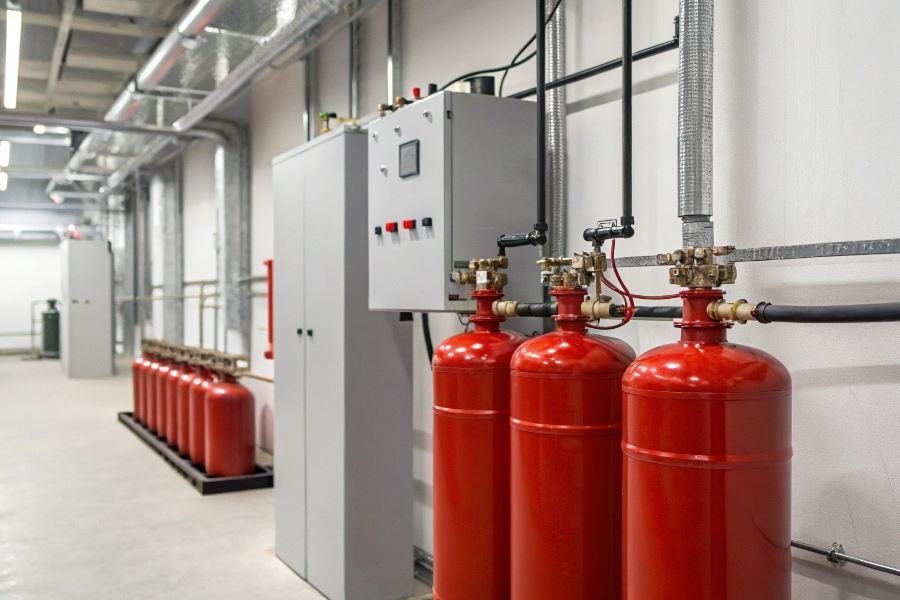
When fire threatens commercial spaces, every second counts. Drum fire suppression systems represent one of the most reliable frontline defenses against catastrophic fire damage in business environments. These specialized systems consist of pressurized cylinders containing fire-extinguishing agents that deploy automatically when triggered by heat or smoke detection. Unlike conventional sprinkler systems, drum suppressants target the fire’s chemical reaction rather than simply cooling it, making them incredibly effective for protecting valuable assets and equipment.
Meeting the regulatory landscape
Business owners must navigate a complex web of compliance requirements. The National Fire Protection Association (NFPA) codes—particularly NFPA 12, 12A, and 2001—establish the foundation for proper installation and maintenance. Additionally, local building codes and insurance underwriters often impose specific requirements that vary by jurisdiction and building classification.
Why drum systems outperform alternatives
Drum fire suppression systems offer three critical advantages over traditional methods:
- Speed of response – Activation occurs within seconds of detection, often before flames can spread
- Minimal collateral damage – Unlike water-based systems, specialized agents leave no residue on expensive equipment
- Operational continuity – Many systems allow for business operations to resume almost immediately after discharge
For businesses housing sensitive electronics, irreplaceable inventory, or critical operational equipment, the investment in drum suppression technology delivers protection that conventional systems simply cannot match.
The Engineering Behind Drum Fire Suppression Excellence
When it comes to protecting commercial assets, drum fire suppression systems represent the gold standard in automated fire protection technology. These systems combine robust engineering with strategic deployment to create a comprehensive safety net for businesses of all sizes.
The features of installing drum fire suppression systems in commercial premises involve careful consideration of spatial dynamics, regulatory compliance, and integration capabilities. Unlike residential systems, commercial installations must account for higher ceilings, diverse floor plans, and specialized hazard zones—all while maintaining aesthetic appeal and operational efficiency.
System Components That Make the Difference
At the heart of every effective drum system lies a carefully orchestrated collection of components working in harmony:
- Pressurized cylinders containing extinguishing agents (typically FM-200, CO2, or clean agents)
- Distribution piping networks designed for rapid agent delivery
- Specialized nozzles calibrated for optimal dispersion patterns
- Detection devices including heat, smoke, and flame sensors
- Control panels that serve as the system’s brain
The configuration requirements vary based on the protected space, but most systems follow the N+1 redundancy principle, ensuring backup capacity if primary components fail.
| Component | Function | Installation Consideration |
|---|---|---|
| Agent Cylinders | Store extinguishing material | Requires secure mounting, temperature control |
| Piping Network | Delivers agent to protected areas | Must maintain specific slopes and bends |
| Discharge Nozzles | Disperses agent effectively | Height and spacing calculations critical |
| Detection System | Identifies fire conditions | Requires strategic placement for early warning |
Spatial Mastery: Where Science Meets Strategy
The effectiveness of drum systems hinges on spatial considerations that many installers overlook. Ceiling height, room volume, and air handling systems dramatically impact system performance.
For optimal placement:
- Height matters: Nozzles typically require installation 12-18 inches below ceiling level
- Coverage calculations: Each nozzle has a specific protection radius based on agent type
- Obstruction mapping: Shelving, machinery, and partitions affect dispersion patterns
Room integrity becomes particularly crucial with gaseous systems. Even small unsealed penetrations can compromise effectiveness, requiring thorough testing using door fan tests to verify containment capability.
Seamless Integration With Building Systems
Modern drum fire suppression doesn’t exist in isolation—it becomes part of your building’s nervous system.
Integration points include:
- Fire alarm control panels for centralized monitoring
- Building management systems for coordinated emergency response
- HVAC shutdown to prevent agent dispersion and oxygen circulation
- Access control systems for emergency egress and first responder entry
Notifier and Siemens offer particularly robust integration platforms that simplify this process.
The most successful installations leverage addressable technology, allowing pinpoint identification of activation locations and system status. This precision dramatically reduces false discharges while accelerating response times.
Remember that electrical considerations extend beyond simple power requirements. Backup power systems, voltage drop calculations, and circuit isolation all play critical roles in system reliability during the very emergencies they’re designed to address.
By approaching drum fire suppression installation with this comprehensive mindset, commercial properties gain not just code compliance, but genuine protection that preserves both assets and business continuity.
Mastering Drum Fire Suppression Maintenance
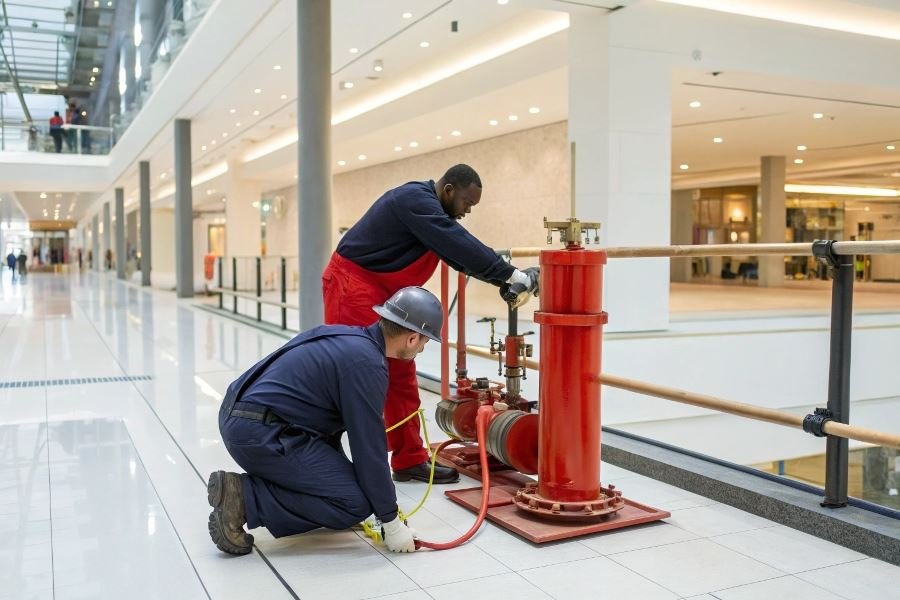
Fire suppression systems aren’t just installed and forgotten—they demand ongoing attention to ensure they’ll perform when disaster strikes. Drum fire suppression systems, with their specialized components and critical function, require particularly vigilant maintenance protocols in commercial settings.
Inspection schedules that protect your investment
Regular inspections form the backbone of any effective maintenance program. The National Fire Protection Association (NFPA) mandates specific inspection intervals that commercial property owners must follow:
- Weekly visual inspections: Quick checks of pressure gauges, visible components, and tamper seals
- Monthly inspections: More thorough examination of all accessible components
- Quarterly tests: Functional testing of alarms and signals
- Annual comprehensive inspections: Complete system evaluation by certified professionals
These aren’t arbitrary timeframes—they’re carefully calculated to catch potential issues before they compromise system performance. Documentation of these inspections isn’t just good practice; it’s essential for compliance verification with local fire codes and insurance requirements.
Missing even one scheduled inspection can invalidate insurance coverage and create significant liability exposure.
Staff training that saves lives
Even the most sophisticated drum fire suppression system becomes ineffective without properly trained personnel. Comprehensive training programs should include:
| Training Component | Frequency | Participants |
|---|---|---|
| Basic awareness | New hire orientation | All staff |
| System operation | Bi-annually | Designated responders |
| Emergency protocols | Quarterly drills | All staff |
| First responder coordination | Annually | Management team |
Training must go beyond theoretical knowledge to include hands-on practice with system components (excluding actual suppressant discharge). Staff should understand not just how to respond during activation but also how to recognize warning signs of potential system issues.
Emergency protocols deserve special attention, with clear documentation of:
- Evacuation procedures
- Communication chains
- System manual override procedures
- Post-discharge safety measures
Lifecycle management for lasting protection
Drum fire suppression systems represent significant investments with expected lifespans of 15-20 years when properly maintained. Effective lifecycle management includes:
-
Component replacement scheduling: Critical parts like pressure gauges, nozzles, and control panels have different service lives and should be tracked individually.
-
Suppressant testing and replacement: Chemical agents degrade over time. Most manufacturers recommend testing agent efficacy every 6 years and complete replacement at 12-year intervals.
-
Technology upgrades: Fire suppression technology continues to evolve. Regular consultations with Fire Suppression System Association certified technicians can identify beneficial upgrades that improve performance while potentially reducing long-term costs.
-
Documentation management: Maintaining comprehensive digital records of all inspections, tests, and maintenance activities provides crucial protection during regulatory audits and insurance reviews.
The most successful commercial property managers approach maintenance not as a regulatory burden but as risk management strategy. By implementing rigorous inspection schedules, comprehensive staff training, and thoughtful lifecycle management, these systems deliver reliable protection throughout their service life—and potentially beyond.
Remember: The cost of proper maintenance is always less than the cost of system failure during an actual fire event.
Discover essential features of drum fire suppression systems for commercial spaces, including installation requirements, compliance standards, and maintenance protocols that ensure optimal fire protection and regulatory adherence.
Discover essential features of drum fire suppression systems for commercial spaces, including installation requirements, compliance standards, and maintenance protocols that ensure optimal fire protection and regulatory adherence.