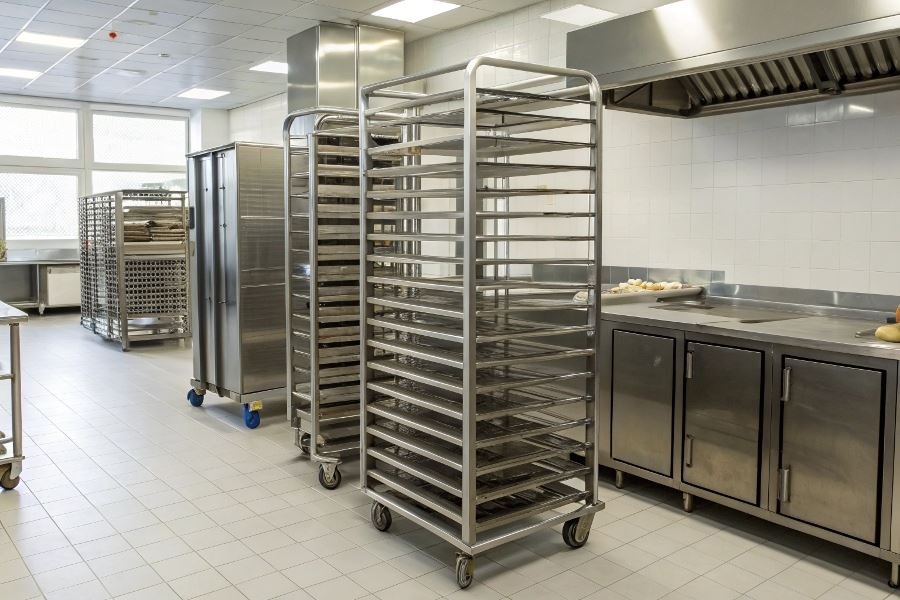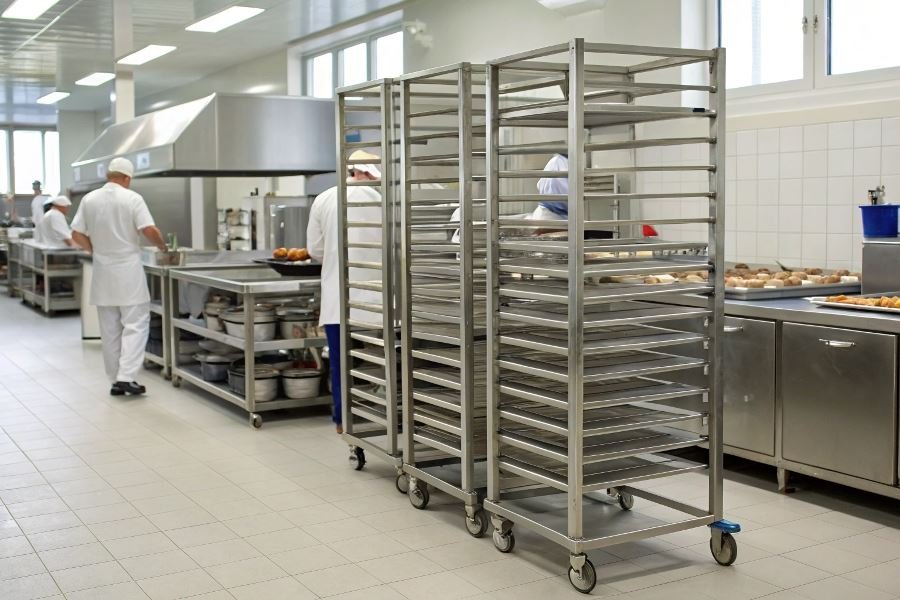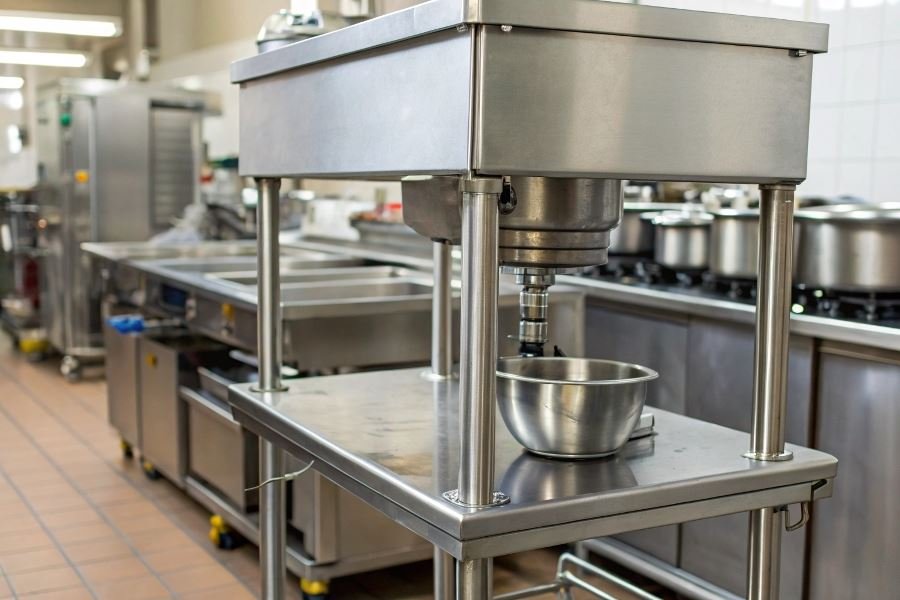
Ever watched a $5,000 commercial mixer wobble precariously during operation? That sight alone explains why proper equipment support isn’t just a detail—it’s a necessity that separates professional kitchens from amateur setups.
Behind every successful culinary operation lies an often-overlooked hero: the equipment stand. These sturdy platforms do far more than simply elevate your mixers, slicers, and processors off the floor. They create the critical foundation that determines whether your expensive equipment performs at peak efficiency or fails prematurely.
The performance connection
The right stand transforms how your equipment functions. A properly designed stand minimizes vibration—reducing noise, preventing component wear, and maintaining precision in food preparation. For high-speed equipment like commercial blenders, this stability difference can extend operational life by up to 40%.
Beyond durability: The complete picture
Selecting the ideal stand involves balancing several crucial factors:
- Height ergonomics: The stand should position equipment at the optimal working height for your staff, preventing strain and improving efficiency
- Material compatibility: Stainless steel stands offer superior sanitation in wet environments, while powder-coated steel provides cost-effective durability in drier areas
- Load capacity: Always choose stands rated for at least 1.5× your equipment’s weight to ensure long-term stability
- Mobility needs: Consider whether your operation requires fixed positioning or the flexibility of locking casters
The difference between thoughtfully selected stands and generic supports often becomes apparent within months—not years—of daily use. Equipment that remains properly supported maintains calibration longer, requires fewer repairs, and ultimately delivers more consistent results to your customers.
Engineering the Perfect Foundation for Your Food Equipment
Weight Capacity: The Non-Negotiable Starting Point
When selecting equipment stands for commercial kitchens, weight capacity isn’t just a specification—it’s your insurance policy. Professional-grade food equipment can weigh anywhere from 50 to 800+ pounds, making structural integrity the cornerstone of your decision-making process. The process of how to choose a stand for specific food equipment begins with a simple calculation: take your equipment’s weight and add 20-30% as a safety buffer.
Load ratings matter more than marketing claims. A commercial pizza oven stand might advertise “heavy-duty construction,” but what you need is the specific static load rating (typically measured in pounds). Premium manufacturers like Vulcan provide detailed load specifications that account for both static weight and operational stress.
Never underestimate dynamic loading—the additional stress created when equipment operates. A stand that adequately supports a 200-pound mixer at rest might fail when that mixer kneads dense dough, creating lateral forces that test structural integrity.
Material Selection: The Science Behind the Surface
The material of your equipment stand determines everything from longevity to compliance with health codes. Three primary options dominate the market:
| Material | Weight Capacity | Corrosion Resistance | Cost Range | Best For |
|---|---|---|---|---|
| 304 Stainless Steel | Excellent (500-1000+ lbs) | Superior | $400-1200 | Wet environments, sanitation-critical applications |
| Aluminum | Good (300-600 lbs) | Good | $250-700 | Mobile applications, weight-sensitive settings |
| Composite | Moderate (200-400 lbs) | Excellent | $150-500 | Budget constraints, dry environments |
304 stainless steel stands represent the gold standard for most commercial kitchens. Their non-porous surface prevents bacterial growth, while their resistance to acidic foods and cleaning chemicals ensures longevity. For equipment that generates significant heat, like Hobart ovens, stainless steel’s thermal stability prevents warping.
Aluminum stands offer compelling advantages for operations prioritizing mobility. At approximately one-third the weight of steel, they’re ideal for equipment that requires frequent repositioning. However, they’re susceptible to pitting when exposed to certain cleaning chemicals.
Composite materials have evolved dramatically, with high-density polyethylene (HDPE) options now offering NSF certification for food safety. These budget-friendly alternatives excel in dry storage areas but may degrade faster in high-heat applications.
Dimensional Mastery: Beyond Basic Measurements
The spatial relationship between your equipment and its stand transcends simple matching of length and width. Effective dimensional compatibility requires:
- Overhang allowance: Equipment should typically have 1-2 inches of stand surface beyond its footprint on all sides
- Height optimization: Work surface height should align with ergonomic standards (34-36 inches for most prep tasks)
- Footprint efficiency: In space-constrained kitchens, multi-functional stands with undershelving can reduce your equipment’s total footprint by up to 40%
Smart dimensional planning prevents costly workflow inefficiencies. A stand for a commercial Robot Coupe food processor should position the work bowl at a height that minimizes operator strain during extended prep sessions.
For equipment requiring utilities, integrated cable management systems prevent dangerous cord entanglements while maintaining compliance with health department regulations that prohibit exposed wiring. The most sophisticated stands incorporate leveling feet that compensate for uneven floors—critical for equipment like precision scales where even slight angles compromise accuracy.
By prioritizing these essential factors—weight capacity, material selection, and dimensional compatibility—you’ll secure not just a stand, but a foundation for operational excellence that pays dividends in equipment longevity and workflow efficiency.
Advanced Stand Features That Elevate Your Food Equipment Game
Mobility That Makes Sense
The difference between a good stand and a great one often comes down to mobility. High-quality casters transform a static workstation into a dynamic tool that adapts to your changing kitchen layout. Premium stands feature dual-locking casters that secure both the wheel rotation and swivel function, providing rock-solid stability when locked.
The industry has evolved significantly since the basic wheel designs of the early 2000s. Today’s commercial-grade casters offer:
- Load capacity ratings between 200-400 pounds per caster
- Material innovations like thermoplastic rubber that won’t mark floors
- Noise-reduction technology for busy kitchen environments
The best stands include casters with sealed bearings that prevent food debris infiltration—a small detail that extends operational life by years. When evaluating mobility features, test the locking mechanisms personally; they should engage with a satisfying click and require deliberate force to disengage.
Sanitation Standards That Exceed Expectations
In commercial food environments, cleaning accessibility isn’t just convenient—it’s critical for compliance and safety. Modern stands designed for food equipment incorporate NSF-certified materials and construction techniques that eliminate bacterial hiding spots.
The difference between consumer-grade and commercial-grade stands becomes most apparent in their sanitation features.
Premium stands feature:
| Feature | Benefit | Why It Matters |
|---|---|---|
| Seamless welding | Eliminates crevices | Prevents bacterial growth in joints |
| Rounded corners | No sharp edges | Easier cleaning, safer handling |
| Removable components | Access to all surfaces | Complete sanitization possible |
| Non-porous surfaces | Prevents absorption | Resists stains and odors |
Look for stands with a minimum 304-grade stainless steel construction, which offers superior corrosion resistance even with frequent sanitizing chemical exposure. The best designs eliminate horizontal surfaces where water can pool and bacteria can multiply.
Functionality Beyond The Basics
The most sophisticated food equipment stands transform from simple supports into workflow-enhancing tools through thoughtful additional features.
Storage integration has become increasingly sophisticated, with designs that include:
- Pull-out tool drawers with antimicrobial liners
- Dedicated spaces for cleaning supplies that keep them separate from food zones
- Quick-access hooks for frequently used utensils
Height adjustability has evolved beyond simple leg extensions. Look for stands with:
- Hydraulic lift systems that adjust with minimal effort
- Memory settings that allow quick changes between operators
- Ergonomic height ranges that accommodate both prep and service positions
Modular capabilities represent the cutting edge of stand design, allowing:
- Attachment points for additional work surfaces
- Interchangeable components that adapt to different equipment
- Expansion options that grow with your business needs
The most innovative stands feature cable management systems that keep power cords organized and protected from kitchen moisture—a seemingly small detail that significantly reduces maintenance issues and potential hazards.
When evaluating additional functionality, prioritize features that directly address your specific workflow challenges rather than being seduced by bells and whistles that look impressive but serve little practical purpose in your daily operations.
Discover how to choose the perfect stand for your food equipment with our comprehensive guide covering weight capacity, materials, dimensions, mobility features, and sanitation standards for optimal performance and longevity.
Discover how to choose the perfect stand for your food equipment with our comprehensive guide covering weight capacity, materials, dimensions, mobility features, and sanitation standards for optimal performance and longevity.