
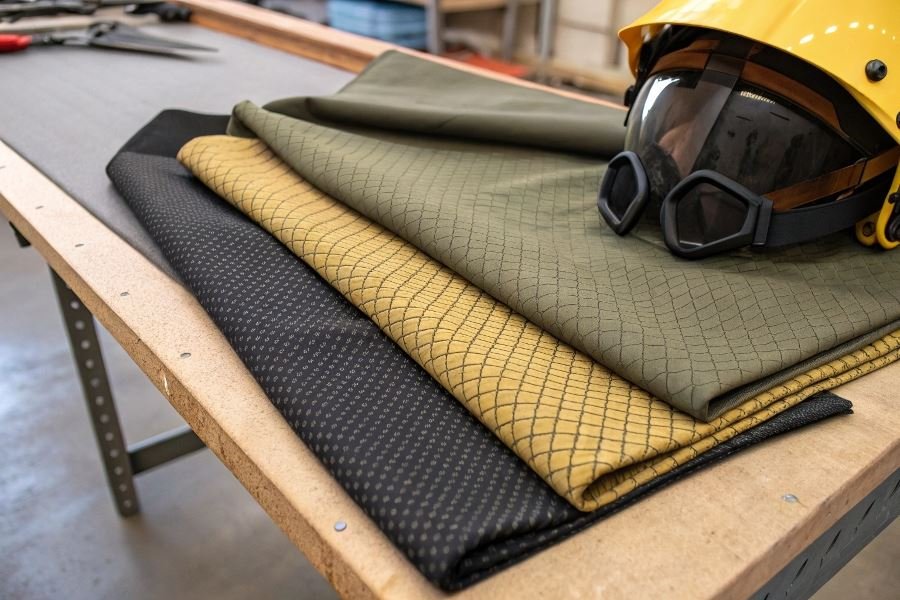
Ever watched a firefighter walk through flames or a construction worker handle rough materials all day? Behind these everyday heroes is an unsung champion: durable work clothing. The difference between going home with intact gear versus tattered remnants isn’t just about comfort—it’s about safety, productivity, and cost-effectiveness.
When selecting work apparel, durability isn’t just a preference—it’s a necessity that varies dramatically across industries. A welder needs flame-resistant materials that won’t melt or ignite, while a logger requires tear-resistant fabrics that withstand constant abrasion against rough bark and branches. The healthcare professional needs antimicrobial properties that survive hundreds of wash cycles.
What truly determines material durability? It’s a complex equation of fiber strength, weave density, chemical treatments, and construction techniques. The most resilient work clothing balances several factors:
- Tensile strength: How much force the material can withstand before breaking
- Abrasion resistance: How well it handles repeated friction
- Chemical resistance: Its ability to withstand exposure to acids, oils, and other substances
- Thermal stability: Performance under extreme temperatures
- Moisture management: How it handles sweat and environmental conditions
Evaluating durability requires understanding both laboratory tests and real-world performance. While manufacturers might boast impressive numbers from standardized tests like the Martindale abrasion test or tear strength measurements, nothing replaces field testing in actual work environments. The most reliable assessments combine scientific metrics with feedback from workers who put these materials through daily challenges.
The Indestructible Trio: Work Clothing Materials That Outlast Everything
When selecting workwear that can withstand the toughest conditions, understanding what materials are the most durable for work clothing becomes essential for professionals who demand performance from every thread. The difference between adequate and exceptional workwear often comes down to the fabric’s molecular structure and engineering. Let’s examine the three undisputed champions of durability that have revolutionized the work clothing industry.
Canvas and Duck Cloth: The Timeless Workhorses
Canvas and duck cloth represent perhaps the oldest continuously used durable fabrics in workwear history. These tightly woven cotton materials feature a plain weave construction that creates exceptional tensile strength and abrasion resistance.
Duck cloth (derived from the Dutch word “doek”) is essentially a denser version of canvas, typically weighing between 8-15 ounces per square yard. Its distinctive characteristic is a smoother surface than traditional canvas, making it ideal for:
- Construction site outerwear
- Utility vests and tool aprons
- Heavy-duty work pants
The durability factors that make canvas and duck cloth exceptional include:
| Property | Rating (1-10) | Real-world Application |
|---|---|---|
| Abrasion resistance | 9 | Withstands repeated friction against rough surfaces |
| Tear strength | 8 | Resists tearing when caught on protruding objects |
| Wash durability | 7 | Maintains integrity through hundreds of industrial washes |
| Weather resistance | 6 | Naturally water-resistant, improves with treatments |
The beauty of canvas lies in its paradoxical nature—it actually becomes more comfortable with use while maintaining structural integrity.
Ripstop Fabrics: Engineered to Prevent Catastrophic Failure
Ripstop represents a significant engineering advancement in textile design. Rather than simply being a material, ripstop is a construction technique that incorporates reinforcement threads in a crosshatch pattern.
The genius behind ripstop is its ability to contain damage. When a tear begins, the reinforcement grid prevents it from spreading—hence the name “ripstop.” Modern versions typically use:
- Nylon ripstop (lightweight but incredibly strong)
- Polyester ripstop (better UV resistance than nylon)
- Cotton-poly ripstop blends (comfort with enhanced durability)
Strength characteristics that set ripstop apart:
- Exceptional tensile strength-to-weight ratio
- Self-containing tear resistance
- Remarkable puncture resistance
- Quick-drying properties
Ripstop excels in dynamic work environments where mobility matters as much as protection—forestry, outdoor utilities, and technical trades where workers need protection without bulk.
Aramid Fibers: When Failure Is Not an Option
When standard materials reach their limits, aramid fibers step in. These synthetic fibers (including Kevlar and Nomex) represent the pinnacle of engineered protection in workwear.
Aramid fibers deliver extraordinary performance metrics:
- Heat resistance up to 800°F (427°C)
- Five times stronger than steel on an equal-weight basis
- Self-extinguishing properties
- Minimal degradation from chemicals or UV exposure
Specialized applications where aramids prove indispensable:
| Industry | Application | Key Benefit |
|---|---|---|
| Firefighting | Turnout gear | Thermal protection barrier |
| Oil & Gas | Flash fire protection | Self-extinguishing properties |
| Manufacturing | Cut-resistant gloves | Prevents lacerations from sharp edges |
| Electrical work | Arc flash protection | Insulation against electrical discharge |
The remarkable molecular structure of aramid fibers—long chains of molecules with strong bonds—creates material that doesn’t melt or drip when exposed to extreme heat, a critical safety feature in high-risk environments.
While aramid fibers represent the gold standard in protection, they come with premium pricing ($150-300 for quality workwear pieces) and often require blending with other materials to improve comfort and flexibility.
Making Smart Choices for Durable Workwear
When it comes to workwear that stands the test of time, the material selection process deserves thoughtful consideration. The right fabric choice can mean the difference between replacing uniforms quarterly or annually—a distinction that impacts both your team’s performance and your bottom line.
Matching Materials to Work Environments
Different work settings demand specific fabric properties. For construction and outdoor trades, heavyweight cotton duck canvas (12-16 oz) provides exceptional abrasion resistance while maintaining breathability. Carhartt has built their reputation on this principle, with garments that routinely survive 3-5 years of heavy use.
For industrial environments with chemical exposure, synthetic blends featuring high percentages of nylon or polyester (typically 60-80%) offer superior chemical resistance. Dickies industrial work pants incorporate these materials specifically to withstand harsh manufacturing conditions.
Temperature extremes require specialized considerations:
| Environment | Recommended Material | Key Benefits |
|---|---|---|
| High Heat | Aramid fibers (Nomex, Kevlar) | Flame resistance, thermal protection |
| Cold Weather | Wool/synthetic blends | Insulation even when wet, durability |
| Wet Conditions | Ripstop nylon with DWR | Water resistance, quick-drying |
| High Visibility | Polyester with fluorescent dyes | Durability of color, washability |
Healthcare and food service industries benefit from poly-cotton blends (65/35 ratio) that resist staining while maintaining comfort through long shifts. These blends typically withstand 100+ industrial washes before showing significant wear.
Extending Workwear Lifespan Through Maintenance
Even the most durable materials require proper care to maximize longevity. Washing work clothes inside out prevents excessive abrasion on the visible surfaces. For heavy-duty workwear, using dedicated detergents like Rit fabric care products can preserve fiber integrity through hundreds of wash cycles.
Proper storage significantly impacts durability. Hanging heavy canvas garments rather than folding prevents permanent creasing that can lead to premature wear points. For flame-resistant clothing, avoiding fabric softeners is critical—they leave residues that can compromise safety properties.
Implementing a repair program can extend workwear life by 30-50%. Simple reinforcements at stress points (knees, elbows, pockets) before they fail completely can add months to garment lifespan. Patagonia’s Worn Wear program demonstrates how even premium workwear can be maintained for years beyond typical replacement cycles.
The Economics of Premium Materials
The initial investment in quality workwear often triggers sticker shock, but the math favors durability. Consider this breakdown:
A premium work shirt made from 8 oz. twill (65)typicallylasts18 − 24monthswithpropercare, whileabudgetalternative(25) might require replacement every 4-6 months. Over a two-year period, the premium option costs $65 while the budget approach totals $100-150.
Beyond direct replacement costs, premium materials deliver additional value:
- Reduced administrative time managing uniform replacements
- Consistent professional appearance throughout garment lifecycle
- Improved worker satisfaction and reduced complaints
- Better protection that maintains its integrity over time
The true cost of workwear includes both acquisition and replacement frequency. When evaluating options, calculate cost-per-wear rather than focusing solely on purchase price. Red Kap workwear demonstrates this principle with their performance metrics showing how their industrial pants maintain shape and function through 50+ industrial washes.
Ultimately, selecting durable work clothing materials requires balancing immediate budget constraints against long-term value. The most successful programs match material properties precisely to job requirements while implementing maintenance practices that maximize every garment’s useful life.
Discover the top 3 most durable materials for work clothing: canvas/duck cloth, ripstop fabrics, and aramid fibers. Learn how to select the right material for your industry and maximize your workwear investment.
Discover the top 3 most durable materials for work clothing: canvas/duck cloth, ripstop fabrics, and aramid fibers. Learn how to select the right material for your industry and maximize your workwear investment.