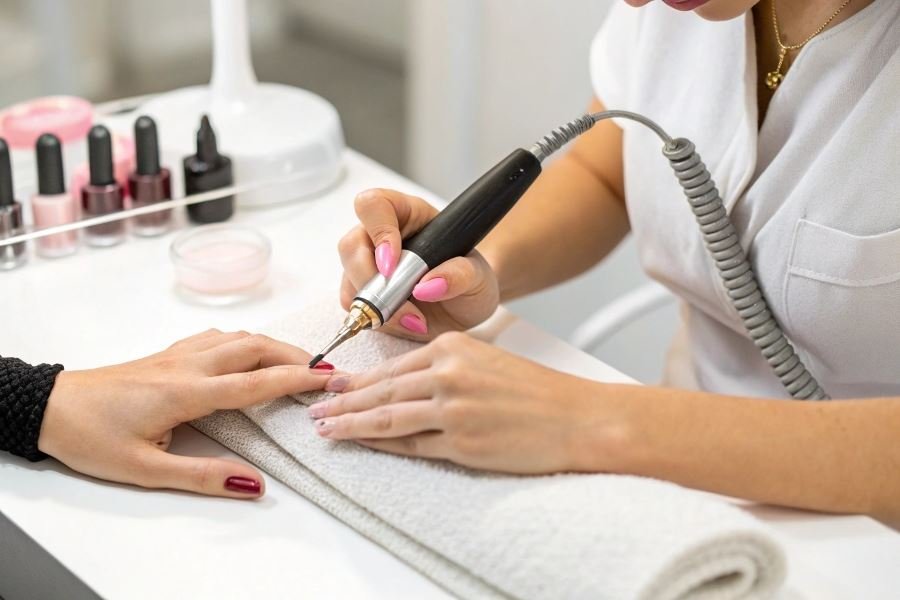
What if the perfect manicure wasn’t about the technician’s skill, but about choosing the right tool? The manicure industry has undergone a remarkable transformation, with professionals and home users now facing a critical choice between electric precision and manual control.
Electric manicure tools have surged in popularity, offering powerful motors that can reduce a full manicure session from 45 minutes to just 15. Meanwhile, traditional manual implements—from stainless steel nippers to glass files—maintain their devoted following among purists who value tactile feedback and absolute control. This isn’t merely about preference; it’s about matching technology to specific nail care needs.
The evolution of manicure technology traces back to ancient Egypt, where royalty used gold tools for nail care. Today’s electric options feature variable speed settings, interchangeable bits, and even dust collection systems—innovations unimaginable even a decade ago. This technological leap has democratized professional-quality results, with 78% of salon owners reporting that electric tools have significantly expanded their service capabilities.
When deciding between electric and manual options, consider these critical factors:
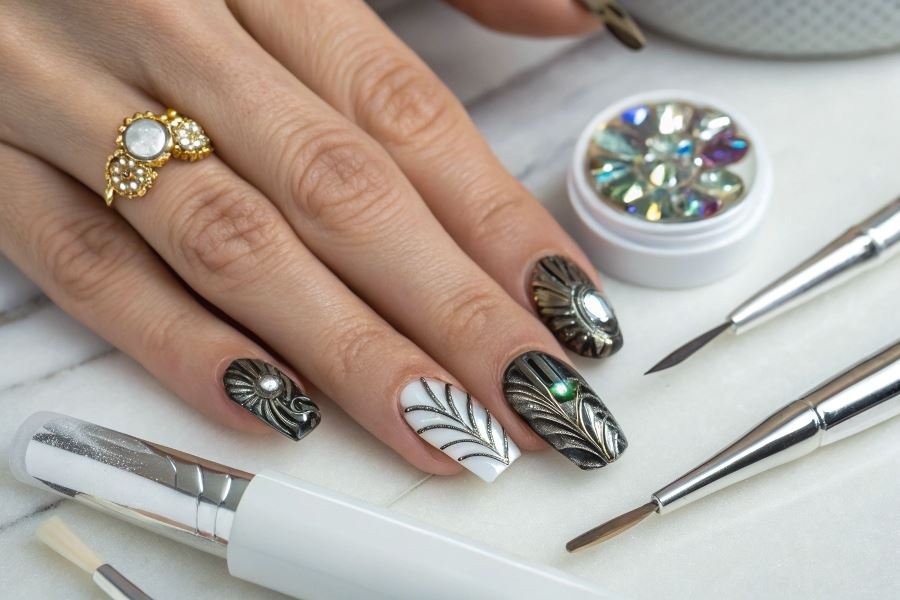
- Precision requirements: Electric tools excel at cuticle work and shaping, while manual tools offer unmatched control for detailed nail art
- Learning curve: Manual tools typically require more skill development but offer greater tactile feedback
- Maintenance needs: Electric tools demand regular cleaning and occasional part replacement
- Investment level: Quality manual tools start at $30 for a complete set, while professional-grade electric systems range from 150−500
The choice ultimately depends on your specific needs, skill level, and the types of manicures you regularly perform. The perfect manicure arsenal often includes both electric and manual tools, each deployed strategically for optimal results.
The Ultimate Showdown: Electric vs Manual Manicure Tools
Performance that transforms your nail game
When evaluating manicure tools, performance stands as the cornerstone of any professional-grade nail care routine. Electric manicure devices have revolutionized the industry with operational speeds typically ranging from 5,000 to 30,000 RPM, allowing for swift removal of gel polish and efficient shaping of natural nails. The comparison of electric and manual manicure tools reveals stark differences in efficiency—electric options can reduce filing time by up to 70% compared to traditional emery boards.
Precision matters when crafting the perfect nail shape. Manual tools offer tactile feedback that many professionals swear by, particularly when working on delicate natural nails. Meanwhile, electric options from brands like Medicool and Beurer provide variable speed settings that adapt to different nail types and techniques.
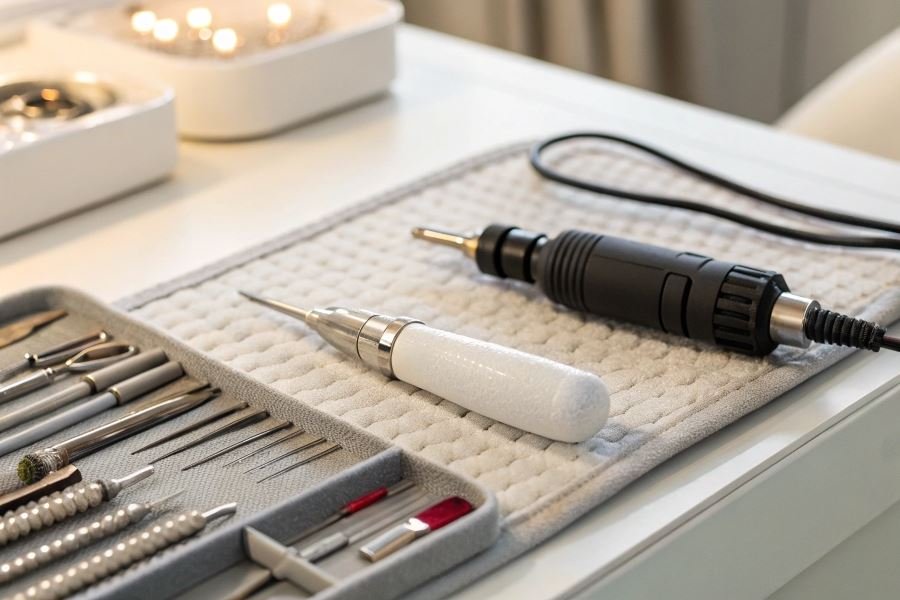
Versatility becomes apparent when examining attachment options. Modern electric units typically include 5-10 interchangeable bits for filing, buffing, cuticle work, and even callus removal. Manual tools require separate implements for each function, creating a more extensive kit but offering specialized performance for each task.
The dollars and sense of nail tools
The financial equation of manicure tools extends beyond the initial price tag. Entry-level electric manicure systems start around $30-50, while professional-grade options from Kupa or Bellissima can command $200-500. Manual tools present a more accessible entry point—quality stainless steel implements typically range from $5-25 per tool.
The long-term value proposition shifts dramatically when considering durability and replacement costs. Electric bits eventually wear down, requiring replacement every 3-6 months depending on usage frequency. This creates recurring costs of approximately $15-30 quarterly for active users. Manual tools, particularly metal implements, can last years with proper sanitization and maintenance.
Value insight: A professional-grade electric system might cost 10x more upfront than a manual kit, but can process 4x more clients in the same timeframe—potentially quadrupling revenue for professionals.
Power consumption adds another dimension to the cost analysis. Rechargeable electric tools typically operate for 5-8 hours per charge, with minimal electricity costs. Manual tools require only human energy—sustainable but limited by operator fatigue.
Mastering your manicure arsenal
The learning curve presents perhaps the most significant divergence between these tool categories. Manual implements offer intuitive operation—most users can achieve basic competency within 1-2 practice sessions. The skill ceiling remains high, however, with master technicians developing techniques over years of practice.
Electric tools demand more initial investment in skill development. First-time users typically require 8-10 hours of practice before achieving comfortable control. The power advantage comes with responsibility—improper technique with high-speed rotation can damage natural nails or cause heat buildup.
Training resources have evolved to address this gap. Brands like Young Nails offer comprehensive video libraries specifically for electric file mastery. Manual techniques benefit from generations of established practice, with fundamentals remaining largely unchanged for decades.
The control factor ultimately determines which tool type suits individual preferences. Manual implements provide direct tactile feedback and zero risk of mechanical failure. Electric options deliver consistency and reduced physical strain, particularly valuable during extended manicure sessions or for those with hand strength limitations.
The Ultimate Decision: Electric vs Manual Manicure Tools
When it comes to nail care, the tools you choose dramatically impact your results. After exploring the features, benefits, and limitations of both electric and manual manicure implements, it’s time to make that all-important decision. Let’s break down exactly when each option shines and how combining them might give you the best of both worlds.
When electric tools take the crown
Electric manicure tools excel in specific scenarios that demand precision, power, and efficiency:
- Professional-grade treatments – For salon owners and nail technicians handling multiple clients daily, electric tools reduce fatigue and increase productivity
- Thick nail management – When dealing with thickened nails (often seen in seniors or those with fungal conditions), electric files provide necessary power
- Precision detailing – Creating intricate nail art or perfectly shaped acrylics requires the consistent speed and control of electric tools
- Callus removal – Electric callus removers can accomplish in minutes what would take significantly longer with manual tools
The efficiency factor cannot be overstated. What might take 45 minutes with manual tools can often be completed in 15-20 minutes with a quality electric device like the Medicool Pro Power 35K or Beurer MP62.
Electric tools aren’t just about speed—they’re about achieving professional results that would otherwise require years of manual technique development.
Manual tools and their sweet spots
Manual manicure implements remain irreplaceable in several key situations:
- Travel-friendly maintenance – No batteries, no charging, no problem
- Sensitive nail care – For thin, brittle, or damaged nails that require gentle handling
- Precise cuticle work – Nothing beats a quality manual cuticle nipper for clean, controlled cuticle removal
- Budget considerations – Quality manual tools like stainless steel nippers and files offer excellent value with minimal investment
- Learning fundamentals – Beginners develop better technique understanding with manual tools before graduating to electric options
Manual tools also shine in their simplicity. There’s no learning curve with a quality nail clipper or glass file—just immediate results without the intimidation factor of multiple bits and variable speeds.
The hybrid approach advantage
The most sophisticated nail care enthusiasts typically embrace a hybrid approach, recognizing that each tool type has its place in a complete manicure system:
| Task | Recommended Tool | Why It Works |
|---|---|---|
| Initial length reduction | Manual clippers | Precise control for basic shaping |
| Shaping and smoothing | Electric file | Efficient, even results across all nails |
| Cuticle removal | Manual nippers | Unmatched precision for delicate work |
| Buffing | Electric buffer | Consistent shine without overworking |
| Final detailing | Manual tools | Finishing touches require gentle precision |
This strategic combination maximizes efficiency while minimizing risk. Start with manual clippers for basic shaping, switch to an electric file for refinement, use manual tools for cuticle work, then finish with electric buffing for that perfect shine.
The hybrid approach also extends tool lifespan. By using each implement for its intended purpose rather than forcing one tool to do everything, you’ll maintain sharper edges and better performance over time.
The verdict? The best manicure system isn’t about choosing sides—it’s about selecting the right tool for each specific task in your nail care routine.
Discover which performs better: electric or manual manicure tools. Compare speed, precision, cost, and skill requirements to make an informed choice for professional-quality nail care at home or in the salon.
Discover which performs better: electric or manual manicure tools. Compare speed, precision, cost, and skill requirements to make an informed choice for professional-quality nail care at home or in the salon.