The refrigeration landscape is changing faster than ice cream melts on a hot sidewalk.
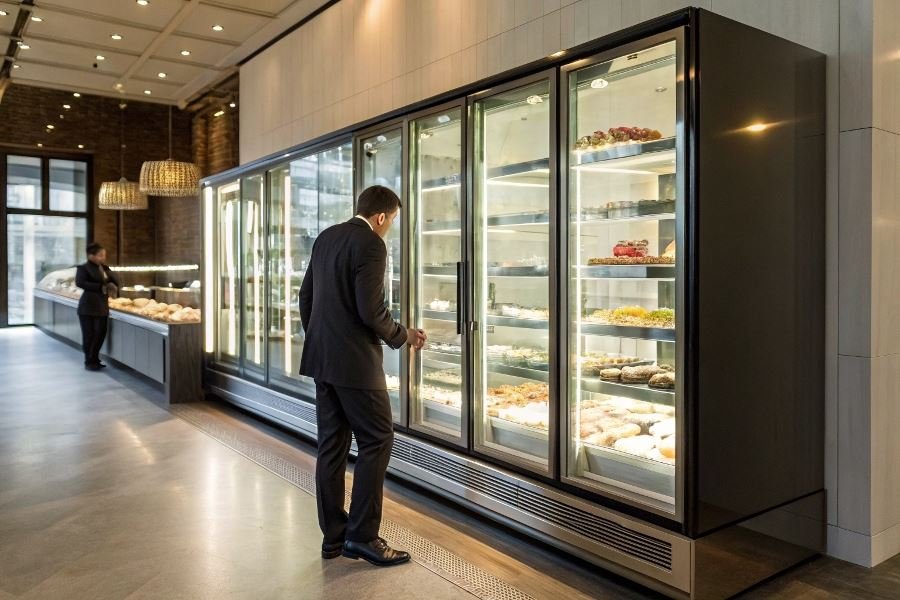
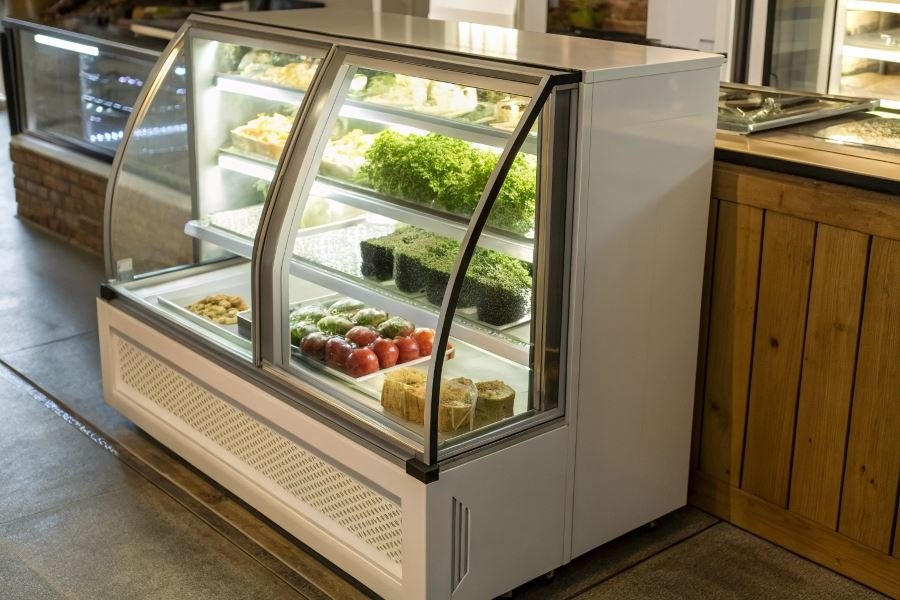
Behind the gleaming glass of modern supermarkets lies a quiet revolution. Energy-efficient refrigerated display cases are transforming how businesses showcase perishable products while slashing operational costs. These aren’t your grandfather’s coolers—they’re sophisticated systems that merge cutting-edge technology with practical retail solutions.
The commercial refrigeration market has shifted dramatically toward efficiency, with energy-saving models now representing over 60% of new installations. This isn’t just a passing trend; it’s a fundamental market transformation driven by both regulatory pressure and bottom-line benefits.
“The difference between standard and energy-efficient refrigeration can mean thousands of dollars annually for a single store location.”
Why does this matter? Energy costs typically represent the second-largest operating expense for food retailers after labor. Modern energy-efficient cases can reduce electricity consumption by 30-50% compared to models from just a decade ago. This translates to substantial savings—often 3, 000−5,000 annually per display case over its lifetime.
The benefits extend beyond immediate savings. Businesses investing in efficient refrigeration report:
- Extended product shelf life due to more consistent temperature control
- Reduced maintenance costs from advanced component design
- Enhanced customer experience through better lighting and display visibility
- Smaller carbon footprint that resonates with environmentally-conscious consumers
The initial investment may be higher, but the long-term economics are undeniable. With payback periods typically ranging from 18-36 months, these systems represent one of the smartest infrastructure investments a food retailer can make.
The Technical Backbone of Energy-Efficient Display Cases
When selecting refrigerated display cases for your business, the technical specifications aren’t just fine print—they’re the difference between profit and loss on your utility bills. The latest energy-efficient refrigerated display cases combine cutting-edge engineering with practical design to deliver performance that protects both your products and your bottom line.
Navigating the world of energy-efficient refrigerated display cases requires attention to several critical factors that determine long-term operational costs and environmental impact. The technology behind these units has evolved dramatically, with manufacturers now offering solutions that consume up to 40% less energy than models from just a decade ago.
Energy Ratings That Actually Matter
The ENERGY STAR certification remains the gold standard for refrigerated display cases, requiring units to consume at least 30% less energy than standard models. But don’t stop there—look for the specific Energy Efficiency Ratio (EER) and Annual Energy Consumption (AEC) metrics on the specification sheet.
Top-tier display cases now achieve EER ratings above 12.0, translating to substantial operational savings. The CEE (Consortium for Energy Efficiency) offers an additional tier system that identifies units that exceed even ENERGY STAR requirements:
| Certification Level | Energy Savings vs. Standard | Typical ROI Timeframe |
|---|---|---|
| ENERGY STAR | 30-35% | 2-3 years |
| CEE Tier 1 | 35-40% | 1.5-2 years |
| CEE Tier 2 | 40%+ | 1-1.5 years |
Insulation and Sealing: The Unsung Heroes
The quality of insulation directly impacts energy consumption, with polyurethane foam being the current industry leader. Premium models now feature insulation with R-values exceeding 8 per inch, dramatically reducing thermal transfer.
Door sealing technology has similarly advanced, with magnetic gaskets giving way to:
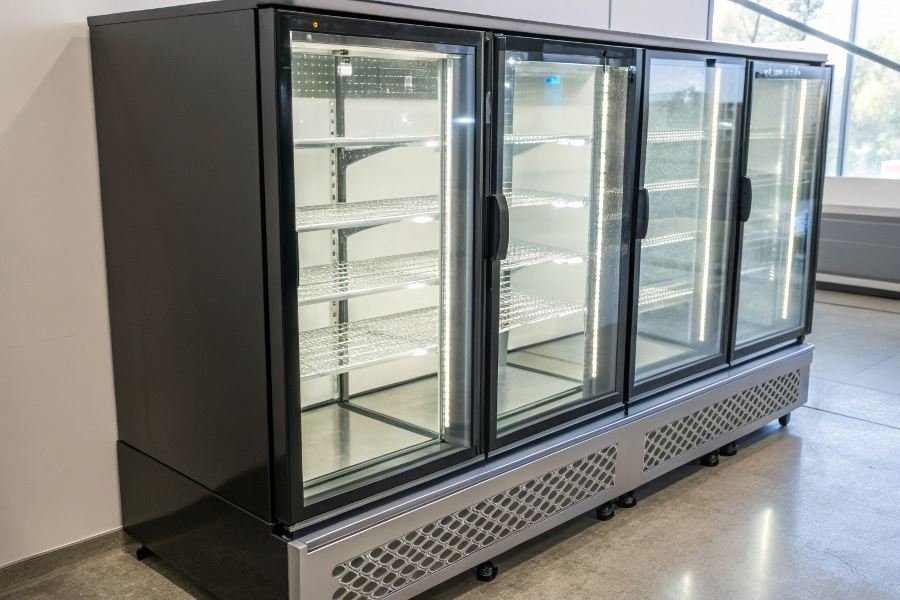
- Triple-seal technology that creates multiple barriers against air infiltration
- Self-closing hinges calibrated to ensure complete closure every time
- Anti-sweat systems that prevent condensation without excessive energy use
These seemingly minor features can reduce energy consumption by up to 15% compared to units with standard sealing systems.
Refrigerants: The Environmental Equation
The refrigerant in your display case impacts both energy efficiency and environmental footprint. The industry has moved decisively away from ozone-depleting substances toward options with lower Global Warming Potential (GWP):
| Refrigerant Type | GWP Rating | Energy Efficiency | Status |
|---|---|---|---|
| R-290 (Propane) | 3 | Excellent | Preferred |
| R-600a (Isobutane) | 3 | Very Good | Growing |
| R-448A | 1,387 | Good | Transitional |
| R-404A | 3,922 | Fair | Being Phased Out |
Carrier Commercial Refrigeration and Hussmann have pioneered natural refrigerant systems that deliver superior efficiency while minimizing environmental impact.
Compressor Technology: The Heart of Efficiency
The compressor accounts for approximately 60% of a display case’s energy consumption, making it the most critical component for efficiency. Variable speed compressors (VSCs) have revolutionized the industry by:
- Adjusting cooling capacity based on actual demand
- Eliminating energy-intensive start-up cycles
- Maintaining more consistent temperatures
- Extending compressor lifespan through reduced wear
Digital scroll compressors from Emerson Climate Technologies can reduce energy consumption by up to 25% compared to fixed-speed alternatives, while providing superior temperature control.
The most advanced systems now incorporate smart controls that optimize compressor operation based on store conditions, product load, and even time of day, creating unprecedented efficiency without sacrificing product quality or appearance.
Smart Money: Practical Considerations for Display Case Selection
Beyond the price tag
When investing in refrigerated display cases, the sticker price tells only a fraction of the story. The true financial picture emerges through total cost of ownership analysis. While premium energy-efficient models might command $3,000-5,000 more upfront than standard alternatives, they typically deliver $800-1,200 annual energy savings. This means most high-efficiency units pay for themselves within 3-5 years, while continuing to generate savings throughout their 10-15 year lifespan.
The cheapest display case is rarely the most economical. Calculate energy consumption at your local utility rates before making decisions.
Modern Hussmann and Arneg display cases with LED lighting and EC motors consume up to 40% less electricity than models from just a decade ago. Factor in potential utility rebates and tax incentives for energy-efficient equipment purchases, which can offset 10-30% of initial costs.
Maintenance matters
The most efficient display case quickly becomes a liability when maintenance accessibility is overlooked. Key considerations include:
- Component accessibility – Can filters be cleaned without tools?
- Parts availability – Are replacement components standardized or proprietary?
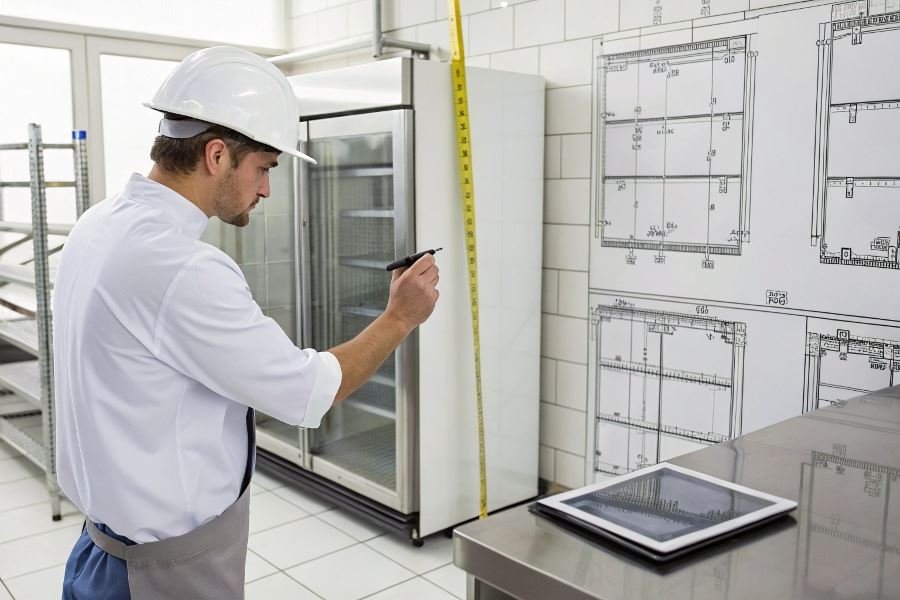
- Service clearance – Is there adequate space for technicians to work?
True Manufacturing designs feature slide-out condensing units that reduce service calls by up to 30%. Meanwhile, Carrier Commercial Refrigeration offers remote monitoring systems that identify potential issues before they cause downtime.
Visibility drives sales
Energy efficiency shouldn’t compromise product presentation. Modern display technology achieves both:
| Feature | Benefit | Energy Impact |
|---|---|---|
| LED lighting | 30-50% better color rendering | 70% less energy than fluorescents |
| Anti-reflective glass | Reduces glare by 80% | Minimizes need for higher-intensity lighting |
| Dynamic shelving | Increases product visibility | Optimizes cold air circulation |
Structural Concepts cases with curved glass fronts eliminate reflection points while maintaining thermal efficiency. Their studies show properly illuminated products can increase impulse purchases by 18-25%.
Right-sizing for business needs
Selecting appropriate dimensions and configurations directly impacts energy consumption. Oversized units waste energy cooling empty space, while undersized ones operate inefficiently under strain.
Consider these configuration options:
- Multi-deck vs. single-deck – Multi-decks offer more display area per square foot but consume 15-25% more energy
- Open vs. closed – Doors reduce energy consumption by 40-60% but may impact impulse purchases
- Remote vs. self-contained – Remote systems are 10-15% more efficient but require dedicated installation
Kysor Warren modular systems allow businesses to expand refrigeration capacity incrementally, avoiding overcapacity while maintaining consistent energy efficiency as needs grow.
Smart businesses evaluate display cases not just on initial cost, but on their ability to reduce operational expenses while effectively showcasing products. The ideal unit balances energy efficiency with practical considerations of maintenance, visibility, and appropriate sizing.
Discover how to select energy-efficient refrigerated display cases that reduce costs while enhancing product presentation. Learn about key technical specifications, environmental impact, and long-term ROI for your business investment.
Discover how to select energy-efficient refrigerated display cases that reduce costs while enhancing product presentation. Learn about key technical specifications, environmental impact, and long-term ROI for your business investment.