Ever heard that telltale knocking sound from under your hood? That might be your engine crying out for a compression test. When it comes to diagnosing the heart of your vehicle, two tools stand at the forefront of precision diagnostics: compression gauges and compression testers.
The difference between these tools could mean catching a failing engine before you’re stranded on the highway or missing critical signs of wear until it’s too late.
The diagnostic duo defined
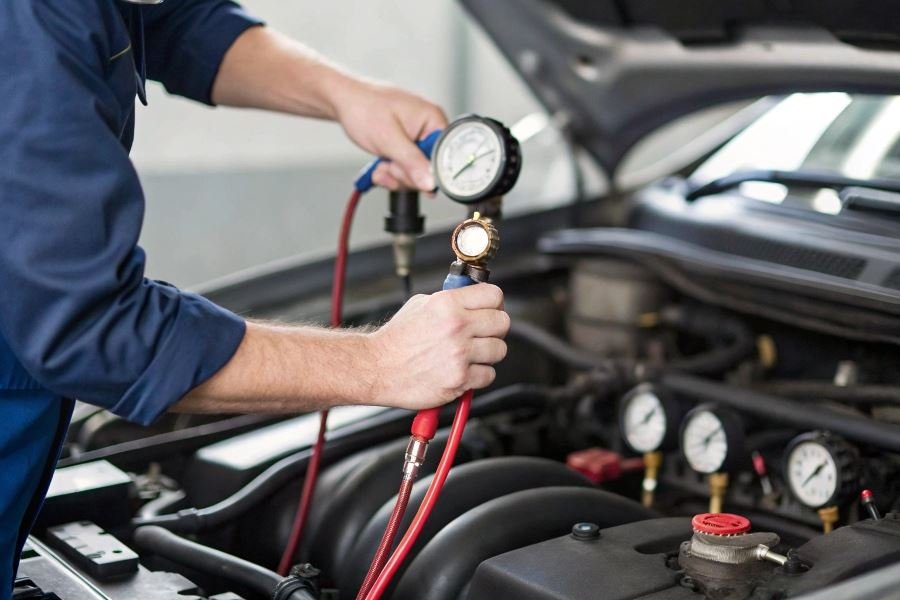
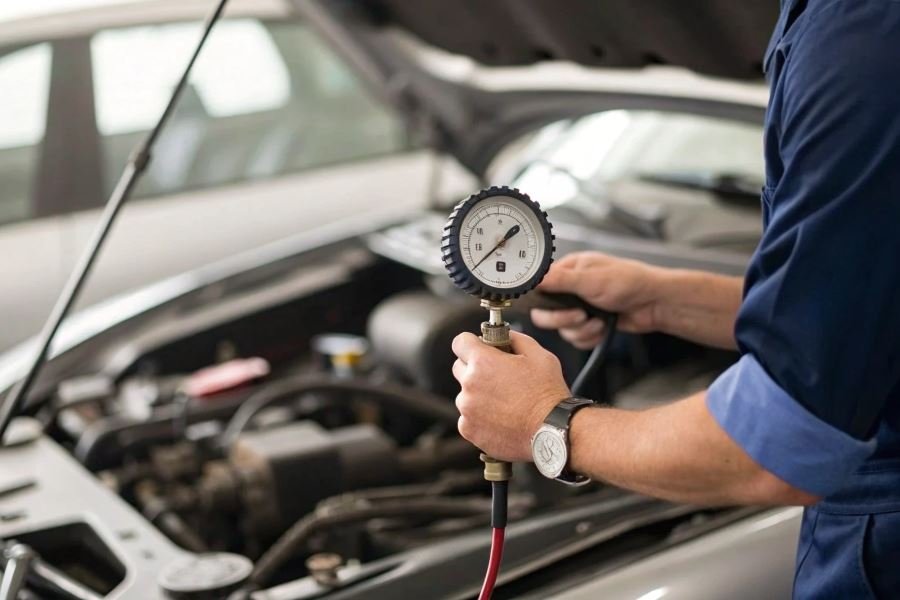
A compression gauge is a relatively simple tool that measures the pressure generated in an engine cylinder during the compression stroke. It typically consists of a pressure gauge attached to a hose with a fitting that screws into a spark plug hole. Think of it as taking your engine’s blood pressure—one cylinder at a time.
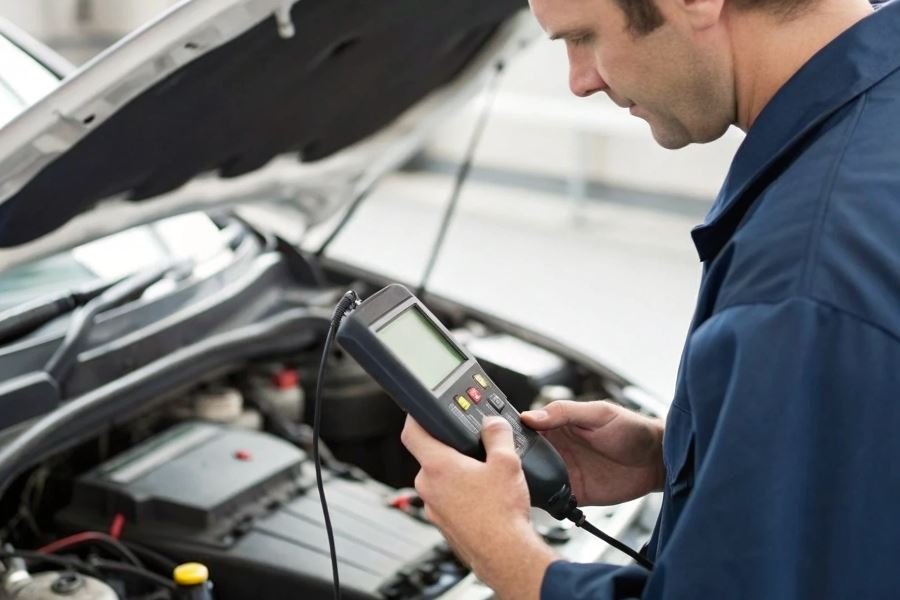
A compression tester, on the other hand, is a more comprehensive system that can simultaneously monitor multiple cylinders and often includes additional features like recording capabilities and specialized adapters. It’s the difference between a basic thermometer and a full medical workup.
Why compression matters
The compression reading is essentially your engine’s vital sign. When your engine compresses the air-fuel mixture properly, you get optimal power, efficiency, and longevity. Poor compression can manifest as:
- Rough idling
- Difficulty starting
- Decreased fuel economy
- Loss of power
- Increased emissions
Gauge vs. tester: The fundamental differences
| Feature | Compression Gauge | Compression Tester |
|---|---|---|
| Complexity | Simple, portable | More complex, comprehensive |
| Testing method | One cylinder at a time | Can test multiple cylinders |
| Data collection | Manual reading | Often digital with recording |
| Price range | 20−50 | 100−500+ |
| Best for | DIY mechanics, quick checks | Professional diagnostics, detailed analysis |
The choice between these tools ultimately depends on your specific needs, technical expertise, and how deeply you need to diagnose engine issues.
Compression Gauge vs. Compression Tester: The Ultimate Diagnostic Showdown
Design Features and Operational Mechanisms
When diagnosing engine health, the tools you choose can make all the difference between an accurate assessment and a costly misdiagnosis. At the heart of engine diagnostics lies the fundamental question of whether a compression gauge or compression tester is better for engine diagnostics, particularly when you’re trying to determine if your engine’s cylinders are maintaining proper compression.
A compression gauge operates on a relatively simple principle: it measures the peak pressure achieved in a cylinder during the compression stroke. Typically featuring a single pressure dial connected to a hose with a threaded fitting, this tool connects directly to the spark plug hole. When the engine cranks, the gauge captures and holds the maximum pressure reading until manually released.
In contrast, a compression tester offers a more comprehensive diagnostic approach. These systems often include multiple components:
- A master gauge unit
- Multiple hoses and adapters
- Pressure holding valves
- Digital recording capabilities (in premium models)
The operational difference is significant. While gauges provide a single peak reading, testers can monitor pressure changes throughout the entire compression cycle, revealing subtle issues that might otherwise go undetected.
Accuracy and Reliability Factors
The reliability of your diagnostic results depends heavily on both the tool selected and the engine conditions being tested.
| Factor | Compression Gauge | Compression Tester |
|---|---|---|
| Accuracy | ±3-5% (analog models) | ±1-2% (digital models) |
| Temperature Compensation | Minimal | Advanced in premium models |
| Repeat Testing Consistency | Moderate | High |
| Wet/Dry Testing Capability | Basic | Comprehensive |
Temperature sensitivity represents a critical consideration often overlooked by DIY mechanics. Engine compression readings vary significantly between cold and operating temperatures. Premium compression testers from brands like Snap-on incorporate temperature compensation features that adjust readings accordingly.
The difference becomes particularly pronounced when diagnosing intermittent issues or when testing high-performance engines where precision matters.
Cost Considerations and Value Assessment
The investment required for these diagnostic tools varies dramatically based on quality, features, and intended use.
Basic compression gauges typically range from 25−75, making them accessible entry points for DIY mechanics. These tools provide adequate readings for general maintenance and basic troubleshooting.
Professional-grade compression testers command significantly higher prices:
- Mid-range digital testers: 150−300
- Professional diagnostic systems: 500−1,200
Value proposition factors extend beyond the initial purchase price. Consider these elements when evaluating which tool delivers better long-term value:
- Frequency of use – Occasional DIYers may find gauges sufficient while professionals require testers
- Diagnostic depth needed – Simple pass/fail vs. detailed analysis
- Vehicle specialization – Modern engines with variable valve timing benefit from testers’ advanced capabilities
- Learning curve – Gauges offer simplicity while testers require interpretation skills
For professional mechanics, the investment in a quality compression tester from manufacturers like OTC Tools typically pays for itself through more accurate diagnoses and fewer comebacks. DIY enthusiasts performing occasional maintenance might find the simpler gauge provides sufficient information without unnecessary complexity.
Making the Right Choice for Engine Diagnostics
Engine Type Dictates Your Testing Tool
Selecting between a compression gauge and tester isn’t just about preference—it’s about matching the right tool to your specific engine. For naturally aspirated engines found in many American classics and everyday vehicles, a standard compression gauge often provides sufficient diagnostic capability. These engines typically operate at compression ratios between 8:1 and 12:1, well within the measurement range of quality gauges from brands like Innova or OTC.
For high-performance engines with compression ratios exceeding 12:1, or turbocharged and supercharged applications, a professional-grade compression tester becomes essential. These systems can accurately measure the higher pressures generated in performance engines while providing the detailed data needed to diagnose subtle issues that might escape detection with simpler tools.
Diesel engines present unique challenges due to their significantly higher compression ratios (often 16:1 to 22:1). Here, specialized diesel compression testers from manufacturers like Snap-on are non-negotiable, as standard gasoline engine tools simply can’t handle the pressure ranges involved.
What the Pros Use and Why
“I wouldn’t diagnose a modern engine without both tools in my arsenal,” notes veteran mechanic Tom Denton, who’s been diagnosing engine issues for over three decades.
Professional mechanics typically follow a diagnostic hierarchy:
- Start with a compression gauge for quick baseline readings
- Progress to a compression tester when anomalies appear
- Document readings across multiple cold and hot cycles
ASE-certified technicians overwhelmingly recommend digital compression testers for modern vehicles with complex engine management systems. The precision and data-logging capabilities allow for correlation with other diagnostic parameters.
Diagnostic Alternatives and Complementary Approaches
| Diagnostic Method | Best For | Limitations |
|---|---|---|
| Leak-down Test | Pinpointing exact leak location | Requires engine disassembly |
| Cylinder Power Balance | Quick performance check | Less precise than compression testing |
| Exhaust Gas Analysis | Emissions-related issues | Indirect compression measurement |
Beyond compression testing, cylinder leak-down testers provide invaluable complementary data. While compression tests measure the engine’s ability to create pressure, leak-down tests reveal where that pressure escapes—whether through valves, rings, or head gaskets.
For comprehensive engine diagnostics, consider integrating:
- Borescope inspection to visually examine cylinder walls and valve faces
- Oil analysis to detect metal particles indicating internal wear
- Vacuum gauge readings which often reveal issues before compression problems become severe
Modern OBD-II scan tools from Autel or Launch Tech can provide valuable context for compression test results, especially when examining fuel trim and misfire data alongside compression readings.
The most effective diagnostic approach combines multiple testing methods, creating a complete picture of engine health that no single tool can provide. As engine technology continues advancing, this multi-tool approach becomes increasingly important for accurate diagnosis and efficient repairs.
Discover which tool delivers more accurate engine diagnostics: compression gauge or tester. Compare features, accuracy, and cost to make the right choice for your vehicle maintenance needs and extend engine life.
Discover which tool delivers more accurate engine diagnostics: compression gauge or tester. Compare features, accuracy, and cost to make the right choice for your vehicle maintenance needs and extend engine life.