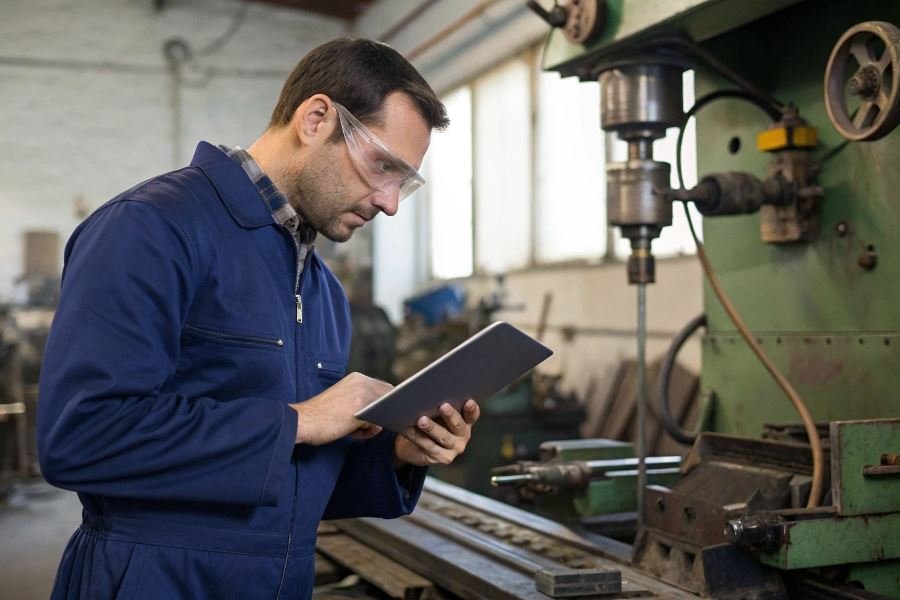
The decision keeps you up at night. Your production line needs new equipment, but writing that massive check feels like jumping off a fiscal cliff. Meanwhile, your competitors are upgrading their fleets while you deliberate. What’s the smart move in 2025’s volatile market?
Equipment acquisition decisions have transformed dramatically since the supply chain disruptions of 2020-2022. Today’s manufacturing and technical businesses face a critical crossroads when modernizing their fleets: commit capital to ownership or preserve cash flow through leasing arrangements. This choice impacts everything from tax positions to operational flexibility, with ramifications that extend years into your company’s financial future.
“The equipment acquisition strategy you choose today will shape your competitive position for the next decade.” — Harvard Business Review, 2023
The financial implications cut deeper than the surface numbers suggest. While purchase offers long-term asset appreciation and eventual cost advantages, leasing provides immediate tax benefits and protection against technological obsolescence. The calculus depends on several factors:
- Cash flow management – Purchase requires substantial upfront capital; leasing preserves liquidity
- Tax treatment – Different structures offer varying depreciation benefits and expense deductions
- Maintenance responsibilities – Who bears the burden of keeping equipment operational?
- End-of-term flexibility – Your options when technology inevitably advances
Market volatility has pushed interest rates into territory unseen since 2007, fundamentally altering the traditional lease-versus-buy equation. Equipment with rapid technological turnover cycles now presents a particularly compelling case for leasing arrangements, while stable technologies with lengthy useful lives may still favor traditional purchase models.
The Financial Calculus of Fleet Modernization
When it comes to modernizing your production equipment and technical fleet, the decision between leasing and purchasing represents one of the most consequential financial crossroads business owners face. The path you choose can dramatically impact your company’s financial health for years to come. Let’s dive into the numbers that matter.
Total Cost of Ownership Revealed
The true cost of equipment goes far beyond the sticker price. When analyzing leasing versus purchase options for updating the production and technical fleet, savvy business leaders examine the complete financial picture across the asset’s entire lifecycle.
Purchase TCO Components:
- Initial acquisition cost (100% upfront or financed)
- Maintenance expenses (increasing with age)
- Insurance premiums
- Disposal or resale value
- Opportunity cost of capital
Leasing TCO Components:
- Monthly lease payments
- Potential excess usage charges
- End-of-lease costs or buyout options
- Maintenance (often included in full-service leases)
A manufacturing company recently found that purchasing five CNC machines at $175,000 each would cost approximately $1.2 million over seven years when including maintenance, while leasing the same equipment totaled $980,000—a 18% savings through leasing.
Tax Advantages That Transform the Equation
The tax implications of your fleet acquisition strategy can substantially alter the financial calculus.
Purchasing advantages:
- Section 179 deduction allowing immediate expensing (up to $1,160,000 in 2023)
- Bonus depreciation options
- Interest deduction if financed
- Complete ownership of depreciation schedule
Leasing advantages:
- Lease payments typically 100% tax-deductible as business expenses
- Simplified tax treatment with predictable deductions
- No complex depreciation calculations
- Potential to deduct payments faster than depreciation schedules
| Tax Consideration | Purchase | Lease |
|---|---|---|
| Upfront Deductions | Section 179 + Bonus Depreciation | None |
| Ongoing Deductions | Depreciation + Interest | Full Lease Payment |
| Complexity | High | Low |
| Timing Control | Yes | Limited |
Cash Flow Impact and Capital Preservation
The purchase pathway demands substantial upfront capital or financing that encumbers your balance sheet. This approach locks resources into depreciating assets but builds equity with each payment.
The leasing strategy preserves working capital with minimal upfront costs—typically just the first and last month’s payments plus a security deposit. This approach maintains liquidity for:
- Investing in revenue-generating opportunities
- Weathering unexpected business challenges
- Seizing time-sensitive market opportunities
- Maintaining stronger financial ratios for other financing needs
For example, a construction company facing the choice between purchasing five Caterpillar excavators or leasing them discovered that leasing freed up $1.2 million in capital that generated a 12% return when invested in business expansion—effectively making the leasing option significantly more profitable despite its higher nominal cost.
The Strategic Flexibility Premium
Beyond pure numbers, leasing offers a strategic flexibility premium that’s difficult to quantify but increasingly valuable in rapidly evolving industries. With 24-36 month lease terms becoming standard, companies can refresh their technical fleet more frequently, maintaining technological competitiveness without the burden of obsolete equipment.
The financial analysis ultimately reveals that neither option universally outperforms the other—the optimal choice depends on your specific business circumstances, tax situation, and strategic priorities. The most profitable approach emerges only after thorough analysis of your unique operational context.
Strategic Equipment Decisions: Your Roadmap to Lease or Buy
When facing the critical decision between leasing and purchasing equipment for your production fleet, the right choice hinges on far more than simple cost calculations. Let’s dive into a strategic framework that will transform this complex decision into a clear path forward.
Equipment Type Drives Decision Making
Different equipment categories demand different acquisition approaches. Heavy machinery with 15+ year lifespans often justifies ownership, while technology-dependent equipment that faces rapid obsolescence typically favors leasing arrangements.
Consider a CNC machining center: purchasing makes sense for standard models with proven longevity, while leasing provides flexibility for specialized units that may require upgrades as technology evolves. Similarly, construction companies often purchase core equipment like bulldozers but lease specialized attachments used only for specific projects.
The utilization pattern tells an equally important story. Equipment running at 80%+ capacity year-round builds a strong case for ownership, while seasonal or project-specific machinery presents compelling leasing opportunities.
Time Horizon: The Decision Multiplier
Your equipment timeline fundamentally shapes optimal acquisition strategy:
| Time Horizon | Leasing Advantages | Purchase Advantages |
|---|---|---|
| 1-3 Years | Lower initial costs, maintenance included, easy upgrades | None significant |
| 3-7 Years | Potential tax benefits, predictable expenses | Building equity, lower total cost |
| 7+ Years | Minimal | Substantial long-term savings, complete control |
Manufacturing operations with stable, long-term production needs often benefit from purchasing core equipment. A metal fabrication shop might purchase fundamental press brakes and shears while leasing specialized forming equipment that may change with evolving customer requirements.
The financial calculus shifts dramatically when considering equipment with high technological turnover rates. Medical imaging centers frequently lease advanced diagnostic equipment from GE Healthcare or Siemens Healthineers to maintain competitive capabilities without the burden of owning rapidly depreciating assets.
Implementation Timeline and Transition Planning
Successful equipment transitions require meticulous planning beyond the lease-vs-buy decision:
- Phased implementation minimizes operational disruption while allowing for training and workflow adjustments
- Overlapping capabilities ensure production continuity during transition periods
- Vendor coordination aligns delivery, installation, and training with operational needs
For manufacturing transitions, consider a staggered approach where new equipment is installed alongside existing machinery until operators achieve proficiency. This approach minimizes production gaps but requires temporary floor space allocation.
The most successful transitions incorporate detailed training programs. When Caterpillar equipment enters a fleet, operators typically require 40-60 hours of training to achieve optimal productivity—a critical factor in transition planning that affects both timeline and ROI calculations.
The most expensive equipment is the equipment sitting idle during transition periods.
Develop contingency plans for equipment delivery delays, which occur in approximately 35% of major equipment acquisitions. These plans might include short-term rentals, overtime on existing equipment, or strategic outsourcing of production capacity.
By applying this strategic framework to your specific business context, equipment profile, and time horizon, you’ll make acquisition decisions that optimize both operational capability and financial performance.
Discover whether leasing or purchasing is more profitable for updating your production fleet. Compare financial benefits, tax advantages, and strategic considerations to maximize ROI on equipment investments in today's market.
Discover whether leasing or purchasing is more profitable for updating your production fleet. Compare financial benefits, tax advantages, and strategic considerations to maximize ROI on equipment investments in today's market.