Ever watched a makeup artist transform a face with seemingly effortless precision? Behind that magic lies an often-overlooked secret: a meticulously organized workspace designed for peak performance. The difference between good and exceptional artistry often comes down to how thoughtfully the creative environment is arranged.
Makeup artistry demands physical endurance, precision, and creativity—all of which suffer when working in poorly designed spaces. Artists who invest in proper ergonomics report 40% fewer back and neck complaints and complete complex looks up to 25% faster than those working in haphazard setups. This isn’t just about comfort; it’s about sustainability in a physically demanding profession.
The impact extends beyond the artist. Clients sense the difference immediately, even if they can’t articulate why. A thoughtfully arranged workspace communicates professionalism and attention to detail before the first product is even applied. It creates an atmosphere where clients feel valued and secure—essential ingredients for building a loyal clientele.
Three foundational principles guide effective makeup workstation design:
- Height optimization: Work surfaces positioned to prevent hunching and strain
- Strategic lighting: Natural-spectrum illumination that reveals true colors without casting shadows
- Accessibility mapping: Arranging tools and products based on frequency of use and workflow sequence
When these elements align, the workspace becomes more than a collection of furniture and products—it transforms into a powerful extension of the artist’s creative vision and technical skill.
The Ergonomic Makeup Workspace: Building Your Professional Command Center
The difference between amateur and professional makeup application often comes down to one overlooked factor: the workspace. Professional makeup artists know that a thoughtfully designed station dramatically improves precision, reduces fatigue, and elevates the client experience.
When designing ergonomics of a makeup artist’s workspace, how you organize the space becomes the foundation of your professional success. Every element—from lighting to seating to tool placement—works together to create an environment where creativity flourishes and physical strain disappears.
Lighting That Reveals Truth
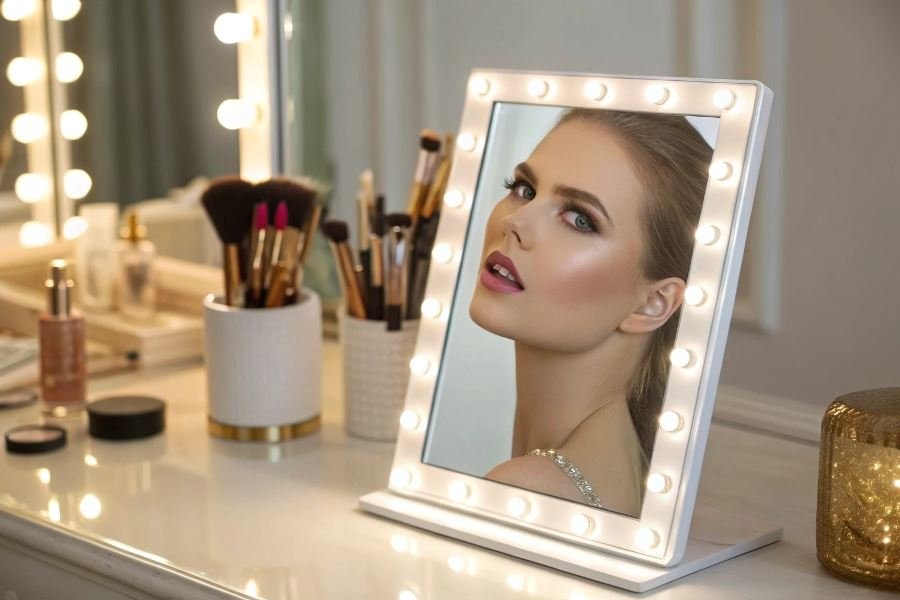
Professional makeup application demands lighting that exposes reality without mercy. The gold standard remains natural daylight (5000-6500K color temperature), but since we can’t always work next to floor-to-ceiling windows, strategic alternatives exist:
- LED ring lights with adjustable brightness and color temperature settings
- Three-point lighting systems that eliminate shadows
- Portable light panels that can be positioned to illuminate specific facial areas
The key is eliminating shadows while maintaining color accuracy—your client should look flawless in any environment, not just your perfectly lit station.
Seating That Supports Both Bodies
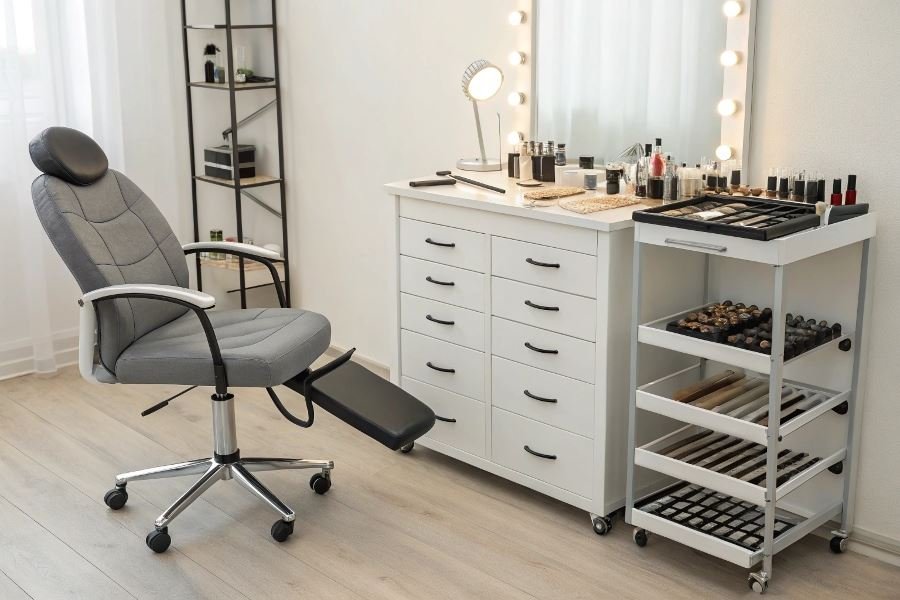
The makeup chair isn’t just furniture—it’s a critical tool. For clients, hydraulic chairs with adjustable heights (typically 18-21 inches from floor) provide comfort during lengthy sessions. For artists, consider these essentials:
| Artist Seating Feature | Benefit |
|---|---|
| Adjustable height stool | Maintains proper posture regardless of client height |
| Swivel capability | Reduces twisting motions that strain your back |
| Small backrest | Provides support without restricting movement |
| Wheeled base | Allows easy repositioning without standing |
Position your client at eye level to eliminate hunching—your spine will thank you after decades in the profession.
Strategic Tool Organization
The professional makeup kit contains dozens, sometimes hundreds of products. Efficiency demands organization systems that prioritize:
- Frequency of use – Most-used items within arm’s reach
- Workflow sequence – Tools arranged in application order
- Visibility – Clear containers or labeled drawers
- Accessibility – No digging or searching mid-application
Consider magnetic palettes from Z Palette for customized eyeshadow collections and clear acrylic organizers from Muji for everyday essentials.
Adjustable Workstation Design
The physical structure of your station should adapt to you—not force your body into uncomfortable positions. Modern makeup stations feature:
- Height-adjustable surfaces (30-45 inches from floor)
- Modular components that can be reconfigured for different services
- Extendable trays for additional workspace when needed
- Cable management systems to prevent tripping hazards
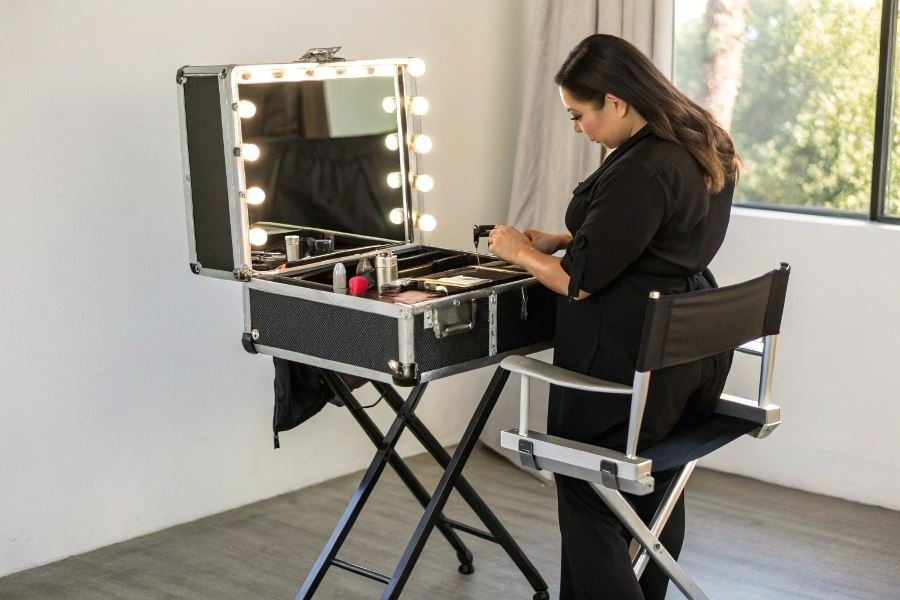
For mobile artists, portable stations from Cantoni offer professional-grade solutions that maintain ergonomic principles even on location.
Remember that your workspace isn’t just about aesthetics—it’s a precision instrument that, when properly calibrated, allows your artistic vision to translate flawlessly onto your client’s face while preserving your physical wellbeing for a sustainable career.
Transforming Your Makeup Workspace for Peak Performance
Revitalizing Your Existing Setup
Transforming your makeup workspace doesn’t require starting from scratch. Begin by conducting an ergonomic assessment: stand at your station and note any movements that cause strain. The ideal setup allows you to reach 90% of your tools without bending or stretching.
First, adjust your chair and table heights. Your elbows should rest at approximately 90 degrees when working. For standing setups, an anti-fatigue mat from The Original Fatigue Mat can reduce pressure on your lower back by up to 40%.
Next, reorganize your tools using the frequency principle:
- Primary zone: Items used constantly (foundation, brushes, sponges)
- Secondary zone: Products used regularly (palettes, setting sprays)
- Tertiary zone: Specialty items used occasionally
Lighting transformation makes a dramatic difference. Position your primary light source at face level, not overhead, to eliminate shadows. The Glamcor Multimedia X provides 96+ CRI lighting that reveals true colors while maintaining proper ergonomic positioning.
The most effective workspace reorganizations focus on reducing repetitive movements rather than simply making things look organized.
Finally, cable management prevents tripping hazards and extends equipment life. Invest in cable clips and velcro ties to secure everything neatly beneath your station.
Budget-Friendly Ergonomic Upgrades
Ergonomic improvements don’t require emptying your bank account. Start with a properly adjusted chair—even a $75 office chair with lumbar support dramatically outperforms a $500 stylish chair without ergonomic features.
For mobile artists, lightweight alternatives make a significant difference:
- Collapsible brush holders ($15-30)
- Rolling cases with telescoping handles ($120-200)
- Foldable LED lights with adjustable height ($50-100)
DIY solutions deliver surprising results. Create custom brush holders from PVC pipes covered in decorative paper. Transform ordinary shelving with drawer dividers made from repurposed cardboard boxes.
| Upgrade | Cost Range | Ergonomic Benefit |
|---|---|---|
| Adjustable stool | $60-150 | Reduces back strain by 35% |
| Task lighting | $30-80 | Decreases eye fatigue by 60% |
| Tool organizers | $15-40 | Cuts reaching movements by 45% |
| Anti-fatigue mat | $40-90 | Lowers leg fatigue by 50% |
Consider investing in a Makeup Box Shop portable station that combines storage with proper working height—these modular systems grow with your career while maintaining ergonomic principles.
Maintaining Your Ergonomic Advantage
The best ergonomic setup requires consistent maintenance. Implement a weekly 15-minute assessment routine: check for items that have migrated from their designated zones and return them to their proper places.
Monthly deep cleaning prevents product buildup that can compromise your workspace flow. Remove everything, sanitize surfaces with appropriate cleaners, and reassess placement before returning items.
Quarterly equipment checks ensure your tools remain in optimal condition. Inspect chair mechanisms, light fixtures, and storage components for wear. Apply lubricant to moving parts and tighten loose screws.
Seasonal reorganization accommodates changing product lines. As you transition between seasonal looks, take the opportunity to rotate products, bringing frequently used items forward.
Technology maintenance preserves functionality. Clean fan vents on lighting systems and replace batteries in portable equipment. The Makeup Light systems last 40% longer with proper maintenance.
Remember that ergonomics evolves with your body. As you age or if you experience injuries, your workspace needs will change. Schedule professional ergonomic assessments every two years to ensure your setup continues supporting your health and productivity.
Discover how to create an ergonomic makeup workspace that prevents fatigue and enhances creativity. Learn professional lighting techniques, optimal tool arrangement, and adjustable setup solutions for better client experiences and improved artistry.
Discover how to create an ergonomic makeup workspace that prevents fatigue and enhances creativity. Learn professional lighting techniques, optimal tool arrangement, and adjustable setup solutions for better client experiences and improved artistry.