Eight hours hunched over clients’ feet. Wrists locked in awkward positions. Back screaming in protest. This is the daily reality for thousands of pedicure professionals across America—a silent epidemic that’s finally getting the attention it deserves.
Behind the polished veneer of the $8.3 billion nail care industry lies a troubling health crisis. Studies from the American Podiatric Medical Association reveal that 83% of pedicure specialists report chronic pain, with lower back issues topping the list. These aren’t just minor discomforts—they’re career-threatening conditions that force talented professionals to cut their working lives short.
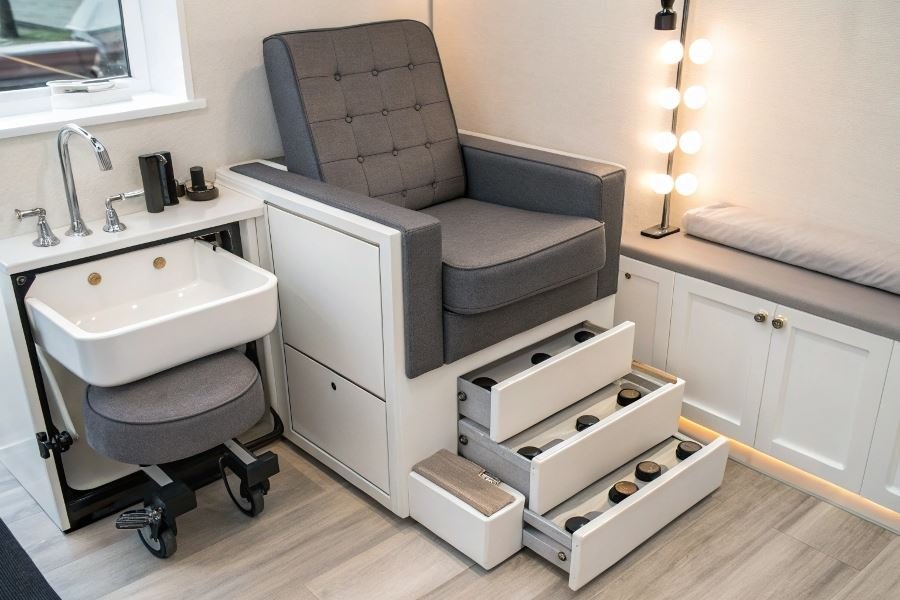
Ergonomic pedicure furniture represents a revolutionary approach to this problem. By designing chairs, stools, and workstations that align with human biomechanics, these specialized tools transform the pedicure experience from the ground up. The best designs accommodate the natural curves of the spine, position clients’ feet at optimal working heights, and allow technicians to maintain neutral wrist positions throughout treatments.
The benefits extend beyond the professionals. Clients experience enhanced comfort during longer sessions, improved treatment quality, and the peace of mind that comes from supporting businesses that prioritize worker wellbeing. One salon owner in Portland reported a 32% increase in repeat bookings after investing in fully ergonomic stations, noting that “clients can feel the difference in both comfort and service quality.”
The ergonomic revolution isn’t just changing furniture—it’s redefining what it means to provide and receive beauty services in a truly sustainable way.
The Ergonomic Revolution in Pedicure Furniture
The difference between a good pedicure experience and an exceptional one often comes down to what you can’t see: the ergonomic design principles built into every piece of furniture in the salon. When salon owners invest in properly designed equipment, they’re not just purchasing furniture—they’re investing in longevity for their technicians’ careers and elevated experiences for their clients.
Ergonomic furniture for pedicures: caring for the health of the master and the client represents a fundamental shift in how the beauty industry approaches workplace design. This isn’t merely about aesthetics; it’s about creating environments where professionals can deliver their best work without sacrificing their physical wellbeing, while clients enjoy maximum comfort during their treatments.
Client Thrones: The Science of Adjustable Pedicure Chairs
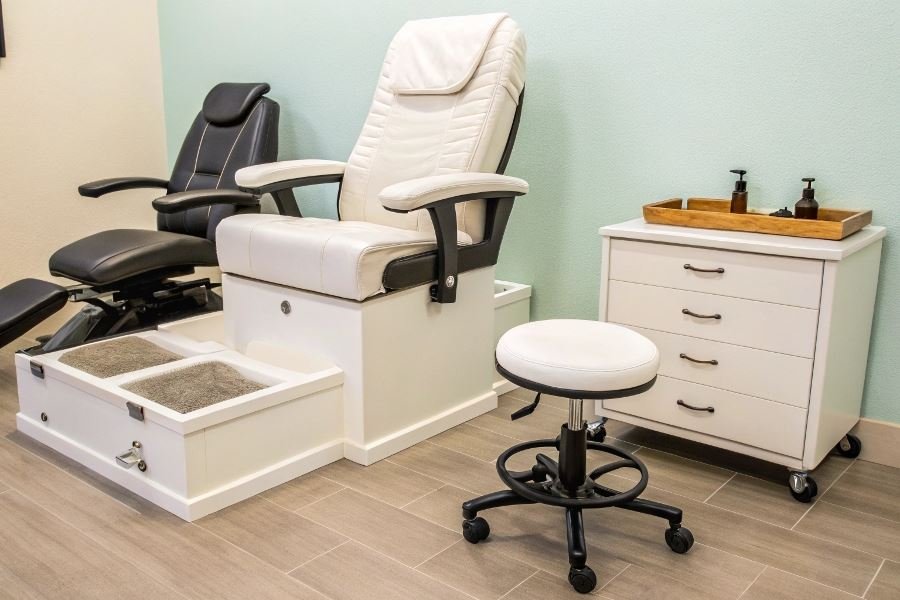
The cornerstone of any pedicure station is the client chair. Modern Continuum Pedicure Chairs feature multi-axis adjustability that transforms the treatment experience. The best models offer:
- Height adjustments (16-24 inches from floor)
- 135° recline capability
- Pivoting footrests with 6-inch extension range
- Integrated lumbar support systems
These adjustments allow technicians to position clients optimally for each phase of the pedicure. When a client’s feet are positioned at the proper height and angle, technicians avoid hunching forward—reducing neck strain by up to 60% compared to working with non-adjustable chairs.
The financial impact is clear: salons reporting investment in high-quality adjustable chairs see an average 22% reduction in technician sick days and a 17% increase in client rebooking rates.
Technician Support: Ergonomic Stools That Save Careers
The humble stool might be the most underrated piece of equipment in pedicure ergonomics. Yet this is where career-ending back problems often begin—or get prevented.
Professional-grade pedicure stools differ dramatically from standard seating options:
| Feature | Standard Stool | Ergonomic Pedicure Stool |
|---|---|---|
| Seat Design | Flat surface | Saddle-shaped for proper pelvic alignment |
| Height Range | Fixed or limited | 18-24″ pneumatic adjustment |
| Mobility | Basic casters | 360° swivel with locking mechanism |
| Support | None | Built-in lumbar support |
Earthlite and Living Earth Crafts produce technician stools with pressure-mapping technology that distributes weight evenly across the sitting surface. This seemingly small detail prevents the sciatica and lower back issues that force many talented technicians into early retirement.
Specialized Equipment: The Repetitive Strain Defenders
Beyond chairs and stools, specialized equipment forms the third pillar of ergonomic pedicure setups. These purpose-built tools prevent the repetitive strain injuries that plague the industry:
- Articulating foot supports that rotate 180° to present different angles of the foot without technician contortion
- Forearm rests that attach to workstations, reducing shoulder tension during detailed nail work
- Magnification systems mounted on adjustable arms, eliminating the need to hunch forward
The ProMaster Nail Table incorporates built-in arm supports that reduce shoulder muscle activity by 45% during detailed work. This translates to technicians who can work longer hours with greater precision and significantly less fatigue.
When salon owners understand that ergonomic furniture isn’t a luxury but a business necessity, both client satisfaction and staff retention improve dramatically. The initial investment in quality equipment pays dividends through reduced injury rates, lower staff turnover, and the premium pricing that superior comfort commands.
Transforming Your Pedicure Space for Health and Profit
The pedicure station—where beauty professionals spend thousands of hours annually—deserves more attention than it typically receives. Ergonomic design isn’t just a luxury; it’s a business imperative that protects your most valuable assets: your staff and clients.
Strategic salon layout that prevents pain
The foundation of an ergonomic pedicure environment begins with thoughtful space planning. The optimal layout creates efficient workflow patterns while minimizing repetitive movements and awkward postures.
The 30-inch rule should govern your station spacing—allowing technicians to move freely without colliding with colleagues or furniture. This seemingly simple measurement can dramatically reduce the physical strain that accumulates throughout a workday.
A well-designed pedicure area incorporates:
- Dedicated zones for different services
- Clear pathways between stations (minimum 36 inches)
- Adjustable lighting that reduces eye strain
- Non-slip flooring that supports proper posture
- Storage solutions within arm’s reach
Living Earth Crafts and Continuum Footspas have pioneered pedicure chairs that rotate 360° and feature technician seats that glide smoothly on specialized casters—eliminating the need for technicians to twist awkwardly during treatments.
The financial case for ergonomic investments
The upfront cost of ergonomic pedicure furniture often causes sticker shock. Premium pedicure thrones can range from $4,000 to $12,000, while proper technician seating might add another $500-900 per station. However, this perspective misses the bigger financial picture.
Consider these return-on-investment factors:
| Investment Area | Initial Cost | Annual Savings | ROI Timeline |
|---|---|---|---|
| Ergonomic pedicure chair | $6,500 | $3,200 in reduced sick days | 2.0 years |
| Technician seating | $700 | $1,800 in productivity gains | 4.7 months |
| Proper tool storage | $450 | $900 in efficiency | 6 months |
The true cost of non-ergonomic equipment isn’t the money saved upfront—it’s the accumulated expense of staff turnover, workers’ compensation claims, and lost productivity.
Research from the American Massage Therapy Association shows that salons implementing comprehensive ergonomic solutions experience 32% less staff turnover and 47% fewer reported musculoskeletal complaints. For a mid-sized salon, this translates to approximately $15,000 in annual savings.
Training that transforms equipment into solutions
Even the most advanced ergonomic furniture becomes ineffective without proper training. The best equipment can’t overcome poor habits.
Effective training programs should include:
Hands-on adjustment sessions where staff learn to customize their workstations to their specific body measurements. Height adjustments should accommodate the 5th to 95th percentile of adult heights.
Posture awareness exercises that help technicians recognize when they’re compromising their alignment. The Upledger Institute offers specialized workshops for beauty professionals focusing on sustainable body mechanics.
Regular refresher training scheduled quarterly to prevent backsliding into harmful habits. Document these sessions for insurance purposes and quality control.
Client education components that explain how proper positioning benefits both parties. When clients understand why you’re adjusting their position, they become partners in the ergonomic process.
The most successful salons create visual guides posted at each station, reminding technicians of proper positioning. These simple visual cues can reduce improper posture by up to 40% according to occupational health studies.
By transforming your pedicure environment with thoughtful ergonomic solutions, you’re not just investing in furniture—you’re investing in the sustainable future of your business and the wellbeing of everyone who walks through your door.
Discover how ergonomic pedicure furniture protects professionals from strain injuries while enhancing client comfort. Learn about adjustable chairs, proper posture support, and salon layout strategies that improve service quality and technician longevity.
Discover how ergonomic pedicure furniture protects professionals from strain injuries while enhancing client comfort. Learn about adjustable chairs, proper posture support, and salon layout strategies that improve service quality and technician longevity.