Ever driven past a road sign that changed its message as you approached? That’s not magic—it’s the culmination of decades of display technology innovation. While the humble painted metal sign has guided travelers for generations, today’s intelligent roadways are showcasing a revolution in how critical information reaches drivers.
The journey from static to dynamic displays represents one of transportation’s most significant yet underappreciated transformations. Traditional fixed signs—those aluminum rectangles with reflective coatings—served admirably for decades, but they couldn’t adapt to changing conditions. The oil crisis of 1973 prompted early experiments with variable message signs, allowing traffic managers to communicate real-time information for the first time.
Modern display technologies in road signage now balance three critical factors: visibility in all conditions, durability against harsh elements, and energy efficiency. LED displays have emerged as frontrunners, offering exceptional brightness even in direct sunlight while consuming minimal power. Meanwhile, prismatic displays physically rotate elements to change messages without requiring constant electricity.
“The right display technology can reduce accident rates by up to 40% at problematic intersections by providing timely warnings about hazards ahead.” – Federal Highway Safety Commission
These advanced signs don’t just direct traffic—they save lives. By delivering instant alerts about accidents, weather conditions, or congestion, dynamic displays give drivers precious seconds to react. The evolution continues with signs that can communicate directly with connected vehicles, creating a seamless information ecosystem that makes our roads smarter and safer than ever before.
Display Technologies Revolutionizing Modern Road Signs
Road signs have evolved dramatically from simple painted metal to sophisticated communication systems. The most popular display technologies in road signs today combine visibility, durability, and increasingly, interactive capabilities to keep drivers informed and safe across America’s vast highway network.
Let’s examine the three dominant technologies that have transformed roadside communication from static messages to dynamic information systems capable of adapting to changing conditions.
LED Displays: Brightness Meets Efficiency
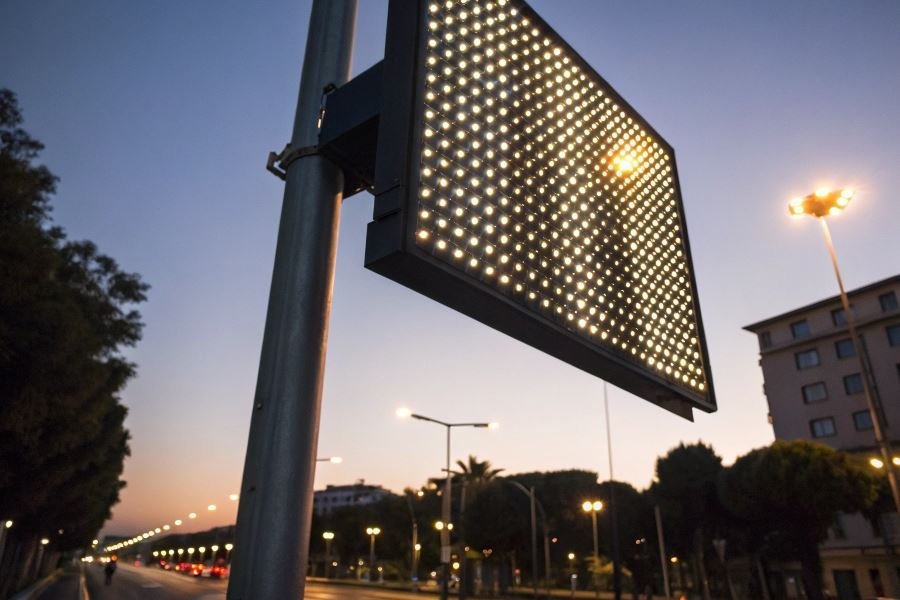
LED (Light Emitting Diode) technology has become the gold standard for digital road signs, offering unmatched visibility in all weather conditions. These displays use clusters of tiny light-emitting semiconductors that consume minimal power while delivering maximum impact.
Key advantages of LED road signs include:
- Exceptional brightness (up to 7,000 nits) visible even in direct sunlight
- Energy efficiency consuming 40-60% less power than older technologies
- Operational lifespans exceeding 100,000 hours (11+ years of continuous use)
- Ability to display multiple colors and graphics
LED signs excel in high-traffic areas where visibility is critical, particularly at complex intersections and highway merges. The Federal Highway Administration reports that LED-equipped warning signs can reduce accidents by up to 30% at problematic intersections.
The technology isn’t without limitations, however. Initial installation costs remain high, typically 10, 000−50,000 depending on size and complexity. Maintenance requires specialized knowledge, and extreme temperature fluctuations can affect performance without proper thermal management systems.
VMS Technology: Information When It Matters Most
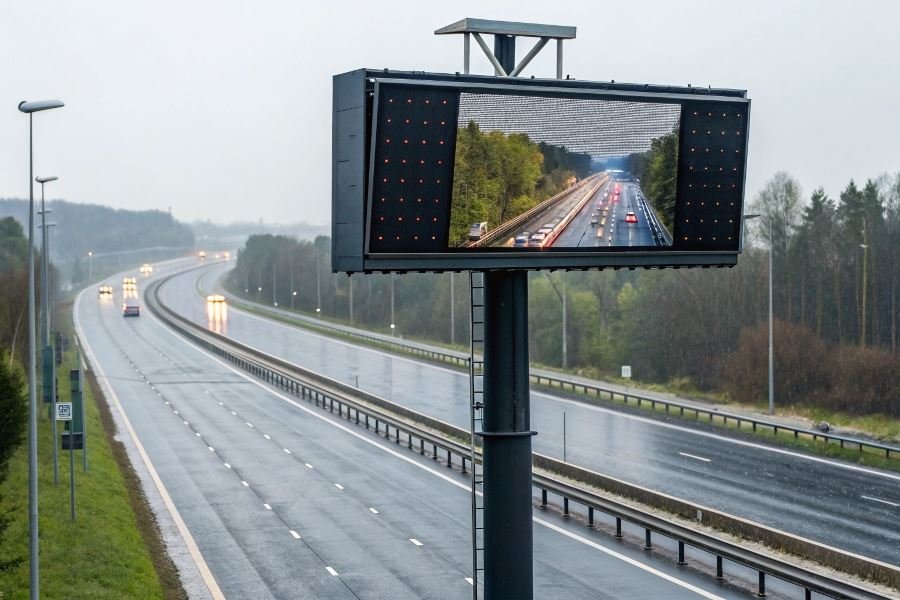
Variable Message Signs (VMS) represent the next evolution in road communication, offering unprecedented flexibility for traffic management. These programmable displays can be updated remotely in real-time, making them invaluable for emergency notifications, traffic advisories, and event management.
VMS systems typically incorporate:
- Remote control capabilities via cellular or fiber networks
- Pre-programmed message libraries for common scenarios
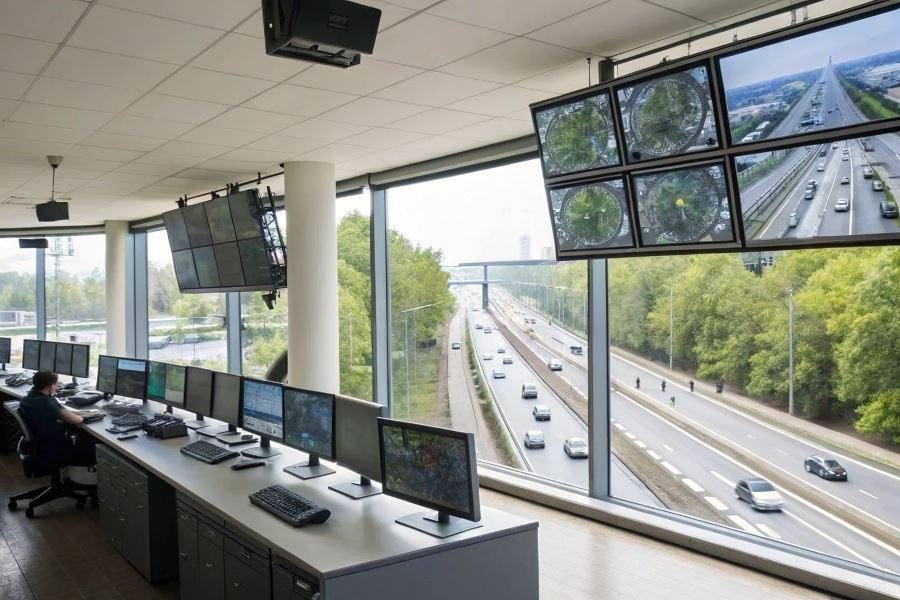
- Integration with traffic monitoring systems
- Weather-resistant enclosures rated for extreme conditions
During the 2021 winter storms in Texas, VMS systems proved critical in redirecting traffic away from dangerous road conditions, potentially saving hundreds of lives through timely information delivery.
| VMS Type | Typical Applications | Average Cost Range |
|---|---|---|
| Full-matrix | Highways, major arterials | 75, 000−150,000 |
| Line-matrix | Urban corridors, work zones | 30, 000−60,000 |
| Character-matrix | Local roads, temporary installations | 15, 000−25,000 |
Retroreflective Materials: The Reliable Backbone
Despite digital advancements, retroreflective technology remains essential in modern road signage. These passive materials reflect light from vehicle headlights directly back to drivers, requiring no power source while maintaining visibility in all conditions.
Modern retroreflective signs utilize:
- Prismatic sheeting with up to 3x the reflectivity of older materials
- Specialized coatings that resist graffiti and environmental damage
- Color-stable pigments rated for 10-12 years of outdoor exposure
- Designs optimized for maximum visibility at standard viewing distances
The 3M Company revolutionized this field with Diamond Grade reflective sheeting, which maintains effectiveness even when wet or viewed from extreme angles.
Retroreflective technology proves particularly valuable in rural areas where power infrastructure is limited and during emergencies when electrical systems may fail. Their simplicity and reliability ensure they’ll remain a cornerstone of road safety for decades to come, complementing rather than competing with their digital counterparts.
The Road Ahead: Future Trends in Sign Display Tech
Smart Signs That Talk to Your Car
Road signs are getting smarter, and the integration with vehicle navigation systems represents perhaps the most transformative shift in roadway communication since the invention of reflective materials. These intelligent systems create a seamless dialogue between infrastructure and vehicles, fundamentally changing how drivers receive information.
Siemens Mobility has pioneered connected infrastructure that broadcasts real-time data directly to compatible navigation systems. These smart signs don’t just display information visually—they transmit digital signals containing speed limits, hazard warnings, and traffic conditions directly to vehicles. The result? Your navigation system knows about road changes before you even see the physical sign.
The real magic happens with V2I (Vehicle-to-Infrastructure) communication. This technology enables bidirectional data exchange, allowing signs to adjust their displays based on traffic volume, weather conditions, or emergency situations. For example, during rush hour, a smart speed limit sign might automatically reduce the posted limit and simultaneously push this information to approaching vehicles.
“The future of road safety isn’t just about better signs—it’s about creating an ecosystem where infrastructure and vehicles collaborate intelligently.”
Powering Displays Without the Grid
Sustainability has become the driving force behind next-generation road sign power solutions. Traditional hardwired connections are increasingly giving way to self-sufficient alternatives that reduce both installation costs and environmental impact.
Solar technology leads this revolution, with high-efficiency photovoltaic panels now capable of powering even energy-hungry LED displays in regions with moderate sunlight. 3M has developed ultra-efficient solar collectors specifically designed for roadside applications, featuring specialized coatings that resist dust accumulation and maintain performance between cleanings.
Wind-solar hybrid systems are gaining traction in areas with variable weather patterns:
| Power Solution | Energy Output | Best Applications | Maintenance Cycle |
|---|---|---|---|
| Solar Only | 50-200W | Sunny regions, low-power displays | 12-18 months |
| Wind-Solar Hybrid | 100-500W | Variable climate zones, medium-power displays | 18-24 months |
| Kinetic Energy Recovery | 20-100W | High-traffic areas, supplemental power | 6-12 months |
Kinetic energy recovery systems represent the newest frontier, harvesting energy from passing vehicles through pressure plates embedded in roadways. This technology is particularly effective near intersections where vehicles regularly slow down or stop.
Seeing Through the Storm
Adverse weather conditions have long been the nemesis of road sign visibility, but emerging technologies are rapidly changing this equation.
Electrochromic displays adapt their brightness and contrast based on ambient conditions. Unlike static signs, these smart surfaces can increase luminosity during fog or heavy rain, ensuring critical information remains visible when drivers need it most. Daktronics has pioneered weather-responsive LED technology that automatically adjusts based on visibility sensors.
Thermal imaging integration allows signs to detect approaching vehicles even in zero-visibility conditions, triggering enhanced illumination precisely when drivers enter the critical viewing zone. This targeted approach conserves energy while maximizing effectiveness.
Perhaps most promising are new materials that actively repel precipitation. Hydrophobic and oleophobic coatings developed by 3M cause water and snow to bead and slide off sign surfaces rather than accumulating. When combined with subtle heating elements powered by renewable energy, these systems ensure signs remain clear and legible regardless of weather conditions.
These innovations collectively point toward a future where road signs remain effective communication tools in all conditions, seamlessly integrating with vehicles while minimizing environmental impact.
Discover the evolution of modern road sign technologies: LED displays, Variable Message Signs, and retroreflective materials. Learn how these innovations enhance traffic safety, provide real-time information, and adapt to challenging visibility conditions.
Discover the evolution of modern road sign technologies: LED displays, Variable Message Signs, and retroreflective materials. Learn how these innovations enhance traffic safety, provide real-time information, and adapt to challenging visibility conditions.