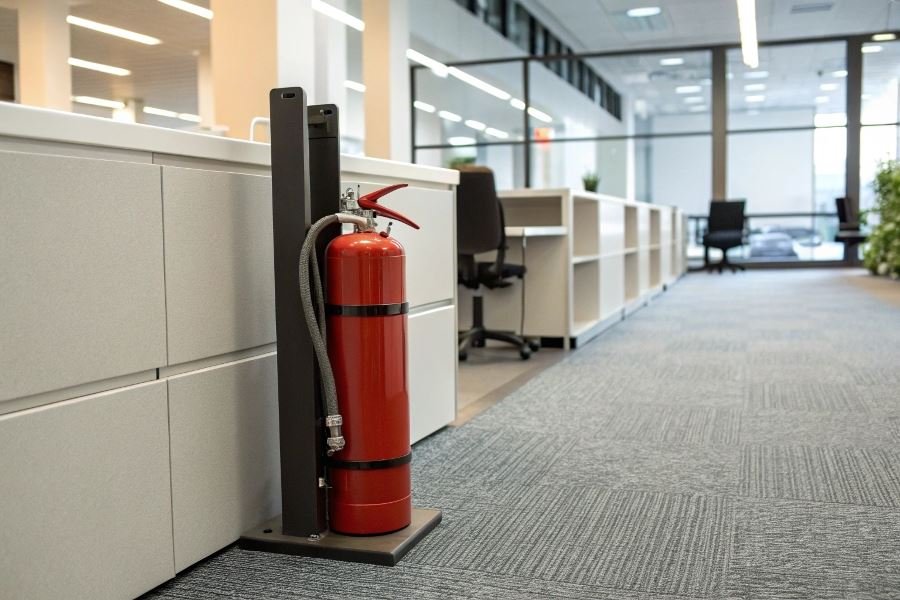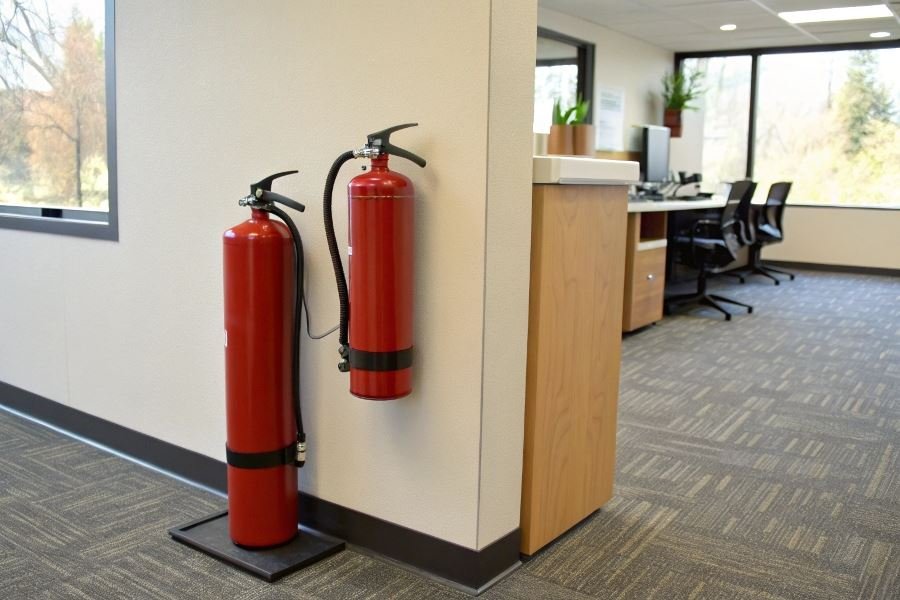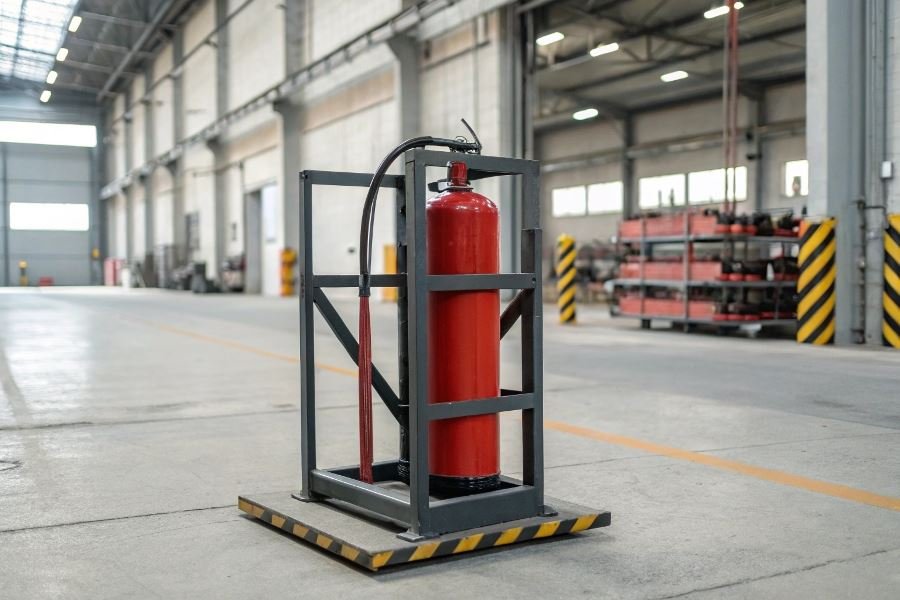
Did you know that properly placed fire extinguisher stands can reduce emergency response time by up to 30 seconds? In manufacturing environments, that half-minute difference can mean saving millions in equipment and—more importantly—lives.
When it comes to protecting your production facility, fire extinguisher stands aren’t just metal brackets on a wall—they’re your first line of defense against potential disaster. Selecting the right stands involves careful consideration of multiple factors that balance regulatory compliance with practical accessibility.
The critical role of proper placement
Fire safety in industrial settings isn’t optional—it’s essential. Production facilities face unique fire risks due to the presence of machinery, electrical equipment, flammable materials, and complex workflows. A strategically positioned fire extinguisher stand ensures that firefighting equipment is:
- Immediately visible during emergency situations
- Easily accessible to all personnel regardless of their location
- Protected from damage while remaining ready for use
- Properly maintained through regular inspections
Navigating regulatory requirements
OSHA and NFPA standards establish clear guidelines for fire extinguisher placement. These include:
“Portable fire extinguishers shall be installed so that the travel distance for employees to any extinguisher is 75 feet (22.9 m) or less.” — NFPA 10
Additionally, local building codes may impose stricter requirements based on your facility’s specific hazards and layout. Compliance isn’t just about avoiding fines—it’s about creating a genuinely safer workplace.
Key selection criteria at a glance
When evaluating fire extinguisher stands for your production facility, consider:
- Visibility factors – High-contrast colors and reflective elements
- Durability requirements based on environmental conditions
- Accessibility features for quick deployment
- Compatibility with your specific extinguisher types and sizes
The Engineering Behind Fire Safety Infrastructure
When selecting fire extinguisher stands for industrial environments, the difference between adequate protection and optimal safety often comes down to thoughtful engineering decisions. Manufacturing facilities present unique challenges that demand specialized fire safety equipment configurations.
Evaluating criteria for choosing a fire extinguisher stand for production facilities requires balancing regulatory compliance with practical considerations. The most effective installations account for environmental factors, accessibility requirements, and compatibility with specific suppression technologies.
Material Construction That Withstands Industrial Realities
The foundation of any reliable fire extinguisher stand begins with its construction materials. In manufacturing settings, stands face exposure to chemicals, temperature fluctuations, and physical impacts that can compromise integrity over time.
Stainless steel stands offer superior corrosion resistance in facilities with high humidity or chemical exposure. Grade 304 stainless provides excellent protection in most environments, while Grade 316 delivers enhanced performance in facilities with chloride exposure or coastal locations.
Powder-coated carbon steel alternatives provide cost-effective durability with a 5-7 year service life in standard indoor environments.
For outdoor installations or extreme conditions, consider these material specifications:
| Material | Environmental Resistance | Expected Lifespan | Best Applications |
|---|---|---|---|
| 316 Stainless | Excellent chemical/UV resistance | 15-20+ years | Chemical processing, outdoor |
| Aluminum | Good corrosion resistance, lightweight | 10-15 years | Clean manufacturing, food processing |
| Fiberglass | Non-conductive, chemical resistant | 10-15 years | Electrical facilities, corrosive environments |
Strategic Visibility That Saves Critical Seconds
The most durable stand becomes worthless if workers can’t locate it during an emergency. Effective visibility incorporates multiple design elements working in concert.
High-contrast color schemes remain the industry standard, with red-on-white configurations demonstrating optimal visibility across varied lighting conditions. Photoluminescent markings provide critical backup during power failures, maintaining visibility for up to 8 hours after charging.
Placement considerations should account for:
- Maximum viewing distance (typically 100 feet in open areas)
- Sight line obstructions from equipment or inventory
- Consistent positioning relative to exits and hazard areas
Strategic placement at intersections of main walkways increases familiarity during daily operations, reinforcing location awareness during emergencies.
Dimensional Compatibility With Your Suppression Arsenal
Fire extinguisher stands must accommodate the specific extinguisher types required for your facility’s hazard profile. Dimensional compatibility ensures both secure mounting and quick removal during emergencies.
Standard Class A extinguishers (water, foam) typically require different mounting configurations than specialized Class D (combustible metals) or Class K (kitchen fires) units. Multi-extinguisher stands should incorporate:
- Adjustable mounting brackets to accommodate varying cylinder diameters
- Weight-rated shelving (minimum 50 pounds per extinguisher)
- Clearance specifications that allow unobstructed access to operating handles
Modular systems with expandable configurations provide future flexibility as your fire protection needs evolve. The most advanced stands incorporate QR-code based maintenance tracking to streamline inspection documentation.
When selecting stands for specialized extinguishers like wheeled units or clean agent systems from Ansul, ensure mounting hardware meets manufacturer specifications to maintain warranty coverage and operational reliability.
Maximizing Safety: Advanced Fire Extinguisher Stand Selection
When protecting your production facility from fire hazards, the stand that holds your extinguishers deserves as much strategic consideration as the extinguishers themselves. Far from being mere metal brackets, today’s fire extinguisher stands represent the intersection of safety compliance, operational efficiency, and facility-specific customization.
Tailoring stands to your industrial reality
The most effective fire protection solutions acknowledge that no two production environments are identical. Modern fire extinguisher stands offer customization options that transform standard safety equipment into precision-engineered protection systems:
- Material compatibility – Facilities with corrosive chemicals require stands constructed from corrosion-resistant materials like stainless steel or specialized polymers
- Visibility enhancements – High-noise environments benefit from stands with integrated LED lighting or photoluminescent markings that remain visible during power outages
- Specialized configurations – Clean rooms and food processing facilities can utilize antimicrobial coatings on stands to prevent contamination
The difference between a generic stand and a customized solution often becomes apparent during emergency situations when seconds count.
Manufacturing facilities with heavy machinery vibration should consider stands with reinforced mounting systems that prevent extinguishers from becoming dislodged. Meanwhile, outdoor processing areas require weather-resistant stands with UV protection and drainage features to prevent water accumulation.
Installation and maintenance fundamentals
Even the most advanced stand becomes a liability when improperly installed or neglected. Effective implementation requires attention to several critical factors:
| Consideration | Requirement | Benefit |
|---|---|---|
| Mounting height | 3.5-5 feet from floor to handle | Optimal accessibility for average adult |
| Clearance zone | Minimum 3-foot radius | Unobstructed access during emergencies |
| Inspection schedule | Monthly visual checks | Early identification of damage or tampering |
| Load capacity | 150-200% of extinguisher weight | Prevents failure during emergency access |
Maintenance considerations extend beyond the stand itself to the surrounding environment. “The most common installation mistake I see is placing stands in locations that eventually become blocked by inventory or equipment,” notes a veteran fire safety inspector with 20 years of experience.
Value assessment beyond initial cost
When evaluating fire extinguisher stands, the purchase price represents only a fraction of the total ownership equation. A comprehensive cost-benefit analysis should consider:
-
Compliance savings – Premium stands with integrated inspection tags and QR-code tracking systems streamline documentation, potentially saving thousands in compliance management hours annually
-
Durability dividends – Higher-grade materials may increase initial costs by 30-40%, but can extend service life by 5-10 years in harsh industrial environments
-
Replacement reduction – Stands with anti-theft features and tamper protection significantly reduce unauthorized removal and misuse, decreasing replacement frequency
-
Insurance implications – Some insurance providers offer premium reductions for facilities that implement advanced fire safety equipment systems, including properly specified stands
The true value of a fire extinguisher stand isn’t measured by its purchase price, but by its contribution to your facility’s comprehensive safety infrastructure.
When properly selected, installed and maintained, advanced fire extinguisher stands transform from simple storage solutions into critical components of your facility’s fire protection strategy, delivering safety, compliance, and operational benefits that far outweigh their initial investment.
Discover the 7 critical criteria for selecting industrial fire extinguisher stands that meet safety regulations while maximizing visibility, durability, and accessibility in manufacturing environments. Essential guidance for facility managers.
Discover the 7 critical criteria for selecting industrial fire extinguisher stands that meet safety regulations while maximizing visibility, durability, and accessibility in manufacturing environments. Essential guidance for facility managers.