When seconds count, the right fire safety equipment isn’t just important—it’s critical.
Fire shields represent the frontline defense in any comprehensive fire safety strategy, yet many facility managers struggle with a fundamental choice: open or closed configuration? This decision impacts not just compliance, but potentially lives and property as well. The distinction between these two systems goes far beyond mere aesthetics, touching on accessibility, protection levels, and practical deployment considerations.
Fire shields serve as organized stations housing essential firefighting tools—extinguishers, hoses, axes, and other emergency equipment. Their primary purpose is twofold: to consolidate critical resources in strategic locations and to ensure immediate accessibility during emergencies when every moment matters.
“The right fire shield configuration can reduce response time by up to 30 seconds—a lifetime when flames are spreading.”
Regulatory frameworks like NFPA standards and OSHA requirements mandate specific placement, visibility, and content requirements. These aren’t arbitrary rules but life-saving protocols refined through decades of fire science and tragic lessons.
The fundamental difference? Open-type shields offer immediate visual confirmation and access to equipment without barriers, ideal for environments where speed trumps environmental protection. Closed-type shields provide superior equipment protection from dust, moisture, and tampering—critical in harsh industrial settings or public spaces where equipment security matters.
Your choice ultimately depends on balancing immediate access against environmental protection needs—a decision that deserves careful consideration rather than casual selection.
The Ultimate Showdown: Open vs. Closed Fire Shields
Fire safety equipment decisions might not seem exciting at first glance, but they’re critical investments that demand careful consideration. When it comes to fire shields, the fundamental choice between open and closed configurations can significantly impact your safety protocol effectiveness, compliance status, and maintenance requirements.
The debate around open and closed type fire shield: what to choose often centers on specific use cases and environmental factors. Both designs serve the same ultimate purpose—housing essential firefighting tools—but their structural differences create distinct advantages in various settings. Let’s dive into what makes each option unique and which might be right for your facility.
Design Architecture and Materials
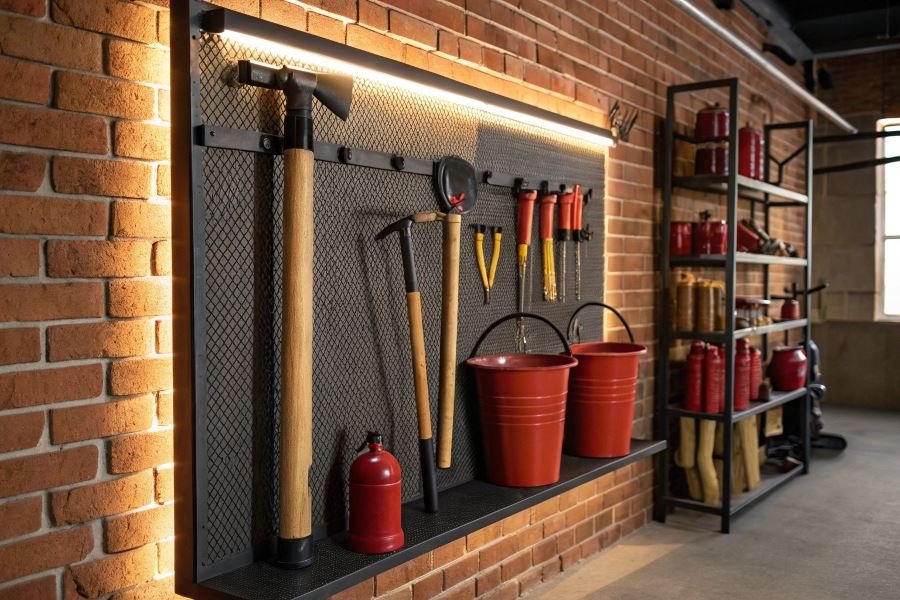
Open fire shields typically feature a backboard with exposed hooks, brackets, and shelving where equipment is visibly mounted. These shields are commonly constructed from:
- Fire-resistant painted steel (most common)
- Aluminum (for specialized environments)
- Reinforced fiberglass (for chemical facilities)
The open design prioritizes immediate visual confirmation of equipment presence and condition.
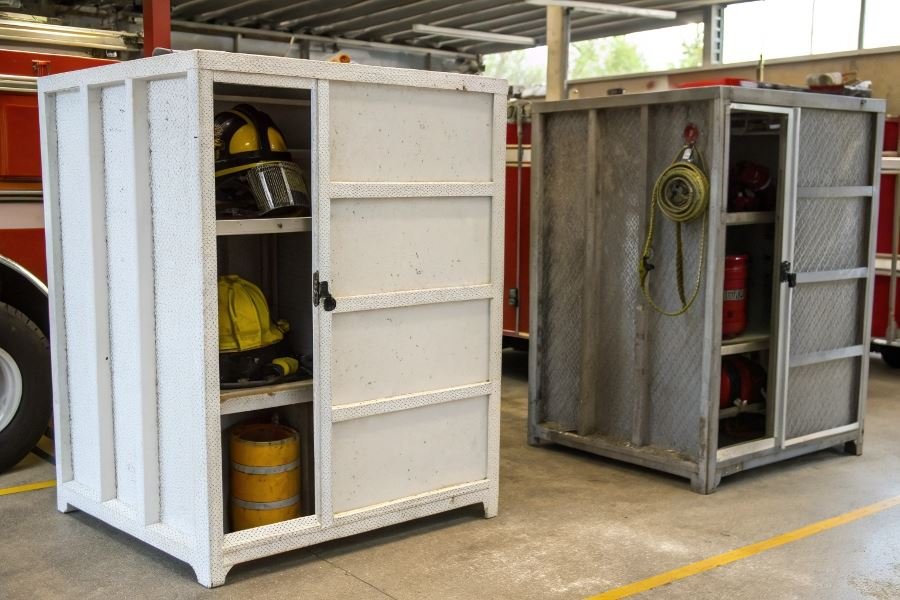
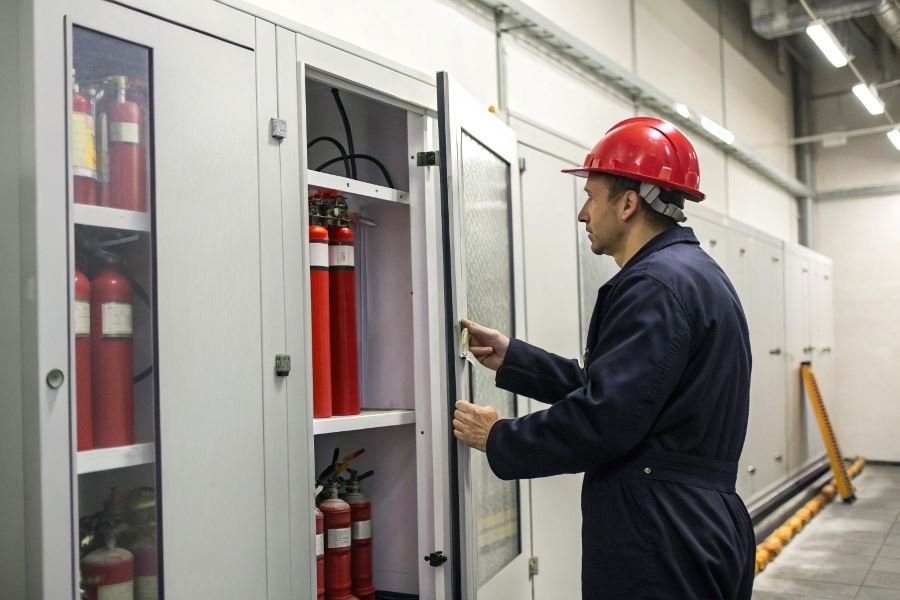
Closed fire shields incorporate protective cabinets with doors that fully enclose the firefighting equipment. Construction materials include:
- Powder-coated steel cabinets
- Stainless steel (for corrosive environments)
- Weather-resistant polymers (for outdoor installations)
Many closed shields feature transparent panels or windows to balance protection with visibility.
Visibility and Accessibility Factors
| Feature | Open Shields | Closed Shields |
|---|---|---|
| Visual inspection | Immediate | Requires opening or window |
| Access speed | Fastest | Slight delay (door operation) |
| Equipment security | Lower | Higher |
| Environmental protection | Minimal | Significant |
Open configurations excel in environments where split-second access is critical and regular visual inspection is part of safety protocols. Closed shields shine in areas where equipment protection from dust, moisture, or tampering is paramount.
Installation Requirements and Space Considerations
The mounting requirements between these options differ substantially:
Open shields typically require:
- Flat wall surface of sufficient size
- Minimum clearance area (usually 3 feet) in front
- Strategic positioning for visibility from multiple angles
- Adequate lighting for equipment identification
Closed cabinets demand:
- Structural support for heavier installations
- Door clearance space (often overlooked)
- Consideration for door swing direction
- Potentially deeper wall offsets
In tight spaces, open shields offer a slimmer profile, while closed cabinets provide better protection in high-traffic areas where accidental contact might dislodge equipment.
Maintenance Protocols and Longevity
Maintenance differences between these designs are significant:
Open shields require:
- More frequent equipment cleaning
- Regular inspection for dust accumulation
- Occasional repainting of the backboard
- Immediate replacement of missing equipment (high visibility means absences are obvious)
Closed shields demand:
- Hinge and latch mechanism maintenance
- Seal integrity checks for outdoor installations
- Interior moisture monitoring
- Door alignment adjustments
Expert insight: The maintenance investment difference between open and closed shields typically equalizes over a 5-year period, with open shields requiring more frequent but simpler maintenance, while closed shields need less frequent but more complex servicing.
The durability equation favors closed shields in harsh environments, with protection from UV exposure, moisture, and airborne contaminants extending equipment lifespan by up to 40% compared to open configurations in similar settings.
Your ultimate selection should balance immediate accessibility needs against environmental protection requirements, while considering your facility’s specific compliance obligations and maintenance capabilities.
Making the Right Fire Shield Choice: A Decision Framework
Environment Dictates Protection
When selecting between open and closed fire shields, your environment is the first critical factor. Indoor settings typically favor closed-type shields that contain equipment neatly while maintaining aesthetic appeal. These enclosed cabinets protect extinguishers and equipment from dust accumulation and casual tampering—perfect for office buildings, hospitals, and retail spaces.
Outdoor installations face different challenges. Open-type shields often perform better in high-traffic industrial yards where quick access trumps aesthetics. However, in regions with extreme weather, closed shields with weather-resistant features protect equipment from:
- Rain and moisture damage
- UV degradation
- Temperature fluctuations
- Corrosive coastal air
The climate factor can’t be overstated—equipment exposed to harsh elements may fail precisely when you need it most.
Industry-Specific Selection Criteria
Different industries have developed distinct preferences based on practical experience:
| Industry | Typical Preference | Primary Consideration |
|---|---|---|
| Manufacturing | Open-type | Rapid access during emergencies |
| Healthcare | Closed-type | Infection control and aesthetics |
| Hospitality | Recessed closed-type | Visual integration with décor |
| Chemical processing | Specialized closed-type | Protection from corrosive environments |
| Education | Tamper-resistant closed | Prevention of misuse |
The oil and gas sector often requires specialized NFPA compliant shields with additional hazardous environment certifications. Meanwhile, food processing facilities typically choose stainless steel closed cabinets that can withstand rigorous cleaning protocols.
The Economics of Protection
The cost analysis extends far beyond initial purchase price. A comprehensive ROI calculation should include:
Initial investment factors:
- Equipment purchase cost (closed types typically cost 30-45% more)
- Installation expenses
- Customization requirements
Long-term considerations:
- Equipment lifespan extension (closed shields can extend equipment life by 40-60%)
- Maintenance frequency reduction
- Insurance premium impacts
- Compliance violation avoidance
For a medium-sized facility, the average closed-type installation costs approximately $1,200-2,500 more than open alternatives. However, this investment typically pays for itself within 3-5 years through reduced replacement cycles and maintenance costs.
Size and Risk-Based Recommendations
Your facility’s dimensions and risk profile should ultimately guide your decision:
Small facilities (under 5,000 sq ft) with standard risk profiles often find adequate protection with strategically placed open shields. The cost-benefit analysis typically favors simplicity here.
Medium facilities benefit from a hybrid approach—closed shields in public-facing areas and open configurations in utility spaces.
Large industrial complexes require a comprehensive fire safety audit to determine optimal placement and type. These facilities often implement zone-specific solutions based on:
- Personnel density
- Presence of critical assets
- Evacuation route proximity
- Specific hazard types
The highest risk areas deserve the highest protection standards, regardless of facility size.
When your risk assessment identifies areas with potential for rapid fire spread or hazardous materials, invest in premium closed-type shields with additional features like status monitoring systems and specialized extinguishing agents.
Remember that your fire shield selection isn’t just about compliance—it’s about creating a comprehensive emergency response system tailored to your specific operational reality.
Discover the critical differences between open and closed fire shields with our comprehensive selection guide. Learn which option best suits your facility based on regulatory requirements, installation considerations, and safety needs.
Discover the critical differences between open and closed fire shields with our comprehensive selection guide. Learn which option best suits your facility based on regulatory requirements, installation considerations, and safety needs.