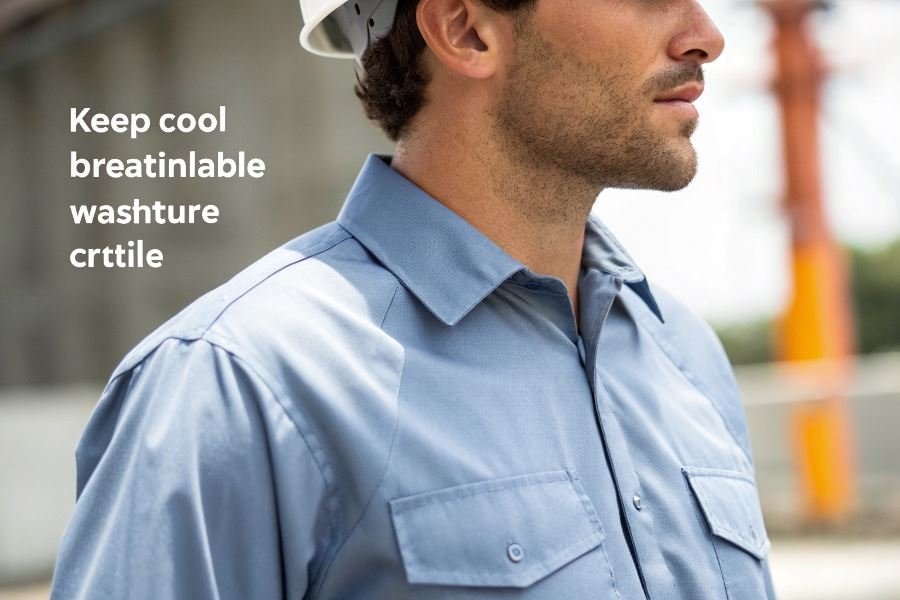
Ever wondered what stands between a welder and third-degree burns? Or what keeps an electrical worker from becoming a human conductor? It’s not luck—it’s meticulously engineered fabric technology that transforms an ordinary-looking t-shirt into potentially life-saving equipment.
Fire-resistant (FR) work t-shirts represent a critical safety barrier for professionals working in environments where thermal hazards lurk around every corner. Unlike conventional cotton tees that ignite at approximately 400°F and continue burning, FR garments self-extinguish when removed from flame sources, dramatically reducing injury severity during flash fires, arc flashes, and other thermal incidents.
The science behind these protective garments has evolved dramatically since the 1970s when workplace safety regulations began mandating appropriate protective clothing. Modern FR t-shirts utilize advanced materials like modacrylic blends, aramid fibers, and treated cotton that create molecular barriers against heat transfer. These fabrics don’t just resist ignition—they actively work to prevent the fire-oxygen-fuel triangle from completing.
Today’s standards, including NFPA 2112 and ASTM F1506, establish rigorous performance benchmarks measuring critical factors like arc rating (measured in cal/cm²), after-flame time, and char length. For workers in oil and gas, electrical utilities, and metalworking industries, these aren’t just technical specifications—they’re quantifiable measurements of survival chances during worst-case scenarios.
The evolution continues as manufacturers develop FR fabrics that don’t just protect but also provide comfort, moisture-wicking, and breathability—because safety equipment only works when workers actually wear it.
The Science Behind Fire-Resistant Work Shirts
When your workday involves potential flame hazards, what stands between you and serious injury is often just a few millimeters of specialized fabric. Fire-resistant work t-shirts represent a remarkable fusion of chemistry, textile engineering, and safety science that transforms ordinary garments into life-saving equipment. Let’s dive into what makes these specialized shirts tick.
Advanced Material Composition
Fire-resistant work t-shirts: characteristics and safety standards begin with the foundation of specialized fibers. Three primary material categories dominate the market:
Inherently Flame-Resistant Fibers: Aramid fibers like Nomex® and Kevlar® lead this category with molecular structures that resist breaking down under extreme heat.
These fibers don’t rely on chemical treatments—their flame resistance is built into their DNA, so to speak.
Treated Cotton: Regular cotton undergoes transformation through phosphorus-based compounds that create a char barrier when exposed to flame. FR-treated cotton from brands like Carhartt offers the comfort of natural fibers with added protection.
Synthetic Blends: Modern FR shirts often feature strategic combinations like modacrylic/cotton blends that optimize both protection and comfort. Bulwark pioneered many of these innovative blends.
| Material Type | Heat Resistance | Comfort Level | Typical Lifespan |
|---|---|---|---|
| Aramid Fibers | Excellent (up to 700°F) | Moderate | 5+ years |
| Treated Cotton | Good (up to 500°F) | High | 2-3 years |
| Synthetic Blends | Very Good (up to 600°F) | Good | 3-4 years |
Performance Under Fire
The effectiveness of FR shirts isn’t measured by marketing claims but by standardized testing protocols that quantify their protective capabilities:
Heat Transfer Performance (HTP): This critical metric measures how quickly heat transfers through fabric to the skin. Higher HTP ratings (measured in cal/cm²) indicate superior protection.
Flame Spread Rate: Top-tier FR shirts achieve a self-extinguishing rating within 2 seconds after flame removal. This prevents the “continuing burn” that causes many workplace injuries.
The difference between a 4.5 and 8.0 cal/cm² rating might seem small on paper, but represents a substantial increase in escape time during an actual flash fire event.
Durability Factors That Matter
Protection that fails after a few wash cycles isn’t protection at all. Modern FR shirts maintain their protective qualities through:
Wash Resistance: Premium FR shirts from manufacturers like Ariat maintain their flame-resistant properties for 50+ industrial washings—a critical factor for daily workwear.
Abrasion Tolerance: Work environments punish fabrics. The best FR shirts incorporate reinforced stitching and abrasion-resistant panels at high-wear points.
Service Life Indicators: Some advanced FR garments now include color-changing threads or tags that signal when protective properties have degraded below safe levels.
The engineering behind these shirts continues to evolve. The latest generation incorporates moisture-wicking properties, antimicrobial treatments, and improved breathability—proving that safety doesn’t have to sacrifice comfort.
When selecting FR workwear, remember that the NFPA 2112 and ASTM F1506 certifications aren’t just bureaucratic checkboxes—they represent rigorous testing protocols that ensure your shirt will perform when it matters most.
Navigating the Maze of Fire-Resistant Workwear Standards
Fire-resistant work t-shirts aren’t just clothing—they’re life-saving equipment governed by rigorous safety standards. Understanding these standards isn’t just regulatory box-checking; it’s about ensuring workers return home safely every day.
NFPA 2112: The Gold Standard for Flash Fire Protection
The National Fire Protection Association’s NFPA 2112 standard represents the benchmark for flame-resistant garments in environments with flash fire hazards. This standard requires garments to:
- Limit body burn injury to less than 50% when exposed to 3-second flash fires
- Maintain flame resistance after 100 industrial wash cycles
- Pass vertical flame tests with less than 2 seconds of afterflame
- Show no evidence of melting or dripping when exposed to heat
What makes this standard particularly robust is its testing methodology. Garments undergo evaluation on instrumented manikins exposed to simulated flash fires—a dramatic but necessary test that replicates real-world dangers.
“The difference between NFPA 2112 compliance and non-compliance can literally be measured in percentage of survivable burns.”
ASTM F1506: Electric Arc Flash Protection
For electrical workers, ASTM International developed F1506, which specifically addresses arc flash hazards. This standard requires:
- Arc rating measurements (reported in cal/cm²)
- Vertical flame resistance testing
- Heat resistance evaluation
- Durability after multiple launderings
Unlike general flame resistance standards, ASTM F1506 specifically addresses the unique thermal hazards of electric arcs, which can reach temperatures of 35,000°F—hotter than the surface of the sun.
Understanding Arc Ratings and HRC
Arc ratings measure a fabric’s protective performance against electric arc flashes, expressed in calories per square centimeter (cal/cm²). This rating directly correlates to Hazard Risk Categories (HRC):
| HRC Level | Arc Rating (cal/cm²) | Typical Applications |
|---|---|---|
| HRC 1 | 4 | Utility meter reading, warehouse work |
| HRC 2 | 8 | Electrical maintenance, panel operation |
| HRC 3 | 25 | Electrical equipment switching, work near energized parts |
| HRC 4 | 40 | Power generation work, arc flash suit required |
The higher the cal/cm² rating, the greater protection the garment provides. Most fire-resistant t-shirts fall within HRC 1-2 categories, offering protection for common workplace electrical hazards.
Selection Guidelines Based on Workplace Assessment
Selecting appropriate fire-resistant t-shirts requires a systematic approach:
- Conduct a thorough hazard assessment identifying all potential fire and electrical hazards
- Determine the specific standards applicable to your industry (petroleum, electrical, welding)
- Match the garment rating to the calculated incident energy exposure
- Consider comfort and functionality to ensure worker compliance
Industry-specific requirements often layer additional standards on top of NFPA and ASTM requirements. For instance, the oil and gas industry frequently references API standards, while utilities may have OSHA-derived specifications.
The most effective approach combines compliance with usability. Even the most protective garment fails as a safety measure if workers find it too uncomfortable to wear properly. Modern fire-resistant fabrics have dramatically improved in comfort while maintaining or exceeding protection standards.
When selecting fire-resistant t-shirts, remember that standards represent minimum requirements. Many manufacturers exceed these benchmarks, offering enhanced protection without sacrificing comfort—an investment that pays dividends in both safety and workforce satisfaction.
Discover essential safety standards for fire-resistant work t-shirts, including material technologies, heat resistance ratings, and certification requirements like NFPA 2112 and ASTM F1506 for optimal workplace protection.
Discover essential safety standards for fire-resistant work t-shirts, including material technologies, heat resistance ratings, and certification requirements like NFPA 2112 and ASTM F1506 for optimal workplace protection.