$33.1 billion – that’s the staggering annual cost of foodborne illnesses in the United States, according to CDC estimates. Behind many contamination incidents lies an overlooked culprit: improperly maintained food production equipment, including the humble cart.
Food production carts serve as the workhorses of processing facilities, transporting ingredients, finished products, and equipment throughout the production floor. Yet their maintenance often falls to the bottom of priority lists, creating significant risks to both consumer safety and operational efficiency.
The food safety imperative
The FDA’s Food Safety Modernization Act (FSMA), enacted in 2011, transformed equipment maintenance from a recommendation to a regulatory requirement. Under these guidelines, all food contact surfaces—including carts—must be designed and maintained to prevent contamination.
“A single overlooked cart with damaged wheels or crevices can harbor pathogens that contaminate entire production batches.” – Food Safety Magazine
Regular maintenance protocols that include thorough cleaning, sanitizing, and inspection prevent biofilm formation—those stubborn microbial communities that resist standard cleaning procedures and become persistent contamination sources.
The compliance landscape
Beyond FSMA, facilities must navigate a complex web of standards:
- 3-A Sanitary Standards for dairy equipment
- NSF International certifications
- USDA requirements for meat and poultry facilities
Non-compliance doesn’t just risk regulatory action—it threatens brand reputation and consumer trust that takes years to build but moments to destroy.
The financial case for preventative maintenance
Preventative maintenance isn’t just about avoiding problems—it’s a strategic investment with measurable returns:
| Reactive Approach | Preventative Approach |
|---|---|
| $4,200 average emergency repair | $1,100 average planned maintenance |
| 4-8 hours unplanned downtime | Scheduled during non-production hours |
| Potential product loss/recall | Consistent product quality |
Facilities implementing comprehensive cart maintenance programs report equipment lifespan extensions of 40-60%, dramatically improving ROI on these essential assets.
Cart Care That Keeps Food Safe
Food production facilities rely heavily on carts for transporting ingredients, finished products, and equipment throughout their operations. Proper maintenance and care of carts in food production environments isn’t just about equipment longevity—it’s a critical component of food safety compliance and operational efficiency. When carts are properly maintained, they become reliable workhorses rather than potential contamination vectors or workflow bottlenecks.
Daily cleaning protocols that matter
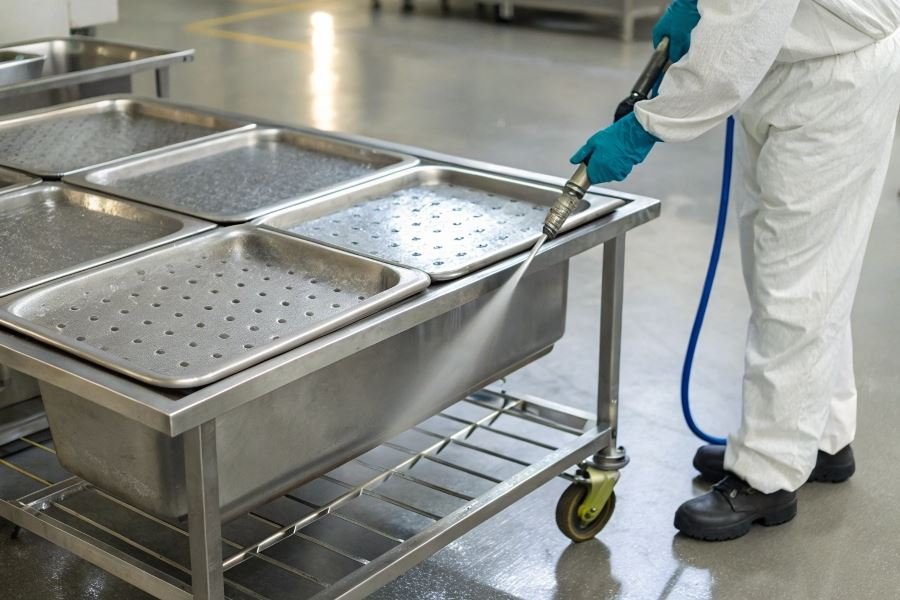
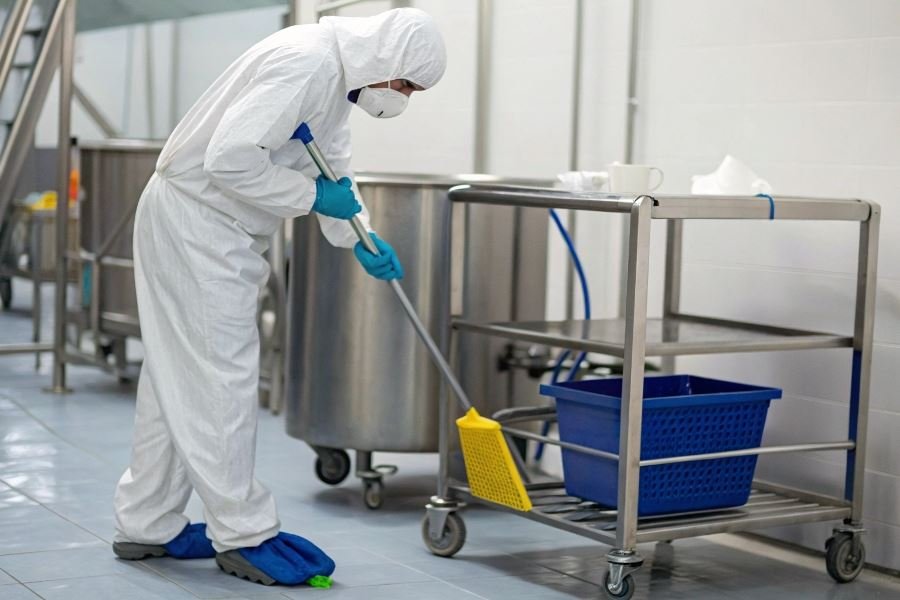
The foundation of effective cart maintenance begins with rigorous daily cleaning procedures. Food-grade carts should undergo a thorough cleaning at the end of each shift using a three-step process:
- Physical debris removal – Scrape and remove all visible food particles and debris
- Detergent washing – Apply food-safe detergent with proper dilution ratios
- Sanitization – Use quaternary ammonium compounds or other food-approved sanitizers
Research from the Food Safety Magazine indicates that properly sanitized transport equipment can reduce cross-contamination risks by up to 87%. This isn’t merely about appearances—it’s about preventing microbial growth that could compromise entire production batches.
The most expensive cart maintenance program is still cheaper than a single contamination-related recall.
For stainless steel carts, avoid chlorine-based cleaners that can cause pitting and corrosion. Instead, opt for neutral pH cleaners specifically formulated for food contact surfaces.
Weekly and monthly inspection essentials
| Inspection Frequency | Key Focus Areas | Documentation Required |
|---|---|---|
| Weekly | Wheel functionality, surface integrity, joint stability | Digital checklist with photo verification |
| Monthly | Structural integrity, load capacity testing, lubrication | Comprehensive inspection report |
Weekly inspections should focus on high-wear components like casters, handles, and shelving connections. Rubbermaid Commercial Products recommends testing mobility under both empty and loaded conditions to identify early warning signs of bearing wear.
Monthly inspections require more comprehensive evaluation:
- Structural integrity – Check for cracks, bends, or deformation in frame components
- Welding points – Examine all welded joints for signs of stress or separation
- Load capacity verification – Test with standardized weights to ensure specifications are maintained
Documentation is non-negotiable. Digital inspection platforms like SafetyCulture allow teams to create standardized checklists with photo evidence, timestamp verification, and maintenance history tracking.
Preventative maintenance that prevents problems
The most successful food production facilities implement preventative maintenance schedules rather than reactive repairs. This approach typically includes:
- Quarterly caster replacement rotation – Even before failure, rotating casters prevents uneven wear
- Biannual bearing lubrication – Using food-grade lubricants from suppliers like Lubriplate
- Annual structural assessment – Professional evaluation of load-bearing components
Documentation systems should track each cart individually with:
- Maintenance history
- Repair records
- Sanitization verification
- Inspection certifications
Smart maintenance scheduling means aligning intensive maintenance procedures with planned production downtime. This coordination minimizes operational disruption while ensuring no cart misses its maintenance window.
By implementing these systematic approaches to cart maintenance, food production facilities can extend equipment lifespan, maintain compliance standards, and protect both product integrity and consumer safety.
Maximizing Cart Lifespan in Food Production
Food production carts take a beating. They’re slammed into walls, hosed down with chemicals, and expected to perform flawlessly in environments ranging from freezing cold to steaming hot. Yet many facilities treat these workhorses as disposable assets rather than critical infrastructure investments.
The data tells the story: properly maintained carts can serve 7-10 years in high-volume operations, while neglected units often fail within 18 months. Let’s explore the strategies that separate cart champions from those constantly replacing their fleet.
Material selection drives longevity
The foundation of cart longevity begins before purchase. Stainless steel (304 or 316 grade) remains the gold standard for food environments, offering superior corrosion resistance against acidic ingredients and sanitizing chemicals. However, not all stainless is created equal.
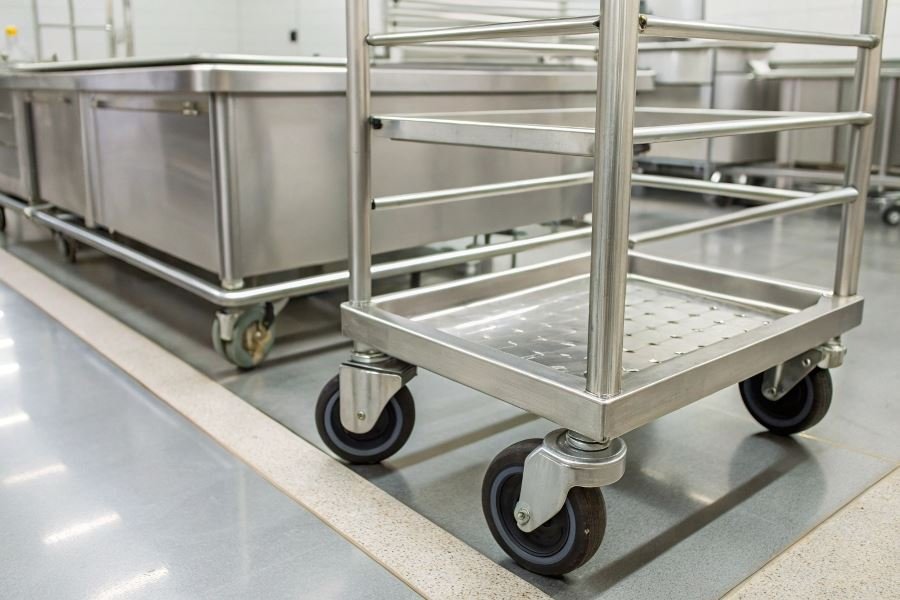
Look for fully welded seams rather than bolted connections where moisture can penetrate. Carts from manufacturers like Lakeside Manufacturing feature continuous welds that eliminate bacterial harborage points while strengthening structural integrity.
For non-metal components, high-density polyethylene (HDPE) and ultra-high-molecular-weight polyethylene (UHMW) deliver exceptional performance. These materials withstand impacts, resist chemicals, and don’t absorb moisture—critical properties in wash-down environments.
The difference between commercial and true food-grade construction often comes down to seemingly minor details: caster quality, handle reinforcement, and corner protection.
Staff training creates cart champions
Even perfectly constructed carts fail prematurely without proper handling protocols. Effective training programs address three critical behaviors:
| Training Focus | Key Components | Impact on Lifespan |
|---|---|---|
| Loading Practices | Weight distribution, maximum capacity adherence | Prevents frame warping and caster failure |
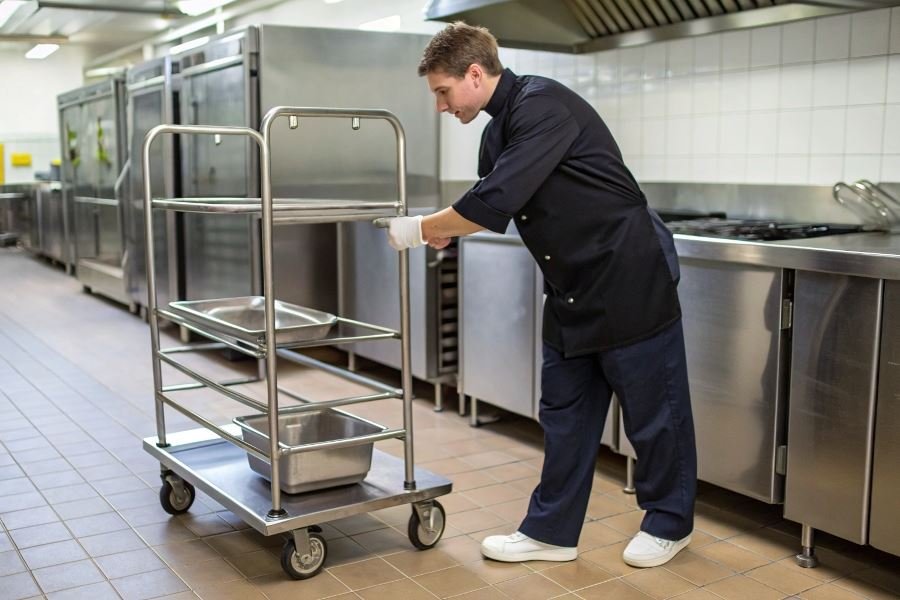
| Movement Techniques | Proper pushing vs. pulling, obstacle navigation | Reduces impact damage and operator strain |
| Cleaning Protocols | Chemical selection, pressure limitations, drying procedures | Prevents corrosion and material degradation |
The most successful operations designate “cart champions” who perform regular audits and refresher training. These individuals become the frontline defense against developing bad habits that shorten equipment life.
Training isn’t just about preventing damage—it’s about creating a culture where equipment care becomes second nature.
Systematic replacement transforms budgeting
Rather than waiting for catastrophic failure, leading operations implement strategic replacement cycles. This approach transforms unpredictable emergency purchases into planned capital expenditures.
Start by categorizing your cart fleet by usage intensity:
- High-impact zones: Areas with temperature extremes, chemical exposure, or constant movement
- Moderate-use areas: Standard production floors with regular but not extreme conditions
- Light-duty applications: Storage, occasional transport, or administrative functions
Assign different replacement intervals to each category, then stagger purchases to distribute costs evenly across fiscal periods. Metro Industries offers fleet management programs that can help track cart age, condition, and replacement timing.
The smartest operations use a phase-out strategy, moving aging carts from high-impact to progressively lighter-duty roles as they approach end-of-life. This maximizes return on investment while ensuring critical production areas always have peak-performing equipment.
By implementing these three strategies—proper material selection, comprehensive staff training, and systematic replacement planning—food production facilities can dramatically extend cart lifespan while reducing both planned and emergency expenditures.
Discover essential maintenance practices for food production carts that ensure safety compliance, extend equipment lifespan, and reduce operational costs. Learn proper cleaning protocols and preventative maintenance strategies for optimal performance.
Discover essential maintenance practices for food production carts that ensure safety compliance, extend equipment lifespan, and reduce operational costs. Learn proper cleaning protocols and preventative maintenance strategies for optimal performance.