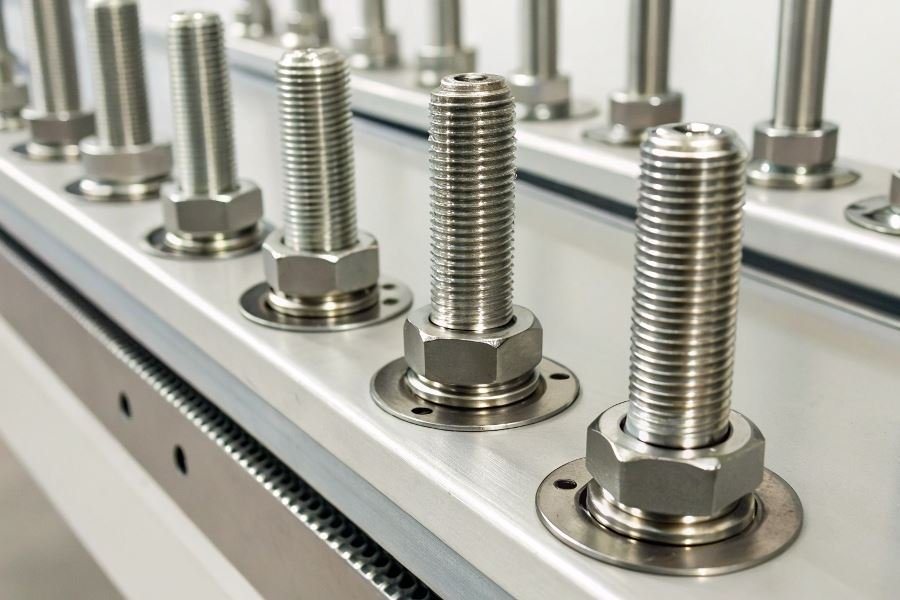
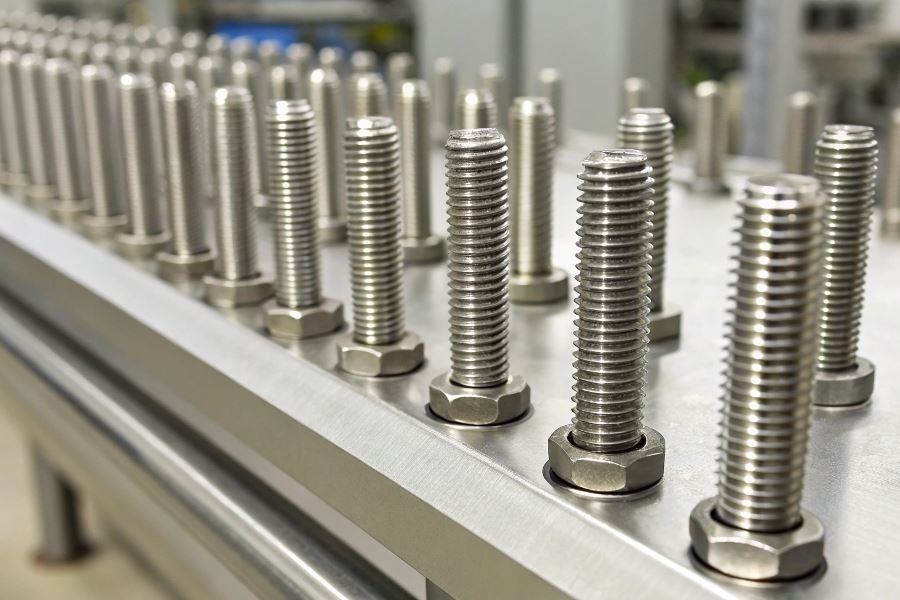
Ever wondered why a $5 pin failure can shut down a $500,000 production line? In food manufacturing, these seemingly insignificant components silently determine whether you’re hitting production targets or explaining costly downtime to stakeholders.
Pins in food processing equipment serve as the critical connection points that transfer motion, secure components, and maintain precise alignment throughout the manufacturing process. They’re the unsung mechanical heroes working behind the scenes in everything from mixers and slicers to packaging machinery. When these components fail prematurely, the consequences cascade through the entire operation.
The ripple effect of pin quality cannot be overstated. A single compromised pin can lead to misalignment issues, contamination risks, and even complete system failures. FDA data shows that mechanical failures contribute to approximately 24% of food recalls, with component failures like pins being a significant factor.
The harsh reality of food processing environments creates a perfect storm of challenges for these components:
- Constant exposure to moisture, acids, and sanitizing chemicals
- Extreme temperature fluctuations
- Continuous mechanical stress and vibration
- Strict sanitation requirements limiting material options
The most successful food manufacturers understand that pin longevity isn’t just about preventing breakdowns—it’s about maintaining consistent product quality, ensuring food safety compliance, and protecting profit margins. As one production manager at a leading bakery operation noted, “We learned the hard way that saving pennies on pins costs dollars in downtime.”
The Hidden Factors That Determine Pin Longevity
When food equipment fails, it’s often the smallest components that cause the biggest headaches. Pins—those seemingly insignificant metal connectors—can bring production lines to a grinding halt when they deteriorate prematurely. Understanding the service life of pins in food equipment requires attention to several critical factors that many operators overlook until it’s too late.
Material composition stands as the foundation of pin durability. Food-grade stainless steel (316L) offers superior corrosion resistance compared to standard 304 stainless, with approximately 2-3 times longer service life in acidic food environments. The addition of molybdenum in 316L creates a nearly impenetrable passive layer that shields against chemical attack. Meanwhile, specialized alloys like Hastelloy can extend pin life by 5-7 years in extreme conditions, though at 4-5 times the initial cost.
The operational environment where your pins function dramatically impacts their longevity. Temperature fluctuations between freezing and cooking zones create expansion-contraction cycles that accelerate metal fatigue. Every 18°F increase in operating temperature can reduce pin service life by approximately 15% due to accelerated corrosion reactions. Moisture presence, particularly in combination with cleaning chemicals, creates a perfect storm for pin degradation. Daily exposure to chlorinated sanitizers at concentrations above 200ppm can reduce expected pin life by up to 40%.
Material Selection Matrix
| Environment Type | Recommended Material | Expected Lifespan | Relative Cost |
|---|---|---|---|
| Dry processing | 304 Stainless | 3-5 years | $ |
| Wet processing | 316L Stainless | 5-7 years | $$ |
| Acidic foods | Hastelloy C-276 | 7-10 years | |
| Alkaline washing | Titanium alloys | 8-12 years | $$$ |
Mechanical stress represents the third critical factor affecting pin durability. Continuous vibration, common in mixing and grinding equipment, creates microscopic fractures that compound over time. Pins experiencing loads above 70% of their rated capacity show a 30% reduction in service life. Improper installation—a surprisingly common issue—can introduce misalignment that increases lateral forces by up to 300%, dramatically accelerating wear patterns.
Stress Mitigation Strategies
The smartest operators implement regular rotation schedules for pins in high-stress applications. This practice, while requiring minimal additional inventory, can extend overall system reliability by up to 40%. Implementing precision torque specifications during installation (typically 15-20% below maximum recommended values) provides optimal clamping force without introducing damaging stress concentrations.
Advanced surface treatments offer another layer of protection. Nitriding processes can increase surface hardness by 300% while maintaining corrosion resistance. DuPont’s Teflon coatings reduce friction coefficients by up to 80%, dramatically decreasing wear in articulating connections.
Documentation proves invaluable for tracking pin performance. Establishing baseline replacement intervals through careful observation allows for predictive rather than reactive maintenance. The most successful operations maintain detailed records of pin replacements correlated with production conditions, creating a powerful database for optimizing future equipment designs and maintenance schedules.
By addressing these critical factors systematically, food processing operations can transform pin management from a frustrating maintenance headache into a strategic advantage that enhances equipment reliability, reduces downtime, and ultimately improves bottom-line performance.
Extending Pin Life Through Smart Maintenance
Food processing equipment relies on seemingly minor components that can make or break production efficiency. Among these unsung heroes are pins—those cylindrical fasteners that secure moving parts, transfer motion, and maintain alignment in everything from mixers to conveyor systems. When these humble components fail, entire production lines can grind to a halt.
Preventive maintenance that pays dividends
The difference between pins that fail prematurely and those that serve reliably for years often comes down to maintenance protocols. Implementing a structured approach delivers remarkable results:
Daily visual inspections should become second nature for equipment operators. Looking for early signs of wear, misalignment, or contamination takes seconds but saves thousands in downtime costs. Train staff to recognize subtle changes in equipment sound or vibration—often the first warning of pin degradation.
Lubrication schedules deserve religious adherence. Food-grade lubricants applied at manufacturer-recommended intervals reduce friction that accelerates wear. Many operations see pin life extended by 40-60% simply by optimizing lubrication practices.
The most expensive maintenance is the maintenance you skip.
Cleaning protocols must address the unique challenges of food processing environments. Pins exposed to acidic ingredients, salt, or sugar solutions face accelerated corrosion. Implementing post-shift cleaning with appropriate pH-neutral solutions removes corrosive residues before they can damage pin surfaces.
Quality indicators that separate premium pins from pretenders
When replacement becomes necessary, selection criteria make all the difference:
Material composition stands as the primary quality indicator. Food-grade stainless steel pins (particularly 316L grade) offer superior corrosion resistance in wet processing environments, while titanium alloys provide exceptional strength-to-weight ratios for high-stress applications.
Surface finish quality directly impacts both performance and sanitation. Electropolished pins with Ra values below 0.5μm minimize bacterial adhesion while reducing friction and wear. This microscopic detail often separates premium pins from budget alternatives.
Manufacturing tolerances tell the real story of pin quality. Premium pins maintain dimensional consistency within ±0.001 inches, ensuring precise fit and reduced vibration. Request tolerance specifications when evaluating suppliers—reputable manufacturers proudly provide this data.
The true economics of pin selection
The cost analysis extends far beyond purchase price:
| Pin Type | Initial Cost | Average Lifespan | Downtime Risk | Total Ownership Cost |
|---|---|---|---|---|
| Economy | $5-15 | 3-6 months | High | $1,200-2,400/year |
| Standard | $15-30 | 8-12 months | Medium | $800-1,200/year |
| Premium | $30-60 | 18-24+ months | Low | $400-800/year |
The math becomes compelling when factoring downtime costs. A single hour of unplanned downtime typically costs food processors between 5, 000−30,000 in lost production. Premium pins with predictable service intervals allow maintenance to be scheduled during planned downtime, eliminating these costly surprises.
Material certification provides another economic advantage. Pins from Smalley Steel Ring Company or Spirol International come with material traceability documentation that simplifies compliance with food safety audits and reduces regulatory overhead.
The service life equation ultimately favors quality. While premium pins might cost 3-4 times more initially, their extended service life, reduced maintenance requirements, and dramatically lower risk of catastrophic failure deliver compelling total cost advantages for operations focused on long-term profitability rather than short-term savings.
Discover key factors affecting food equipment pin durability and learn practical strategies to extend service life. Expert insights on material selection, maintenance protocols, and cost-effective solutions for optimal performance in demanding food processing environments.
Discover key factors affecting food equipment pin durability and learn practical strategies to extend service life. Expert insights on material selection, maintenance protocols, and cost-effective solutions for optimal performance in demanding food processing environments.