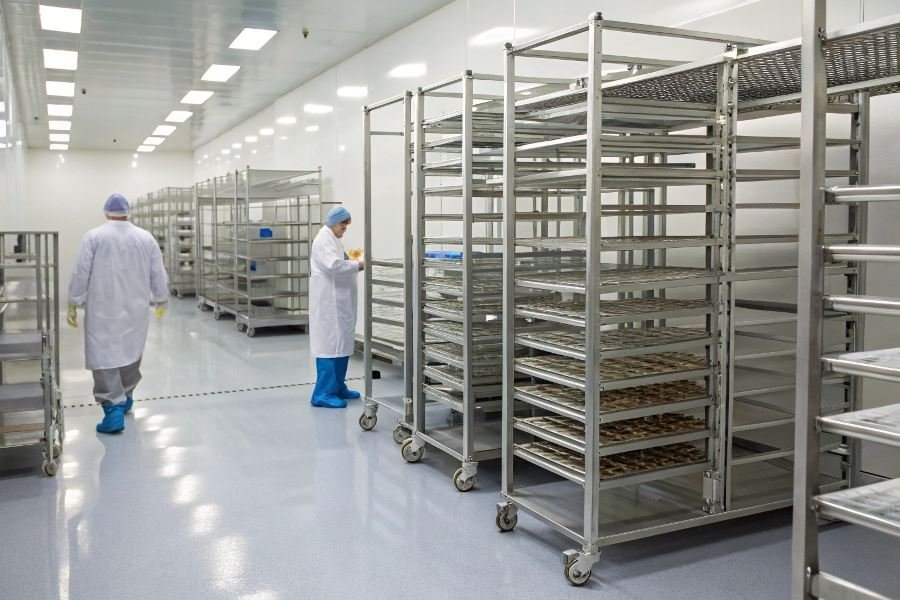
Did you know that improper food storage causes approximately 20% of foodborne illness outbreaks? Behind every safe food product stands an unsung hero: properly designed and maintained shelving systems.
The shelving in food processing facilities, restaurants, and warehouses isn’t just about organization—it’s a critical defense against contamination. Sanitary shelving requirements represent the intersection of engineering precision and public health protection, creating an invisible shield between your food and potential hazards. When designed correctly, these systems prevent cross-contamination, resist bacterial growth, and enable thorough cleaning protocols that keep products safe.
The regulatory landscape isn’t optional. The FDA Food Safety Modernization Act, established in 2011, transformed food safety from reactive to preventive, with specific material and design requirements for all food contact surfaces—including shelving. These standards aren’t arbitrary; they’re science-backed protections developed through decades of food safety research.
“Proper shelving isn’t just about compliance—it’s about protecting your customers and your business reputation.”
The consequences of cutting corners can be devastating. Beyond the immediate health risks to consumers, non-compliant shelving can trigger:
- Regulatory shutdowns costing thousands per day
- Product recalls averaging $10 million per incident
- Permanent brand damage that outlasts the news cycle
The right shelving solution doesn’t just meet minimum requirements—it becomes an integral part of your food safety culture, protecting both consumers and your bottom line.
Material and Design Excellence for Food-Grade Shelving
When it comes to food safety, the unsung heroes are often the storage systems that keep products organized, accessible, and—most importantly—uncontaminated. The materials and design features of shelving units play a critical role in maintaining sanitary conditions throughout food processing and storage facilities. Sanitary requirements for shelving in the food industry encompass everything from material selection to structural design and cleaning protocols, creating a comprehensive framework that protects both products and consumers.
FDA-Approved Materials That Stand the Test
The foundation of any food-grade shelving system begins with appropriate materials. The FDA maintains strict guidelines about which materials can safely contact food products, directly or indirectly.
Stainless steel reigns supreme in the hierarchy of food-safe materials, particularly Type 304 (18/8) and Type 316 for environments with higher salt or acid exposure. These alloys resist corrosion, withstand harsh cleaning chemicals, and don’t harbor bacteria in microscopic crevices.
Beyond metal options, high-density polyethylene (HDPE) and polypropylene have carved out their niche in environments where moisture resistance and lighter weight are priorities. These FDA-approved polymers resist chemicals, don’t absorb moisture, and maintain their integrity through countless cleaning cycles.
| Material | Best Applications | Durability Rating | Price Point |
|---|---|---|---|
| 304 Stainless Steel | General food storage | Excellent | |
| 316 Stainless Steel | Acidic/salty environments | Superior | $ |
| HDPE | Moist environments | Very Good | $$$ |
| Polypropylene | Chemical exposure areas | Good | $$ |
| Aluminum | Dry storage only | Moderate | $$ |
Structural Design That Prevents Contamination
The architecture of shelving systems must actively work against potential contamination sources. Modern food-grade shelving incorporates several key design elements:
Seamless construction eliminates crevices where bacteria could multiply. Look for welded joints rather than bolted connections in metal shelving, and one-piece molded units in polymer options.
Rounded corners and edges serve dual purposes—they prevent product damage during loading/unloading and eliminate sharp angles that are difficult to clean and can harbor contaminants.
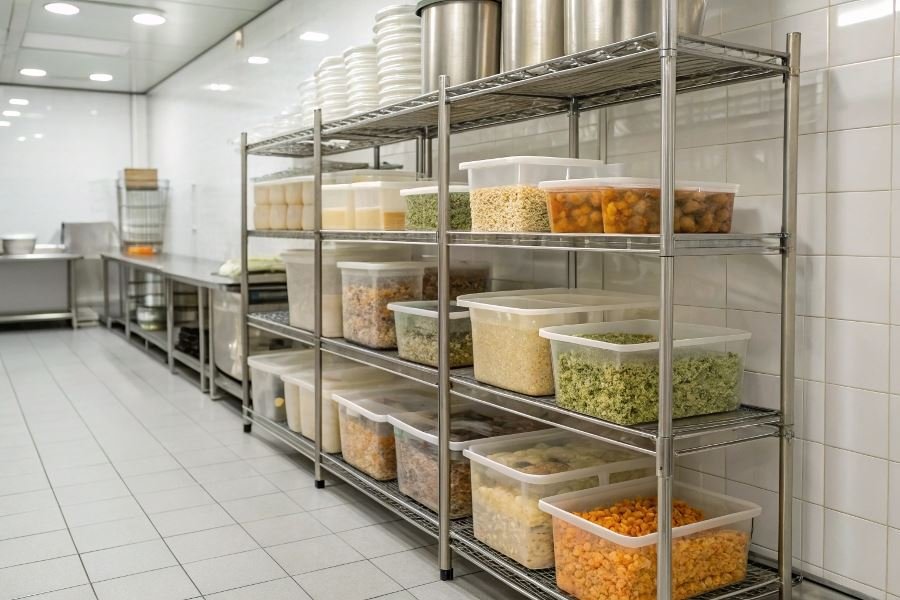
Open-grid designs promote air circulation, preventing moisture accumulation that could lead to mold growth. These designs also allow visual inspection of all surfaces without dismantling the unit.
Cleaning Accessibility That Makes Compliance Simple
Even the most advanced materials and designs fall short if they can’t be thoroughly cleaned. Best-in-class shelving systems feature:
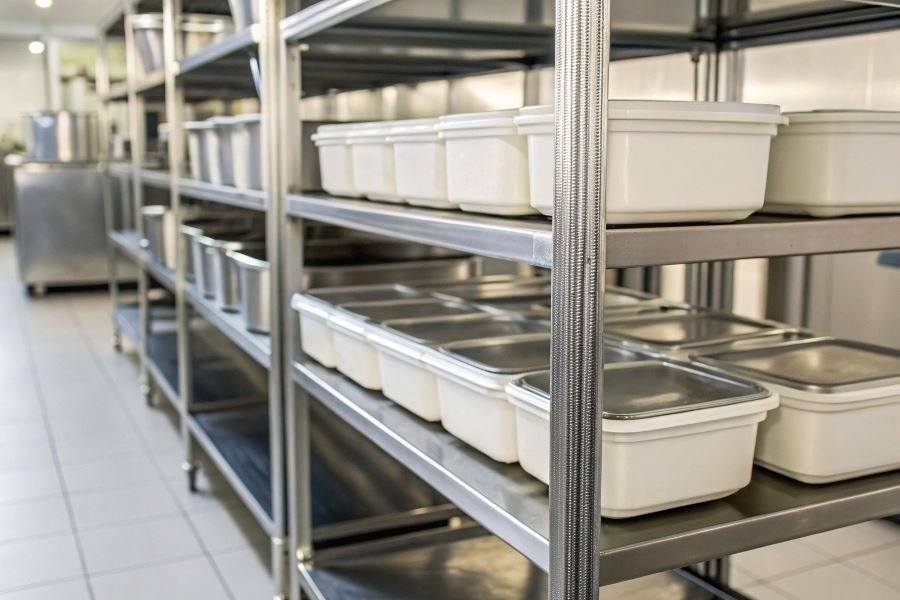
Removable shelf mats that can be run through commercial dishwashers for sanitization. Cambro and other industry leaders offer systems where the shelf surface detaches from the frame without tools.
Height-adjustable components that accommodate different cleaning methods and product sizes. This flexibility ensures that no surface becomes inaccessible due to fixed configurations.
Quick-release mechanisms allow for rapid disassembly during deep cleaning protocols. This feature has become increasingly important as food safety regulations have tightened, requiring more frequent thorough sanitization.
The intersection of material science, structural engineering, and practical maintenance considerations creates shelving systems that don’t just store products—they actively participate in your facility’s food safety program. By selecting shelving that meets these essential requirements, food processors and distributors can significantly reduce contamination risks while streamlining their sanitation procedures.
Mastering Sanitary Shelving: Implementation and Maintenance
Food safety isn’t just about ingredients and preparation—it’s about the entire ecosystem where food lives. Shelving systems might seem mundane, but they’re critical control points in preventing contamination. Let’s dive into the nitty-gritty of implementing and maintaining sanitary shelving systems that keep inspectors happy and consumers healthy.
Installation that prevents contamination
Proper installation of shelving in food environments isn’t just about stability—it’s about creating systems that actively resist contamination. The difference between standard and food-grade installation is significant:
Floor clearance is non-negotiable. All shelving units must maintain a minimum 6-inch clearance from the floor to prevent splash contamination and allow thorough cleaning underneath. This isn’t arbitrary—studies from the FDA show that floor-level contamination can travel upward during cleaning activities.
When installing shelving against walls, maintain a 2-inch gap to prevent moisture accumulation and bacterial growth in those hard-to-reach spaces. As one food safety auditor told me, “The corner where shelf meets wall is where I find 80% of violations.”
Installation materials matter just as much as the shelves themselves. Use only food-grade silicone sealants and stainless steel fasteners that won’t corrode or harbor bacteria. Avoid wood shims or spacers that can absorb moisture and become bacterial reservoirs.
Cleaning protocols that actually work
The best shelving in the world fails without proper cleaning protocols. Effective cleaning isn’t just about frequency—it’s about methodology:
| Shelving Material | Recommended Cleaning Agent | Maximum Cleaning Interval | Special Considerations |
|---|---|---|---|
| Stainless Steel | Quaternary ammonium compounds | 24 hours | Avoid chlorine-based cleaners |
| High-density polyethylene | Alkaline detergents | 48 hours | Check for surface abrasions |
| Wire shelving | Hot water pressure washing | 24 hours | Ensure complete drying |
| Aluminum | Non-abrasive alkaline cleaners | 24 hours | Verify pH compatibility |
The most effective cleaning schedules follow a three-phase approach:
- Daily spot cleaning during shift changes
- Deep cleaning on a rotating schedule (never clean all shelving simultaneously)
- Quarterly preventative maintenance including inspection of all joints and supports
Temperature matters more than you think. Hot water (at least 140°F) dramatically increases the effectiveness of most cleaning agents. One study by the National Sanitation Foundation found that increasing water temperature from 110°F to 140°F reduced cleaning time by 38%.
Documentation: Your shield against compliance issues
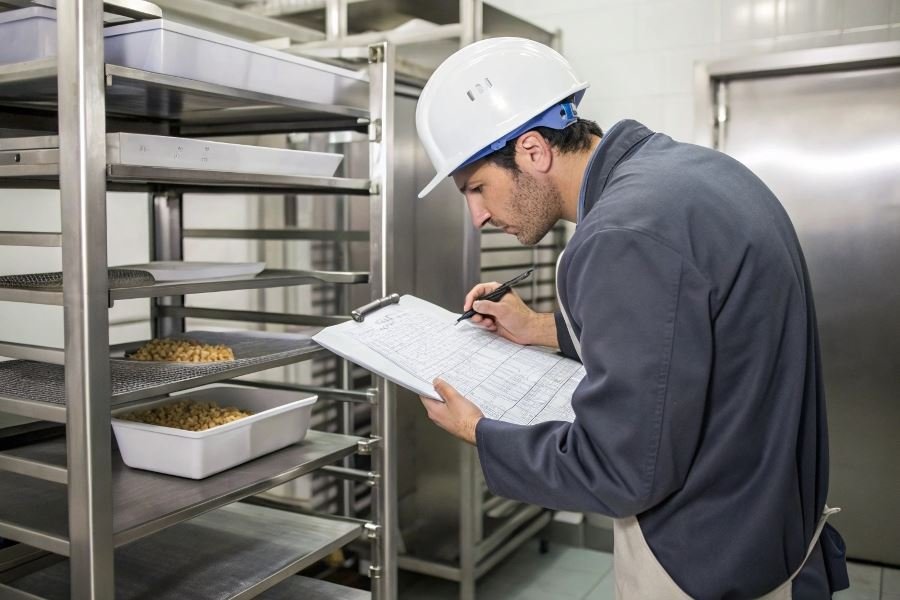
Documentation isn’t just paperwork—it’s protection. Comprehensive records demonstrate due diligence and create accountability:
Digital verification systems have revolutionized compliance documentation. QR codes on shelving units can be scanned to record cleaning activities, with time stamps and employee identification. This creates an unbroken chain of accountability.
The master sanitation schedule should include:
- Detailed cleaning procedures for each shelving type
- Assignment of responsibility by position, not individual
- Verification requirements (ATP testing, visual inspection)
- Corrective action protocols for failed inspections
ATP (Adenosine Triphosphate) testing provides objective verification of cleaning effectiveness. These rapid tests detect biological residue that might not be visible. Establish baseline readings for clean shelving and set action thresholds that trigger re-cleaning.
Remember that documentation is only as good as its accessibility. Keep records organized and readily available for both internal audits and regulatory inspections. Many facilities now use cloud-based documentation systems that allow instant retrieval of cleaning records during surprise inspections.
Implementing these practices creates a sanitation system that’s both effective and defensible—protecting your products, your consumers, and your business reputation.
Discover FDA-compliant shelving standards essential for food safety and regulatory compliance. Learn about approved materials, contamination-preventing designs, and proper maintenance protocols to ensure your food facility meets all sanitary requirements.
Discover FDA-compliant shelving standards essential for food safety and regulatory compliance. Learn about approved materials, contamination-preventing designs, and proper maintenance protocols to ensure your food facility meets all sanitary requirements.