Ever wondered why that jar of pickles in your pantry stays fresh for months? Behind every safely preserved food product stands an unsung hero: the industrial sterilizer. These powerhouse machines aren’t just equipment—they’re the difference between a safe product and a potential health crisis.
Food preservation has evolved dramatically since Nicolas Appert first developed canning in 1809. Today’s commercial canning operations rely on sophisticated sterilization systems that eliminate harmful microorganisms while maintaining food quality. When selecting sterilizers for canning operations, understanding the fundamentals can make all the difference in product safety, shelf life, and ultimately, consumer trust.
The FDA’s current standards require commercial canners to achieve a minimum 5-log reduction in pathogenic bacteria—essentially eliminating 99.999% of harmful microorganisms. This isn’t just regulatory box-checking; it’s essential protection against botulism and other foodborne illnesses that can devastate both consumers and businesses.
Three primary sterilizer types dominate the commercial landscape:
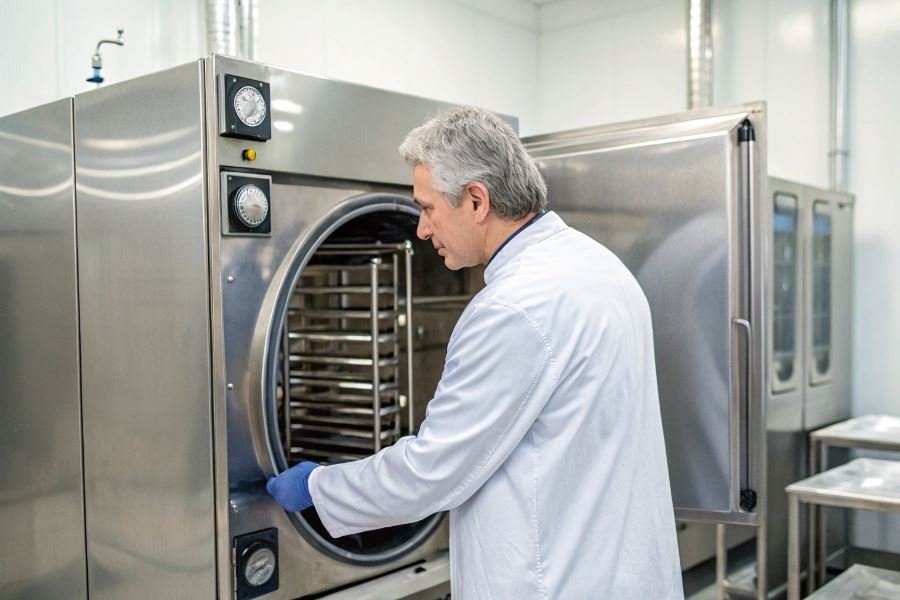
- Retort sterilizers: The workhorses of the industry, using pressurized steam for consistent heat penetration
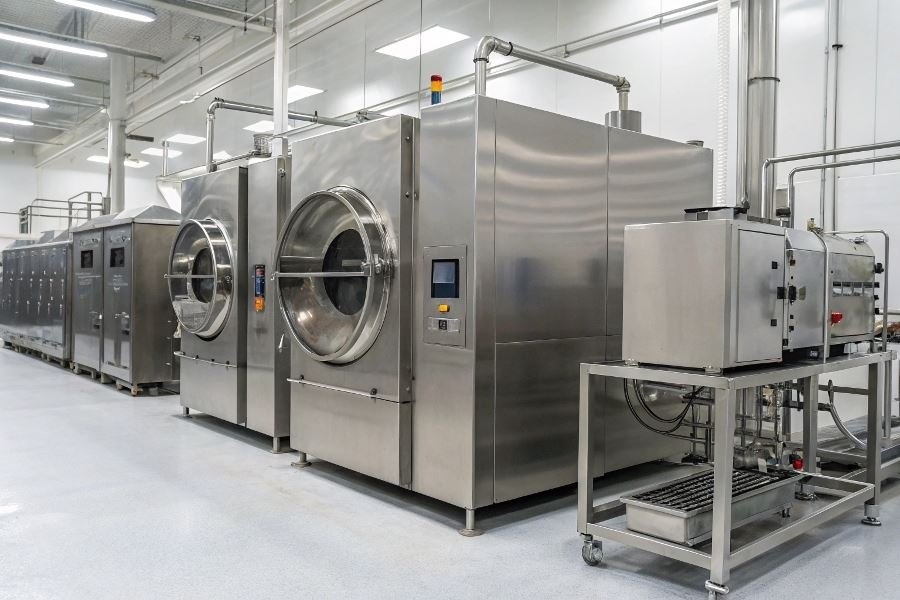
- Hydrostatic sterilizers: Continuous-flow systems ideal for high-volume operations
- Aseptic processing systems: Advanced technology that sterilizes food and packaging separately before assembly
Each system offers distinct advantages depending on your product type, production volume, and quality requirements. The right sterilizer doesn’t just preserve food—it preserves your reputation and bottom line.
Critical Selection Factors for Canning Sterilizers
When evaluating sterilizers for the canning industry, manufacturers face decisions that directly impact product safety, quality, and operational efficiency. Sterilizers for the canning industry: what to pay attention to when choosing involves multiple technical considerations that can make or break your production line’s performance. Let’s dive into the essential factors that should guide your investment.
Processing Capacity Meets Production Demands
The cornerstone of any sterilizer selection process begins with honest assessment of your throughput requirements.
Production volume alignment is non-negotiable—undersized equipment creates bottlenecks while oversized systems waste capital and energy. Most mid-tier operations require processing capacities between 2,000-5,000 containers per hour, while industrial-scale facilities may demand 20,000+ units hourly.
Consider not just current needs but growth projections for the next 3-5 years. The JBT FoodTech Rotary Pressure Sterilizer offers scalable configurations that can grow with your operation—a smart hedge against future expansion costs.
Temperature Precision and Heating Technologies
The difference between perfectly preserved products and compromised batches often comes down to temperature control precision.
Modern sterilizers should maintain temperatures within ±0.5°F throughout the entire process cycle. This precision directly impacts both food safety and quality preservation.
| Heating Method | Advantages | Best Applications |
|---|---|---|
| Steam | Rapid heating, uniform penetration | Low-acid foods requiring high temps |
| Hot Water | Gentler processing, reduced container stress | Delicate products, glass packaging |
| Steam-Air | Precise pressure control, reduced container deformation | Flexible packaging, plastic containers |
The Allpax Multimode Retort systems offer switchable heating methods within a single unit—providing flexibility for diverse product lines.
Energy Efficiency Drives Operational Economics
Energy consumption represents 15-30% of sterilization operational costs, making efficiency a critical selection factor.
Heat recovery systems can reduce energy usage by 25-40% compared to conventional designs. The Steriflow Static Retort incorporates advanced insulation and heat recapture technology that delivers measurable utility savings.
Maintenance requirements directly impact total cost of ownership. Systems with simplified designs and accessible components typically reduce downtime by 30-50% compared to complex alternatives.
Automation Integration Capabilities
Modern production demands seamless integration between sterilization equipment and broader factory systems.
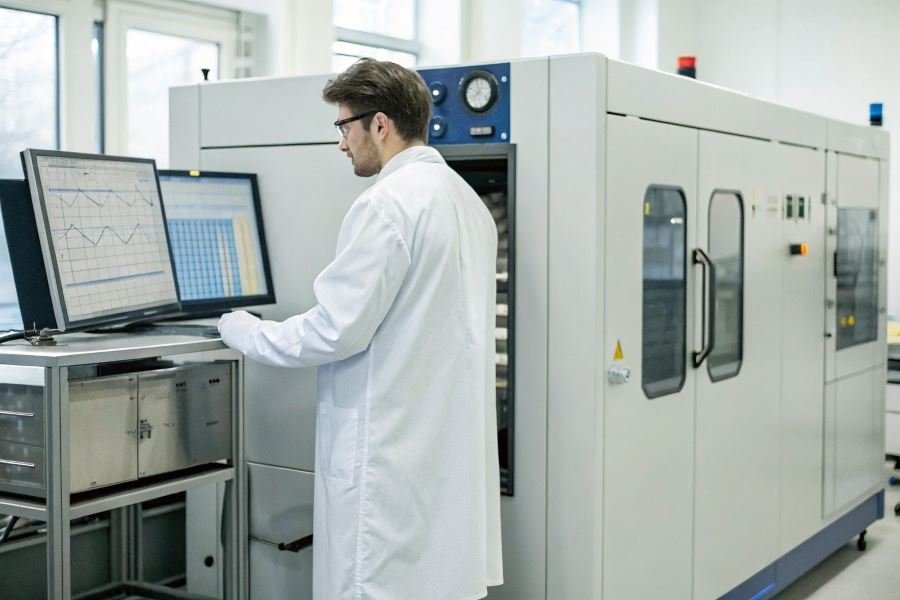
Look for sterilizers offering open-architecture controls compatible with industry-standard protocols like Ethernet/IP and Modbus TCP. This ensures communication with existing SCADA systems and production management software.
The Surdry S-Series features advanced PLC controls with remote monitoring capabilities, allowing real-time process verification and adjustment from anywhere in the facility.
Regulatory Compliance and Food Safety Standards
Sterilization equipment must meet increasingly stringent regulatory requirements across multiple jurisdictions.
FDA 21 CFR Part 113 compliance is mandatory for low-acid canned foods, requiring precise documentation of thermal processes. Equipment should provide automated record-keeping with tamper-evident data storage.
FSMA preventive controls implementation is simplified with systems offering built-in validation protocols and continuous monitoring capabilities.
International manufacturers should verify equipment meets ISO 22000 standards and country-specific requirements for export markets.
The right sterilizer balances these critical factors against your specific production needs, creating a foundation for safe, efficient, and profitable canning operations for years to come.
The Sterilization Technology Showdown
When production efficiency meets food safety, the right sterilization technology becomes your operation’s backbone. Let’s dive into the three dominant sterilization technologies reshaping the canning industry landscape and the critical factors that separate good investments from great ones.
Retort Sterilizers: The Pressure Performers
Retort sterilizers remain the workhorses of the canning industry, and their effectiveness hinges on three critical parameters: pressure control, temperature uniformity, and cycle optimization.
Modern Allpax and JBT FoodTech retort systems deliver pressure precision within ±0.1 PSI—a game-changer when processing delicate products like seafood or dairy-based formulations. This precision prevents both under-processing (safety risk) and over-processing (quality degradation).
Temperature uniformity represents perhaps the most overlooked specification. Leading systems now achieve ±0.5°F variance across the entire chamber, eliminating those frustrating cold spots that compromise batch integrity. When evaluating options, request heat distribution studies with at least 12 measurement points.
Cycle time efficiency separates good retorts from exceptional ones. The latest models feature:
| Feature | Benefit | Time Savings |
|---|---|---|
| Rapid cooling systems | Prevents overcooking | 15-20% reduction |
| Automated loading/unloading | Minimizes downtime | 8-12 minutes per batch |
| Recipe management software | Optimizes parameters | Custom to product |
These innovations translate directly to throughput increases of 25-30% compared to systems from just a decade ago.
Continuous Flow Sterilizers: The Throughput Champions
For high-volume operations, continuous flow sterilization systems from manufacturers like Steriflow deliver unmatched efficiency—but require careful attention to product handling and validation protocols.
Product handling capabilities must match your specific formulation characteristics. Viscous products like sauces and purees demand specialized agitation systems to prevent burning and ensure uniform heat penetration. Look for systems with adjustable residence time distribution (RTD) controls that can be fine-tuned to your specific product density and particulate size.
The validation complexity of continuous systems often catches buyers off-guard. Unlike batch processes, continuous systems require:
- Flow visualization studies to identify potential dead zones
- Multiple temperature probes throughout the system
- Regular verification of holding tube integrity
- Comprehensive HACCP integration capabilities
The investment in robust validation pays dividends in regulatory compliance and production confidence. Leading systems now incorporate real-time monitoring that tracks every critical control point and automatically adjusts parameters to maintain optimal processing conditions.
Aseptic Sterilization Systems: The Quality Preservers
Aseptic systems represent the gold standard for quality preservation, particularly for heat-sensitive products. Their implementation success hinges on packaging compatibility and maintenance infrastructure.
Packaging compatibility extends beyond the obvious material considerations. The latest Tetra Pak and Krones systems accommodate an impressive range of container formats, but each requires specific sterilization parameters. When evaluating options, provide samples of your actual packaging for compatibility testing—theoretical compatibility often differs from practical performance.
Maintenance requirements for aseptic systems demand serious consideration. These systems typically require:
- Sterile air systems with redundant filtration
- Ultra-pure water generation capabilities
- Regular integrity testing of all seals and connections
- Specialized cleaning protocols for product contact surfaces
The maintenance investment typically runs 15-20% higher than conventional systems, but delivers extended shelf life and superior product quality that justifies the premium for premium products.
The ideal sterilization technology ultimately depends on your specific production requirements, but understanding these critical selection factors ensures your investment delivers both safety and competitive advantage.
Discover essential factors for selecting commercial canning sterilizers that ensure food safety and extend shelf life. Compare retort, continuous flow, and aseptic systems based on capacity, temperature precision, and regulatory compliance.
Discover essential factors for selecting commercial canning sterilizers that ensure food safety and extend shelf life. Compare retort, continuous flow, and aseptic systems based on capacity, temperature precision, and regulatory compliance.