Did you know that a mere 2% inaccuracy in fuel measurement can cost a medium-sized fleet operation over $20,000 annually? In critical industries like aviation, even smaller discrepancies could mean the difference between safe operation and potential disaster.
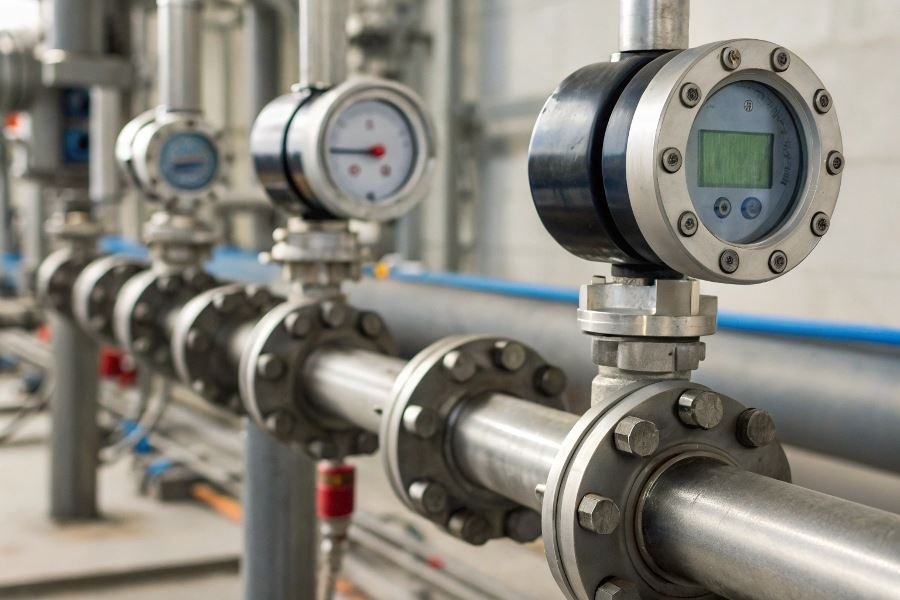
Universal flow meters represent the Swiss Army knife of fluid measurement technology. These versatile devices accurately measure volume or mass flow rates across different fuel types—from traditional petroleum products to biofuels and emerging alternatives—all with a single instrument. By employing sophisticated sensing technologies like Coriolis force, ultrasonic waves, or electromagnetic principles, these meters deliver precision regardless of the fluid’s physical properties.
The evolution of this technology tells a fascinating story of innovation. Early mechanical meters from the 1950s could handle only specific fuels within narrow viscosity ranges. The digital revolution of the 1980s brought microprocessor-controlled systems that expanded capabilities, but true multi-fuel functionality remained elusive until advanced materials and computational methods emerged in the early 2000s.
Today’s universal flow meters feature:
- Self-calibrating algorithms that adjust to changing fluid properties
- Temperature compensation for extreme operating environments
- Connectivity options that integrate with modern management systems
For industries ranging from transportation to manufacturing, these devices have transformed from simple counting tools to critical infrastructure components that ensure operational efficiency, regulatory compliance, and environmental responsibility.
Cutting-Edge Flow Meter Technologies for Multi-Fuel Applications
When precision meets versatility in fuel measurement, the industry turns to specialized instruments designed to handle diverse fluid properties. Universal flow meters for working with different types of fuel have revolutionized how businesses monitor, measure, and manage their fuel consumption across operations. These sophisticated devices offer remarkable adaptability whether you’re dealing with diesel, gasoline, biofuels, or specialized industrial liquids.
Coriolis Flow Meters: The Gold Standard
Coriolis technology represents the pinnacle of mass flow measurement precision. These meters operate on a fascinating principle: as fluid moves through oscillating tubes, it creates a measurable twisting force proportional to the mass flow rate.
What makes Coriolis meters exceptional:
- Direct mass measurement without compensating for temperature or pressure
- Accuracy ratings typically between ±0.1% and ±0.5% of reading
- Simultaneous measurement of density and temperature
- Virtually zero maintenance requirements
The Micro Motion F-Series from Emerson exemplifies this technology, handling everything from light hydrocarbons to heavy crude oils without recalibration. Their multi-variable capabilities deliver density, temperature, and volumetric measurements simultaneously—critical data points for fuel quality assessment.
“Coriolis meters deliver unmatched accuracy across varying fuel densities, making them the preferred choice for custody transfer applications where financial settlements depend on measurement precision.”
Ultrasonic Flow Meters: Non-Intrusive Excellence
Ultrasonic technology offers a compelling alternative, particularly where non-invasive measurement is paramount.
Transit-time ultrasonic meters transmit sound waves both with and against the flow direction. The time differential between these signals precisely indicates flow rate—all without contacting the fluid.
Key advantages for diverse fuel applications:
- No moving parts to wear or maintain
- No pressure drop across the meter
- Excellent performance with clean, low-viscosity fuels
- Bi-directional measurement capabilities
| Ultrasonic Type | Best Fuel Applications | Typical Accuracy |
|---|---|---|
| Transit-Time | Refined petroleum products | ±0.5% to ±1.0% |
| Doppler | Crude oil with particulates | ±1.0% to ±2.0% |
| Hybrid | Mixed fuel systems | ±0.7% to ±1.5% |
The FLEXIM FLUXUS F721 exemplifies modern ultrasonic excellence, offering clamp-on convenience that eliminates the need for pipe modifications while maintaining impressive accuracy across gasoline, diesel, and alternative fuels.
Thermal Mass Flow Meters: Viscosity Versatility
For applications where fuel viscosity varies significantly, thermal mass flow meters provide remarkable adaptability.
These devices operate by introducing a precise amount of heat into the flowing stream and measuring how quickly this heat dissipates—a function directly related to mass flow rate regardless of viscosity changes.
Industry applications where thermal meters excel:
- Biogas and natural gas measurement
- Fuel consumption monitoring in generators
- Compressed natural gas (CNG) dispensing
- Blended biofuel processing
The Sierra Instruments QuadraTherm 640i represents cutting-edge thermal technology, featuring multi-variable sensors that automatically compensate for gas composition changes—ideal for alternative fuel applications where consistency varies.
Thermal meters particularly shine in low-flow applications where other technologies struggle to maintain accuracy, making them invaluable for precise fuel consumption analysis in efficiency-focused operations.
The integration of these three distinct technologies has created unprecedented flexibility in fuel measurement systems, allowing operators to select the perfect solution based on their specific application requirements rather than adapting their processes to meter limitations.
Mastering Universal Flow Meter Selection and Implementation
Critical specifications that make or break performance
Selecting the right universal flow meter for fuel applications isn’t just about checking boxes—it’s about understanding the critical specifications that determine success in your specific environment. The viscosity range capability stands as perhaps the most crucial factor, as universal meters must handle everything from light gasoline (0.5 centistokes) to heavy oils (up to 1000 centistokes). The best universal meters offer turndown ratios of 100:1 or better, allowing accurate measurement across dramatically different flow conditions.
Temperature and pressure ratings deserve careful scrutiny. Premium universal meters from manufacturers like Endress+Hauser and Emerson typically handle temperatures from -40°F to 450°F and pressures up to 1500 psi—essential parameters when working with volatile fuels.
Material compatibility often separates adequate meters from exceptional ones. Look for:
| Material | Best For | Limitations |
|---|---|---|
| 316L Stainless Steel | Most petroleum products | Some biofuels cause corrosion |
| Hastelloy C | Aggressive chemicals, ethanol blends | Higher cost |
| PTFE-lined | Highly corrosive applications | Temperature limitations |
Accuracy specifications must be evaluated against real-world conditions, not just laboratory settings. The gold standard for universal fuel meters is ±0.15% of reading (not full scale), maintained across the entire flow range.
Installation best practices that maximize accuracy
The installation environment can make even the finest meter perform poorly. The straight pipe run requirement stands as the most frequently overlooked factor—most universal meters need 10 pipe diameters upstream and 5 downstream for optimal performance. Ignoring this single requirement accounts for nearly 40% of field accuracy problems.
Orientation matters significantly with certain meter types. While Coriolis meters can be mounted in any position, vortex and turbine meters typically require horizontal installation with the electronics positioned away from potential heat sources.
The vibration environment can devastate measurement accuracy, particularly with mechanical meters. When installing near pumps or compressors, incorporate vibration isolation mounts and flexible connectors to protect measurement integrity.
For multi-product applications, strategic valve placement becomes critical. Install isolation valves that allow for meter removal without system drainage, and consider adding strainers with bypass arrangements to prevent contamination without interrupting flow during maintenance.
Maintenance that preserves investment and accuracy
The calibration frequency debate often centers on regulatory requirements, but the reality is more nuanced. While most standards require annual verification, meters handling multiple fuel types benefit from quarterly verification during the first year to establish a performance baseline. NIST traceable calibration using actual process fluids (not just water) provides the most reliable results.
Preventive maintenance schedules should include:
- Monthly visual inspections for leaks and corrosion
- Quarterly verification of electrical connections and signal quality
- Semi-annual cleaning of strainers and filters
- Annual verification of zero stability and linearity
The most overlooked maintenance aspect is documentation. Maintaining detailed records of all calibrations, repairs, and performance trends allows for predictive maintenance and extends meter lifespan by up to 40%.
For meters with digital capabilities, firmware updates should be evaluated but applied selectively. The rule of thumb: unless the update addresses a specific issue you’re experiencing or adds functionality you need, maintain the current validated configuration.
Discover top universal flow meters for multi-fuel applications. Compare Coriolis, ultrasonic, and thermal mass technologies for precise measurement across different fuel types. Expert selection, installation, and maintenance guidance for optimal performance.
Discover top universal flow meters for multi-fuel applications. Compare Coriolis, ultrasonic, and thermal mass technologies for precise measurement across different fuel types. Expert selection, installation, and maintenance guidance for optimal performance.