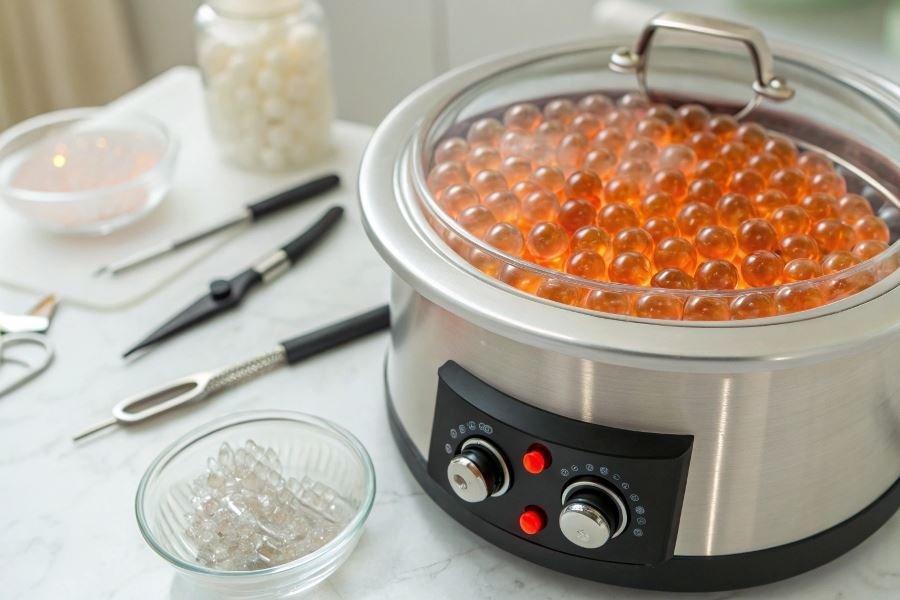
What if I told you the tiny glass beads in a salon sterilizer reach temperatures hot enough to melt lead? These unassuming devices are the unsung heroes of safety in countless professional settings, from tattoo studios to medical clinics.
Glass pearl sterilizers represent a fascinating intersection of simplicity and scientific precision. At their core, these devices consist of a heat-resistant container filled with uniformly sized glass beads that are heated to temperatures between 425°F and 600°F. When instruments are inserted into this sea of scorching beads, pathogens are destroyed within seconds through direct heat transfer—no chemicals, no waiting, just physics at its most practical.
The journey of these sterilizers began in the 1940s with rudimentary designs, but they’ve evolved dramatically. Modern units feature digital temperature controls, automatic shut-offs, and specialized chambers designed for specific instruments. What hasn’t changed is their fundamental advantage: the ability to sterilize heat-resistant tools in seconds rather than minutes or hours.
“Proper sterilization isn’t just about compliance—it’s about professional integrity and client safety.”
The FDA and CDC have established rigorous guidelines for sterilization equipment, requiring specific temperature thresholds and exposure times. Professional-grade sterilizers must maintain consistent temperatures throughout the bead chamber and include features that prevent accidental burns. The best models incorporate fail-safe mechanisms that alert users when optimal sterilization temperatures haven’t been reached.
Understanding these fundamentals isn’t just technical knowledge—it’s the foundation for making informed decisions about which sterilizer will best protect your clients and your reputation.
Essential Selection Criteria for Glass Pearl Sterilizers
When precision meets sterilization requirements, the details make all the difference. Glass pearl sterilizers have revolutionized instrument sterilization across medical, dental, and beauty industries, but choosing the right one requires understanding specific technical parameters that directly impact performance.
Selecting appropriate glass pearl sterilizers for different procedures demands careful consideration of temperature capabilities, chamber dimensions, and construction quality. These factors determine not only the effectiveness of sterilization but also the longevity of your investment and safety of your procedures. The right sterilizer matches your specific instrument types while providing consistent, reliable performance day after day.
Temperature Range and Heat Distribution
The cornerstone of effective sterilization lies in precise temperature control. Modern glass pearl sterilizers typically offer temperature ranges between 150°C to 300°C (302°F to 572°F), with premium models providing:
- Digital temperature control with ±1°C precision
- Rapid heating elements that reach sterilization temperature in 3-7 minutes
- Uniform heat distribution through specialized heating coils
For dental instruments, temperatures between 230-250°C (446-482°F) typically provide optimal sterilization without damaging delicate tips. Tattoo equipment often requires higher temperatures around 270°C (518°F) for complete pathogen elimination.
Critical insight: The quality of temperature sensors directly correlates with sterilization consistency. Ceramic-encased thermocouples outperform standard sensors by maintaining accuracy even after thousands of heating cycles.
Chamber Dimensions and Capacity Considerations
| Chamber Type | Typical Diameter | Depth | Ideal Applications |
|---|---|---|---|
| Compact | 35-45mm | 35mm | Single instruments, small tips |
| Standard | 50-60mm | 50mm | General dental/beauty tools |
| Professional | 70-80mm | 60mm | Multiple instruments, larger tools |
Chamber size directly impacts workflow efficiency. Undersized chambers force multiple sterilization cycles, while oversized units waste energy heating unused glass beads. The optimal chamber accommodates your most frequently used instruments while allowing proper submersion in the glass beads.
Material thickness matters: Professional-grade units feature chambers with 2-3mm thick walls that resist warping even after years of thermal cycling.
Construction Materials and Durability Factors
The longevity of your sterilizer depends largely on its construction materials:
-
Exterior housing: Stainless steel bodies resist corrosion from disinfectants and provide superior heat insulation compared to aluminum alternatives.
-
Interior chamber: Medical-grade stainless steel (316L grade) offers superior resistance to pitting and corrosion from repeated exposure to sterilization temperatures.
-
Heating elements: Ceramic-embedded heating coils provide more consistent heating and typically last 3-5 years longer than exposed wire elements.
Thermal insulation quality dramatically affects both energy efficiency and exterior surface temperature. Units with double-walled construction and silicone insulation maintain cooler external surfaces (under 60°C/140°F) while operating at full sterilization temperatures.
The most reliable sterilizers incorporate fault protection systems that prevent overheating beyond programmed temperatures—a critical safety feature that protects both instruments and operators. Look for models from Tuttnauer or SciCan that offer automatic shutoff after predetermined sterilization periods.
When evaluating durability, examine warranty terms carefully. Premium manufacturers typically offer 2-3 year warranties on heating elements and 5+ years on chambers—a testament to their confidence in construction quality.
Maximizing Your Glass Pearl Sterilizer’s Lifespan and Effectiveness
The maintenance ritual that saves thousands
Glass pearl sterilizers represent a significant investment in your practice’s infection control protocol. Yet many professionals overlook the maintenance routines that can extend equipment life by up to 300%. The difference between a sterilizer that lasts three years versus ten often comes down to simple, consistent care protocols.
Proper maintenance isn’t just about equipment longevity—it directly impacts sterilization effectiveness and client safety.
Daily cleaning protocols that professionals swear by
The most successful sterilization programs follow a strict end-of-day cleaning ritual:
- Power down completely and allow cooling to room temperature
- Remove all instruments and foreign debris
- Extract the glass beads using the specialized scoop tool
- Inspect beads for discoloration or contamination
- Wipe interior surfaces with manufacturer-approved disinfectant
- Check heating elements for residue buildup
Never use abrasive cleaners on heating elements as microscopic scratches can create hotspots that reduce effectiveness and shorten equipment lifespan.
Weekly deep cleaning schedule
| Component | Cleaning Method | Warning Signs |
|---|---|---|
| Glass Beads | Alcohol soak, air dry | Discoloration, clumping |
| Chamber | Manufacturer-approved solvent | Residue buildup, corrosion |
| Heating Elements | Gentle brush with soft bristles | Uneven heating, extended warm-up |
| Temperature Sensors | Alcohol wipe | Temperature fluctuations |
The replacement timeline professionals follow
Glass beads don’t last forever. Their microscopic structure degrades with repeated heating cycles, reducing sterilization effectiveness long before visible signs appear.
The most dangerous sterilizer is one that looks functional but fails to reach proper sterilization parameters.
Replacement schedules that ensure consistent performance:
- Glass beads: Replace every 3-6 months depending on usage volume
- Heating elements: Inspect quarterly, replace at first sign of uneven heating
- Temperature sensors: Calibrate monthly, replace annually
- Chamber seals: Replace every 6 months to prevent heat loss
Documentation systems that protect your practice
The Centers for Disease Control and Prevention recommends maintaining detailed sterilization logs that include:
- Date and time of each sterilization cycle
- Operator identification
- Items sterilized (categorized by type)
- Temperature verification using external indicators
- Maintenance activities performed
- Replacement dates for consumable components
Digital documentation systems have shown 87% higher compliance rates compared to paper logs, with significantly reduced recording errors.
Verification procedures that ensure peace of mind
Implement a three-tier verification system:
- Physical monitors: Built-in displays showing temperature and time
- Chemical indicators: External strips that change color when proper parameters are reached
- Biological indicators: Weekly spore tests that verify complete sterilization
Professionals using 3M Attest biological indicators report higher confidence levels in their sterilization protocols and reduced anxiety about potential cross-contamination incidents.
By implementing these maintenance protocols, replacement schedules, and verification procedures, you’ll not only extend your equipment’s useful life but also ensure consistent, reliable sterilization results that protect both your clients and your professional reputation.
Discover how to select the perfect glass pearl sterilizer for your professional needs. Learn essential criteria including temperature range, chamber capacity, and maintenance protocols to ensure effective sterilization across different procedures.
Discover how to select the perfect glass pearl sterilizer for your professional needs. Learn essential criteria including temperature range, chamber capacity, and maintenance protocols to ensure effective sterilization across different procedures.