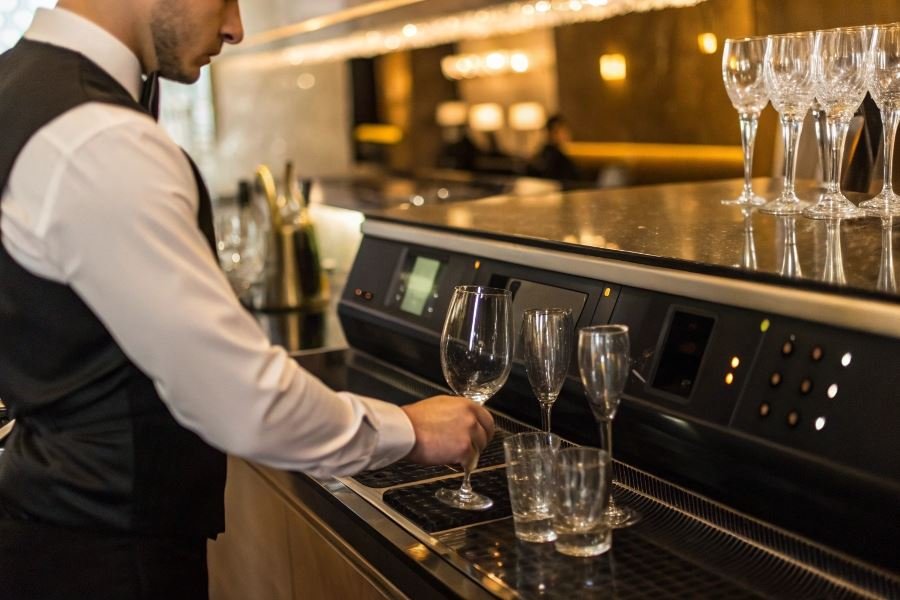
Ever watched a bartender frantically polishing glasses during a rush? Those days are rapidly becoming history. Commercial glass washing machines have silently revolutionized how businesses handle one of their most fragile yet essential assets.
At their core, glass washers are specialized cleaning systems designed to remove contaminants, sanitize surfaces, and deliver spotless results with minimal human intervention. Unlike your home dishwasher, these powerhouses operate on precisely calibrated combinations of water pressure, temperature control, and specialized detergents to achieve commercial-grade cleanliness without damaging delicate glassware.
Performance in this industry isn’t just about clean glasses – it’s measured through multiple critical metrics: cycle time (typically 90-180 seconds), water consumption (as low as 2 gallons per cycle in high-efficiency models), energy usage, and sanitization effectiveness. The most advanced systems now achieve 99.9% pathogen reduction while using 30% less water than models from just a decade ago.
The evolution has been remarkable. Early commercial washers from the 1950s were essentially glorified sinks with spray attachments. Today’s machines incorporate intelligent sensors that adjust washing parameters based on load size, water quality, and even glass type. Some premium models feature:
- Recirculation systems capturing and filtering water for reuse
- Heat recovery technology converting waste heat into energy savings
- IoT connectivity providing usage analytics and predictive maintenance
The current market landscape reflects this technological sophistication, with specialized machines for everything from delicate wine glasses to heavy-duty bar tumblers. What was once a luxury investment has become an operational necessity for establishments serious about efficiency, consistency, and sustainability.
The Performance Powerhouse Behind Spotless Glass
Water Efficiency That Makes Every Drop Count
Modern glass washing machines have revolutionized the way businesses handle their glassware cleaning needs. The latest models demonstrate remarkable advances in water conservation technology, using as little as 0.8 gallons per rack compared to the 2-3 gallons typical of older machines. The Hobart LXGEPR Advansys glass washer, for instance, incorporates multi-stage filtration systems that recirculate water through consecutive wash cycles, reducing fresh water requirements by up to 50%.
When evaluating glass washing machines: performance and efficiency stand as the two critical metrics that separate exceptional equipment from merely adequate options. The water consumption profile of today’s high-efficiency units often includes smart sensors that detect load size and soil level, automatically adjusting water usage accordingly. This precision approach means a half-loaded machine won’t wastefully use the same resources as a full one.
Water-saving innovations worth noting:
- Rinse-aid optimization systems that reduce surface tension, allowing water to sheet off glassware more effectively
- Recirculation tanks that capture, filter, and reuse final rinse water for the next wash cycle’s pre-rinse
- Variable pressure nozzles that adjust water force based on the cleaning stage and glass type
Energy Consumption That Won’t Power Down Your Profits
The thermal efficiency of glass washers has seen dramatic improvements, with heat recovery systems capturing steam that would otherwise escape during the cycle. The Meiko M-iClean series exemplifies this advancement, utilizing exhaust heat to pre-warm incoming water, reducing energy requirements by up to 21%.
Energy efficiency isn’t just about lower utility bills—it translates directly to faster cycle times and extended equipment lifespan.
A comparative analysis of energy consumption reveals striking differences between standard and high-efficiency models:
| Model Type | kWh Per 100 Racks | Annual Cost* | CO₂ Emissions (tons/year) |
|---|---|---|---|
| Standard | 290-340 | 870−1,020 | 5.8-6.8 |
| High-Efficiency | 180-220 | 540−660 | 3.6-4.4 |
| Ultra-Efficient | 120-160 | 360−480 | 2.4-3.2 |
*Based on average commercial electricity rates
Throughput That Keeps Pace With Demand
The cleaning cycle duration directly impacts operational efficiency, especially during peak service periods. Leading models like the Winterhalter UC Series offer customizable cycle times ranging from 60 seconds for lightly soiled glassware to 180 seconds for intensive cleaning needs.
Throughput capacity evaluation must consider not just raw speed but consistent cleaning quality. The most efficient machines maintain optimal performance even when pushed to their rated capacity limits of 30-40 racks per hour. This reliability factor becomes particularly crucial during high-volume periods.
Performance factors that influence throughput:
- Wash arm design and spray pattern coverage
- Pump pressure consistency throughout multiple cycles
- Detergent dispensing precision and rinse aid distribution
- Temperature maintenance during consecutive wash cycles
The latest glass washers incorporate digital monitoring systems that track performance metrics in real-time, allowing operators to identify efficiency drops before they impact cleaning results. This predictive maintenance approach ensures maximum uptime and consistent performance—critical factors for establishments where spotless glassware is non-negotiable.
Maximizing Commercial Glass Washer Performance
Maintenance practices that extend equipment life
Glass washing machines represent a significant investment for commercial operations. Preventative maintenance isn’t just a recommendation—it’s the difference between consistent performance and costly downtime.
Daily cleaning routines make an extraordinary difference in machine longevity. Removing glass particles and debris from filters after each shift prevents the buildup that leads to pump failures. Studies from the National Restaurant Association show that properly maintained glass washers typically last 7-10 years, while neglected units often require replacement within 4 years.
The maintenance sweet spot includes:
- Daily inspection and cleaning of wash arms and spray nozzles
- Weekly descaling in hard water areas (monthly in soft water regions)
- Quarterly replacement of water seals and gaskets
- Biannual professional servicing of pumps and electrical components
The most expensive glass washer is the one that sits idle during peak service hours.
Temperature monitoring proves critical for both performance and efficiency. Most commercial glass washers operate optimally between 140-160°F for washing and 180°F for sanitizing. Calibrating these temperatures quarterly ensures both spotless glassware and energy efficiency.
Smart technology integration transforms efficiency
The integration of Hobart smart glass washers with IoT capabilities has revolutionized commercial kitchen operations. These systems provide real-time monitoring of water usage, chemical consumption, and energy efficiency—allowing managers to identify inefficiencies before they impact the bottom line.
Modern glass washers now feature:
| Technology Feature | Efficiency Benefit | ROI Timeline |
|---|---|---|
| Variable speed pumps | 30-40% energy reduction | 14-18 months |
| Auto-dosing chemical systems | 25% reduction in detergent use | 8-12 months |
| Heat recovery units | 35% energy savings | 24-30 months |
| Remote monitoring | Reduces service calls by 40% | 12-16 months |
Winterhalter has pioneered connected glass washing systems that automatically adjust cycle times based on soil levels, dramatically reducing water consumption while maintaining perfect results. These systems learn from usage patterns, optimizing performance during peak periods and conserving resources during slower times.
ROI analysis reveals surprising long-term savings
When analyzing glass washer investments, the purchase price represents only 15-20% of lifetime operational costs. Energy consumption typically accounts for 35%, while water and chemicals represent another 25%. The remaining costs come from maintenance and labor.
High-efficiency models from Meiko might command a 30% premium upfront but deliver 40-50% reductions in operational costs. For establishments washing 500+ glasses daily, this translates to approximately 3, 200−4,800 annual savings.
The efficiency equation becomes even more compelling when factoring in:
- Reduced labor costs through faster cycle times
- Decreased breakage from gentler handling systems
- Enhanced customer experience from consistently spotless glassware
- Extended equipment lifespan through smart monitoring
For high-volume operations, the payback period for premium glass washing equipment typically ranges from 18-24 months, with substantial savings continuing for years afterward. When factoring in water conservation rebates available in many municipalities, this timeline can shrink to under a year.
The most successful operations view glass washing not as a utility function but as a strategic investment in operational excellence and customer satisfaction.
Discover how modern glass washing machines maximize performance while minimizing resource consumption. Our comprehensive guide explores efficiency metrics, water conservation features, and smart technology integration for optimal commercial results in 2025.
Discover how modern glass washing machines maximize performance while minimizing resource consumption. Our comprehensive guide explores efficiency metrics, water conservation features, and smart technology integration for optimal commercial results in 2025.