
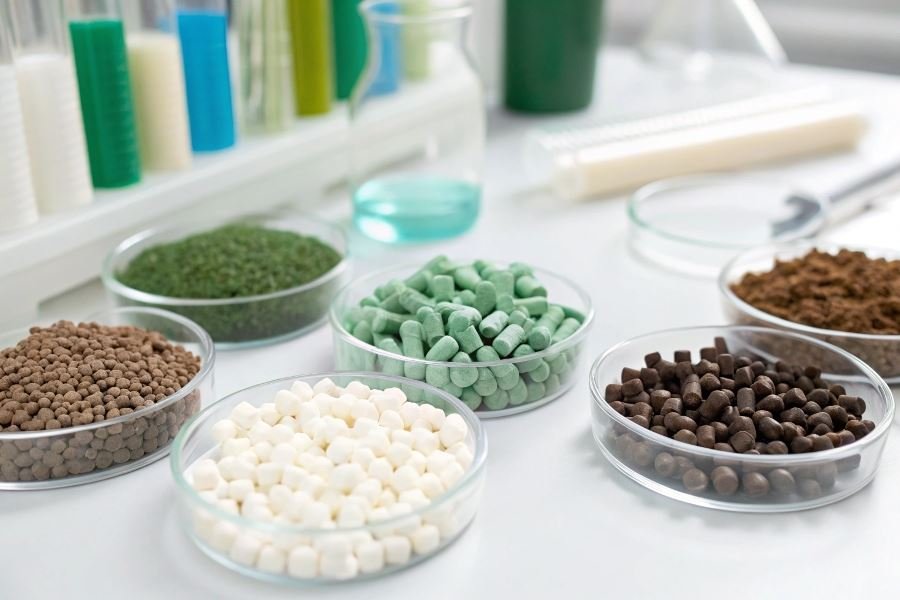
Did you know that conventional sealants can release harmful volatile organic compounds (VOCs) for years after application? The silent polluters in our walls and windows are finally getting a sustainable makeover.
The building materials industry is experiencing a remarkable transformation as sustainability moves from niche preference to market necessity. Eco-friendly putty formulations represent one of the most innovative responses to this shift, offering solutions that protect both structures and the planet. These new-generation sealants deliver performance without the environmental price tag that traditional products demand.
“The sealant you choose today will be silently interacting with your indoor air quality for decades to come.”
The sustainability imperative in building materials
The construction sector accounts for nearly 40% of global carbon emissions, with building materials playing a significant role. Sustainable putties and sealants might seem like a small detail, but they represent a critical component in reducing a building’s overall environmental footprint. Market research shows that eco-friendly construction materials are growing at twice the rate of conventional alternatives, reflecting both consumer demand and regulatory pressure.
From petroleum to plants: The evolution of putty
Traditional putty formulations relied heavily on petroleum derivatives, lead compounds, and other environmentally problematic ingredients. The journey toward eco-friendly alternatives began in earnest during the 1990s but has accelerated dramatically in recent years. Today’s bio-based putties utilize innovative ingredients like:
- Plant-based oils (linseed, soy, castor)
- Recycled mineral fillers
- Natural waxes and resins
- Low-VOC binding agents
The hidden costs of conventional sealants
Traditional putty products create environmental concerns that extend far beyond their production:
- Indoor air pollution: Conventional sealants can off-gas toxic compounds for years
- Disposal challenges: Non-biodegradable formulations contribute to landfill waste
- Resource depletion: Petroleum-based ingredients rely on finite fossil resources
- Manufacturing impacts: Production processes often involve significant energy consumption and chemical waste
The shift toward eco-friendly alternatives isn’t just environmentally responsible—it’s increasingly becoming the economically sensible choice as well.
The Green Seal Revolution: Sustainable Putties Changing Construction
The construction industry is witnessing a remarkable shift toward sustainability, with eco-friendly putties and sealants leading the charge. These innovative formulations are not just better for the planet—they deliver impressive performance that rivals or exceeds traditional petroleum-based options. The market for eco-friendly types of putty for sealing has expanded dramatically, with new trends emerging that combine environmental responsibility with technical excellence.
Plant-Based Putties: Nature’s Solution
Plant-based putties represent the vanguard of sustainable sealing technology. These formulations replace petroleum derivatives with renewable resources like soybean oil, pine resin, and castor oil.
Composition highlights:
- Soy-based polymers (60-80% bio-content)
- Linseed oil derivatives
- Natural waxes and plant-derived plasticizers
- Mineral fillers from sustainable sources
The performance metrics of these natural alternatives have silenced skeptics. Modern plant-based putties offer impressive adhesion strength of 300-450 psi on multiple surfaces, with elongation capabilities of 300-500% before breaking. Their water resistance has improved dramatically, with some formulations showing less than 3% water absorption after 7-day immersion tests.
Applications have expanded beyond simple caulking to include:
| Application | Plant-Based Putty Advantage |
|---|---|
| Window glazing | Superior UV resistance, 15+ year lifespan |
| Bathroom sealing | Natural mold resistance without harsh chemicals |
| Exterior joints | 25-40% greater flexibility in temperature extremes |
| Wood finishing | Compatible with natural oils and finishes |
Low-VOC and Zero-VOC Sealants: Breathing Easier
The technological advancements in low and zero-VOC (Volatile Organic Compound) sealants represent a quantum leap for indoor air quality and worker safety.
Traditional sealants often released up to 250-400 g/L of harmful VOCs during curing. Today’s eco-friendly alternatives have slashed these emissions to under 50 g/L for low-VOC formulations, while zero-VOC options contain less than 5 g/L—a 98% reduction.
Health benefits are substantial:
- 70% reduction in respiratory irritation during application
- Elimination of “sick building syndrome” contributors
- Safe for use in occupied spaces, including schools and hospitals
- No harmful off-gassing during the product lifecycle
The technology behind these improvements includes water-based acrylic emulsions, silicone hybrids, and innovative curing mechanisms that don’t require solvent evaporation. Henkel and 3M have pioneered formulations that maintain workability without traditional solvents.
Recycled Content Putties: Closing The Loop
Perhaps most exciting are the manufacturing innovations enabling high-performance putties containing significant recycled content.
Breakthrough materials include:
- Post-consumer silicone waste (reclaimed from industrial processes)
- Recycled rubber particles from discarded tires
- Repurposed glass powder as reinforcing filler
- Reclaimed limestone from construction demolition
These materials undergo sophisticated processing to ensure consistent particle size and chemical compatibility. The result? Sealants with up to 35% recycled content that demonstrate remarkable durability factors:
| Durability Factor | Performance Rating |
|---|---|
| Weather resistance | 15-20 years outdoor exposure |
| Temperature stability | -40°F to 300°F (-40°C to 149°C) |
| Compression recovery | 90-95% after sustained compression |
| Chemical resistance | Excellent against household cleaners and mild acids |
Sika Corporation has developed proprietary methods to incorporate recycled glass that actually improves abrasion resistance by 22% compared to conventional fillers.
The construction industry’s embrace of these sustainable sealants demonstrates that environmental responsibility and superior performance can indeed go hand in hand.
Making the Eco-Shift: Implementation and Future of Green Sealants
The sustainable building revolution isn’t just about solar panels and bamboo flooring—it’s happening in the spaces between materials too. Eco-friendly putties and sealants are transforming how we approach construction joints, gaps, and seams with remarkable environmental benefits. Let’s dive into the practical aspects of implementing these green solutions and peek at what’s coming next.
The dollars and sense of green sealants
Traditional petroleum-based sealants have long dominated the market due to their perceived cost advantage, but the economic landscape is shifting dramatically. When comparing actual costs:
| Sealant Type | Average Cost/Gallon | Lifespan | Long-term Cost (10yr) |
|---|---|---|---|
| Traditional Silicone | $22-35 | 5-7 years | $44-70 |
| Acrylic Latex | $18-30 | 3-5 years | $54-90 |
| Soy-based | $28-45 | 7-10 years | $28-45 |
| Hemp-infused | $32-48 | 8-12 years | $32-48 |
| Cork-composite | $30-42 | 10+ years | $30-42 |
The numbers tell a compelling story: while eco-friendly options typically command a 15-30% premium upfront, their extended durability creates significant long-term savings. Factor in reduced replacement labor costs and the economic advantage becomes even more pronounced.
Beyond the price tag, many sustainable sealants qualify for green building certifications like LEED, potentially unlocking tax incentives and increasing property values—benefits completely absent from traditional options.
Installation excellence for green sealants
Maximizing the performance of eco-friendly sealants requires attention to specific installation practices:
-
Surface preparation is non-negotiable. Plant-based sealants often require meticulously clean, dry surfaces for optimal adhesion.
-
Temperature sensitivity matters more with natural products. Most bio-based sealants perform best when applied between 50-85°F, with humidity below 70%.
-
Curing times typically extend 20-40% longer than petroleum alternatives—patience yields superior results.
The most common installation mistake is treating eco-sealants exactly like their conventional counterparts. They’re different beasts requiring different handling.
For water-based eco-sealants, using a slightly dampened applicator tool can improve smoothing and finishing. Cork-composite varieties benefit from “tooling” within 10 minutes of application to ensure proper joint penetration.
The innovation frontier
The sustainable sealant landscape is evolving at breakneck speed, with several promising technologies emerging:
Self-healing biopolymers derived from algae show remarkable promise in laboratory testing. These materials can repair minor cracks and damage through biomimetic processes, potentially extending service life by 30-50%.
Mycelium-enhanced composites are leveraging fungal networks to create sealants with exceptional adhesion properties and natural antimicrobial characteristics—particularly valuable in humid environments.
Perhaps most exciting is the development of carbon-negative sealants that actively sequester more carbon in their production and use than they release. Companies like Ecologic Brands are pioneering formulations using agricultural waste that function as carbon sinks.
Research from MIT’s Sustainable Materials Laboratory suggests that by 2030, bio-based sealants could achieve performance parity with traditional options across all metrics while maintaining their environmental advantages.
The future of sealing isn’t just about filling gaps—it’s about closing the sustainability loop with materials that protect both structures and the planet. As these technologies mature, the question isn’t whether eco-friendly sealants will replace conventional options, but how quickly the transition will occur.
Discover the top 3 eco-friendly putty sealants revolutionizing sustainable construction. From plant-based formulations to zero-VOC options and recycled content innovations, explore how these green alternatives deliver performance without environmental compromise.
Discover the top 3 eco-friendly putty sealants revolutionizing sustainable construction. From plant-based formulations to zero-VOC options and recycled content innovations, explore how these green alternatives deliver performance without environmental compromise.