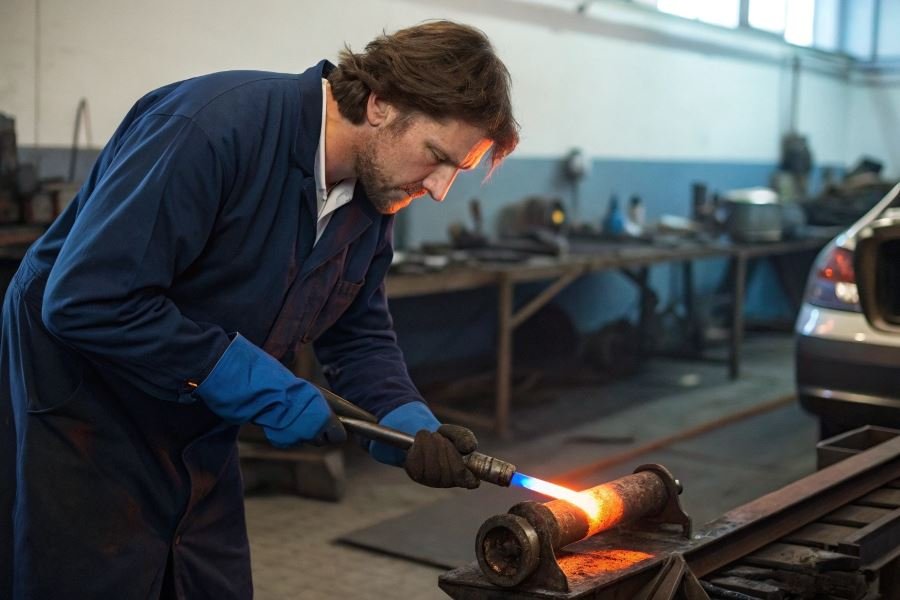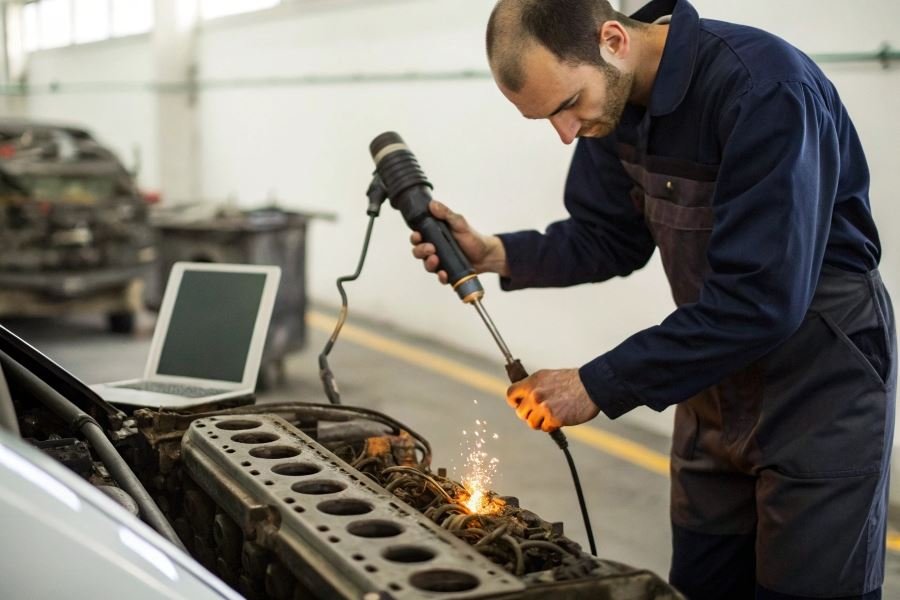
Ever watched metal transform from solid to glowing red in seconds without a flame in sight? That’s the magic of induction heating—a technology that’s revolutionizing everything from manufacturing to cooking. But here’s the catch: select the wrong power rating, and you’re either wasting energy or failing to get the job done.
Induction heating works through electromagnetic fields that generate heat directly within the metal workpiece—no direct contact required. Unlike conventional heating methods that waste energy heating the surrounding air, induction heating delivers precision, speed, and efficiency that’s transforming industries worldwide.
When determining the appropriate power for your induction heater, you’re essentially solving an equation with multiple variables. The material composition, mass, target temperature, and heating time all play crucial roles in this calculation. Getting this right isn’t just about performance—it’s about your bottom line.
The science behind proper power selection combines metallurgy, electrical engineering, and thermodynamics. For instance, heating a 2-inch steel rod to 1800°F requires dramatically different power than warming a copper tube to 400°F. The difference can mean thousands in operational costs over time.
“The right power rating is where performance meets efficiency—too little and you’re wasting time, too much and you’re wasting money.”
Understanding these fundamental criteria isn’t just technical necessity—it’s the foundation for operational excellence in any application where precision heating matters.
The Science Behind Induction Heater Power Selection
When precision heating matters, selecting the right power for an induction heater transforms from a simple specification into a critical engineering decision. Manufacturers who understand the technical criteria for selecting the power of an induction heater gain significant advantages in production efficiency, energy consumption, and final product quality.
Material Properties Drive Power Requirements
Different materials respond uniquely to induction heating based on their electromagnetic properties. Ferromagnetic materials like carbon steel and iron are induction heating champions, requiring less power due to their high magnetic permeability. In contrast, non-ferrous metals like aluminum and copper demand substantially higher power inputs—often 3-5 times more—to achieve similar heating results.
Electrical resistivity plays an equally crucial role. Materials with higher resistivity generate heat more efficiently through eddy current losses. This explains why stainless steel, despite being less magnetically responsive than carbon steel, can still be effectively heated through induction due to its higher electrical resistance.
| Material | Relative Magnetic Permeability | Power Requirement |
|---|---|---|
| Carbon Steel | 100-5000 | Low |
| Stainless Steel | 1.02-1.10 | Medium |
| Aluminum | 1.00002 | High |
| Copper | 0.999994 | Very High |
Size, Mass and Geometry: The Physical Equation
The physical characteristics of your workpiece dramatically influence power requirements. A fundamental rule: larger mass requires more power. However, the relationship isn’t strictly linear—doubling the mass doesn’t simply double the power needed.
Geometry creates additional complexity. Thin-walled components heat faster than solid pieces, while complex shapes with varying thicknesses present challenges for uniform heating. The coupling distance—space between the induction coil and workpiece—exponentially affects power efficiency, with even small increases in distance requiring significant power compensation.
Temperature Goals and Time Constraints
Your target temperature and heating timeframe establish the baseline for power calculations. Heating steel from room temperature to 1200°C requires approximately 0.5 kWh per kilogram under ideal conditions. However, real-world applications demand additional power to overcome:
- Heat losses through radiation
- Convection to surrounding air
- Conduction to fixtures or other components
Rapid heating applications typically require 2-3 times more power than gradual heating processes to achieve the same final temperature, making power density a critical specification for time-sensitive operations.
Power Density and Thermal Efficiency
Power density—measured in watts per square centimeter—determines how intensely heat is generated within the workpiece. For surface hardening applications, power densities of 1.0-1.5 kW/cm² are common, while through-heating may require lower densities of 0.3-0.8 kW/cm² to allow heat penetration.
The thermal efficiency factor accounts for system losses and typically ranges from 50-85% depending on:
- Coil design optimization
- Power supply quality
- Cooling system effectiveness
- Workpiece-to-coil coupling
Advanced induction systems with optimized coil geometry and high-frequency capabilities can achieve efficiency ratings at the upper end of this spectrum, reducing overall power requirements by 20-30% compared to basic systems.
By methodically evaluating these technical criteria, engineers can precisely calculate induction heater power requirements that balance performance needs with energy efficiency—ultimately delivering superior heating results while minimizing operational costs.
Powering Your Success: Practical Criteria for Induction Heater Selection
When selecting an induction heater, power isn’t just a number—it’s the heartbeat of your entire operation. The difference between 5kW and 50kW isn’t merely mathematical; it’s the difference between precision brazing a small component and melting pounds of metal in minutes.
Application dictates everything
Different heating applications demand dramatically different power profiles:
- Hardening operations typically require 10-150kW depending on part size and depth requirements
- Brazing applications generally function well in the 5-50kW range
- Melting processes often demand 50-500kW for efficient throughput
A jewelry maker working with small gold components might find a 3kW unit perfectly adequate, while an automotive parts manufacturer hardening crankshafts could require 75kW or more for optimal results.
The right power level doesn’t just heat your workpiece—it transforms your entire production economics.
Duty cycle and environment matter enormously
Your operational environment dramatically impacts power requirements:
| Duty Cycle | Typical Application | Power Adjustment Factor |
|---|---|---|
| 100% continuous | Production lines | 1.25-1.5× base requirement |
| 50% intermittent | Batch processing | 1.0× base requirement |
| 20% occasional | Repair/maintenance | 0.8× base requirement |
Ambient temperature also plays a crucial role. Operations in high-temperature environments (>90°F) may require additional power overhead of 10-15% to maintain performance consistency.
Facility constraints create boundaries
Even the perfect induction heater is useless if your facility can’t power it. Consider:
- Available voltage (208V, 240V, 480V, etc.)
- Phase availability (single vs. three-phase power)
- Maximum amperage your electrical service can provide
A 75kW induction system typically requires a 100A three-phase 480V service. If your facility only offers 240V single-phase power, you’ll need to either upgrade your electrical infrastructure or select a lower-power unit compatible with existing services.
Water cooling requirements increase proportionally with power—a 50kW unit might require 10-15 gallons per minute of cooling capacity.
The economics of power selection
The cost-benefit analysis of induction heater power selection involves several factors:
- Initial investment increases with power (roughly $1,000-2,500 per kW)
- Operating costs (electricity consumption scales nearly linearly with power)
- Production throughput (higher power generally means faster processing)
- Quality considerations (some applications require precise, slower heating)
Oversizing your induction heater by 20-30% often provides valuable flexibility for future production needs, but exceeding this range typically creates diminishing returns and unnecessary capital expenditure.
Undersizing creates immediate bottlenecks and can lead to equipment failure through overuse—a far more expensive proposition than selecting adequate power initially.
The most successful operations match power requirements precisely to application needs, then add a calculated margin for operational flexibility. This approach maximizes ROI while ensuring your heating processes never become production bottlenecks.
Discover essential criteria for selecting the optimal induction heater power based on material properties, workpiece characteristics, and application requirements. Learn how to balance technical specifications with practical considerations for maximum efficiency and performance.
Discover essential criteria for selecting the optimal induction heater power based on material properties, workpiece characteristics, and application requirements. Learn how to balance technical specifications with practical considerations for maximum efficiency and performance.