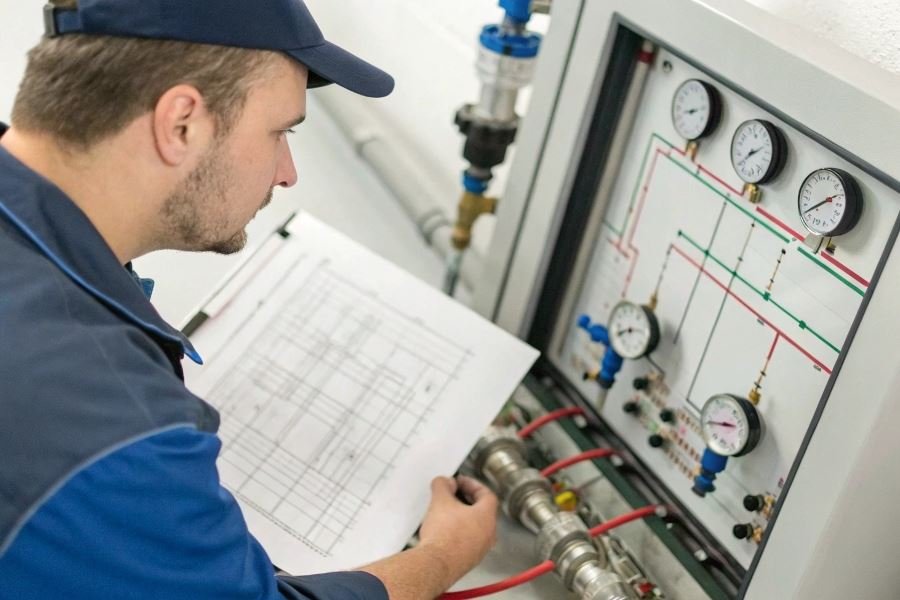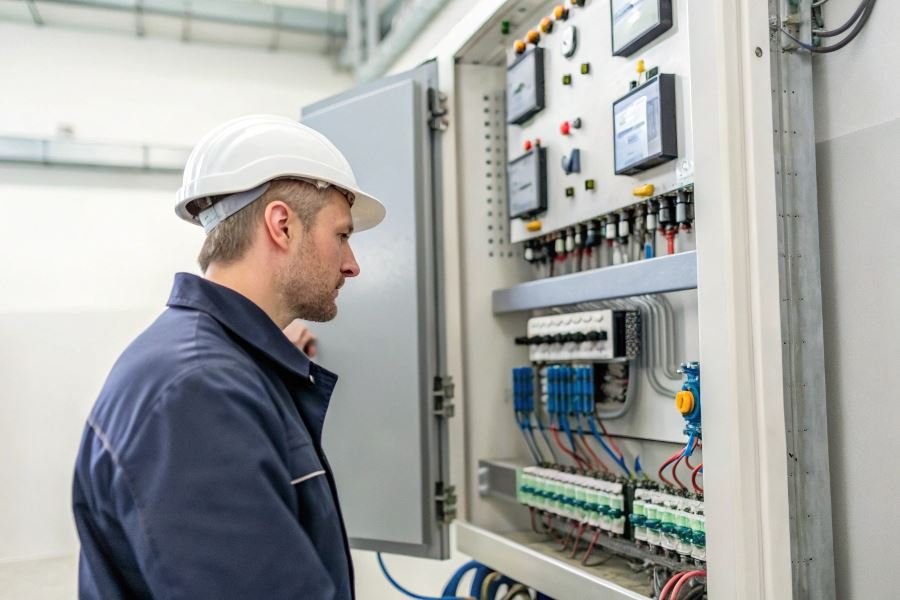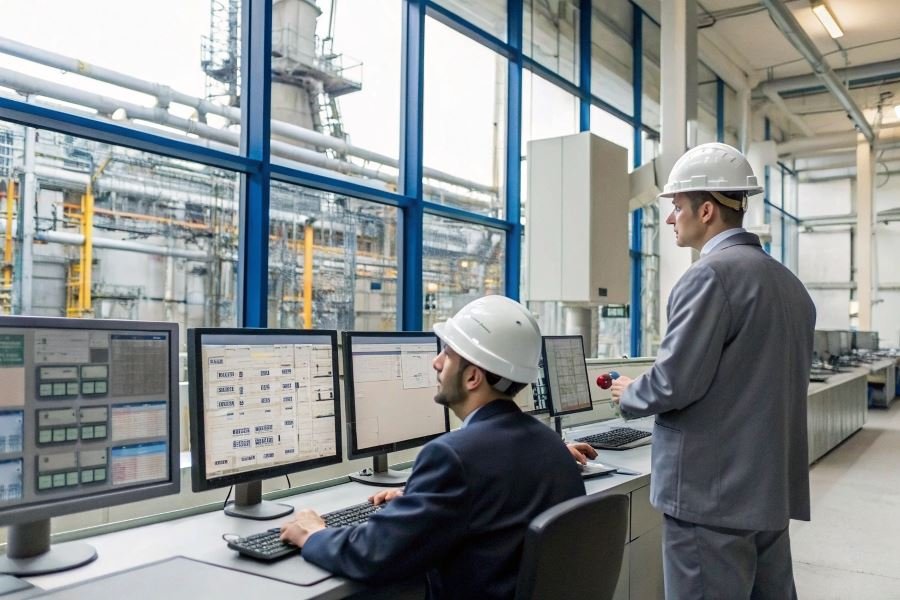
Ever watched a symphony orchestra perform? While the musicians create the music, it’s the conductor who ensures perfect harmony. In industrial facilities, control nodes play that critical conductor role—they’re the central nervous system that keeps everything running smoothly, safely, and efficiently.
Control nodes are specialized hardware and software systems that monitor, manage, and coordinate industrial processes. They’re the decision-makers that process thousands of inputs, execute complex algorithms, and send precise commands to equipment throughout a facility. When these nodes fail, production stops—costing some facilities upwards of $20,000 per minute in downtime.
“The reliability of control systems directly correlates to operational uptime, safety metrics, and ultimately, profitability.” — American Society of Automation Engineers
The evolution of these critical systems tells a fascinating story of industrial transformation. Early control systems of the 1960s relied on analog components and mechanical relays, offering basic functionality but limited flexibility. The 1980s brought programmable logic controllers (PLCs), revolutionizing industrial control with digital precision. Today’s systems integrate advanced cybersecurity, predictive maintenance capabilities, and seamless cloud connectivity.
Key reliability factors in modern control systems
Three factors determine control node reliability: hardware redundancy, software robustness, and environmental resilience. The most dependable systems employ triple-modular redundancy—where three identical systems perform the same functions simultaneously, with voting logic determining the correct output. This approach has reduced critical failures by 87% in high-stakes environments like petrochemical processing.
Programmable Logic Controllers: The Industrial Backbone
In the manufacturing sector, reliability isn’t just a feature—it’s the difference between production and costly downtime. When examining the most reliable types of control nodes for industrial facilities, Programmable Logic Controllers (PLCs) consistently emerge as the gold standard for mission-critical operations. These robust computing devices have evolved from simple relay replacements to sophisticated control systems that form the nervous system of modern factories.
Redundancy that never sleeps
Modern PLC systems have transformed redundancy from a backup plan to an architectural philosophy. Hot standby configurations now allow seamless transitions between primary and secondary controllers with zero data loss. Allen-Bradley ControlLogix systems, for instance, implement redundant processors that synchronize data at scan-by-scan precision—ensuring that even if the primary controller fails, operations continue uninterrupted.
The evolution from basic failover to true redundancy represents perhaps the most significant advancement in industrial control reliability.
| Redundancy Feature | Traditional PLCs | Modern Redundant PLCs |
|---|---|---|
| Switchover Time | 3-10 seconds | <20 milliseconds |
| Memory Synchronization | Manual/Periodic | Real-time |
| I/O Handling During Failover | Often lost | Preserved |
| Self-diagnostics | Basic | Comprehensive |
Fault-tolerant architectures that refuse to fail
The architecture of industrial-grade PLCs has been reimagined with fault tolerance as a foundational principle rather than an add-on feature. Siemens SIMATIC S7 controllers exemplify this approach with their distributed I/O systems that can operate independently if communication with the central processor is interrupted.
Triple Modular Redundancy (TMR) has become the gold standard for critical applications in oil and gas, nuclear, and chemical processing. These systems employ three parallel processing channels with voting mechanisms that can identify and isolate faults without interrupting operations.
Real-time monitoring that sees the future
The integration of predictive maintenance capabilities has revolutionized how PLCs contribute to facility reliability. Modern systems don’t just control processes—they actively monitor their own health and the condition of connected equipment.
Honeywell Experion PKS controllers now incorporate advanced analytics that can:
- Detect subtle changes in equipment performance weeks before failure
- Automatically adjust control parameters to compensate for degrading components
- Generate maintenance recommendations based on actual usage patterns rather than calendar schedules
This shift toward predictive intelligence means that maintenance becomes a planned activity rather than an emergency response. One petroleum refinery in Texas reported a 73% reduction in unplanned downtime after implementing predictive maintenance-enabled PLCs, translating to approximately $3.2 million in saved production costs annually.
The integration of OPC UA (Open Platform Communications Unified Architecture) has further enhanced real-time monitoring by creating standardized communication protocols that allow PLCs to share diagnostic data across platforms and vendors. This interoperability means that comprehensive facility monitoring is no longer limited by proprietary systems.
When reliability is measured in millions of dollars per hour of uptime, the investment in advanced PLC systems becomes not just justifiable but essential.
Distributed Control Systems: The Backbone of Industrial Reliability
When industrial facilities demand unwavering reliability, Distributed Control Systems (DCS) stand as the gold standard. These sophisticated networks of controllers, sensors, and human interfaces don’t just monitor operations—they form the central nervous system of modern manufacturing, power generation, and process industries.
Redundancy that never sleeps
The true power of DCS implementations lies in their redundant controller configurations. Unlike traditional control systems where a single failure point can halt operations, modern DCS platforms employ multiple layers of redundancy.
Triple Modular Redundancy (TMR) has become the architecture of choice for mission-critical applications. This approach deploys three identical controllers running in parallel, with a voting system that compares outputs to ensure accuracy. If one controller deviates, the system automatically identifies and isolates it while maintaining operations.
The difference between 99.9% and 99.999% reliability might seem small on paper, but translates to hours versus mere minutes of downtime annually—a distinction that can represent millions in prevented losses.
Honeywell Experion PKS and Emerson DeltaV systems exemplify this approach, offering redundancy at multiple levels:
| Redundancy Level | Components | Recovery Time |
|---|---|---|
| Controller | Dual or triple processors | <10 milliseconds |
| Network | Redundant communication paths | <1 millisecond |
| Power | Uninterruptible power supplies | Zero interruption |
| I/O | Redundant I/O modules | <100 milliseconds |
Hot-swappable components change the game
The days of scheduling downtime for maintenance are becoming obsolete thanks to hot-swappable components. These engineering marvels allow technicians to replace hardware while systems remain fully operational.
ABB System 800xA pioneered this approach with their “online replacement” technology that permits maintenance without interrupting process control. The system automatically recognizes new components, synchronizes configurations, and transfers operations seamlessly.
Zero-downtime maintenance extends beyond hardware to firmware and software updates. Modern DCS platforms from Siemens and Yokogawa allow patches and upgrades while systems continue running—a capability that was unimaginable just a decade ago.
“The most expensive component in any industrial facility isn’t the equipment—it’s the downtime.”
Integrated safety systems that never compromise
The integration of safety systems directly into DCS architecture represents perhaps the most significant advancement in industrial control reliability. These aren’t just alarms—they’re comprehensive fail-safe mechanisms designed to prevent catastrophic failures.
Safety Instrumented Systems (SIS) work alongside standard control functions but remain independent enough to override operations when safety parameters are breached. The Schneider Electric Triconex platform exemplifies this approach with its dedicated safety controllers that achieve SIL-3 (Safety Integrity Level) certification—the gold standard for processes where failures could threaten lives.
Modern DCS implementations incorporate:
- Fault-tolerant processors that can detect internal failures
- Diverse programming languages to prevent common-mode failures
- Automatic diagnostics that continuously verify system integrity
- Graceful degradation pathways that maintain critical functions even during partial failures
The integration of these safety systems doesn’t just protect equipment—it creates a comprehensive safety envelope that protects personnel, communities, and the environment while ensuring regulatory compliance.
Discover the 7 most reliable industrial control nodes that maximize uptime and safety. Compare PLCs, DCS, and SCADA systems with edge computing to find the perfect solution for your facility's automation needs.
Discover the 7 most reliable industrial control nodes that maximize uptime and safety. Compare PLCs, DCS, and SCADA systems with edge computing to find the perfect solution for your facility's automation needs.