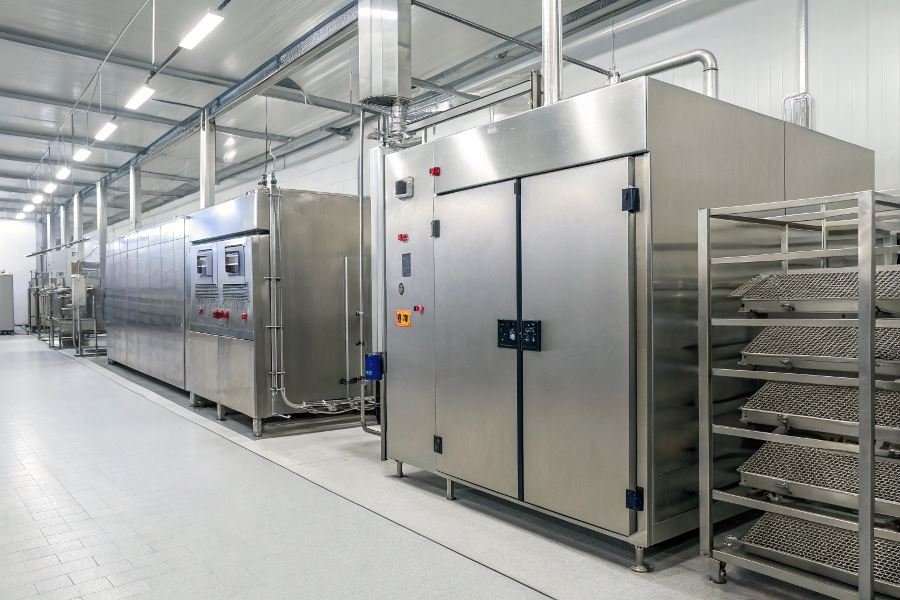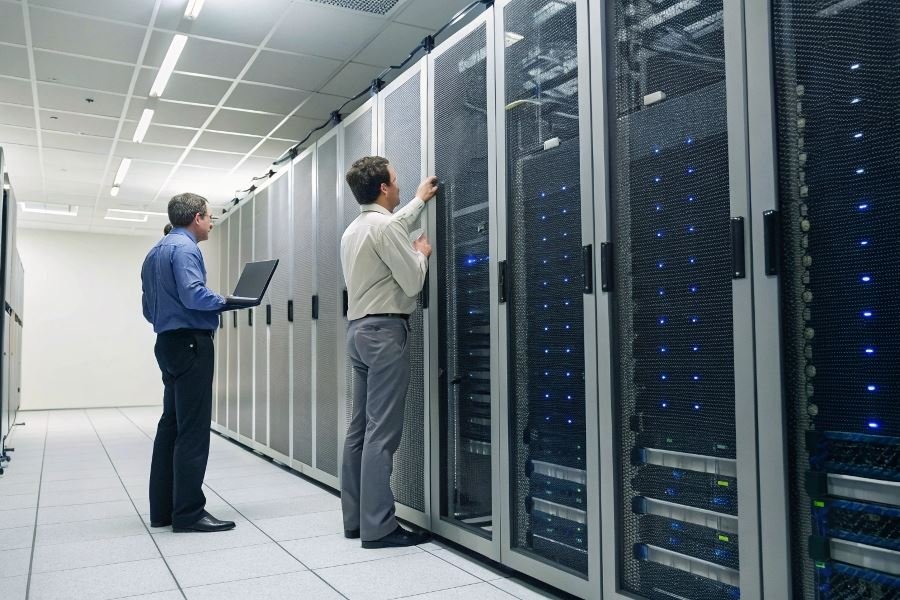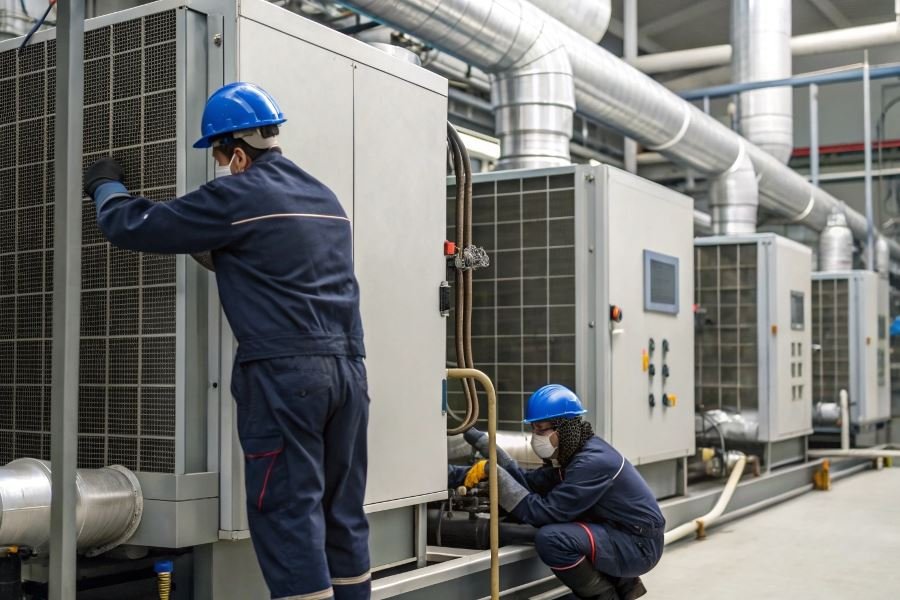
Ever wondered what keeps massive data centers from melting down or how food processing plants maintain perfect temperatures? The answer lies in industrial cooling systems – the unsung heroes of modern manufacturing.
Industrial coolers aren’t just oversized versions of your home refrigerator. They’re sophisticated systems designed to handle extreme thermal loads in demanding environments. From massive evaporative coolers that harness the power of water evaporation to precision chiller systems that maintain temperatures within fractions of a degree, these systems form the critical infrastructure behind countless industries.
The difference between optimal performance and costly failure often comes down to two factors: proper installation and meticulous operation. A correctly installed industrial cooling system can reduce energy consumption by up to 30% while extending equipment lifespan by years. Conversely, poor installation practices lead to the number one cause of premature system failure – improper refrigerant charging.
Types that power industry
Industrial cooling systems generally fall into three main categories:
- Air-cooled systems: Ideal for smaller applications with lower cooling demands
- Water-cooled systems: Offer superior efficiency for medium to large operations
- Evaporative cooling: Provides cost-effective cooling in appropriate climates
Beyond the basics
When considering an industrial cooling solution, several factors demand attention:
“The true cost of cooling isn’t in the purchase price – it’s in the decades of operation that follow.”
Spatial requirements, energy efficiency ratings, and maintenance accessibility form the trinity of smart cooling decisions. Additionally, environmental regulations increasingly shape cooling choices, with many operations transitioning away from traditional refrigerants toward more sustainable alternatives.
Essential Installation Features of Industrial Coolers
Site preparation and spatial requirements
The foundation of successful industrial cooler deployment begins long before the equipment arrives. Proper site preparation requires meticulous planning and precise measurements. Most industrial-grade cooling systems demand a minimum clearance of 36 inches on all sides—not just for installation, but for ongoing maintenance access that prevents costly downtime.
Floor load capacity represents another critical consideration that’s frequently overlooked. Industrial coolers can weigh anywhere from 1,500 to 10,000 pounds when fully operational. Reinforced concrete flooring with a minimum thickness of 6 inches is typically recommended for larger units. The installation and operation features of industrial coolers extend beyond the equipment itself to encompass the entire ecosystem in which they function, including structural considerations that directly impact performance and longevity.
Surface levelness matters significantly. Even minor deviations of 1/4 inch across an 8-foot span can cause compressor strain, reducing equipment lifespan by up to 30%. Professional installers use laser leveling tools to ensure perfect horizontal positioning, particularly for walk-in coolers and freezers where door seals depend on precise alignment.
Electrical and plumbing considerations
The electrical infrastructure supporting industrial cooling systems requires specialized attention. Most commercial-grade coolers operate on three-phase power (208-230V or 460V), necessitating dedicated circuits with appropriate amperage ratings. Circuit protection must be calculated based on the maximum load draw plus a 25% safety margin.
Voltage fluctuations represent one of the leading causes of compressor failure. Installing power conditioning equipment, such as voltage regulators or phase monitors, provides essential protection against irregular power supply issues that standard circuit breakers won’t catch.
Condensate drainage systems deserve equal consideration. A properly designed drainage system requires:
| Drainage Component | Specification | Purpose |
|---|---|---|
| Drain line diameter | Minimum 3/4 inch | Prevent clogging |
| Slope gradient | 1/4 inch per foot | Ensure proper flow |
| Trap depth | 2-4 inches | Prevent air infiltration |
| Condensate pump | For below-grade installations | Overcome gravity limitations |
Emergency water detection systems with automatic shutoff capabilities can prevent catastrophic flooding events, particularly in food storage applications where water damage extends beyond equipment to inventory losses.
Ventilation and airflow optimization
The efficiency of industrial cooling systems hinges directly on proper ventilation design. Heat rejection requirements typically demand 400-600 cubic feet per minute of airflow per ton of cooling capacity. Inadequate ventilation can reduce system efficiency by up to 40% while dramatically increasing operational costs.
Strategic placement of supply and return air ducts maximizes cooling effectiveness while minimizing energy consumption. The rule of thumb: cold air delivery should occur at the highest point possible within the cooled space, while return air collection should happen at the lowest point, leveraging natural convection principles.
The difference between a properly ventilated cooling system and a poorly ventilated one isn’t just efficiency—it’s the difference between predictable operational costs and budget-destroying energy bills.
For larger installations, computational fluid dynamics (CFD) modeling helps visualize airflow patterns before construction begins. This advanced planning technique identifies potential dead zones or short-cycling issues that would otherwise remain undetected until after installation.
Air curtains from manufacturers like Berner provide an invisible barrier that prevents warm air infiltration when doors open, reducing cooling load by up to 80% during access periods. These seemingly simple additions deliver outsized returns on investment, typically paying for themselves within 12-18 months through energy savings alone.
Mastering Industrial Cooler Performance
Industrial cooling systems represent the backbone of countless manufacturing processes, food storage operations, and technological infrastructures. Their optimal performance isn’t just about keeping things cold—it’s about precision, efficiency, and reliability that directly impacts bottom lines.
Energy efficiency that pays dividends
The energy consumption of industrial cooling systems can represent up to 30% of a facility’s total energy costs. Modern optimization techniques have transformed these power-hungry giants into lean, efficient machines:
- Variable frequency drives (VFDs) adjust compressor speeds based on actual cooling demands rather than running at full capacity continuously, reducing energy consumption by 15-40%.
- Heat recovery systems capture waste heat from condensers, repurposing it for space heating or water heating applications—essentially getting two utilities for the price of one.
- Advanced insulation technologies using aerogel and vacuum-insulated panels deliver R-values up to five times higher than traditional materials while occupying less space.
The difference between an optimized and non-optimized cooling system can translate to tens of thousands of dollars annually for medium-sized operations.
Temperature control with surgical precision
Modern industrial coolers have evolved far beyond simple thermostats, incorporating sophisticated monitoring and regulation systems:
| Technology | Precision | Key Benefit |
|---|---|---|
| IoT sensors | ±0.1°C | Real-time monitoring across multiple zones |
| Predictive algorithms | N/A | Anticipate temperature fluctuations before they occur |
| Zoned cooling | Variable | Target specific areas with different temperature requirements |
| Digital twin modeling | N/A | Simulate system performance under various conditions |
These systems don’t just maintain temperatures—they provide actionable intelligence. Danfoss electronic controllers, for instance, can track performance metrics while automatically adjusting to changing conditions, preventing temperature excursions that could compromise product integrity.
Preventative maintenance that prevents disasters
The most expensive maintenance is the maintenance you didn’t do. A comprehensive preventative approach includes:
Daily checks:
- Visual inspection of refrigerant levels through sight glasses
- Monitoring of discharge and suction pressures
- Verification of oil levels in compressors
Monthly procedures:
- Cleaning of condenser coils to prevent efficiency losses (dirty coils can reduce efficiency by up to 30%)
- Inspection of all electrical connections and controls
- Verification of proper superheat settings
Quarterly deep dives:
- Vibration analysis to detect early bearing failures
- Oil analysis to identify potential compressor issues
- Thermal imaging to locate hot spots in electrical systems
The cost of scheduled maintenance is typically 1/10 the cost of emergency repairs, not counting production losses during unexpected downtime.
When troubleshooting becomes necessary, modern systems equipped with Emerson diagnostic tools can often pinpoint issues before they cause system failure. These predictive capabilities transform maintenance from reactive to proactive, extending equipment life and preventing the cascade of problems that often follow a primary failure.
By implementing these operation and maintenance strategies, industrial cooling systems become not just reliable infrastructure, but strategic assets that contribute to operational excellence and competitive advantage.
Discover essential guidelines for successful industrial cooler installation and operation. Learn about site preparation, energy efficiency, and maintenance strategies to maximize performance and extend equipment lifespan.
Discover essential guidelines for successful industrial cooler installation and operation. Learn about site preparation, energy efficiency, and maintenance strategies to maximize performance and extend equipment lifespan.