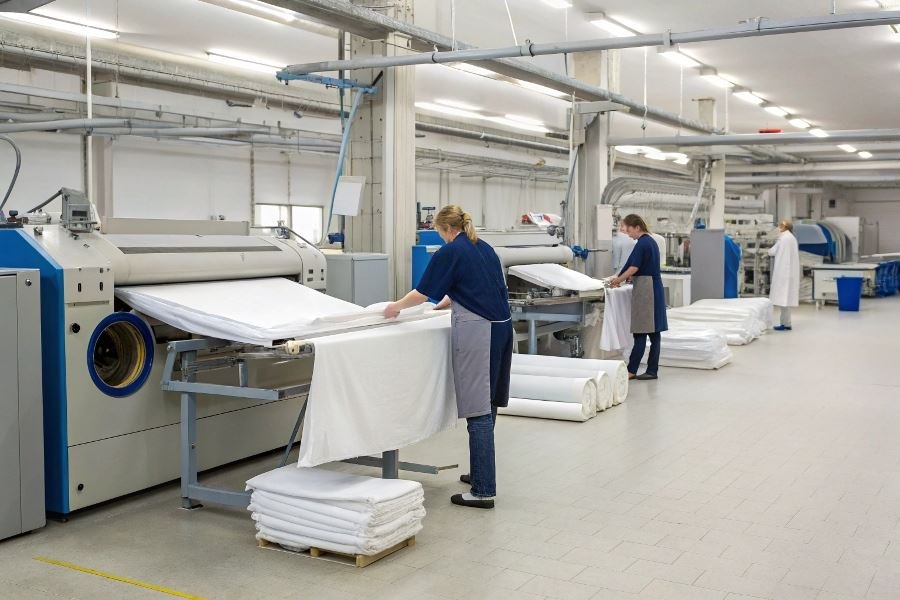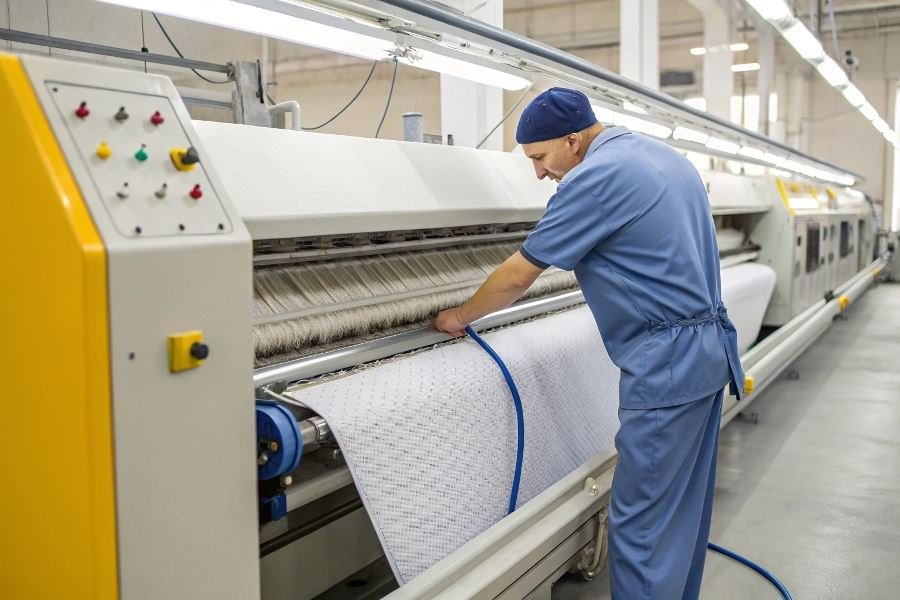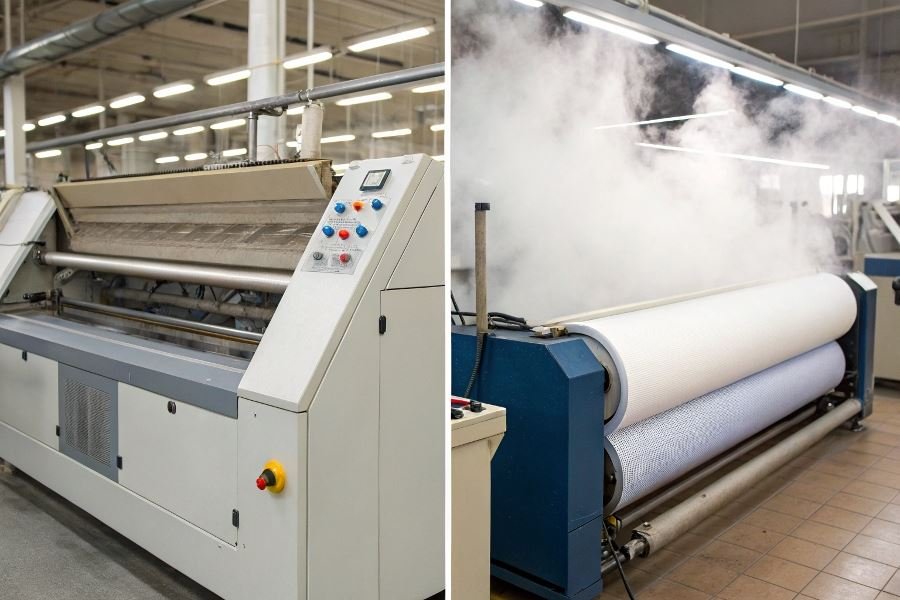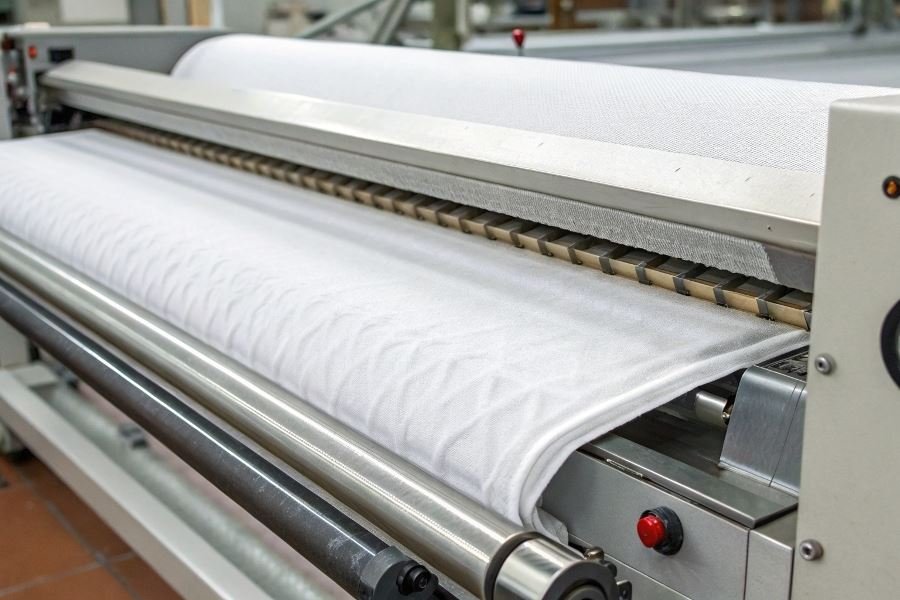
Ever watched a hotel sheet being transformed from a wrinkled mess to crisp perfection in minutes? That’s the magic of industrial ironing rollers at work. These mechanical marvels are the unsung heroes of laundry operations worldwide, processing hundreds—sometimes thousands—of items daily with remarkable efficiency.
Industrial ironing rollers (also called flatwork ironers or calendar ironers) are specialized machines designed to simultaneously dry, press, and finish large flat linens. Unlike their domestic counterparts, these powerhouses feature heated metal cylinders that rotate against pressure beds or additional rollers, creating the perfect combination of heat, pressure, and tension to banish wrinkles instantly.
What determines a roller’s workload capacity? It’s a combination of cylinder diameter, heating method, roller width, and processing speed. A small 8-inch diameter roller might handle 50 pounds per hour, while industrial giants with 32-inch cylinders can process over 800 pounds hourly. The heating system—gas, electric, or steam—significantly impacts both performance and operating costs.
The market divides these machines into three distinct categories:
- Light-duty rollers: Typically 5-13 feet wide with smaller cylinders, perfect for boutique hotels, small restaurants, and medical clinics processing 50-100 pounds hourly
- Medium-duty systems: 13-20 feet wide with enhanced heating capacity, serving mid-sized hotels and hospitals with 100-400 pound hourly requirements
- Heavy-duty industrial giants: Massive 20+ foot machines with multiple rollers, serving large hospitality chains and commercial laundries processing 400+ pounds hourly
Choosing the right capacity isn’t just about volume—it’s about matching your specific linen types, space constraints, and operational workflow to the perfect mechanical partner.
Industrial Ironing Rollers: The Workload Warriors
When production demands precision and efficiency, the right industrial ironing roller makes all the difference. The marketplace offers a spectrum of options designed to handle everything from boutique hotel linens to massive hospital laundry operations. Let’s dive into what separates the contenders from the pretenders.
Industrial ironing rollers: comparison of models for different workloads reveals that success in commercial laundry operations hinges on matching equipment capabilities to specific business needs. The wrong choice can lead to bottlenecks, excessive energy consumption, and premature equipment failure – costly mistakes in an industry where margins matter.
Light-Duty Champions
Light-duty industrial ironing rollers excel in environments processing up to 50kg per hour – perfect for small hotels, restaurants, and boutique laundry services.
Key Specifications:
- Roll width: 100-140cm
- Heating methods: Electric (3-9kW)
- Processing speed: 2-4 meters per minute
- Footprint: Compact, often under 5 square meters
The Miele HM 16-83 stands out with its intuitive finger-guard safety system and remarkable energy efficiency. The Electrolux IC33016 offers exceptional temperature control for delicate fabrics, while the Primus I25-140 impresses with its rapid heat-up time of just 3 minutes.
Medium-Duty Workhorses
Medium-duty models handle 50-200kg per hour, serving mid-sized hotels, regional hospitals, and commercial laundries with moderate volume.
Key Specifications:
- Roll width: 140-200cm
- Heating methods: Electric (9-20kW), gas, or steam
- Processing speed: 4-8 meters per minute
- Advanced moisture sensors for optimal finish quality
The Jensen DL 500 features dual-sensor temperature monitoring that reduces energy consumption by up to 30%. The Chicago Century boasts tool-free maintenance access points that minimize downtime. The Girbau PC-120 offers programmable memory for different fabric types, making it exceptionally versatile.
Heavy-Duty Titans
Heavy-duty ironing rollers process 200kg+ hourly, serving large hospitals, hotel chains, and industrial laundry facilities.
Key Specifications:
- Roll width: 200-320cm
- Heating methods: Primarily steam or gas (20-60kW)
- Processing speed: 8-15 meters per minute
- Advanced automation features for continuous operation
The Kannegiesser HPM 1800 dominates with its remarkable 15 meters per minute throughput and auto-feeding system. The IPSO IR 50-320 features redundant heating elements ensuring operation even during partial system failure. The Alliance Laundry Systems Ironer Pro X3 incorporates AI-driven pressure adjustment that extends roller life by up to 40%.
Performance Metrics That Matter
| Metric | Light-Duty | Medium-Duty | Heavy-Duty |
|---|---|---|---|
| Throughput (kg/hr) | 20-50 | 50-200 | 200-800+ |
| Energy Efficiency (kWh/kg) | 0.8-1.2 | 0.5-0.8 | 0.3-0.5 |
| Maintenance Interval | 500 hrs | 1000 hrs | 2000 hrs |
| Average Lifespan | 8-10 years | 10-15 years | 15-20+ years |
| Initial Investment | $8,000-15,000 | $15,000-40,000 | $40,000-120,000 |
Energy efficiency improves dramatically as you move up the capacity scale, with heavy-duty models using up to 60% less energy per kilogram of processed laundry compared to light-duty alternatives. However, this comes with significantly higher upfront costs and space requirements.
Maintenance requirements tell an interesting story: while heavy-duty models require less frequent servicing, when maintenance is needed, it’s typically more complex and costly. Light-duty models offer simpler maintenance that in-house staff can often handle, reducing downtime and specialist service costs.
The right ironing roller isn’t just about capacity—it’s about finding the sweet spot where throughput, efficiency, and total cost of ownership align with your operation’s unique demands.
Making the Smart Investment: Your Industrial Ironing Roller Selection Guide
The ROI equation for workload-matched equipment
Selecting the right industrial ironing roller isn’t just about meeting today’s production needs—it’s about maximizing your return on investment. When businesses align equipment capabilities with actual workload requirements, the financial benefits are substantial.
A mid-sized hotel laundry operation processing 500 pounds daily might find that investing in a Miele HM 16-83 with a $22,000 price tag delivers complete ROI within 18 months through labor savings alone. Compare this to underspending on a smaller unit requiring replacement within three years, or overspending on industrial capacity that sits idle 60% of the time.
The wisest investment isn’t always the cheapest upfront—it’s the one that delivers the lowest cost per processed item over its operational lifetime.
For businesses processing under 200 pounds daily, compact models like the Chicago Comet series offer the sweet spot of affordability and durability. Meanwhile, industrial laundries handling 2,000+ pounds require the robust engineering of Jensen Jenroll EXP units that, while commanding premium prices, deliver unmatched throughput efficiency.
Building for tomorrow with scalable solutions
The most successful businesses don’t just purchase for present needs—they anticipate growth. Modern industrial ironing systems offer unprecedented adaptability that wasn’t available even five years ago.
Scalability factors worth prioritizing:
- Modular design allowing for capacity expansion
- Firmware upgradability for improved efficiency algorithms
- Compatibility with future automation systems
- Energy efficiency technologies that future-proof against rising utility costs
The Girbau PC Series exemplifies this forward-thinking approach with its modular heating sections that allow businesses to increase capacity by 30% without replacing the entire unit—a feature that has saved growing businesses an average of $15,000 in upgrade costs.
Strategic recommendations by business profile
| Business Type | Daily Volume | Recommended Models | Key Features to Prioritize |
|---|---|---|---|
| Small Boutique Laundry | 100-300 lbs | Electrolux IC43320, Primus I33 | Energy efficiency, compact footprint |
| Mid-sized Hotel/Hospital | 300-800 lbs | Miele HM 16-83, Chicago Eagle | Reliability, moderate throughput, ease of maintenance |
| Industrial Laundry | 800+ lbs | Jensen Jenroll EXP, Kannegiesser ExpressStar | High throughput, automation integration, advanced diagnostics |
For specialized applications like healthcare facilities, prioritize models with certified sanitization capabilities such as the Girbau Medical Series that maintain 180°F processing temperatures consistently.
Hospitality businesses should weigh the benefits of Kannegiesser models with integrated folding systems that reduce handling and improve finished quality—particularly valuable for high-end linens where presentation quality directly impacts customer perception.
Manufacturing facilities processing technical textiles will find their best match in specialized units like the IPSO IY Series with precision temperature controls that protect sensitive materials while maintaining production efficiency.
The ultimate decision should balance immediate budget constraints against long-term operational costs, with particular attention to energy efficiency ratings that will increasingly impact bottom-line performance as utility costs continue their upward trajectory.
Discover the best industrial ironing rollers for your business needs with our comprehensive workload comparison guide. From light to heavy-duty models, learn which machines deliver optimal performance, efficiency, and ROI for your specific operation.
Discover the best industrial ironing rollers for your business needs with our comprehensive workload comparison guide. From light to heavy-duty models, learn which machines deliver optimal performance, efficiency, and ROI for your specific operation.