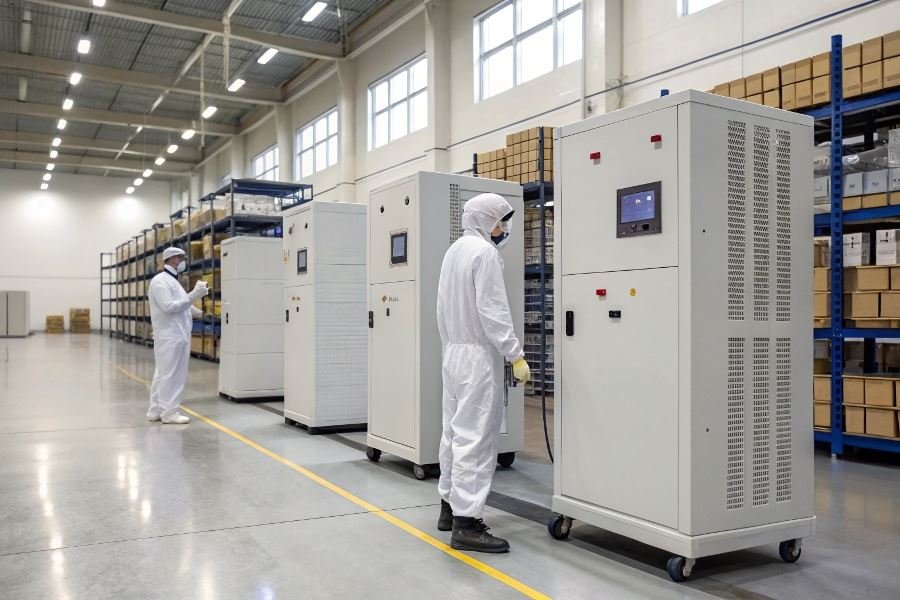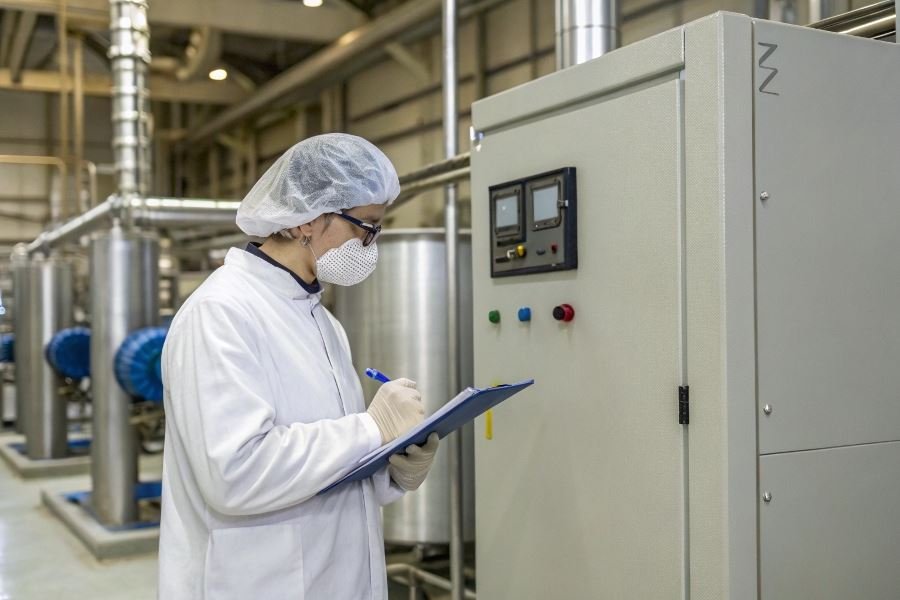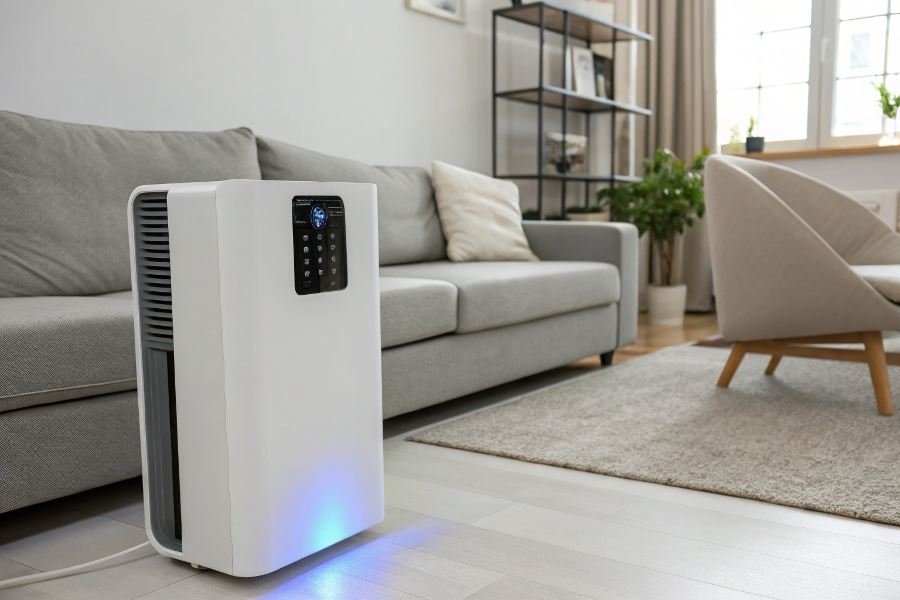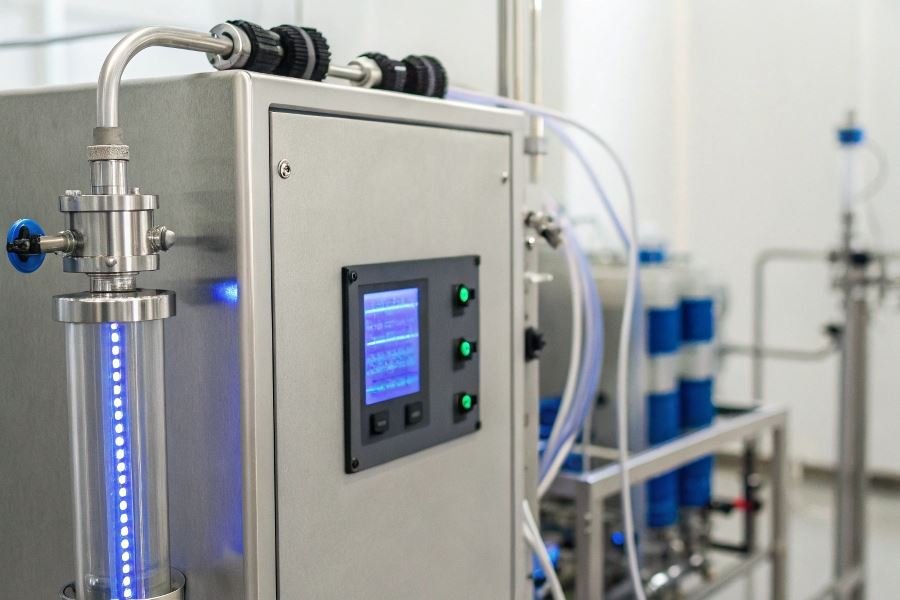
Ever wondered how water treatment plants destroy 99.9% of bacteria without harsh chemicals? Or how food processors extend shelf life while maintaining freshness? The answer lies in industrial ozonators—powerful systems that harness ozone’s remarkable oxidizing properties to transform industries.
Industrial ozonators generate ozone (O₃) by applying electrical discharge to oxygen, creating a potent sanitizing and oxidizing agent. These workhorses serve as the backbone for water treatment facilities, food processing plants, pharmaceutical manufacturing, and countless other applications where sterilization and oxidation are mission-critical.
When comparing industrial ozonators, productivity metrics become the deciding factor between adequate performance and exceptional results. Ozone output rate (measured in g/h or kg/h) stands as the primary productivity indicator, telling you exactly how much ozone the system can generate hourly. But that’s just the beginning. Concentration levels (typically 1-14% by weight) determine potency, while gas flow rate affects how efficiently the ozone reaches treatment targets.
The productivity-application connection
Matching ozonator productivity to your specific industrial needs isn’t just good practice—it’s essential for operational success. A municipal water treatment plant processing millions of gallons daily requires vastly different output than a boutique winery sanitizing equipment between batches.
Undersized systems create bottlenecks and incomplete treatment, while oversized units waste energy and capital. The sweet spot lies in understanding your application’s unique demands and selecting an ozonator with productivity metrics that align perfectly with those requirements.
Industrial Ozonators: The Productivity Spectrum That Drives Results
When selecting industrial ozonation equipment, productivity isn’t just a specification—it’s the cornerstone of operational success. The market offers a diverse range of industrial ozonators with varying output capacities designed to meet specific application requirements. A thorough comparison of industrial ozonators by productivity reveals distinct categories that serve different industrial needs, each with unique cost structures, efficiency profiles, and application suitability.
Low-capacity workhorses (1-50 g/hr)
Low-capacity industrial ozonators deliver between 1 and 50 grams of ozone per hour, making them ideal for smaller-scale applications where precision matters more than volume.
Key applications include:
- Water bottling facilities
- Small municipal water treatment
- Food processing surface disinfection
- Laboratory research
- Aquaculture systems
These systems typically operate on corona discharge technology, requiring minimal maintenance while delivering consistent performance. The efficiency sweet spot for these units lies in their targeted application—they consume between 12-20 watts of electricity per gram of ozone produced.
From a cost perspective, entry-level industrial units start around $2,000, with more sophisticated models reaching $15,000 depending on control features and construction quality.
| Feature | Typical Specification | Cost Impact |
|---|---|---|
| Power consumption | 12-20W per g/hr | $0.30-0.50 per day |
| Cooling system | Air-cooled | Minimal |
| Lifespan | 15,000-25,000 hours | $0.10-0.20 per operating hour |
| Footprint | 1-3 sq ft | Space-efficient |
Medium-capacity performers (50-500 g/hr)
Medium-capacity ozonators represent the industrial workhorse category, balancing substantial output with reasonable operating costs. These systems typically employ advanced corona discharge or electrolytic technology.
Primary applications include:
- Municipal water treatment plants
- Cooling tower water management
- Industrial wastewater processing
- Commercial laundry operations
- Medium-scale food processing
The efficiency metrics for these systems have improved dramatically, with modern units achieving 8-15 watts per gram of ozone—a significant advancement over previous generations. Installation costs typically range from $15,000 to $75,000, with ROI realized within 2-4 years through reduced chemical usage and improved process efficiency.
What sets these systems apart is their versatility across multiple industrial applications while maintaining reasonable space requirements and manageable operating costs.
High-capacity industrial titans (500+ g/hr)
High-capacity industrial ozonators represent the pinnacle of ozone generation technology, producing from 500 grams to several kilograms of ozone hourly. These sophisticated systems employ advanced cooling technologies and precision controls to maintain stability at high outputs.
Specialized applications include:
- Large municipal water treatment
- Pulp and paper manufacturing
- Pharmaceutical production
- Industrial-scale wastewater remediation
- Mining water treatment
These systems feature advanced oxygen concentration systems, sophisticated power supply units, and industrial-grade cooling systems. The investment ranges from $75,000 to several hundred thousand dollars, but the economies of scale make them surprisingly efficient—some models achieve power consumption as low as 6-10 watts per gram of ozone.
Key differentiators include:
- Integrated oxygen concentrators or liquid oxygen compatibility
- Advanced monitoring and control systems
- Industrial-grade water cooling systems
- Redundant components for continuous operation
- Remote monitoring capabilities
The productivity comparison across these categories demonstrates that selecting the right industrial ozonator requires balancing initial investment against long-term operational benefits, with each productivity tier serving distinct industrial needs.
Making the Right Choice: Industrial Ozonator Selection Framework
Critical factors that drive productivity decisions
When evaluating industrial ozonators, productivity isn’t just about output numbers—it’s about matching specific operational needs with the right technology. The most successful implementations begin with a thorough assessment of treatment volume requirements, contaminant types, and concentration levels.
Water treatment facilities typically require 10-50 g/h for small operations and up to 5 kg/h for municipal systems. Meanwhile, food processing applications often demand mid-range units (100-500 g/h) with specialized gas delivery systems to maintain product freshness without affecting taste profiles.
Contact time and concentration form the foundation of any productivity calculation. An ozonator producing 1 kg/h in a system with inadequate mixing or insufficient contact chambers may prove less effective than a 500 g/h unit in an optimized environment. This explains why leading manufacturers like Ozonetech and Absolute Ozone emphasize system integration alongside raw output metrics.
The most overlooked factor? Power efficiency. Modern industrial ozonators have dramatically improved their energy consumption profiles, with premium models requiring 8-12 kWh per kg of ozone—nearly 40% less than units manufactured before 2015.
The true cost equation across productivity tiers
Productivity tiers create natural breakpoints in the total cost of ownership (TCO) analysis:
| Productivity Range | Initial Investment | 5-Year Operating Cost | Maintenance Requirements |
|---|---|---|---|
| Small (10-100 g/h) | 5, 000−15,000 | 8, 000−20,000 | Quarterly electrode cleaning |
| Medium (100-1000 g/h) | 15, 000−60,000 | 25, 000−100,000 | Bi-monthly system checks |
| Large (1-10 kg/h) | 60, 000−250,000 | 100, 000−400,000 | Monthly comprehensive service |
| Industrial (10+ kg/h) | $250,000+ | $400,000+ | Continuous monitoring systems |
The acquisition cost typically represents only 30-40% of the five-year TCO for industrial ozonators. Energy consumption dominates operational expenses, accounting for 45-60% of lifetime costs. This explains the growing popularity of variable output systems from manufacturers like Xylem, which can modulate production based on real-time demand.
Maintenance costs scale non-linearly with productivity increases. While a 500 g/h system might cost twice as much as a 250 g/h unit, its maintenance requirements often increase by only 40-50%, creating economies of scale for larger operations.
Tomorrow’s productivity innovations taking shape today
The industrial ozonator market is experiencing a technological renaissance driven by three key trends:
Electrode technology advancements are pushing efficiency boundaries. Diamond-coated electrodes developed by Suez have demonstrated 15-20% productivity improvements while extending service intervals by up to 40%.
Intelligent output modulation systems now incorporate machine learning algorithms that predict demand patterns and adjust production accordingly. These systems have shown energy savings of 25-35% in variable-load environments like beverage processing.
The most transformative development may be the miniaturization of high-output systems. New ceramic dielectric materials and advanced cooling techniques are enabling compact units with productivity rates previously requiring equipment three times larger. This trend is particularly valuable for retrofit projects with space constraints.
The productivity frontier continues expanding with plasma-assisted ozone generation technologies promising output increases of 30-50% while maintaining current energy consumption profiles—potentially revolutionizing the productivity-to-cost ratio by 2027.
Discover how to select the perfect industrial ozonator based on productivity needs. Compare low (1-50 g/hr), medium (50-500 g/hr), and high-capacity (500+ g/hr) models to optimize your industrial applications and maximize ROI.
Discover how to select the perfect industrial ozonator based on productivity needs. Compare low (1-50 g/hr), medium (50-500 g/hr), and high-capacity (500+ g/hr) models to optimize your industrial applications and maximize ROI.