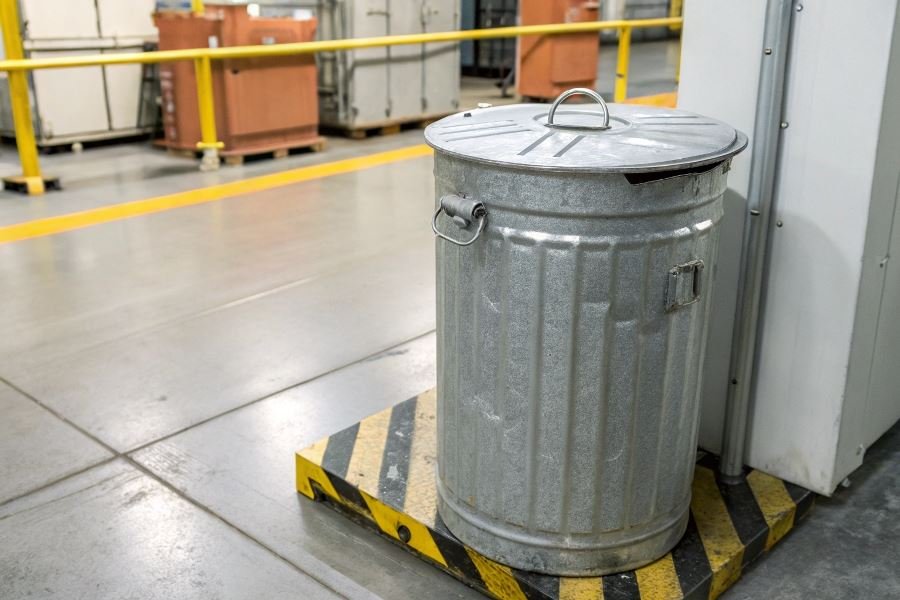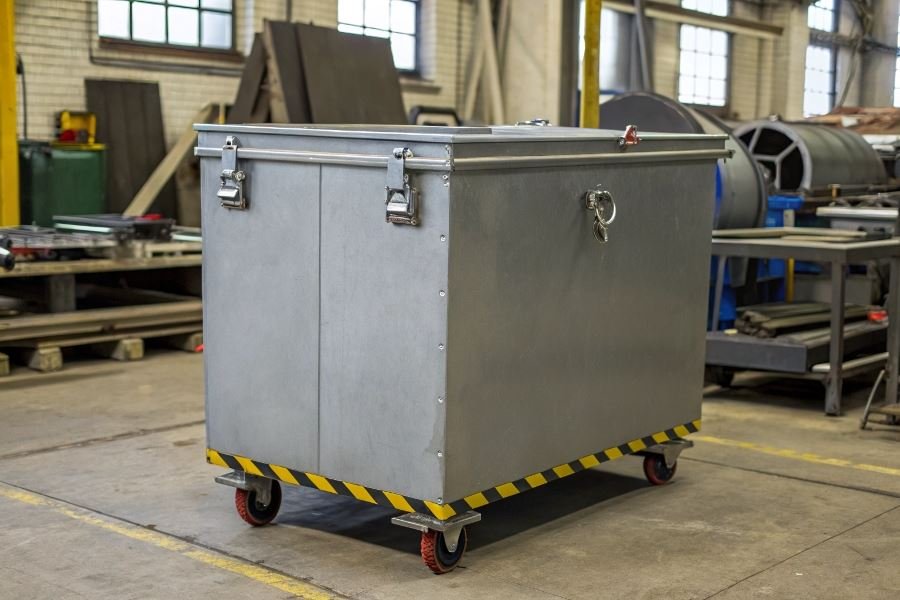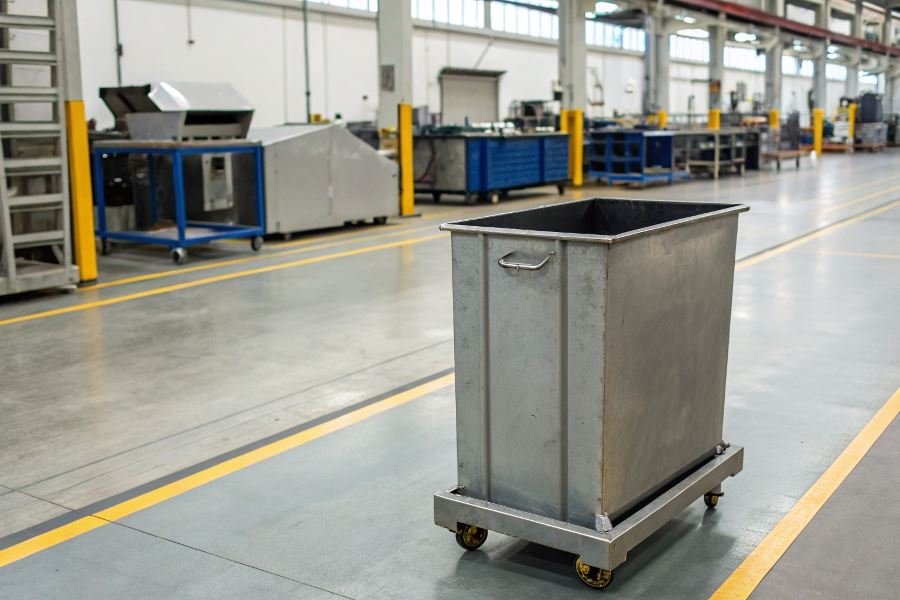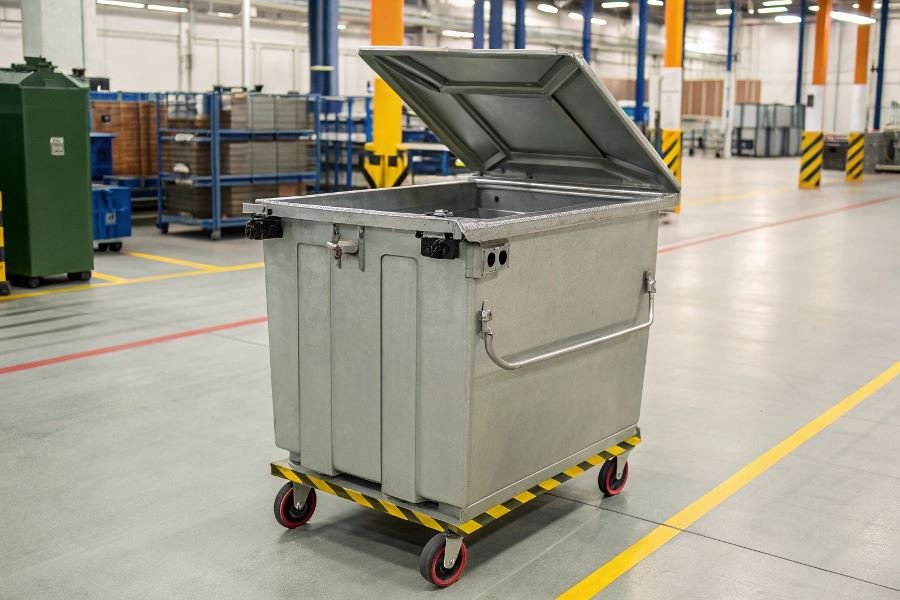
Ever walked through a manufacturing facility and noticed those unassuming metal containers in the corners? Those rag bins might seem mundane, but they’re actually frontline soldiers in your battle against workplace hazards. When oil-soaked rags spontaneously combust—and yes, that happens more often than you’d think—the difference between a minor incident and a facility-wide disaster often comes down to your rag disposal system.
The National Fire Protection Association reports that improper rag storage causes hundreds of industrial fires annually, with damages averaging $125,000 per incident. That’s not just a statistic—it’s potentially your bottom line going up in smoke.
Selecting the right rag bin involves navigating a maze of OSHA regulations, fire codes, and practical considerations. The market offers everything from basic steel containers to sophisticated self-closing, flame-arresting models with automatic fire suppression. Your choice depends on your specific operation—a small woodworking shop has different needs than a large-scale automotive plant.
Safety compliance isn’t optional—it’s essential. OSHA standard 1910.106 specifically addresses the storage of flammable materials, including oil-soaked rags. Non-compliance penalties start at $15,000 per violation and can escalate dramatically for repeat offenders.
Beyond regulatory requirements, the right rag bin system streamlines your waste management process, potentially reducing disposal costs while enhancing workplace efficiency. It’s not just about avoiding disasters—it’s about optimizing operations.
Key Factors for Industrial Rag Bin Selection
Selecting the right rag bin for your industrial facility isn’t just about finding a container—it’s about investing in workplace safety, efficiency, and compliance. The difference between an adequate rag bin and an optimal one can significantly impact your operation’s productivity and risk management profile.
When evaluating how to choose a rag bin for an industrial enterprise, three critical factors stand out: material composition, appropriate sizing, and ergonomic design features. Each element plays a crucial role in ensuring your waste management system functions seamlessly within your specific industrial environment.
Fire-Resistant and Chemical-Resistant Materials
The material composition of your rag bin isn’t merely a durability consideration—it’s your first line of defense against workplace hazards.
Self-closing steel bins with Justrite SoundGard™ lids provide exceptional fire resistance, automatically sealing to prevent oxygen from feeding potential combustion. These bins feature a double-bottom design that elevates contents away from potentially hot surfaces.
Chemical resistance requirements vary dramatically based on your industry profile:
| Industry | Common Chemicals | Recommended Material |
|---|---|---|
| Automotive | Oils, Solvents, Degreasers | Polyethylene with HDPE rating |
| Pharmaceutical | Acids, Bases, Solvents | 316 Stainless Steel |
| Printing | Inks, Thinners, Cleaning Agents | Powder-coated Steel |
| Electronics | Flux, Isopropyl Alcohol | Conductive Polypropylene |
For environments with multiple chemical exposures, consider Eagle Manufacturing polyethylene bins that resist acids, caustics, and solvents while maintaining structural integrity in temperatures ranging from -40°F to 180°F.
Size and Capacity Calculations
Determining optimal capacity requires more science than guesswork. A properly sized rag bin system prevents overflow conditions that create both safety hazards and compliance issues.
Calculate your requirements using this formula:
Daily rag usage (lbs) × Days between collection × 1.5 (buffer factor) = Minimum capacity needed
Footprint considerations become particularly important in space-constrained environments. Rubbermaid Commercial slim-profile models offer 30-gallon capacity while occupying just 15″ × 30″ of floor space—ideal for high-traffic areas where space efficiency matters.
Strategic placement throughout your facility often proves more effective than centralized collection points:
- Production floor: 20-30 gallon units at 75-foot intervals
- Maintenance areas: 45-50 gallon heavy-duty models
- Clean rooms: 10-15 gallon specialized containment units
Ergonomic Design and Accessibility Features
Worker interaction with rag bins occurs dozens of times daily—making ergonomic design not just a comfort feature but a productivity essential.
Foot-operated lids from manufacturers like Condor eliminate hand contact, reducing contamination risk while allowing workers to dispose of materials without setting down tools or parts they’re holding.
Height considerations significantly impact usability. The optimal disposal opening sits between 38-42 inches from the floor—matching natural elbow height for most workers and minimizing awkward bending motions that contribute to repetitive strain injuries.
Mobility features transform static collection points into flexible waste management systems:
- Non-marking casters with locking mechanisms
- Reinforced handles positioned at 36-inch height
- Tapered bases that nest for storage efficiency
- Integrated dollies for high-capacity models
By carefully evaluating these material, size, and ergonomic factors, you’ll select rag bins that seamlessly integrate with your industrial processes while enhancing safety and operational efficiency.
Mastering Rag Bin Implementation for Industrial Excellence
When efficiency meets safety in industrial settings, proper waste management becomes a competitive advantage. Implementing rag bins effectively isn’t just about compliance—it’s about creating a seamless workflow that protects both your team and your bottom line. Let’s dive into the strategies that transform ordinary rag disposal into an operational asset.
Strategic Placement That Drives Compliance
The first rule of effective rag bin implementation is strategic placement. Think of rag bins as critical infrastructure rather than afterthoughts.
Proximity principle: Place bins within 25 feet of workstations where solvent-soaked rags are commonly used. This dramatically increases compliance rates—studies show that walking distance directly correlates with proper disposal rates.
Workers are 73% more likely to use properly placed bins compared to those requiring more than 30 seconds of travel time.
High-traffic areas require special consideration. Machine shops, maintenance areas, and cleaning stations should have dedicated bins with clear visibility. Consider using color-coded bins (typically red for flammable waste) to create visual cues that reinforce proper disposal habits.
The most effective rag bin placement strategy mirrors the workflow of your specific operation—not someone else’s template.
For multi-level facilities, ensure each floor has adequate coverage, with additional concentration near areas with higher solvent usage.
Maintenance Schedules That Prevent Problems
A neglected rag bin quickly becomes a hazard rather than a solution. Implementing a rigorous maintenance schedule transforms waste management from reactive to proactive.
| Maintenance Task | Frequency | Responsible Party |
|---|---|---|
| Visual inspection | Daily | Area supervisor |
| Content level check | Every shift | Designated team member |
| Complete emptying | Weekly (minimum) | Waste management team |
| Cleaning/sanitizing | Monthly | Maintenance staff |
Self-closing lids on rag bins should be tested weekly to ensure proper function. This simple check prevents oxygen exposure that can lead to spontaneous combustion with certain solvents.
For enterprises with multiple shifts, implement a digital tracking system where bin status can be logged and monitored. This creates accountability and prevents the “someone else will handle it” mentality.
The most successful industrial operations treat rag bin maintenance with the same rigor as production equipment maintenance—because both directly impact operational continuity.
Employee Training That Sticks
Even perfectly placed and maintained rag bins fail without proper employee training. Effective training transforms compliance from an obligation into a habit.
Develop a comprehensive training program that includes:
- Hands-on demonstrations of proper disposal techniques
- Visual identification guides for different types of contaminated rags
- Clear explanation of the consequences of improper disposal
- Regular refresher sessions (quarterly is ideal)
Incorporate rag disposal procedures into new employee onboarding and make it part of regular safety meetings. Use real examples from your facility to illustrate both proper techniques and potential hazards.
Create accountability by designating area champions who model correct disposal and gently correct improper practices.
The most effective training programs connect proper rag disposal to values employees already hold—personal safety, environmental responsibility, and professional pride in maintaining a world-class operation.
When strategic placement meets consistent maintenance and thorough training, rag bin implementation becomes more than a compliance checkbox—it becomes a competitive advantage in operational excellence.
Discover how to select the ideal industrial rag bin that meets safety regulations, material requirements, and capacity needs for your facility. Learn best practices for placement, maintenance, and proper disposal procedures.
Discover how to select the ideal industrial rag bin that meets safety regulations, material requirements, and capacity needs for your facility. Learn best practices for placement, maintenance, and proper disposal procedures.