Ever wondered why some workers bounce through 12-hour shifts while others limp home with aching feet? The secret often lies beneath their ankles. In manufacturing plants, construction sites, and warehouses across America, proper footwear isn’t just about comfort—it’s a critical safety component that can prevent career-ending injuries.
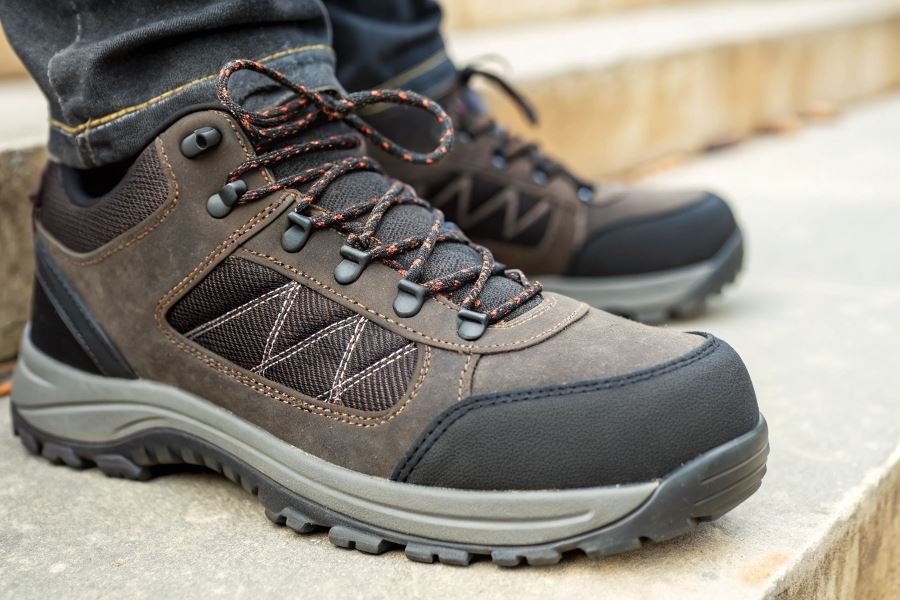
When comparing work sneakers and boots for production environments, we’re really discussing a choice that impacts everything from productivity to long-term health. Modern work footwear has evolved dramatically since the heavy steel-toed boots of the 1970s, with today’s options offering remarkable protection without sacrificing mobility.
Safety standards: Your footwear’s credentials matter
Work footwear must meet specific ASTM (American Society for Testing and Materials) standards to be considered safety-compliant. Look for ratings like:
- ASTM F2413: The comprehensive standard for protective footwear
- ASTM F2412: The testing methods used to certify that protection
These aren’t just bureaucratic checkboxes—they represent real-world protection against compression, impact, electrical hazards, and punctures. Quality work footwear will prominently display these certifications, often with additional ratings like EH (Electrical Hazard) or SR (Slip Resistant).
Decision factors: Boots vs. sneakers
Choosing between work boots and safety sneakers depends on several critical factors:
- Environment assessment: High-risk areas with falling objects demand robust boots with metatarsal guards, while fast-paced environments might benefit from lighter safety sneakers
- Movement requirements: Jobs requiring constant kneeling or climbing favor flexible footwear
- Exposure conditions: Wet environments need waterproof options, while chemical exposure requires specific resistant materials
The ideal choice balances protection with practicality—footwear that safeguards without hindering the very work it’s designed to support.
Work Footwear Showdown: Sneakers vs. Boots for Production Environments
When safety meets the factory floor, your choice of footwear becomes more than a fashion statement—it’s a critical decision that impacts your productivity, comfort, and most importantly, your safety. The eternal debate between work sneakers and boots continues to divide professionals across industries, with passionate advocates on both sides.
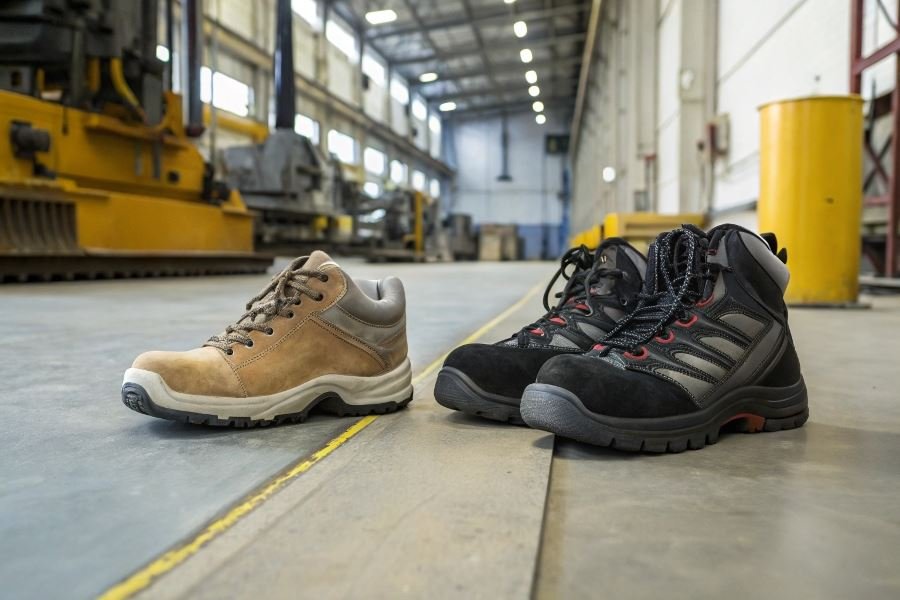
The comparison of work sneakers and boots for production environments reveals that each option offers distinct advantages depending on your specific workplace demands. While traditional steel-toe boots have dominated industrial settings for decades, athletic-inspired safety sneakers have revolutionized the market with their innovative designs that promise both protection and comfort.
Protection That Doesn’t Compromise
Safety toes represent the first line of defense against crushing injuries. Modern work footwear offers several options:
- Steel toes: The classic choice, providing maximum impact protection (up to 75 pounds of force) but adding significant weight
- Composite toes: Made from carbon fiber, plastic, or Kevlar, offering comparable protection at 30-50% lighter weight
- Aluminum toes: Delivering protection similar to steel but with reduced weight
Work boots typically excel in puncture resistance with thicker outsoles and steel or composite midsole plates that prevent sharp objects from penetrating. Premium models like Timberland PRO and Red Wing offer puncture resistance exceeding 1,200 Newtons of force.
Safety sneakers have made impressive strides in protection technology, with brands like Reebok Work incorporating flexible puncture-resistant materials that maintain mobility while meeting ASTM F2413 standards.
For electrical hazard protection, both styles offer options rated for:
| Protection Type | Voltage Resistance | Typical Applications |
|---|---|---|
| EH (Electrical Hazard) | Up to 18,000 volts | General electrical work |
| SD (Static Dissipative) | 106 to 108 ohms | Electronics manufacturing |
| CD (Conductive) | <108 ohms | Environments with explosive risks |
The Comfort Equation
Weight differences between boots and sneakers can be substantial. Traditional work boots typically weigh 3-5 pounds per pair, while athletic-inspired safety sneakers often weigh 1.5-2.5 pounds—a difference you’ll feel after a 12-hour shift.
Flexibility is where safety sneakers clearly dominate. With athletic-inspired designs, sneakers offer:
- Greater range of motion
- Reduced break-in periods (often zero)
- Enhanced proprioception and stability during dynamic movements
For all-day wearability, consider these factors:
- Cushioning technology: Safety sneakers typically incorporate EVA or polyurethane midsoles with targeted cushioning zones
- Breathability: Mesh uppers in sneakers provide superior ventilation compared to leather boots
- Ergonomics: Modern safety sneakers often feature anatomically designed footbeds that reduce fatigue
Durability Across Environments
The longevity equation isn’t straightforward. Traditional leather boots may last 1-3 years in harsh conditions, while safety sneakers typically provide 6-12 months of service life. However, this calculation changes dramatically based on:
Temperature extremes: Boots generally outperform in extreme cold, with insulated models maintaining comfort down to -20°F. However, in high-heat environments, the breathability of safety sneakers can prevent excessive foot perspiration that accelerates material breakdown.
Chemical exposure: Specialized work boots with PVC or rubber construction offer superior chemical resistance for environments with frequent exposure to corrosive substances.
Terrain considerations: Uneven surfaces, frequent climbing, and outdoor work generally favor the ankle support and durability of boots, while indoor production on concrete floors often makes lightweight sneakers the more practical choice.
The ultimate decision between work sneakers and boots should align with your specific production environment, job requirements, and personal comfort preferences—because the most effective safety footwear is the pair you’ll actually wear consistently.
Making the Right Choice: Work Sneakers vs. Boots for Your Production Environment
Industry-specific footwear recommendations
The right footwear choice varies dramatically across industries. In manufacturing environments with heavy machinery, steel-toe boots from brands like Timberland PRO provide essential protection against crushing hazards. Their rigid construction creates a protective barrier that work sneakers simply cannot match.
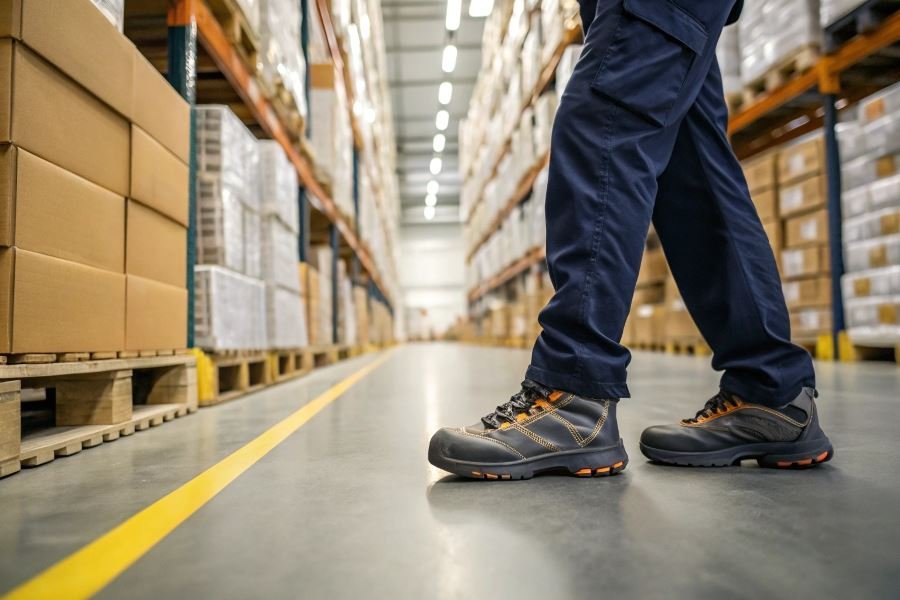
For warehouse and logistics operations where workers cover significant distances, athletic work sneakers from New Balance offer superior comfort without sacrificing protection. A warehouse supervisor walking 8-12 miles per shift will experience significantly less fatigue with lightweight sneakers.
Construction sites with uneven terrain demand the ankle support that only 6-inch or 8-inch boots can provide. The stability offered by Carhartt or Red Wing work boots prevents twisted ankles and provides crucial protection against punctures from nails or debris.
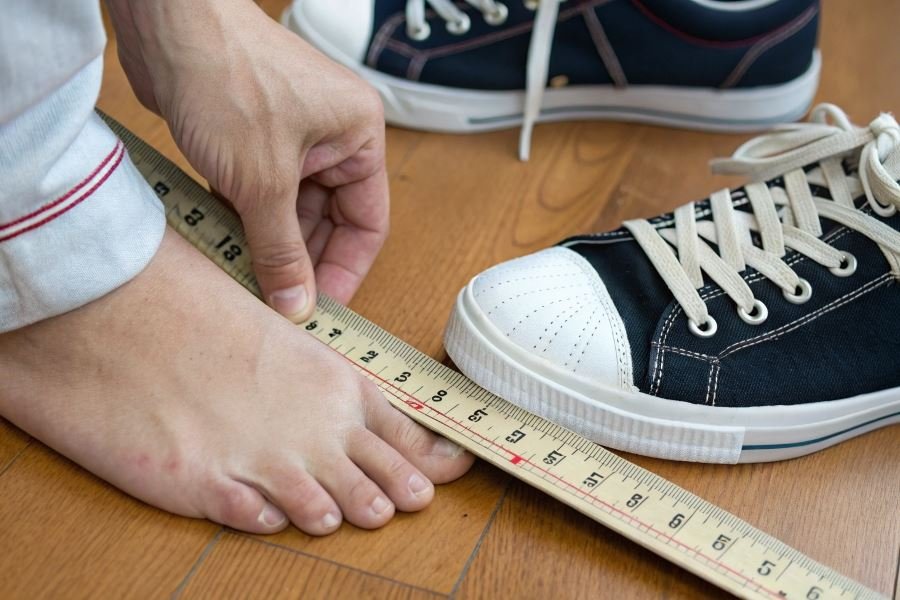
The footwear that feels comfortable in the showroom might become unbearable after an 8-hour shift. Always test new work footwear with the socks you’ll actually wear on the job.
Cost-benefit analysis over time
Initial investment is just one factor in the total cost equation:
| Footwear Type | Average Price | Typical Lifespan | Cost Per Month | Maintenance Needs |
|---|---|---|---|---|
| Work Sneakers | $90-150 | 6-9 months | $10-25 | Low (occasional cleaning) |
| Work Boots | $150-300 | 12-24 months | $6-25 | Medium (cleaning, conditioning) |
While boots require a higher upfront investment, their extended durability often results in better long-term value. A quality pair of Thorogood boots might cost $220 but last 18 months in demanding conditions, while $120 work sneakers might need replacement after just 7 months.
The hidden costs also favor boots in many scenarios. Work sneakers typically cannot be resoled, making them disposable once the outsole wears down. In contrast, premium work boots from manufacturers like Danner can be professionally resoled for $80-120, extending their life by years and reducing waste.
Top considerations for your final decision
1. Movement patterns and physical demands
Analyze your typical workday: Do you climb ladders frequently? Kneel repeatedly? Walk miles on concrete? Work sneakers excel when mobility and flexibility matter most, while boots provide superior support for stationary work or when carrying heavy loads.
2. Environmental hazards
Be brutally honest about workplace risks. Chemical exposure requires specialized resistant materials found in certain boot models. Electrical hazards demand proper EH-rated footwear. Extreme temperatures might necessitate insulated boots or breathable sneakers depending on the conditions.
3. Personal comfort factors
Your individual foot structure matters enormously. Workers with plantar fasciitis often find the arch support in brands like KEEN Utility essential, while those with wide feet may need the expanded toe boxes available in certain boot styles.
The perfect work footwear balances protection, comfort, and longevity for your specific environment. By carefully assessing these factors rather than simply following tradition, you’ll make an investment that pays dividends in productivity, safety, and physical well-being throughout your workday.
Discover which safety footwear best suits your production needs. Compare work sneakers vs boots for protection, comfort, and durability in industrial environments. Make an informed choice for workplace safety and productivity.
Discover which safety footwear best suits your production needs. Compare work sneakers vs boots for protection, comfort, and durability in industrial environments. Make an informed choice for workplace safety and productivity.