Did you know that over 50,000 foot injuries occur annually in American workplaces, with an average cost of $9,600 per incident? That’s not just a statistic—it’s thousands of workers facing pain, lost wages, and potentially life-altering consequences from a single misstep.
When it comes to workplace safety, what stands between you and potential hazards often comes down to what’s on your feet. Specialized work ankle boots aren’t just footwear—they’re your first line of defense in environments where threats range from falling objects and electrical hazards to chemical exposure and slippery surfaces. The right pair doesn’t merely protect; it enhances performance, reduces fatigue, and prevents costly downtime.
Different industries demand dramatically different protection profiles. Construction workers need impact resistance and stability on uneven terrain, while electrical workers require boots with specific dielectric properties. Meanwhile, chemical plant employees need acid-resistant materials, and healthcare professionals prioritize slip resistance and easy cleaning.
“The right boot for the wrong industry is still the wrong boot.” — Occupational Safety Expert
The Bureau of Labor Statistics reports that proper footwear could prevent nearly 75% of workplace foot injuries. Yet many companies still underestimate this crucial safety component, often focusing on more visible PPE while neglecting what supports workers literally every step of the way.
Selecting industry-appropriate ankle boots isn’t just about compliance—it’s about recognizing that different workplace environments present unique challenges requiring specialized solutions.
Industry-Specific Work Ankle Boots That Deliver
When professionals step onto job sites, their footwear becomes their foundation. Selecting work ankle boots tailored to specific industries isn’t just about compliance—it’s about maximizing protection, performance, and longevity in environments that demand specialized features.
The construction, manufacturing, and healthcare sectors each present unique challenges that require thoughtful consideration when choosing appropriate footwear. Work ankle boots for specific industries: features of selection must account for environmental hazards, duration of wear, and the physical demands of each profession. Let’s examine the critical features that make certain boots ideal for these distinct workplace environments.
Construction Industry Champions
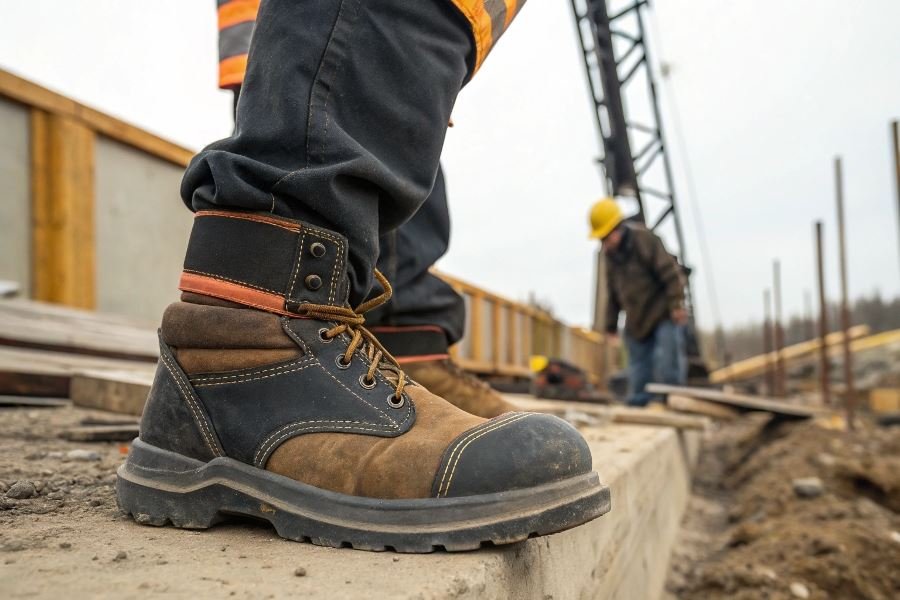
Construction sites are battlegrounds of potential hazards—falling objects, uneven surfaces, and exposure to the elements. The ideal construction boot prioritizes three key elements:
Impact resistance comes first, with composite or steel toe caps that meet ASTM F2413 standards, capable of withstanding up to 75 pounds of falling force. Modern innovations from brands like Timberland PRO incorporate asymmetrical toe caps that match foot anatomy for improved comfort without sacrificing protection.
Slip prevention technology has evolved dramatically, with specialized rubber compounds offering traction ratings that exceed ASTM F2913 requirements. Multi-directional lugs and self-cleaning channels prevent debris buildup that could compromise grip on unpredictable surfaces.
Durability factors extend beyond the obvious. Look for:
| Feature | Benefit | Industry Standard |
|---|---|---|
| Goodyear welt construction | Allows for resoling | 500+ hours of wear |
| Full-grain leather uppers | Abrasion resistance | 2-3 year lifespan |
| Reinforced heel counters | Stability on uneven ground | Reduces ankle injuries by 60% |
Manufacturing Sector Specialists
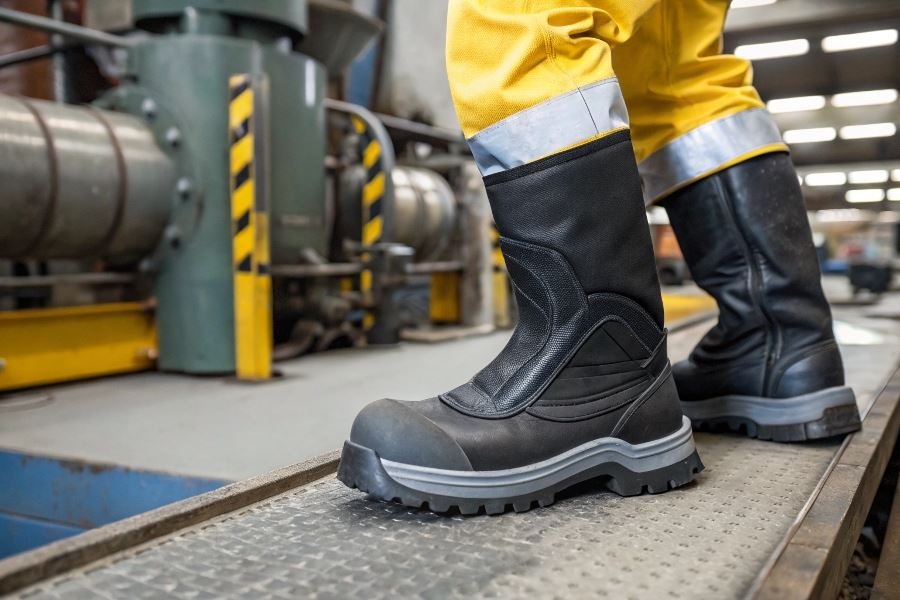
Manufacturing environments introduce chemical exposure, electrical hazards, and long periods of standing that demand specialized protection.
Chemical resistance requirements vary by industry, but boots with polyurethane or nitrile rubber outsoles provide broad-spectrum protection against oils, solvents, and corrosive substances. Keen Utility offers models with uppers treated with PFC-free water repellency that doesn’t compromise breathability while resisting chemical splashes.
Electrical hazard protection is non-negotiable in many manufacturing settings. EH-rated footwear must:
- Provide secondary protection against incidental contact with electrical circuits up to 18,000 volts
- Feature non-conductive, electrical shock-resistant soles and heels
- Maintain a surface resistivity measurement between 1-100,000 megohms
All-day comfort becomes a safety feature when fatigue could lead to accidents. Advanced cushioning systems like those found in Red Wing models incorporate dual-density polyurethane footbeds that maintain resilience even after 12-hour shifts, reducing lower back strain by distributing weight evenly.
Healthcare Field Requirements
Healthcare professionals face unique challenges: potentially infectious fluids, constant movement, and shifts that can extend well beyond standard workdays.
Fluid resistance is paramount, with seamless construction methods eliminating potential entry points for liquids. Synthetic uppers offer advantages over traditional leather, as they can be engineered with microscopic pore structures that block liquids while allowing vapor to escape.
Easy cleaning capabilities save precious time and ensure proper sanitization. Look for:
- Removable footbeds that can be thoroughly disinfected
- Smooth, non-textured surfaces that don’t harbor bacteria
- Materials tested to withstand hospital-grade disinfectants without degradation
Extended wear comfort in healthcare settings means lightweight construction (under 16 oz per boot) combined with responsive cushioning that returns energy with each step. Dansko has pioneered rocker-bottom designs that promote natural walking motion while reducing pressure points during 12+ hour shifts.
The Ultimate Work Boot Selection Guide for Industry Professionals
Navigating safety standards across industries
Work ankle boots aren’t just footwear—they’re personal protection equipment that must meet rigorous industry standards. The American Society for Testing and Materials (ASTM) established comprehensive guidelines that vary significantly by sector. Construction workers need boots meeting ASTM F2413 standards with impact-resistant toes capable of withstanding 75 pounds dropped from 18 inches. Meanwhile, electrical workers require boots with electrical hazard (EH) protection that can withstand 18,000 volts in dry conditions.
The difference between proper and improper footwear isn’t just comfort—it’s the line between safety and preventable injury.
Manufacturing environments often demand puncture-resistant soles that can withstand 270 pounds of pressure, while chemical processing facilities require chemical-resistant materials that won’t degrade upon contact with harsh substances. Before selecting work boots, identify your industry’s specific OSHA requirements and corresponding ASTM certifications to ensure compliance.
Material quality and construction techniques matter
The durability of work boots directly correlates to their construction method and materials. Goodyear welt construction—where the upper, insole, and outsole are stitched together—creates a boot that can be resoled multiple times, extending lifespan significantly compared to cement construction methods.
Full-grain leather remains the gold standard for durability, offering superior abrasion resistance and a natural ability to mold to your foot over time. However, specialized environments might call for alternatives:
| Material | Best For | Key Benefits |
|---|---|---|
| Full-grain leather | General construction, outdoor work | Water-resistant, durable, breathable |
| Nubuck | Mechanics, manufacturing | Oil-resistant, flexible, less break-in time |
| Synthetic materials | Chemical plants, wet environments | Chemical-resistant, quick-drying |
| Kevlar-reinforced | High-risk environments | Cut-resistant, lightweight |
The quality of hardware matters too—rustproof metal eyelets and heavy-duty hooks will outlast plastic alternatives by years. Examine stitching density (8-10 stitches per inch indicates quality) and look for triple-stitched stress points that prevent premature failure.
Finding the protection-comfort sweet spot
Protection features must never come at the expense of wearability. The average industrial worker spends 2,080 hours annually in their work boots—comfort isn’t a luxury, it’s a productivity necessity.
Modern composite toe caps from manufacturers like Timberland PRO and Red Wing offer ASTM-compliant protection while reducing weight by up to 30% compared to traditional steel toes. This weight reduction significantly decreases foot fatigue during 10-12 hour shifts.
Look for these critical comfort features:
- Shock-absorbing midsoles with EVA or polyurethane that maintain cushioning properties even after months of use
- Anatomically-designed footbeds that provide arch support specific to your foot type
- Moisture-wicking linings that keep feet dry in high-temperature environments
- Padded collars that prevent ankle chafing without compromising support
- Flex points aligned with the foot’s natural movement patterns
The most protective boot becomes useless if workers avoid wearing it due to discomfort. Brands like Thorogood have pioneered removable orthotic inserts that allow customization without sacrificing safety features.
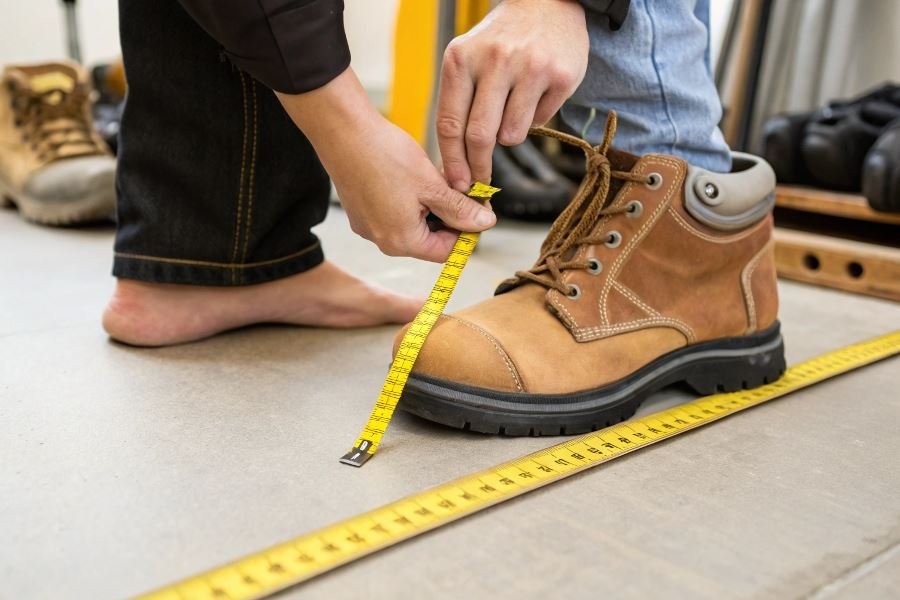
Remember that proper fit remains paramount—boots should provide a thumb’s width of space beyond the longest toe while securing the heel firmly to prevent blisters and maintain stability on uneven surfaces.
Discover how to select the right work ankle boots for your industry with our comprehensive guide. Learn essential safety features, compliance standards, and comfort considerations to protect your feet while maximizing performance on the job.
Discover how to select the right work ankle boots for your industry with our comprehensive guide. Learn essential safety features, compliance standards, and comfort considerations to protect your feet while maximizing performance on the job.