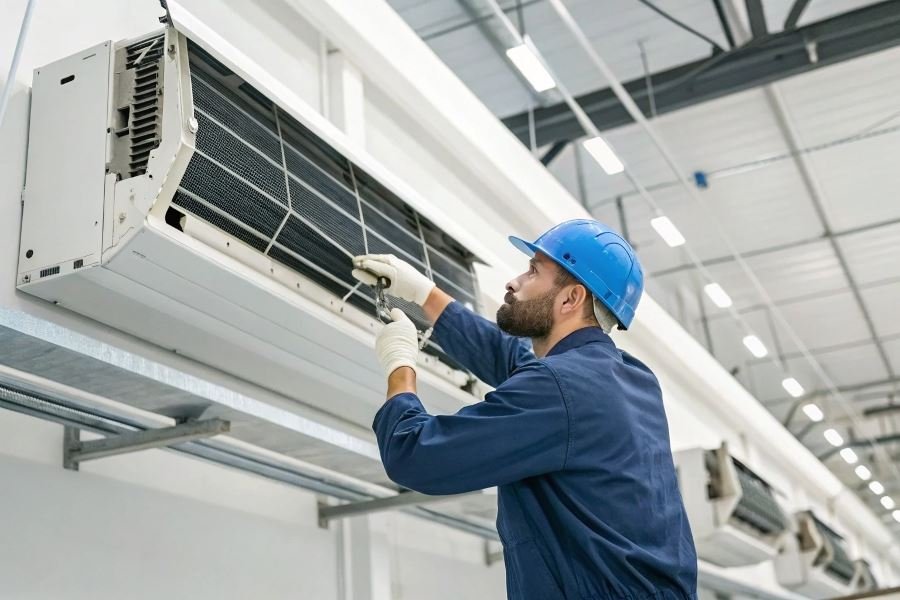
When a single degree can mean thousands in lost production, your HVAC choices matter more than you think.
The manufacturing floor of a precision electronics facility in Michigan went from rejecting 18% of components to just 3% after upgrading their climate control system. This dramatic improvement didn’t come from changing production methods or materials—it came from installing the right industrial split system.
Behind every successful industrial operation lies a carefully engineered environment where temperature, humidity, and air quality are maintained with exacting precision. Unlike residential systems that simply keep occupants comfortable, industrial HVAC solutions directly impact operational efficiency, equipment longevity, and even regulatory compliance.
The industrial difference
Industrial facilities present unique challenges that standard commercial systems simply can’t handle. Production equipment generates substantial heat, processes may require specific temperature ranges, and spaces often feature challenging layouts with high ceilings and specialized zones.
The selection process begins with understanding your facility’s specific requirements:
- Heat load calculations that account for equipment, personnel, and building characteristics
- Spatial considerations including ceiling heights, floor plans, and access points
- Operational patterns such as 24/7 production versus single-shift operations
Configuration options that drive performance
Modern industrial split systems come in various configurations, each designed to address specific needs:
- Ducted systems that distribute conditioned air through extensive ductwork
- Ductless multi-splits offering zone-specific control without extensive infrastructure
- VRF/VRV systems providing exceptional efficiency through variable refrigerant flow
- Rooftop packages that maximize floor space by placing equipment overhead
The right system balances initial investment against long-term operational costs while delivering the precise environmental conditions your industrial processes demand.
Technical Mastery for Industrial Split Systems
Selecting the right split system for an industrial facility demands precision engineering and thoughtful analysis. The stakes are high—inefficient cooling not only impacts productivity but can drain your operational budget faster than a leaky refrigerant line.
When evaluating how to choose a split system for an industrial facility, three technical considerations stand above all others: calculating proper cooling capacity, understanding energy efficiency metrics, and planning for installation realities. Let’s dive into these critical factors with the detail they deserve.
Calculating Cooling Capacity That Matches Your Needs
Determining the required cooling capacity isn’t just about square footage—it’s about understanding your facility’s unique thermal profile.
Start with the basic formula: Approximately 25 BTU per square foot for standard industrial spaces. However, this baseline requires adjustment for:
- Ceiling height (add 15% for each foot above standard 8-foot ceilings)
- Equipment heat load (manufacturing machinery can generate 3,500+ BTU/hour per unit)
- Occupancy density (each person adds roughly 600 BTU/hour)
- Solar gain through windows and roof surfaces
For precision calculations, consider factors like:
Total BTU Required = Base Load + Equipment Load + Occupancy Load + Solar Gain – Insulation Factor
Industrial facilities with server rooms, welding stations, or heat-generating machinery may require zoned cooling solutions from manufacturers like Daikin or Mitsubishi Electric.
Energy Efficiency Metrics That Impact Your Bottom Line
Energy efficiency ratings translate directly to operational costs—a critical factor for facilities operating cooling systems year-round.
Compare these primary efficiency metrics:
| Rating System | What It Measures | Target Value for Industrial |
|---|---|---|
| SEER (Seasonal Energy Efficiency Ratio) | Cooling output/energy input | 16+ for moderate usage |
| EER (Energy Efficiency Ratio) | Performance at peak conditions | 11.5+ for heavy usage |
| IEER (Integrated Energy Efficiency Ratio) | Performance across various conditions | 14+ for variable loads |
Financial impact analysis: A 5-ton system operating 10 hours daily with a SEER rating of 18 versus 14 can save approximately $720 annually at average electricity rates.
Consider variable refrigerant flow (VRF) systems from Carrier for facilities with fluctuating cooling demands—they can reduce energy consumption by up to 30% compared to conventional systems.
Installation Requirements and Spatial Planning
The physical realities of your facility will significantly impact system selection and installation costs.
Critical spatial considerations include:
- Distance between indoor and outdoor units (optimal range: under 50 feet)
- Available roof or ground space for condenser units (approximately 4 square feet per ton)
- Structural support requirements (roof-mounted units may require reinforcement)
- Access for maintenance (minimum 36-inch clearance around service panels)
Refrigerant line limitations matter tremendously. Systems from Trane typically allow maximum line lengths of 150 feet, while some LG commercial systems can extend to 300+ feet with proper design.
Installation cost factors beyond equipment include:
- Electrical upgrades (dedicated circuits, possibly 3-phase power)
- Condensate drainage systems
- Vibration isolation mounts
- Ductwork modifications or installations
For facilities with limited space, mini-split or multi-split configurations offer flexibility without sacrificing performance, though they typically max out at around 5 tons per outdoor unit.
By addressing these technical considerations methodically, you’ll select a split system that delivers optimal performance, reasonable operating costs, and installation feasibility—the trifecta of industrial HVAC success.
Making the Final Decision on Industrial Split Systems
Top 3 Manufacturers Shaping the Industry
When finalizing your industrial split system selection, manufacturer reputation becomes your north star. The market leaders have earned their positions through decades of innovation and reliability.
Daikin stands tall as an engineering powerhouse with their comprehensive industrial lineup. Their VRV IV systems deliver exceptional energy efficiency ratings (up to 28 SEER) while operating effectively in temperatures ranging from -22°F to 122°F. What sets Daikin apart is their proprietary compressor technology that reduces energy consumption by up to 30% compared to conventional systems.
Mitsubishi Electric has revolutionized industrial cooling with their CITY MULTI systems. Their distinctive selling point is zoning flexibility—allowing independent temperature control across multiple areas from a single outdoor unit. Mitsubishi Electric systems excel in facilities with varying cooling demands throughout the day, reducing energy waste by up to 40% in partial-load scenarios.
Carrier remains the gold standard for heavy industrial applications where reliability trumps all other considerations. Their AquaForce chillers paired with split air handlers deliver unmatched durability with an average service life exceeding 20 years. Carrier systems typically cost 15-20% more upfront but demonstrate superior performance in harsh industrial environments with high particulate levels or temperature extremes.
Maintenance Requirements That Won’t Break the Bank
Maintenance requirements vary dramatically between manufacturers and models, directly impacting your total cost of ownership.
Smart maintenance scheduling can reduce operational costs by up to 40%.
| Manufacturer | Filter Replacement | Major Service Interval | Remote Monitoring |
|---|---|---|---|
| Daikin | 3-6 months | 24 months | Standard |
| Mitsubishi | 2-4 months | 18 months | Premium add-on |
| Carrier | 4-8 months | 36 months | Standard |
Beyond scheduled maintenance, service availability becomes crucial during unexpected failures. Evaluate local technician availability and parts distribution networks. Daikin and Carrier maintain extensive service networks across all 50 states, while Mitsubishi’s coverage is strongest in urban centers.
The Cost-Performance Equation
The true cost of an industrial split system extends far beyond the initial invoice. A comprehensive evaluation must balance:
- Initial investment – Equipment and installation costs typically range from $15,000 to $75,000 depending on capacity and features
- Energy efficiency – Higher SEER ratings command premium prices but deliver proportional savings
- Expected service life – Premium systems average 15-20 years versus 8-12 years for economy options
- Maintenance costs – Annual maintenance averages 5-8% of initial system cost
The most cost-effective approach often involves selecting mid-tier equipment with premium efficiency ratings rather than top-tier equipment with features your facility won’t utilize. For example, a 20-ton Daikin system with 18 SEER efficiency might cost $32,000 initially but save $4,800 annually in energy costs compared to a 14 SEER alternative.
When evaluating warranties, look beyond the headline coverage period to examine specific component protection. Compressor warranties ranging from 7-10 years indicate manufacturer confidence in system reliability, while shorter coverage periods should raise concerns about long-term performance.
Remember that the perfect industrial split system balances technical specifications with your facility’s specific operational demands. The ideal choice delivers consistent performance, manageable maintenance requirements, and energy efficiency that generates returns throughout its operational lifespan.
Discover essential factors for selecting the right industrial split system for your facility. Learn about cooling capacity calculations, energy efficiency ratings, and how to balance performance with cost for optimal climate control.
Discover essential factors for selecting the right industrial split system for your facility. Learn about cooling capacity calculations, energy efficiency ratings, and how to balance performance with cost for optimal climate control.