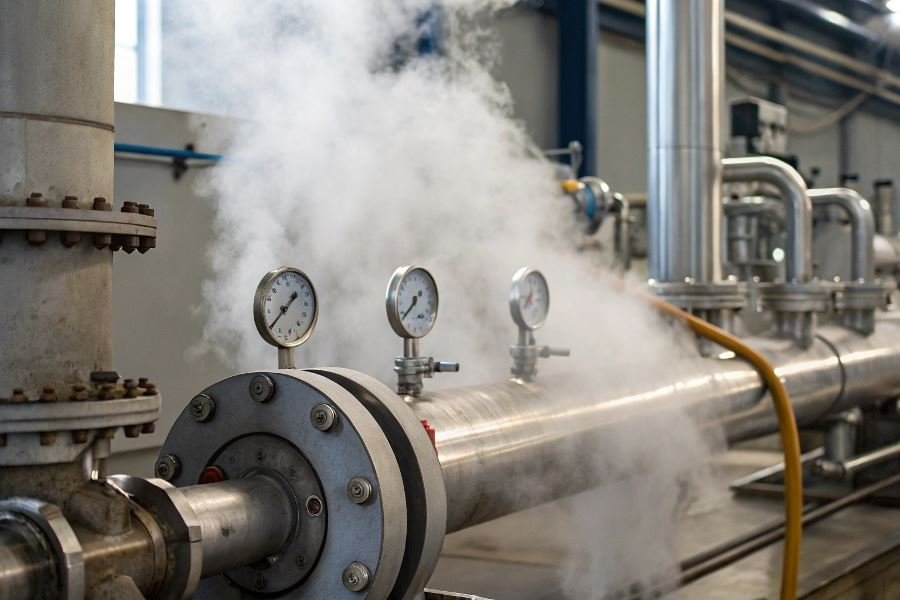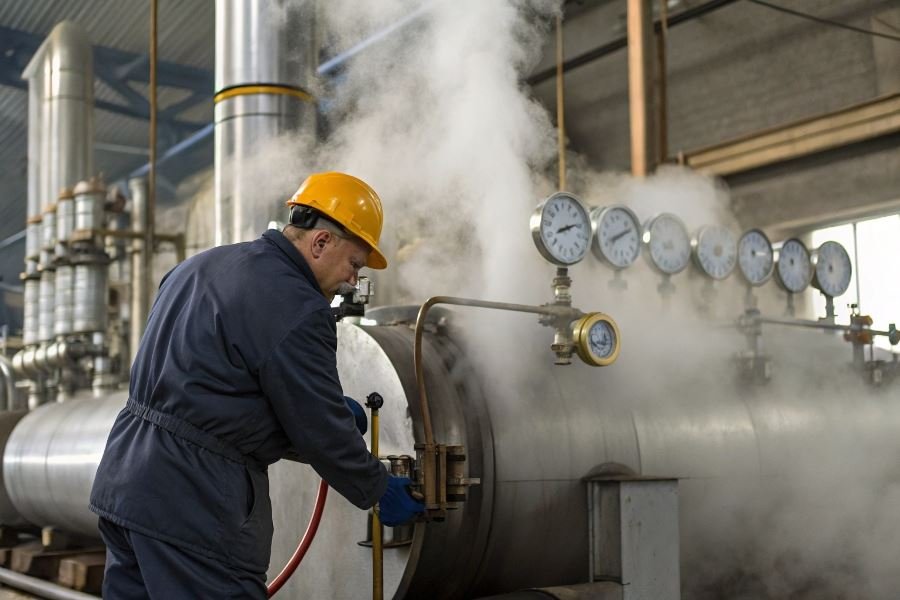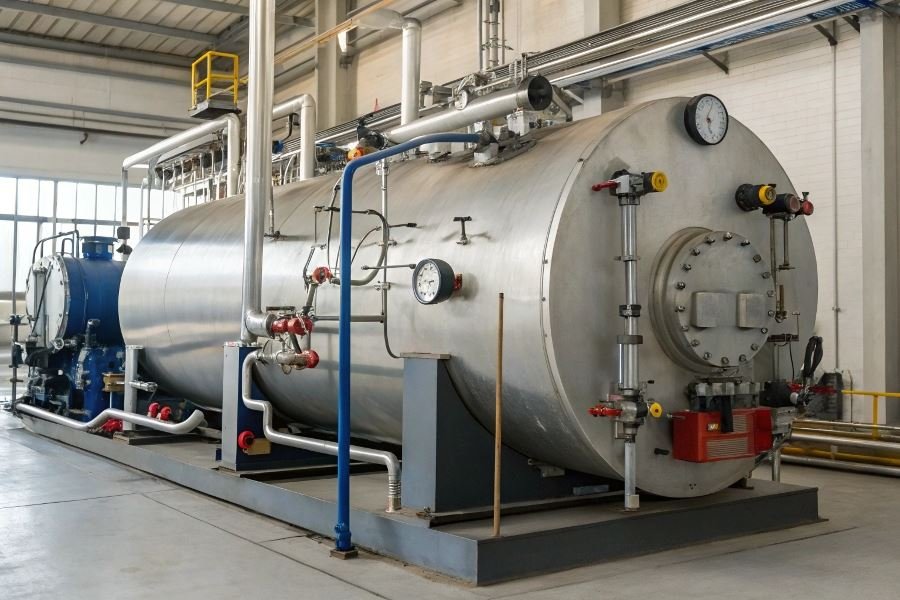
Ever wondered what powers the manufacturing behind everything from your morning coffee to the car you drive? Industrial steam generators are the unsung heroes of modern manufacturing, providing the thermal energy that transforms raw materials into finished products across countless industries.
Steam generation isn’t just about creating hot vapor—it’s the lifeblood of production efficiency. These powerful systems convert water into high-pressure steam that drives turbines, heats processes, and sterilizes equipment. When properly selected, an industrial steam generator becomes a cornerstone of operational excellence, reducing energy costs while maximizing output quality.
The industrial backbone
From food processing to pharmaceutical manufacturing, steam generators serve critical functions across diverse sectors. In textile production, they provide precise humidity control. Chemical manufacturers rely on them for consistent reaction temperatures. Even breweries depend on steam for everything from mashing to bottle sanitization.
“The right steam generator doesn’t just meet current demands—it anticipates future growth and adapts to seasonal production fluctuations.”
Matching power to purpose
Selecting the optimal steam generator requires balancing several factors:
- Capacity requirements: Calculate peak steam demand plus a 20% safety margin
- Fuel options: Natural gas offers efficiency while biomass provides sustainability
- Space constraints: Vertical units minimize footprint for limited factory floors
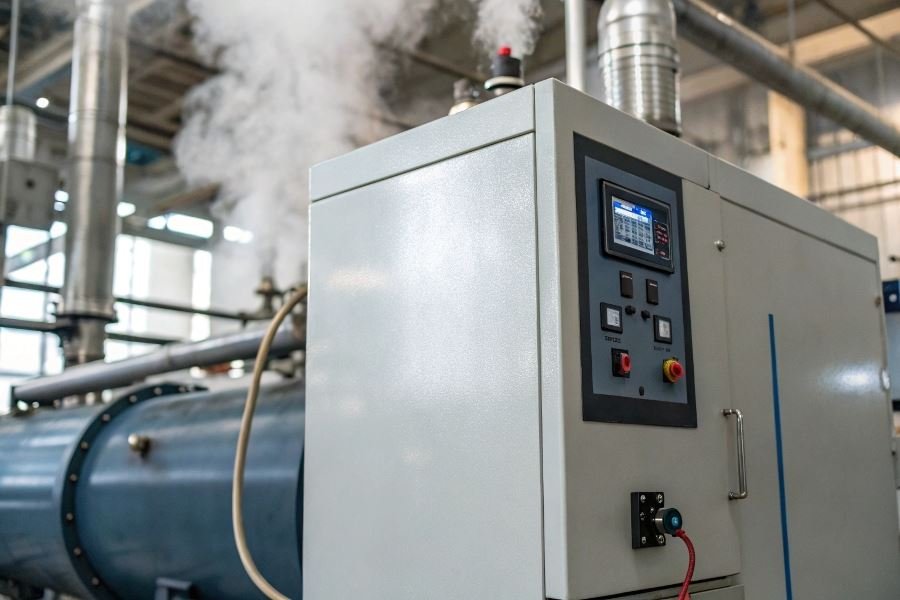
- Automation needs: Modern systems offer remote monitoring and predictive maintenance
The most successful manufacturers approach steam generator selection as a strategic investment rather than a mere utility purchase. By analyzing production cycles, energy costs, and growth projections, they secure systems that deliver reliable performance for decades.
Technical Specifications That Make or Break Your Steam Generator
When evaluating industrial steam generators for your production facility, the technical specifications aren’t just numbers on a spec sheet—they’re the difference between operational excellence and costly inefficiency. The process of selecting the right industrial steam generator demands careful consideration of several critical factors that will impact your production capabilities, operational costs, and facility requirements.
Steam Output Capacity: The Production Powerhouse
The steam output capacity represents the maximum amount of steam your generator can produce, typically measured in pounds per hour (lb/hr) or kilograms per hour (kg/hr). This specification must align precisely with your production demands.
Undersizing risks: Production bottlenecks, inconsistent product quality, and operational delays
Oversizing concerns: Wasted capital, excessive fuel consumption, and inefficient cycling
For food processing operations, requirements might range from 500-2,000 lb/hr, while textile manufacturing might demand 3,000-10,000 lb/hr. Chemical processing facilities often require outputs exceeding 20,000 lb/hr.
Industry insight: Calculate your peak steam demand and add a 20% buffer to accommodate production growth and seasonal variations.
Pressure requirements are equally crucial when determining how to choose an industrial steam generator for production. Different manufacturing processes require specific pressure levels:
| Industry | Typical Pressure Range | Application Examples |
|---|---|---|
| Food & Beverage | 80-150 PSI | Sterilization, cooking |
| Pharmaceutical | 40-80 PSI | Sterilization, humidification |
| Textile | 100-150 PSI | Dyeing, finishing |
| Chemical | 150-300+ PSI | Reaction vessels, distillation |
Fuel Efficiency: The Bottom Line Booster
The energy source you select dramatically impacts operational costs and environmental footprint. Modern industrial steam generators offer multiple fuel options:
- Natural gas: Lower emissions, competitive pricing, widely available
- Propane: Higher BTU value, suitable for remote locations
- Fuel oil: Higher energy density, but increased emissions
- Electric: Zero on-site emissions, but potentially higher operational costs
- Biomass: Sustainable option for facilities with access to organic waste
Cleaver-Brooks boilers with economizers can achieve efficiency ratings up to 85%, while Miura modular systems can reach 85-88% efficiency ratings.
Efficiency metrics to evaluate:
- Fuel-to-steam ratio
- Startup time to full steam production
- Turndown ratio (ability to operate efficiently at reduced loads)
- Heat recovery systems
Space Requirements: The Facility Factor
The physical footprint of your steam generator system impacts installation costs and facility planning. Modern vertical steam generators from manufacturers like Fulton can reduce footprint by up to 50% compared to traditional horizontal designs.
Consider these spatial factors:
Clearance requirements:
- Front: 3-4 feet for burner service
- Sides: 18-36 inches for maintenance access
- Top: 3-4 feet for tube removal
- Rear: 2-3 feet for piping connections
Installation considerations:
- Floor load capacity (water-filled weight)
- Ventilation requirements (combustion air and heat dissipation)
- Noise levels (typically 85-95 dB at 3 feet)
- Emissions compliance equipment space
Modular solutions from companies like Johnston Boiler can reduce installation time by up to 40% with pre-engineered packages that include feedwater systems, blowdown separators, and chemical treatment systems—all on a single skid.
The right steam generator balances these technical specifications with your production requirements, ensuring optimal performance, efficiency, and reliability for years to come.
Making the Final Decision on Your Industrial Steam Generator
Total Cost of Ownership Beyond the Price Tag
When finalizing your industrial steam generator selection, looking beyond the initial purchase price reveals the true investment picture. A comprehensive TCO analysis includes fuel consumption, operational efficiency, and expected lifespan—factors that dramatically impact your bottom line over time.
A high-efficiency condensing steam generator might command a $15,000 premium upfront but deliver annual fuel savings of 7, 000−9,000 compared to conventional models. This transforms that initial premium into a strategic investment with typical ROI periods of 18-24 months for operations running at least 40 hours weekly.
The cheapest generator to buy is rarely the cheapest to own. A proper TCO analysis often reveals that premium equipment pays for itself multiple times over during its operational life.
Consider these critical TCO components:
| Cost Component | Typical Impact on 10-Year TCO | Often Overlooked Factors |
|---|---|---|
| Fuel Consumption | 65-75% | Efficiency degradation over time |
| Maintenance | 10-15% | Specialized technician availability |
| Water Treatment | 5-8% | Local water quality variations |
| Parts Replacement | 7-12% | Supply chain reliability |
| Downtime Costs | Variable | Production schedule disruptions |
Maintenance Requirements and Service Support
The most sophisticated steam generator becomes a liability without proper maintenance infrastructure. Evaluate not just the maintenance schedule, but the entire support ecosystem.
Manufacturer service networks vary dramatically in responsiveness and geographic coverage. Leading manufacturers like Cleaver-Brooks and Clayton Industries maintain extensive service networks with 24-hour response guarantees in most industrial centers—a critical consideration for operations where downtime costs thousands per hour.
Assess these maintenance factors with particular scrutiny:
- Parts availability – Can critical components be sourced within 24-48 hours?
- Technical documentation quality – Are maintenance procedures clearly documented?
- Remote monitoring capabilities – Do systems offer predictive maintenance alerts?
- Service technician certification requirements – Will you need specialized training?
Regulatory Compliance and Safety Considerations
Industrial steam generators operate under strict regulatory frameworks that vary by jurisdiction, industry, and application. Non-compliance risks extend beyond fines to include insurance invalidation, production shutdowns, and potential liability issues.
ASME certification remains the gold standard for pressure vessel safety, while emissions standards continue to evolve with increasing stringency. Equipment from manufacturers like Miura comes pre-certified to meet multiple regulatory standards, potentially simplifying your compliance process.
Key compliance areas to verify include:
- Emissions standards (NOx, CO, particulate matter)
- Pressure vessel certification and inspection requirements
- Safety relief valve specifications and testing protocols
- Burner management system safety certifications
- Water quality discharge regulations
The final selection decision should integrate these three dimensions—TCO, maintenance infrastructure, and regulatory compliance—into a unified evaluation framework. The optimal generator isn’t necessarily the one with the lowest purchase price or the highest efficiency rating, but rather the system that delivers the best overall value proposition for your specific operational context.
Discover how to select the perfect industrial steam generator for your manufacturing needs. Learn about essential specifications, efficiency factors, and cost considerations to make an informed investment that maximizes production capabilities.
Discover how to select the perfect industrial steam generator for your manufacturing needs. Learn about essential specifications, efficiency factors, and cost considerations to make an informed investment that maximizes production capabilities.