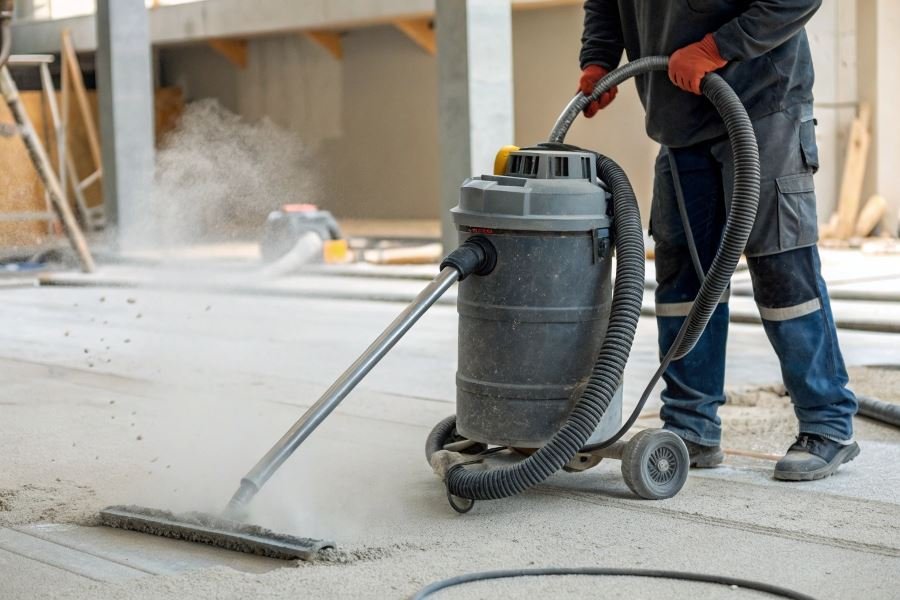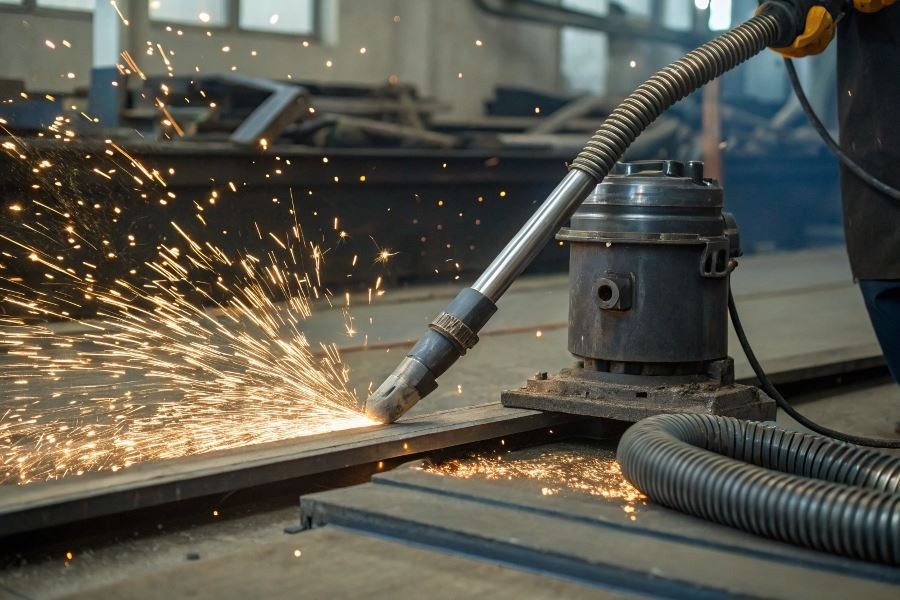
What’s the difference between a standard shop vac and an industrial metalworking vacuum? About 17 hours of downtime and potentially $30,000 in lost productivity.
When molten metal sprays, titanium dust accumulates, and razor-sharp steel shavings scatter across workshop floors, ordinary cleaning solutions crumble under pressure. This isn’t just about tidiness—it’s about survival in an environment where the smallest spark can trigger catastrophe.
Industrial vacuum systems for metalworking have evolved from simple cleanup tools to critical safety infrastructure. Today’s powerhouse models don’t just collect debris; they prevent explosions, protect million-dollar machinery, and safeguard the lungs of skilled workers who form the backbone of manufacturing excellence.
The metalworking challenge matrix
Metalworking environments present a perfect storm of cleaning challenges:
- Combustible dust that can ignite with minimal provocation
- Abrasive particles capable of destroying standard filtration systems
- Heavy debris that would stall conventional motors within minutes
- Fine particulates that bypass regular filters and contaminate air quality
The evolution of these specialized systems tells a fascinating story of engineering ingenuity. From the rudimentary collection systems of the 1950s to today’s HEPA-filtered, explosion-proof titans with automatic filter-cleaning mechanisms, each advancement has been driven by necessity.
Modern industrial vacuums now incorporate specialized metallurgical considerations—from static-dissipating hoses that prevent spark generation to flame-arrestor technology that contains potential ignitions before they spread. This isn’t just cleaning equipment; it’s specialized safety technology disguised as maintenance machinery.
The Ultimate Power Trio: Industrial Vacuum Cleaners That Dominate Metalworking
When metal chips fly and industrial debris piles up, ordinary cleaning solutions simply won’t cut it. The most powerful industrial vacuum cleaners for metalworking enterprises represent specialized engineering marvels designed to handle the unique challenges of metal manufacturing environments. These aren’t your standard shop vacs—they’re industrial-grade powerhouses built to tackle everything from fine aluminum dust to heavy steel shavings while maintaining strict safety standards.
Let’s dive into the three categories of vacuum systems that are revolutionizing cleanup operations in metalworking facilities across the country.
Explosion-Proof Pneumatic Powerhouses
Heavy-duty pneumatic vacuum systems offer unparalleled safety in environments where combustible dust and flammable materials are present. These systems operate on compressed air rather than electricity, eliminating ignition risks in volatile areas.
Key advantages include:
- No electrical components in collection zones
- ATEX certification for hazardous environments
- Continuous operation capability without overheating
- Maintenance-friendly design with fewer moving parts
The Nilfisk Z22 pneumatic series delivers impressive suction power of up to 300 mbar while maintaining complete explosion protection. Similarly, the VAC-U-MAX MDL 1020 offers exceptional performance with its 185 CFM air consumption rate, making quick work of metal shavings and dust.
These systems shine particularly in facilities processing titanium, magnesium, or aluminum, where dust explosions pose genuine threats.
Electric Giants With Filtration Mastery
High-capacity electric industrial vacuum cleaners combine raw power with sophisticated filtration technology, making them ideal for continuous heavy-duty applications where explosion risks are controlled.
| Model | Suction Power | Filtration | Capacity |
|---|---|---|---|
| Delfin DG 300 HD | 7.5 kW | HEPA H14 | 100 L |
| Ruwac DS2 | 11 kW | MicroClean | 200 L |
| Pullman-Ermator S36 | 5.5 kW | HEPA | 56 L |
These electric behemoths feature multi-stage filtration systems that capture particles down to 0.3 microns, protecting both equipment and personnel from harmful metal dust. The most advanced models incorporate automatic filter cleaning mechanisms that maintain suction performance even during extended operation.
What sets these systems apart:
- Three-phase motors delivering sustained power
- Oversized cooling systems preventing thermal shutdown
- Reinforced collection containers withstanding abrasive materials
- Sound dampening technology for quieter operation
Specialized Chip Collection Systems
For facilities generating substantial volumes of metal chips and turnings, specialized metal chip collection vacuum systems with automatic discharge capabilities offer game-changing efficiency.
These systems feature:
- Continuous operation design allowing uninterrupted production
- Separator technology that divides solid material from cutting fluids
- Automatic discharge mechanisms eliminating manual emptying
- Recirculation systems recovering expensive cutting oils
The Nederman MicroMac exemplifies this category with its ability to process up to 2 tons of metal chips daily while recovering 95% of cutting fluids. Similarly, the Donaldson Torit DCE system combines powerful vacuum performance with sophisticated separation technology.
These specialized systems don’t just clean—they contribute directly to operational efficiency by recovering valuable materials and reducing disposal costs.
When selecting among these industrial vacuum titans, consider your specific metalworking processes, material types, and facility safety requirements. The right system doesn’t merely clean your facility; it enhances productivity, improves safety compliance, and potentially delivers measurable ROI through material recovery and reduced maintenance downtime.
Selecting the Right Industrial Vacuum for Metalworking
When metal chips start piling up and fine dust coats every surface of your shop floor, the difference between a mediocre vacuum and an industrial powerhouse becomes painfully obvious. Metalworking environments demand exceptional cleaning equipment that can handle the unique challenges of metal debris, from razor-sharp turnings to microscopic particles that pose serious health risks.
Performance metrics that actually matter
The raw muscle of an industrial vacuum cleaner is measured through several critical specifications:
Cubic Feet per Minute (CFM) represents the volume of air a vacuum can move. For metalworking applications, look for systems delivering at least 200-300 CFM. Heavy-duty models from manufacturers like Nilfisk can reach upwards of 500 CFM, providing the necessary power to collect dense metal chips and shavings.
Water lift (or static pressure) measures suction strength, typically in inches. This specification becomes crucial when dealing with heavier metal debris. Top-tier industrial vacuums designed for metalworking should offer at least 80-100 inches of water lift.
The relationship between CFM and water lift is inversely proportional—as one increases, the other typically decreases. The ideal vacuum strikes the perfect balance for your specific application.
Filtration efficiency might be the most underrated specification. HEPA filtration capturing 99.97% of particles down to 0.3 microns is non-negotiable in metalworking environments where metal dust can cause respiratory issues and even explosions.
| Specification | Minimum Requirement | Premium Performance |
|---|---|---|
| CFM | 200-300 | 400-600 |
| Water Lift | 80″ | 100-120″ |
| Filtration | HEPA (99.97% @ 0.3μ) | ULPA + Spark Arrestors |
| Motor Power | 3-5 HP | 7-15 HP |
The true cost equation
The sticker price is just the beginning of your relationship with an industrial vacuum. The total cost of ownership includes:
Maintenance intervals vary dramatically between models. Premium systems from Ruwac or Delfin might command higher upfront costs but require filter changes every 1,000 hours instead of every 200 hours with budget alternatives.
Energy consumption becomes significant when running these powerful machines daily. A vacuum drawing 20 amps versus one drawing 15 amps represents thousands in operational costs over its lifespan.
Downtime costs often dwarf all other expenses. When a vacuum fails, production can grind to a halt. Investing in redundant filtration systems and equipment with rapid-replacement components pays dividends in continuous operation.
The cheapest vacuum you can buy is almost always the most expensive vacuum you’ll ever own.
Compliance isn’t optional
Metalworking facilities face stringent regulatory requirements that directly impact vacuum selection:
NFPA 652 addresses combustible dust hazards, requiring equipment with proper grounding and explosion-proof features when collecting certain metal dusts like aluminum or titanium.
OSHA’s Permissible Exposure Limits for various metal particulates necessitate vacuums with advanced filtration systems. Dustcontrol offers systems specifically engineered to meet these requirements.
EPA regulations regarding the disposal of collected material must also factor into your selection process, particularly for facilities working with hazardous metals.
The most powerful industrial vacuum isn’t necessarily the one with the biggest motor or the highest price tag—it’s the one that perfectly matches your specific metalworking application while ensuring regulatory compliance, reasonable maintenance requirements, and long-term reliability. When these factors align, you’ll have a cleaning system that protects both your equipment and your workforce while maximizing productivity.
Discover the top 5 industrial vacuum cleaners engineered for metalworking environments. Compare heavy-duty models with explosion-proof features, advanced filtration systems, and specialized chip collection capabilities for optimal workplace safety and efficiency.
Discover the top 5 industrial vacuum cleaners engineered for metalworking environments. Compare heavy-duty models with explosion-proof features, advanced filtration systems, and specialized chip collection capabilities for optimal workplace safety and efficiency.