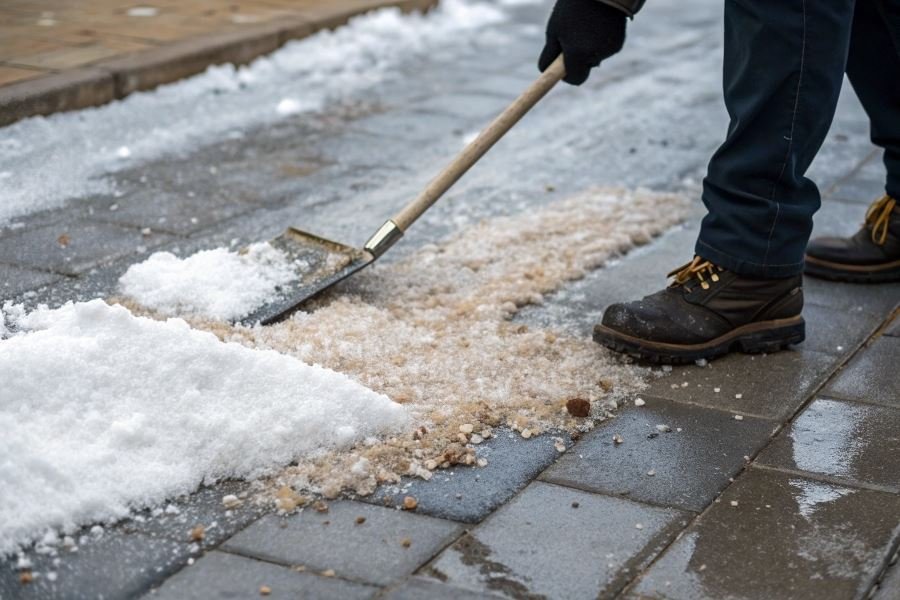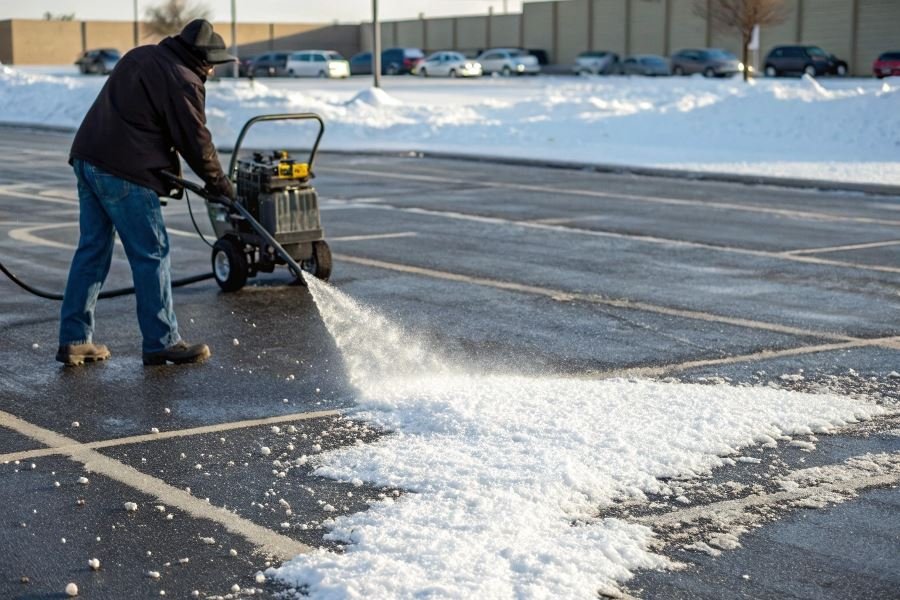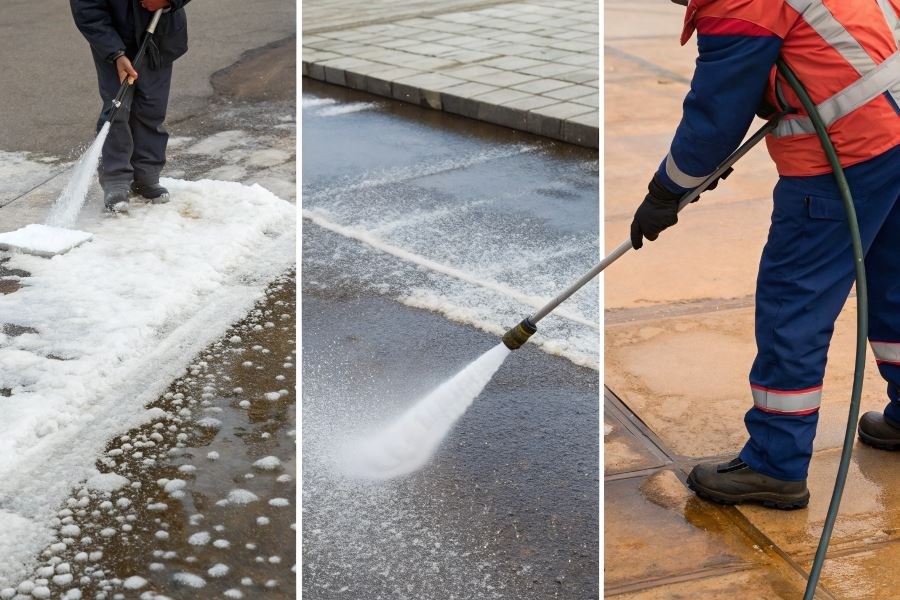
When temperatures plummet, industrial operations face a formidable adversary: ice. A single ice-related accident can halt production, damage equipment worth millions, and—most critically—endanger human lives. The difference between a facility that thrives through winter and one that struggles often comes down to one decision: which anti-icing agent to deploy.
Ice management isn’t just about safety—it’s about operational continuity. Every hour of downtime in manufacturing environments costs an average of $260,000, according to a 2023 industry analysis. Smart facility managers recognize that effective anti-icing isn’t an expense—it’s an investment with measurable ROI.
When selecting the right anti-icing solution for industrial settings, three factors demand particular attention:
Environmental impact considerations
The most powerful de-icer becomes a liability if it damages surrounding ecosystems or corrodes valuable infrastructure. Modern industrial facilities must balance immediate effectiveness with long-term sustainability.
Temperature performance thresholds
Not all anti-icing agents perform equally across temperature ranges. The difference between an agent effective at 20°F versus -20°F can mean the difference between operational continuity and costly shutdowns during severe cold snaps.
Application-specific requirements
Loading docks, equipment yards, and walkways each present unique challenges. The ideal solution for metal surfaces might prove disastrous for concrete installations.
The industry’s top performers—calcium chloride, magnesium chloride, and potassium acetate—each bring distinct advantages to industrial ice management. Their specific applications and performance characteristics create a framework for informed decision-making that protects both assets and operations throughout the winter months.
The Science Behind Industrial De-Icing: Top 3 Solutions Analyzed
When winter strikes industrial facilities, the battle against ice becomes mission-critical. Safety concerns, operational continuity, and infrastructure protection all hang in the balance. The selection of appropriate anti-icing agents can make the difference between smooth operations and costly downtime.
Industrial facility managers across North America have increasingly focused on finding the most effective anti-icing agents for industrial areas. The top 3 anti-icing agents for industrial areas—calcium chloride, magnesium chloride, and potassium acetate—each bring distinct advantages to the table, with performance characteristics that suit different industrial environments and requirements.
Calcium Chloride: The Heavy-Duty Performer
Calcium chloride stands as the powerhouse among de-icing agents, effective at temperatures as low as -25°F (-32°C). This remarkable temperature range makes it particularly valuable for facilities operating in extreme northern climates.
Key properties:
- Exothermic reaction (releases heat when dissolving)
- Works faster than most alternatives
- Effective at extremely low temperatures
- Hygroscopic (attracts moisture from surroundings)
The application methods for calcium chloride have evolved significantly, with options including:
| Application Method | Best For | Typical Coverage Rate |
|---|---|---|
| Pre-wetted solid | Large areas, heavy traffic | 500-800 lbs/lane mile |
| Liquid spray | Preventative treatment | 25-50 gallons/lane mile |
| Blended systems | Custom solutions | Varies by formulation |
Industrial benefits extend beyond mere ice removal. Many manufacturing facilities report 30-40% reductions in slip-and-fall incidents after implementing calcium chloride programs. However, its corrosive nature requires careful consideration around sensitive equipment and metal structures.
Magnesium Chloride: The Environmental Contender
Magnesium chloride has gained traction as a more environmentally conscious option while still delivering solid performance metrics. Effective down to approximately -13°F (-25°C), it represents a balance between performance and environmental impact.
Environmental considerations have become increasingly important as industrial facilities align with sustainability goals and regulatory requirements.
The environmental profile of magnesium chloride shows several advantages:
- Reduced chloride loading – Contains approximately 25% less chloride than calcium chloride
- Lower toxicity to vegetation – Studies show 30-40% less damage to adjacent plant life
- Decreased soil impact – Less persistent in soil systems
Performance metrics reveal magnesium chloride requires about 25-30% more product by weight compared to calcium chloride to achieve similar results. However, its reduced corrosivity often justifies this trade-off in sensitive industrial environments.
Potassium Acetate: The Specialized Solution
For industries with zero tolerance for corrosion—aircraft maintenance facilities, electronics manufacturing, and precision machinery operations—potassium acetate offers unmatched protection.
Potassium acetate delivers these critical advantages:
- Minimal corrosion impact on metals and infrastructure
- Biodegradable composition
- Effective performance down to -15°F (-26°C)
- Residual protection that outlasts chloride-based alternatives
The specialized industrial applications for potassium acetate include:
“In aerospace maintenance facilities, where even microscopic corrosion can compromise safety, potassium acetate has become the gold standard for winter maintenance.”
While carrying a premium price tag (often 3-5 times the cost of chloride-based alternatives), potassium acetate’s specialized benefits make it indispensable in certain industrial contexts. Its lower application rates partially offset the higher per-unit cost, with typical application rates 25-40% lower than chloride-based products.
Each of these solutions offers distinct advantages depending on your specific industrial requirements, environmental considerations, and budget constraints. The science of industrial de-icing continues to advance, with new formulations and application technologies emerging regularly.
Maximizing Your Anti-Icing Investment
The dollars and sense of industrial de-icing
When protecting industrial facilities from winter’s grip, the financial implications extend far beyond the sticker price of anti-icing agents. A comprehensive cost-benefit analysis reveals striking differences among our top contenders.
Calcium chloride commands a premium price point ($900-1,200 per ton) but delivers exceptional performance down to -25°F. This translates to approximately 30% fewer applications during severe winter conditions compared to traditional rock salt. For facilities operating 24/7 where downtime costs thousands per hour, this performance justification is clear.
Magnesium chloride presents the middle ground ($700-900 per ton) with an impressive ROI calculation when factoring in its reduced corrosion profile. Industrial facilities using magnesium chloride report 40-60% less equipment maintenance costs over five-year periods compared to sodium chloride users.
The agricultural by-products solution, while initially appearing more expensive ($1,100-1,400 per ton), delivers surprising long-term value:
| Anti-Icing Agent | Initial Cost/Ton | Annual Application Cost* | Infrastructure Damage | Environmental Remediation | 5-Year Total Cost |
|---|---|---|---|---|---|
| Calcium Chloride | $900-1,200 | $18,000 | Moderate ($5,000) | $3,000 | $98,000 |
| Magnesium Chloride | $700-900 | $22,000 | Low ($2,500) | $1,500 | $82,500 |
| Agricultural By-products | $1,100-1,400 | $25,000 | Minimal ($1,000) | $500 | $77,500 |
*Based on 20-acre industrial facility in moderate winter climate
Application excellence and storage strategies
The effectiveness of any anti-icing program hinges on proper application and storage protocols. For calcium chloride, pre-wetting techniques increase adhesion by up to 30% while reducing bounce and scatter. Apply at 10-15 gallons per lane mile before precipitation begins for optimal results.
Magnesium chloride demands specialized equipment with non-corrosive components. The investment in proper spraying equipment pays dividends through consistent application rates and reduced waste. Store in polyethylene tanks with secondary containment systems to prevent environmental contamination.
For agricultural by-products:
“The key to maximizing bio-based deicer effectiveness lies in temperature-calibrated application rates and proper agitation systems that prevent separation during storage.” – Industrial Winter Maintenance Journal
All three solutions require covered storage areas with impermeable floors and runoff collection systems. Temperature-controlled environments extend shelf life by preventing clumping and maintaining solution concentrations. Implement inventory management systems that track usage patterns against weather forecasts to optimize ordering cycles.
Tomorrow’s ice-free innovations
The industrial anti-icing landscape continues evolving with several promising technologies on the horizon. Nanotechnology-enhanced formulations currently in development promise to reduce application rates by up to 70% while extending effective periods between treatments.
Smart application systems using IoT sensors and predictive analytics are revolutionizing how facilities deploy anti-icing resources. These systems monitor surface temperatures, precipitation rates, and traffic patterns to automatically deploy precise amounts of material exactly when needed.
Biodegradable polymer additives represent another frontier, creating microscopic “lattices” that hold anti-icing agents in place longer while reducing environmental impact. Early adopters report 40% reductions in total material usage while maintaining safety standards.
The most exciting development may be electrically-conductive concrete, which eliminates chemical applications entirely. Though currently 2-3 times more expensive than traditional concrete, the elimination of annual anti-icing costs delivers break-even points within 7-10 years for high-traffic industrial areas.
By strategically implementing today’s best solutions while monitoring emerging technologies, industrial facilities can maintain safe operations throughout winter while protecting infrastructure investments and environmental responsibilities.
Discover the top 3 industrial anti-icing agents: calcium chloride, magnesium chloride, and potassium acetate. Compare performance, environmental impact, and cost-effectiveness for optimal winter safety in industrial settings.
Discover the top 3 industrial anti-icing agents: calcium chloride, magnesium chloride, and potassium acetate. Compare performance, environmental impact, and cost-effectiveness for optimal winter safety in industrial settings.